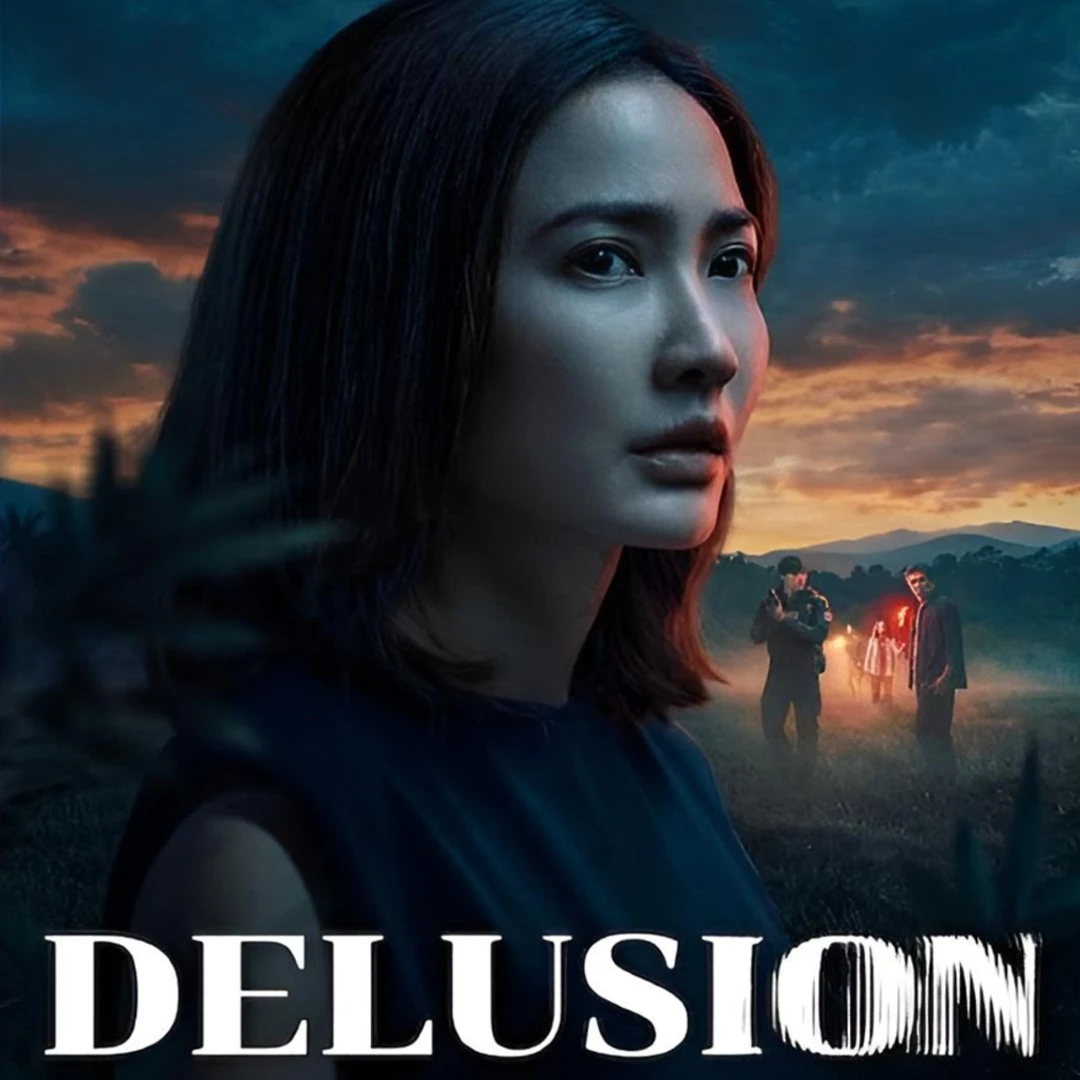
In a quiet village in northeastern Thailand, the disappearance of a child sets off a chilling chain of events. As suspicion and fear mount, an old legend resurfaces, a tale of a mysterious creature that hides among humans by day and hunts for its prey at night. But this time, suspicion doesn't fall on an unknown ghost, but on an elderly man whose memory is fading and who can no longer defend himself.
This is the premise of "Delusion," a Netflix series released on September 24, 2026. Blending crime, psychological horror, and supernatural beliefs, the show poses a haunting question: Do legends sometimes mask terrifying truths, or are they simply stories people turn to when reality becomes too hard to understand?
A Disappearance That Brings the Past Back to Life
Set in Chiang Khan, Loei Province, the story begins with a missing child, a case that stirs up old fears and reopens memories of mysterious events from over a decade ago.
As the search for the child intensifies, rumors spread about the return of a creature from local folklore known as "Phi Phong", a being believed to disguise itself as an ordinary person, only revealing its supernatural nature after dark.
Suspicion quickly falls on Narong, an elderly man with dementia. His unusual behavior and memory lapses make the villagers uneasy, and things become even more complicated when he can't explain his actions or recall where he's been at certain times.
Narong's daughter, Wan, a schoolteacher, refuses to believe the accusations against her father. She insists that his illness doesn't make him a killer or a monster. But soon, she finds herself facing mysteries that go beyond his medical condition, and her trust in those closest to her begins to waver.
Meanwhile, Detective Pete, recently transferred from Bangkok, takes charge of the case. He relies on forensic evidence rather than rumors or local superstitions. As he searches for a logical explanation and some villagers cling to the legend, the lines between past and present blur, and doubts about what really happened only grow.
Can someone become a suspect simply because they've lost their memory?
The series doesn't rely solely on ghosts or monsters for its scares. Its real focus is the fragility of human memory and how it shapes our sense of self and our relationships with others.
Dementia isn't just about forgetting names or events. It's a collection of symptoms that can affect memory, perception, behavior, and the ability to recognize people and places. The severity and nature of these symptoms vary depending on the underlying illness and its stage.
This is where the show's central dilemma emerges: What happens if someone is accused of a crime they can't remember? How can their family defend them when their own testimony is unreliable and their confused actions are seen as evidence against them?
The series adds another layer by setting the story in a community steeped in tales of spirits and possession. For some villagers, unusual behavior is easily explained by the influence of supernatural forces. In this environment, illness becomes a source of suspicion, and fear can lead to condemning someone before their guilt is proven.
What makes the story truly unsettling is that the real horror doesn't come from a supernatural creature, but from the possibility of losing one's identity in the eyes of others and becoming a stranger even to those closest to you.
A True Story That Inspired the Series
Although the show's plot is fictional, one of its central ideas was inspired by a painful real-life experience in the family of one of its producers. In an interview published by Thailand's 'a day' magazine on September 24, 2026, director Chayan Laoyodtrakool explained that the father of one of the producers suffered from advanced dementia, to the point where he could no longer recognize some of his own family members.
On one occasion, the father mistook people inside the house for burglars and tried to attack them with a knife. Afterwards, the family discovered between twenty and thirty old knives hidden throughout the house, but they never learned why he had collected them, as his memory had deteriorated so much that he could no longer explain.
This incident led the show's creators to wonder about the secrets that might be lost forever when someone loses their memory, and how illness can change the way we see people we thought we knew well.
From this idea, the series developed its story, linking memory disorders with accusations and popular beliefs. However, the crimes and disappearances depicted in the show are not based on real events; rather, the series draws on the psychological and human aspects of a true experience.
Phi Phong: The Creature That Doesn't Seem Scary in Daylight
The creators of 'Illusion' chose to feature a mysterious being from Thai folklore known as 'Phi Phong' (ผีโพง in Thai).
This creature is especially associated with the traditions of the Lanna region in northern Thailand, but it also appears in stories from other areas, including the northeast, which inspired the show's setting.
Unlike the typical image of ghosts as the spirits of the dead, some stories describe Phi Phong as a living person possessed by a mysterious force. By day, they live a normal life, but at night, they roam fields and swamps in search of unusual food.
In folk tales, Phi Phong is most notable for a glowing light that shines from its nose, appearing from a distance like a moving orb among the rice fields. Stories say it feeds on the slimy coating of frogs and toads, tries to keep its identity secret, and may seek revenge if anyone discovers the truth.
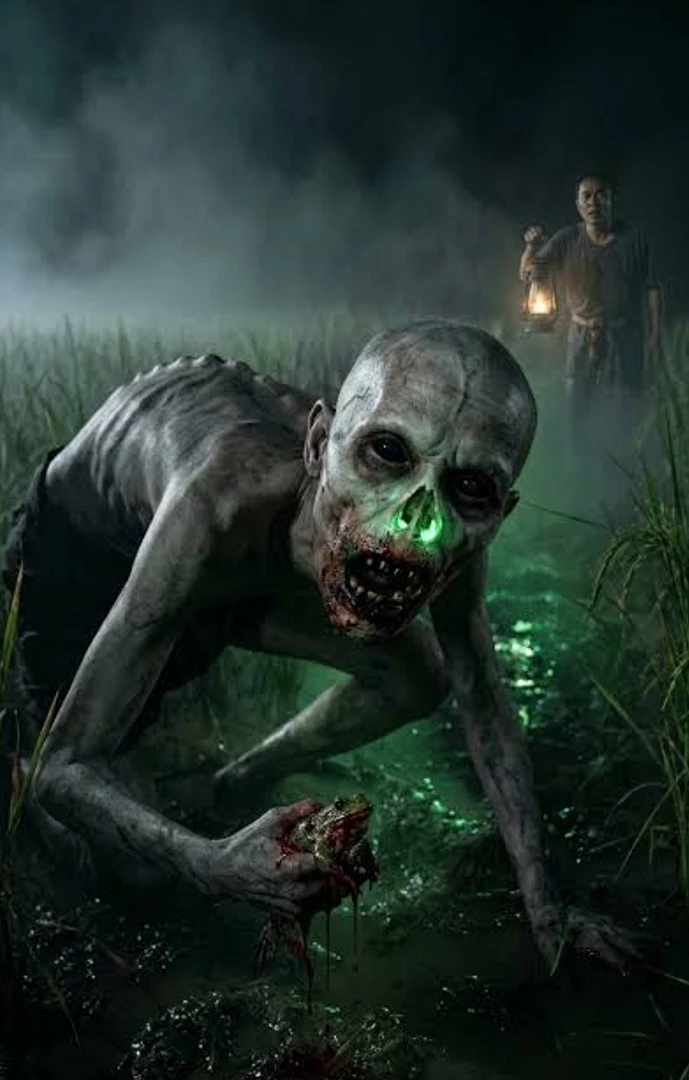
Stories differ when it comes to the origins of this being. Some link it to inheriting a mysterious power, others to practicing witchcraft, while other accounts attribute it to a curse resulting from misdeeds in a previous life.
There’s no scientific evidence to support the existence of this creature, but its legend remains a part of Thai oral tradition, providing rich material for tales of fear and the supernatural.
Interestingly, the legend doesn’t portray 'Phi Phong' as an easily recognizable monster. Instead, it’s depicted as a being that retains its human appearance, making it especially effective at sowing suspicion, anyone who seems odd or behaves unusually could be accused of being the creature.
The show's creators used this idea as a way to connect folklore with dementia, showing how medically explainable changes in behavior can become grounds for suspicion and accusation in a community fearful of spirits and curses.
For those interested in the historical and folkloric roots of this belief, stories of 'Phi Phong' can be found in Lanna tradition, including tales about passing on curses, magical plants, and mysterious lights said to appear over rice fields.
Between Reality and Folklore
Choosing 'Phi Phong' isn’t just a way to add a traditional horror element to the story. It places viewers in the midst of two overlapping conflicts: one between inherited beliefs and evidence-based investigation, and another between memories we can recall and those that may be lost forever.
The director explained that his goal wasn’t to create a typical ghost series, but rather a show that blends mystery and crime investigation with family drama, focusing more on suspicion and doubt than on jump scares.
Psychologically, the series explores how fear can alter people’s judgments. When mysterious events keep happening in a community that believes in evil spirits, rumors can start to seem like facts, and it becomes easy to reinterpret people’s actions and words to fit the prevailing belief.
This can be understood through the concept of confirmation bias, the tendency to seek out information that supports our existing beliefs and to give more weight to evidence that confirms them, while downplaying anything that contradicts them.
The show also highlights an equally important human aspect: the connection between memory, identity, and trust. We come to know others not just by how they look, but through a shared history of memories and experiences. When that history begins to fade for a family member, even the relationships themselves can become unstable.
In this context, the fear in 'The Illusion' takes on a new dimension, it’s no longer just about ghosts. The threat becomes unclear, and it’s hard to tell the difference between reality and belief, or between what actually happened and what memory and myth have reshaped.
That’s what makes 'The Illusion' more than just a story about a disappearance and a criminal investigation. The central question shifts from whether 'Phi Phong' really exists to something deeper:
Is the monster the creature we fear, or the image we create of others in our minds?
About the Author