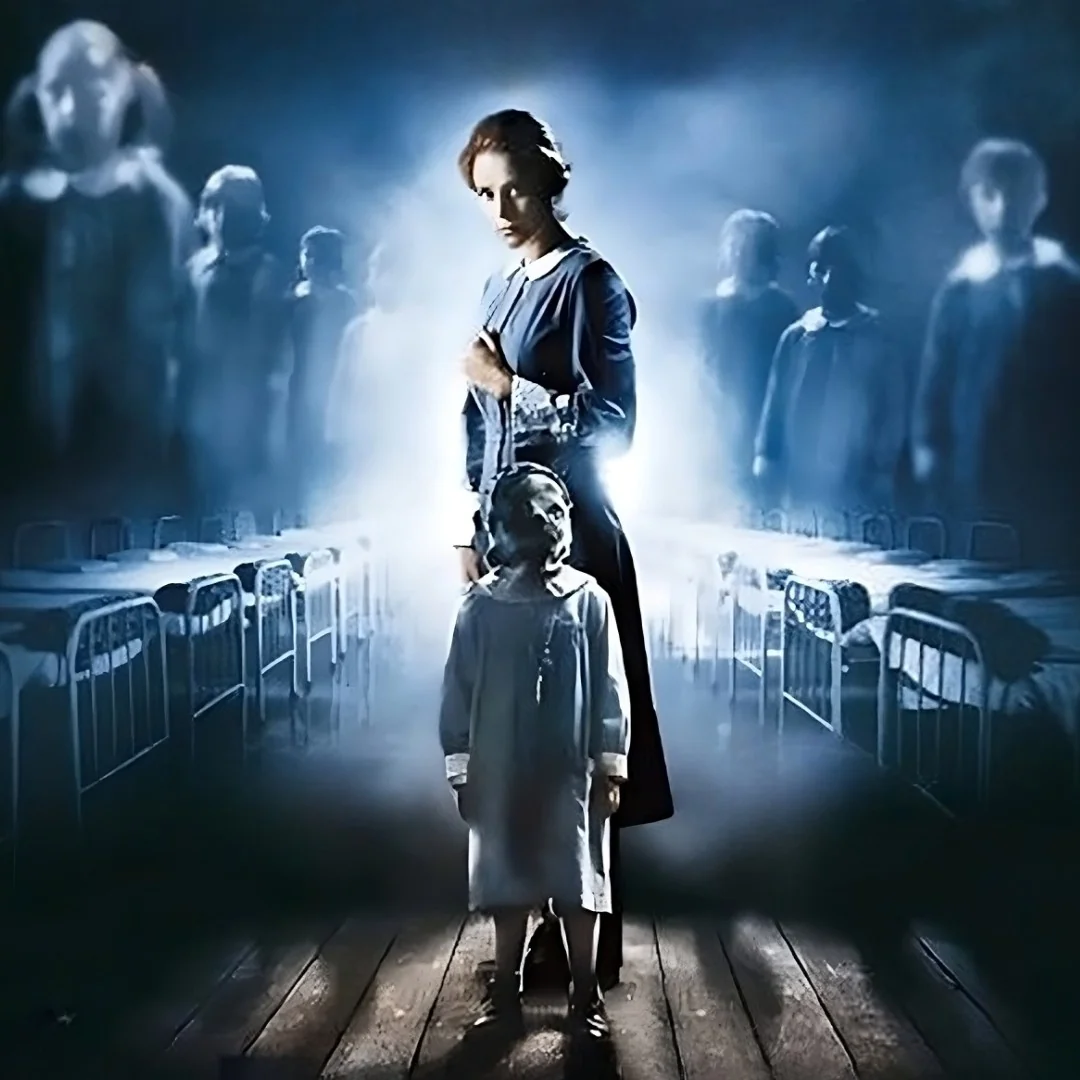
The story begins with Laura García Rodríguez, a middle-aged woman who returns with her husband Carlos and their young son Simón to the orphanage in northern Spain where she grew up thirty years ago. The building, long abandoned, is steeped in history. After years of closure, Laura decides to buy the place and turn it into a home for children with disabilities, hoping to give others the care she herself missed as a child.
But the past doesn’t rest easily. Strange events soon unfold. Simón starts talking about invisible friends he plays with, including one named Tomás, who wears a cloth mask to hide his face. At first, Laura dismisses these stories as a product of her son’s vivid imagination—until the day Simón suddenly disappears inside the orphanage during a children’s party.
Months go by, and Laura becomes obsessed with finding Simón. She hears footsteps in the hallways, knocking on the walls, and sees toys moving on their own. The place she hoped would become a haven of compassion now feels like a gateway between the living and the dead.
In the end, Laura uncovers a tragic truth: Simón was never kidnapped. He died by accident, trapped in a hidden basement room after locking himself inside. Because Laura never stopped searching for him, the spirits of the lost children continued to answer her calls, as if the entire orphanage was trying to confess its old sins.
In the final scene, Laura sits among the ghosts of the children she grew up with, embracing them as she always wished she could in her own childhood. She, too, has become part of the memory that will never leave the orphanage’s walls.
Symbols and Legends in the Story
While the film isn’t based on a specific legend, its atmosphere draws deeply from Spanish folklore, rich with tales of restless spirits, haunted houses, and lost children.
The mask worn by Tomás evokes the image of the outcast or different child in European folklore—someone who hides his face and, in doing so, becomes a shadow, then a ghost seeking recognition.
In Spanish popular memory, as in many cultures, an abandoned orphanage is the perfect setting for horror: a symbol of broken innocence and a refuge for souls that never found peace. In this sense, the orphanage isn’t just a backdrop, but a living entity holding collective sorrow.
Critical Analysis and Artistic Vision
Critics agree that The Orphanage is far more than a conventional horror film. It’s a psychological drama rich in symbolism, using horror as a tool to explore motherhood, guilt, and memory.
Director J.A. Bayona crafts a suffocating atmosphere with careful restraint, steering clear of gore and excess. He relies on dim lighting, the creak of wooden doors, and clever manipulation of time and space to create the sense that everything in the orphanage is watching.
American critic Roger Ebert described the film as "a slow, meticulously crafted work for an audience with deep attention," noting that its power lies in stirring emotion, not just fear. Reviewers at The Globe and Mail argued that the film’s core isn’t horror itself, but the human tragedy of a grieving mother clinging to what’s already lost.
Visually, Bayona’s work recalls the style of Guillermo del Toro—a Mexican director, writer, and producer known for horror and dark fantasy—blending stark realism with supernatural elements. The house becomes a mirror for the human soul, every creaking door echoing an inner voice. It’s no surprise that del Toro himself served as executive producer, believing that Spanish horror can deliver philosophy as well as fear.
The Orphanage isn’t just a ghost story about children—it’s about grief transformed into visual language, and a house that holds the memories of its inhabitants. The film proves that true horror isn’t found in darkness, but in memories that refuse to die and in love that won’t be buried. That’s why The Orphanage remains one of the most powerful Spanish horror films: it doesn’t just scare you, it awakens your own inner ghosts.
About the Author