While American documents about unidentified flying objects continue to capture media attention, the US Forest Service has released three documents related to one of North America's most enduring mysteries: the elusive creature known as Bigfoot or Sasquatch.
These documents were made available on October 15, 2026, through the electronic archive of the Freedom of Information Act. The Denver Gazette later brought them into the spotlight with a report published on November 23, revealing details from investigations and eyewitness accounts spanning several decades.
Three Government Documents
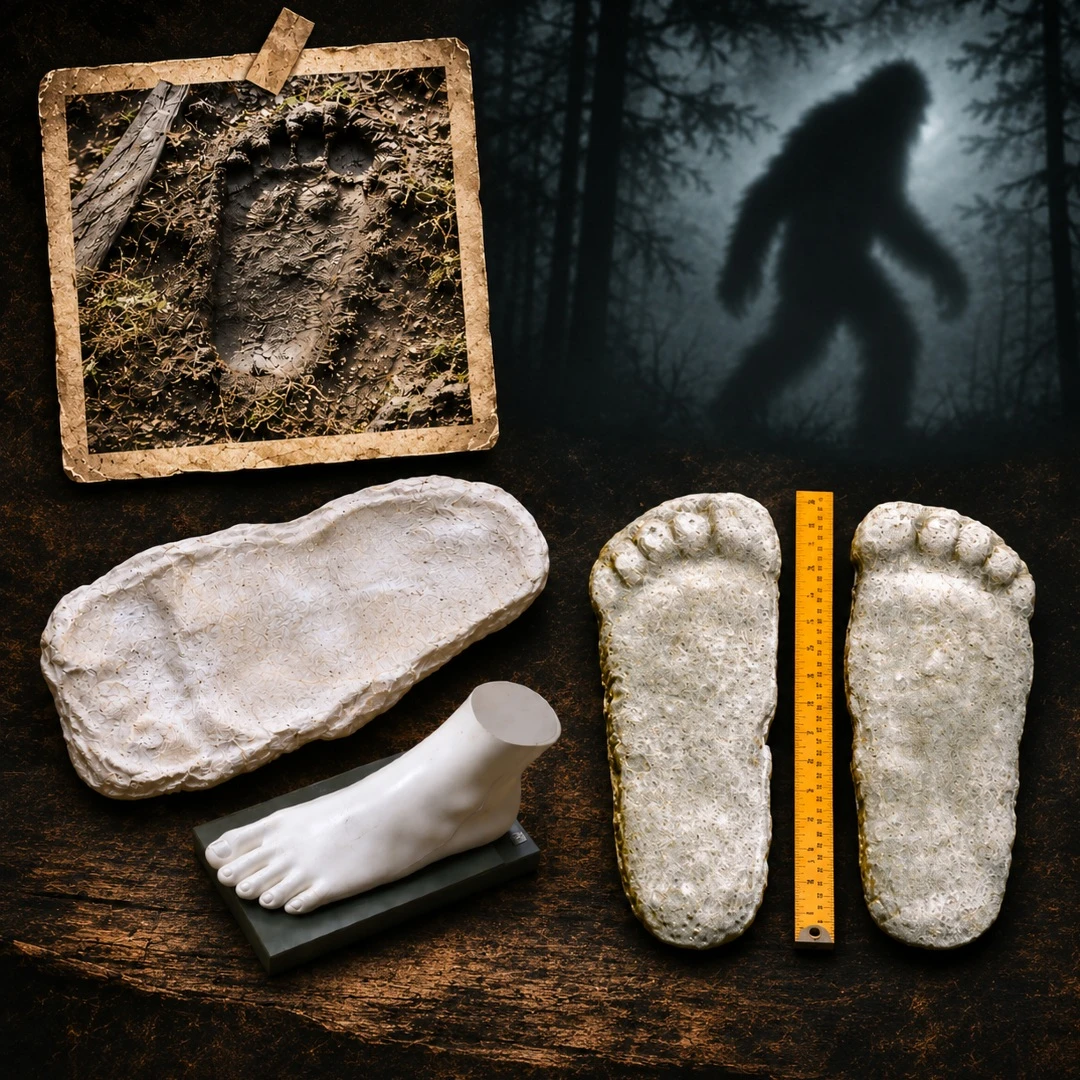
The earliest of the documents dates back to 1980 and includes information and testimonies about possible sightings of the mysterious creature near the Petty Creek area in Montana. Witnesses described finding footprints, hearing strange sounds, and seeing an unknown bipedal figure.
The second document, from 1982, features a report by wildlife specialist Rodney Johnson of the US Department of Agriculture, following a field investigation into mysterious footprints discovered in the Mill Creek area of Washington State.
The third document is a news article from 2003, covering the discovery of enormous footprints in the snow in a rural part of Montana, some measuring up to 41 centimeters long.
Field Investigation of Footprints
The 1982 report stands out as the most intriguing among the published documents. In it, a wildlife specialist examined footprints at two locations, attempting to determine what kind of creature might have left them.
Johnson noted several details that raised his suspicions: the stride length remained consistent despite changes in terrain slope; the prints were surprisingly shallow in muddy soil, given the creature's supposed weight; the tracks began and ended abruptly; and there were no signs of slipping on some steep sections. These observations led him to doubt that the prints were made by a bipedal creature weighing over 300 pounds. Yet, interestingly, he also pointed out that some fine details in the prints appeared natural, suggesting that if they were faked, it would have required significant effort and skill. He even speculated that a mold taken from a real foot might have been used to create the tool that made the prints, though he could not determine exactly how they were fabricated.
A Legend of the Forests
Bigfoot holds a prominent place in North American folklore. Sightings describe it as a large, ape-like creature covered in hair, walking upright on two legs, and living in remote forests—especially in the Pacific Northwest of the United States and western Canada.
For decades, enthusiasts of mysterious phenomena have shared thousands of reports of Bigfoot sightings, along with photos, videos, footprint casts, and hair samples attributed to the creature. However, none of this evidence has provided definitive biological proof accepted by the scientific community.
Do the Documents Reveal Anything New?
The documents released by the U.S. Forest Service do not prove Bigfoot's existence, and their release under the Freedom of Information Act does not necessarily mean they were previously classified.
Their significance lies in showing that U.S. government agencies took reports about this creature seriously enough to have some of the physical evidence examined in the field by wildlife experts.
While the investigation suggests that some of the evidence may have been fabricated, the details that caught the investigator's attention raise questions about how the prints were made. These documents add another chapter to the ongoing search for one of the world's most famous mysterious creatures.
About the Author