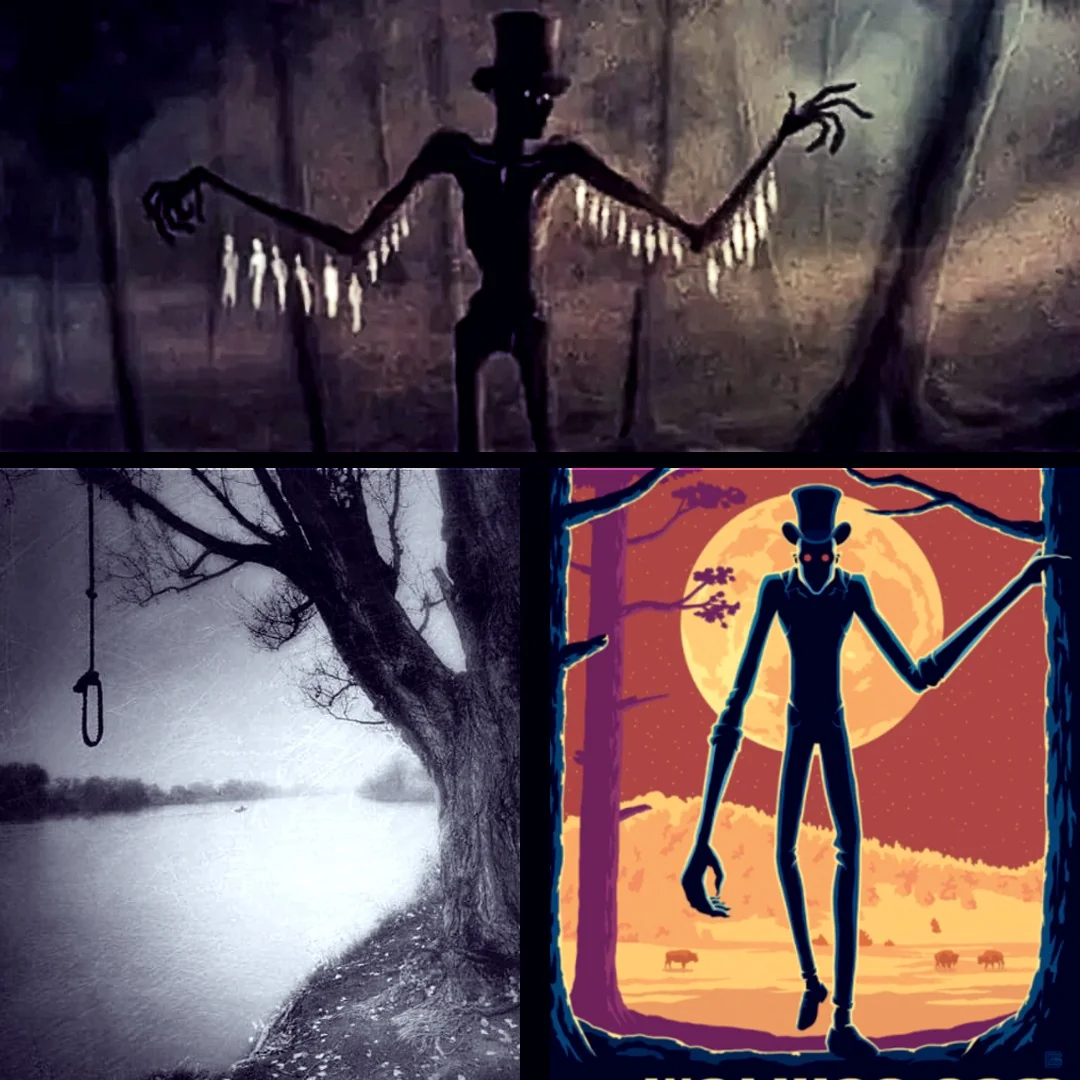
Deep within the Pine Ridge Reservation in South Dakota, one of the most impoverished and marginalized Native American communities in the United States struggles to survive. Here, where echoes of the past blend with present-day pain, a strange legend has taken root: Walking Sam. This mysterious figure is described as unnaturally tall and thin, with no discernible features, always dressed in a dark coat and a tall hat.
According to the stories, he whispers to teenagers, luring them away from this world and convincing them that life is meaningless. He promises that the loneliness they feel will disappear if they join him in another realm.
But what’s the truth behind this legend? Is it just an internet-born myth, or does it reflect a deeper social and psychological tragedy?
Mysterious Origins
Walking Sam is likely a modern extension of older stories passed down by the Lakota and Dakota tribes.
In their traditions, there are tales of spiritual beings known as 'stick people'—roaming spirits that haunt the forests and instill fear. Some sources also mention a figure called the Big Man, whom tribal elders described as a protective spirit, more of a guardian of the land than a malevolent force.
Over time, these stories seem to have blended with influences from digital culture, especially after the rise of the Slender Man phenomenon in 2009. That’s when Walking Sam began to take on his current form: a tall, faceless figure who roams at night, becoming a symbol of fear and despair.
So, the legend isn’t purely a tribal tradition—it’s a mix of old tales and modern imagery born online, adopted by local imagination to explain the unexplainable.
A Wave of Suicides: When Fear Becomes Catastrophe
What brought Walking Sam into the headlines wasn’t his eerie appearance, but his alleged connection to a devastating wave of teen suicides in Pine Ridge.
Between December 2014 and March 2015, authorities recorded 103 suicide attempts among young people—nine of them fatal—in a community of just 40,000. Ropes were found hanging from trees in remote areas, as if left as invitations to death. Rumors quickly spread that Walking Sam was behind it all.
Stories circulated that he appeared at night on the edge of the woods, convincing teens that the world would be better off without them and promising them a place in his world if they followed him. Even police reports noted that social media played a dangerous role in spreading suicide-promoting messages linked to this mysterious spirit.
Tribal leaders, however, warned against focusing solely on the legend. As the president of the Oglala Lakota tribe explained, the real issues are extreme poverty, unemployment, addiction, and cultural isolation. These conditions breed collective despair, creating fertile ground for any myth to take hold. In this context, Walking Sam has become a symbol for a much larger tragedy.
The Symbolism of the Legend: Spirit of Loneliness and Despair
From a psychological perspective, experts believe Walking Sam may reflect what’s known as historical trauma. The Lakota people have endured centuries of displacement and cultural destruction—wounds that are passed down through generations, manifesting as deep, collective pain.
Dr. Maria Yellow Horse Brave Heart, an expert in Indigenous psychology, explains:
"Unresolved suffering becomes a ghost that haunts the community. Walking Sam isn't a real being, but rather a powerful symbol of inherited despair that weighs on the spirits of young people." In this sense, Walking Sam acts as a psychological projection.
The apparition seen by teenagers is really just a reflection of their pain and their longing to escape an unbearable reality. The legend, then, is more than just a scary story—it's a symbolic language that expresses deep pain and inner conflict.
Between Media and the Internet
The legend wouldn't have spread so widely without the internet. Users on platforms like Reddit and TikTok began sharing images and drawings of the tall man, along with stories told in the style of "creepypasta."
These posts gave the legend a global reach and directly linked it to Slender Man, causing it to go viral among teenagers.
But the media played a double-edged role:
On one hand, it brought attention to the crisis and alerted authorities to the suicides.
On the other hand, it amplified the image of Walking Sam to the point where some news reports focused on the legend as much as on the real causes of the crisis.
Comparisons with Similar Legends
Walking Sam isn't unique in this type of folklore. He's closely related to Slender Man, a character that originated online in 2009 and became the center of a notorious criminal case in Wisconsin, where two girls attacked their friend under the influence of the legend. Both figures are tall, faceless, and operate through psychological suggestion and manipulation.
There are also similarities to stories about "Stick Indians" in other North American cultures—mysterious, stick-like creatures said to live in forests and frighten people.
These parallels suggest that Walking Sam is part of the broader "tall man" mythos found in many cultures, from the European Bogeyman to tales like "Abu Rajul Masloukha" in Arab folklore.
Why the Name Sam?
There's no definitive source explaining why the name "Sam" was chosen. In American culture, Sam is often used as a generic name, much like "John Doe" or "Joe Bloggs." For example, "Uncle Sam" is a symbol for the U.S. government, not a real person. So, the name "Sam" here may have been picked simply to give the figure a basic human identity, making it even more unsettling because it feels familiar.
When Loneliness Takes the Shape of a Ghost
Walking Sam may be nothing more than a product of imagination, but it's a dangerous one. Whether he's a mythical creature or just an internet-born story, he has become a powerful symbol of a people's tragedy. He reminds us that some monsters don't live in the woods—they live in our minds and collective memory. To defeat them, we must first face the truth and reach out to those standing at the edge of darkness.
About the Author