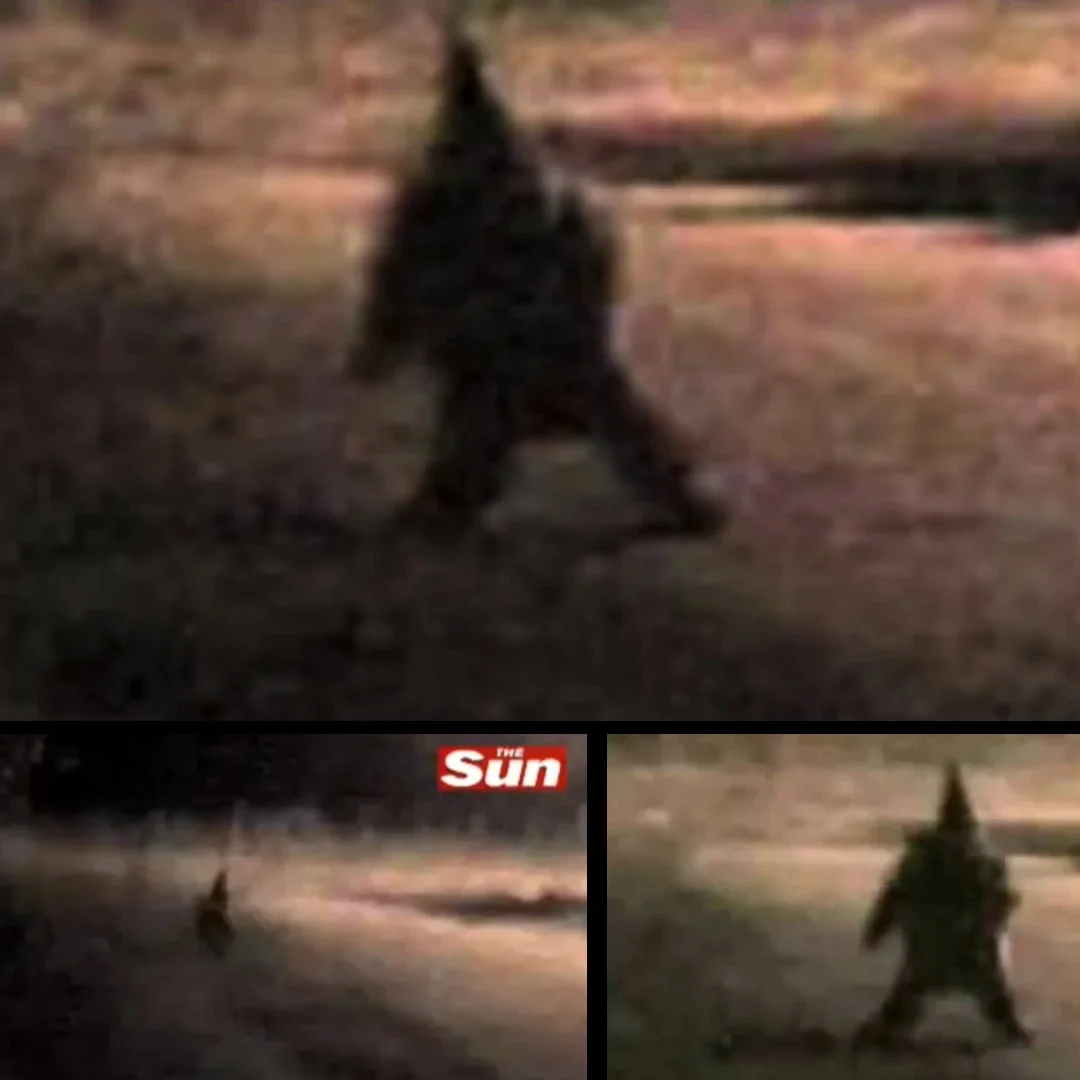
In the spring of 2008, a short video swept across the internet, showing a small, strange creature wearing a pointed hat and walking sideways down a dark street in Argentina. The story first appeared in the local newspaper El Tribuno, but quickly went global after being picked up by British outlets like The Sun and American media such as Fox News. This was the birth of one of the most intriguing urban legends of the early 21st century: the 'Argentine Goblin,' later dubbed the 'Creepy Gnome' by Western media.
Was the creature in the video truly something supernatural, or was it an elaborate hoax that played on our collective fear of the unknown?
In this investigation, we examine the facts, claims, and theories—from the archives of Argentine journalism to Western media coverage—to trace the story from its origins to its rise as a global digital phenomenon.
The Birth of a Legend
The incident took place in the city of General Guemes, in the Salta province of northern Argentina. According to witnesses, a group of teenagers were out late at night when they heard strange noises behind them. One of them pulled out a phone and started recording.
The video shows a short figure moving sideways with quick steps. Suddenly, the teens scream and run, and the recording cuts off abruptly.
Local newspapers described the creature as a 'strange dwarf wearing a conical hat,' noting that residents were so frightened they avoided going out at night.
Within days, international media picked up the story. The video spread rapidly on YouTube, racking up over a million views in just two weeks. The small town became the focus of global attention, with media crews flocking in search of the truth, and the name 'Salta Goblin' began appearing in European and American headlines.
The Image That Sparked the Frenzy
The image that went viral worldwide (and is republished here for investigative purposes) is a still frame from the original video, showing a small figure moving along a dirt road at dawn.
Alongside it were caricatures drawn by a local resident based on witness descriptions, depicting a small, bearded creature with a fierce face and a pointed, horn-like hat.
Together, the video still and the drawing became the visual symbol of the legend, appearing in nearly every article on the subject between 2008 and 2011.
A Second Wave of Sightings... and Chaos
In late 2008, the story resurfaced with a second video from the same area. The new footage allegedly showed the creature reappearing near a soccer field, making shrill noises and leaping between trees.
The story was covered again by The Sun under the headline:
“Creepy Gnome returns: terrifying dwarf haunts town again”
Within a few months, new videos began circulating from other countries—some from Central America, others from Eastern Europe—showing nearly identical scenes: a short creature moving sideways along a street at night.
With each new video, the same explanations—and the same sense of fear—resurfaced.
How the story was reported in the Arab press
After the story faded from global headlines, it suddenly reappeared in March 2011 when Kuwait's Al-Rai newspaper published a report on its website, citing foreign news agencies and websites. The article claimed that a 'dwarf goblin' had resurfaced in the Argentine town of Sancho Corral after an absence of nearly two years.
According to the report, the creature attacked several people at night, assaulting them physically. The 'local police' were said to have created a caricature sketch describing its features: short stature, a pointed hat, and a long, thick beard—despite there being no official police reports to support this.
The article stated that a 14-year-old boy was among the victims, and that a local resident managed to film a new video of the goblin and upload it online, where it was viewed by millions around the world.
The newspaper also reported that authorities had received a series of complaints from residents about similar attacks, prompting the police to issue a public warning out of concern for further incidents.
This report reignited interest in the legend after it had faded, with some calling it the return of the Argentine goblin, while others saw it as a continuation of the same viral phenomenon that began in 2008, now repackaged by the media.
The source of the video mentioned in Al-Rai's report was never identified, and no Argentine newspaper found any evidence to confirm that these incidents actually took place. This suggests that the 2011 story was simply a recycled version of the internet legend, retold in a new form.
Scientific analysis
A review of original Argentine sources—especially El Tribuno and Diario Panorama—found no official police reports or documentation of the alleged attacks.
Major Argentine news outlets stopped covering the story after 2008, indicating that the case faded locally even as it continued to spread internationally through Western media.
A 2008 investigation by the American fact-checking site Snopes concluded that the story was 'unproven and likely fabricated,' suggesting the video was probably a prank staged by teenagers using either a short person or a small doll.
Others explained the footage as a combination of poor lighting and camera shake, which made a human shadow appear to be a distorted creature.
Amid these theories, some saw an opportunity for humor, leading to the creation of 'dancing goblin' memes and video games inspired by the image of an evil dwarf.
Cultural impact: from legend to digital memory
Even though the story has likely been debunked, it refuses to die.
More than a decade after the incident, the original videos are still being reposted and featured in 'strangest unexplained clips' compilations on YouTube and Reddit.
In 2020 and 2023, users brought the scene back on TikTok under the hashtag #RealGnome, often adding a tongue-in-cheek caption:
“They are real… the gnomes are coming.”
(They're real... the gnomes are coming.)
The 'Argentine Goblin' has become a symbol of digital weirdness—a case study in how rumors can evolve from a blurry phone clip into a global legend that refuses to fade away.Between the Goblin and Artificial Intelligence
With the rapid advancement of generative AI, it's now possible to create high-definition videos or images that look incredibly real. Modern mythmakers no longer need shaky or blurry footage to convince people of the supernatural; they can generate fully animated creatures with realistic lighting and shadows in just minutes.
This shift makes it difficult—even for experts—to tell the difference between genuine documentation and AI-generated content. In the coming years, we may see a new wave of convincing visual phenomena that are, at their core, digital illusions designed to fool both the eye and the mind.
What began two decades ago as a grainy video of a goblin on an Argentinian street could soon return in a far more polished and convincing form—though perhaps even more misleading.
In the end, the story of the 'gnome goblin'—caught somewhere between fact and folklore—stands as a testament to the power of collective imagination in the internet age.
From a dusty street in Salta to screens around the world, just a few seconds of blurry footage were enough to create a mythical creature that feeds on humanity's fear of the unknown.
This goblin may not be real, but its cultural impact certainly is—a lesson in how digital networks give rise to modern legends.About the Author