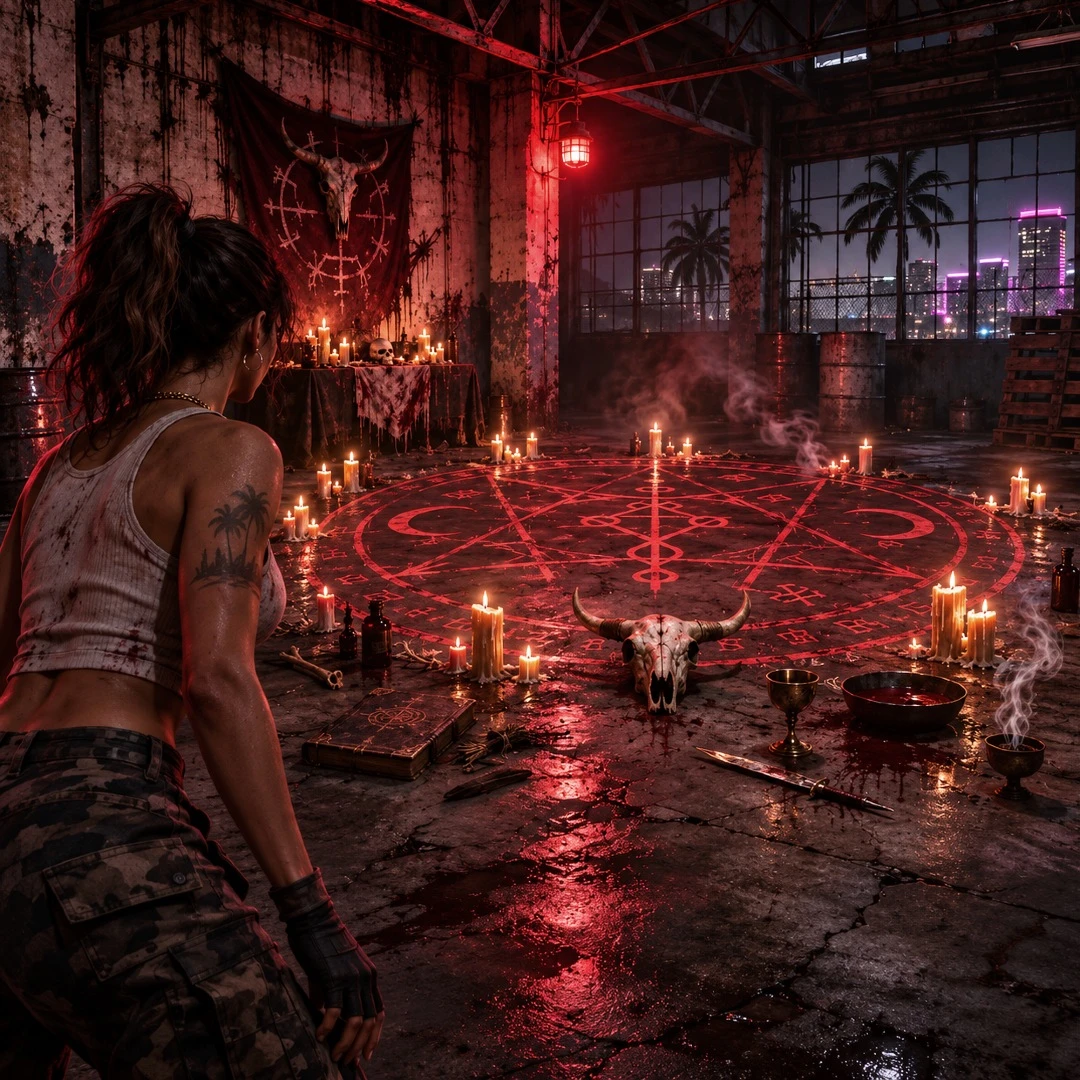
With the release of GTA 6 on November 19, 2026, millions of players dove into its virtual world. But beyond the familiar crime and high-speed chases that define the Grand Theft Auto series, players began uncovering scenes and secrets that venture into the realm of occult rituals, demonic entities, and supernatural phenomena.
These discoveries have reignited questions about a modern phenomenon known as 'Technomagic': Could video games become more than just entertainment and serve as a platform for practicing occult rituals even if only in a virtual sense?
Mysterious Rituals in GTA 6
On November 22, 2026, the horror-focused website Bloody Disgusting published a report detailing several secrets players had uncovered in the game. Among them was an abandoned warehouse featuring a pentagram drawn on the floor, surrounded by candles, along with an altar and a book referencing a mysterious ritual. Players aren’t just passive observers, they can actually participate in a simulated human sacrifice ritual, which is followed by a demonic possession event within the game. Other discoveries include ghost sightings, strange creatures, and even alien abductions.
These elements aren’t entirely new to the series. GTA 5, for example, featured fictional secret societies like the Epsilon Program, as well as the long-standing mystery of Mount Chiliad, which kept the gaming community busy for years as they tried to decipher its hidden symbols.

What is Technomagic?
Technomagic refers to the use of modern technology in magical and occult practices, where digital tools sometimes replace traditional ritual objects. This can include designing magical symbols digitally, conducting group rituals in virtual worlds, using algorithms for divination, and treating digital characters or entities as symbols with spiritual significance.
This trend is connected to contemporary practices like Technopaganism and Chaos Magick, both of which are known for their flexibility in creating rituals and borrowing symbols even from fiction and pop culture.
When Players Become Participants
The key difference between video games and movies lies in the level of interaction. In a film, viewers watch someone perform a magical ritual; in a game, players actively carry out the steps and make choices needed to complete the ritual within the virtual world. As virtual reality and audiovisual effects become more advanced, the sense of immersion and participation grows stronger. Hiding these rituals behind puzzles and secrets also sparks curiosity, encouraging players to explore the meaning and history behind the symbols, sometimes leading them to books and occult practices they might not have encountered otherwise. Still, simulating a magical ritual in a game doesn’t necessarily mean players believe in it or practice it in a religious or spiritual sense.
What do academic studies say?
In 2025, researcher Andrej Kapcár from Masaryk University in the Czech Republic published a study titled "Digitizing Visual Culture in Modern Spirituality: How Video Games Became a Gateway to the Occult." In another paper, "Virtual Magic," Kapcár explored how game designers draw on historical sources of magic, including the book Ars Goetia and the teachings of Aleister Crowley, as well as esoteric groups like the Hermetic Order of the Golden Dawn.
Interestingly, the influence goes both ways: some contemporary practitioners of magic have adopted symbols and rituals originally created by game designers, incorporating them into their real-world practices.
In 2023, a study published in the journal Religions examined the phenomenon of techno-paganism, highlighting how video games and 3D virtual platforms are being used as spaces for spiritual beliefs and rituals by certain groups and individuals. This blending of magic and digital fantasy has become a cultural phenomenon worthy of academic attention, rather than just a matter of symbolic resemblance.
Magic disguised as entertainment?
Some argue that including magical rituals in games can help normalize them culturally and break down psychological barriers, especially among younger players, when these rituals become part of the adventure, discovery, or a way to earn virtual rewards.
Others believe that the use of magic and occult symbols is simply a tool to enrich storytelling and add mystery and excitement, much like the use of mythology in literature and film. It also has commercial value, sparking debate and increasing engagement among players.
So far, there is no credible evidence that Rockstar Games is using GTA 6 to encourage players to practice real-world magic, nor is there scientific proof that performing virtual rituals leads to supernatural effects.
Still, the rise of techno-magic and the blending of occult practices with digital culture raises a broader question: if technology can simulate spiritual and magical rituals in immersive, interactive ways, will these rituals remain just entertainment, or could virtual worlds become new spaces for beliefs and practices once limited to the real world?
About the Author