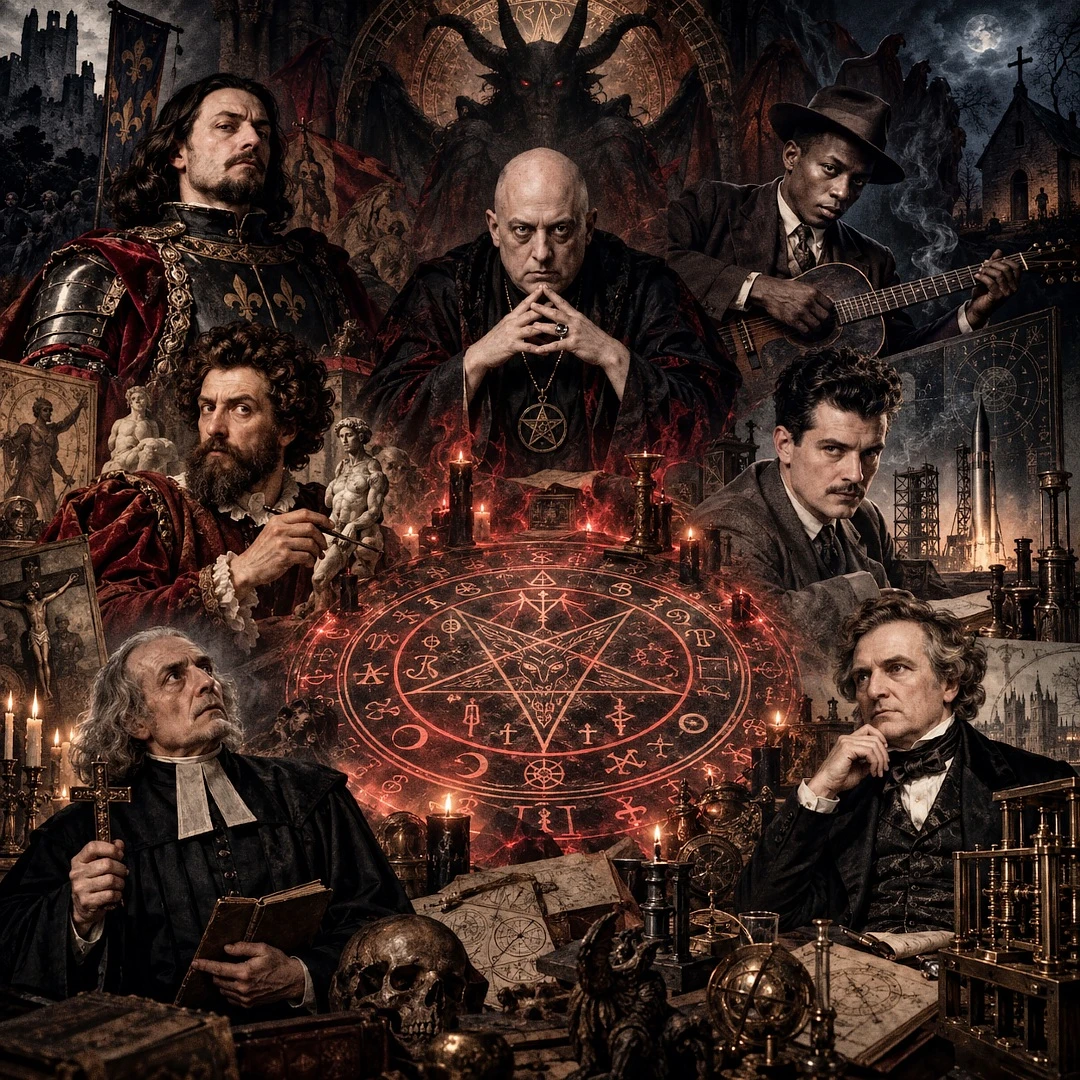
What drives someone to try to summon the devil ? For some, the answer is money; for others, love, power, or knowledge. There are those who simply want to see with their own eyes if the being they've heard about since childhood really exists. Across centuries and continents—from dark castles and ancient Roman arenas to the Algerian desert and the roads of Mississippi, the same story has played out in different forms: a person draws a line between themselves and the unknown, then calls out to something they believe waits on the other side.
What's even more surprising is that some of the people at the center of these stories weren't obscure figures. Among them: a French military leader, one of the Renaissance's most famous artists, a pioneer of modern computing, and a rocket scientist whose experiments paved the way for space exploration.
But did these people really try to summon the devil? Did anything actually appear? Or did history blur the lines between demons, spirits, and occult entities, with legend later filling in the gaps?
1. Gilles de Rais: Searching for Gold in the Realm of Demons
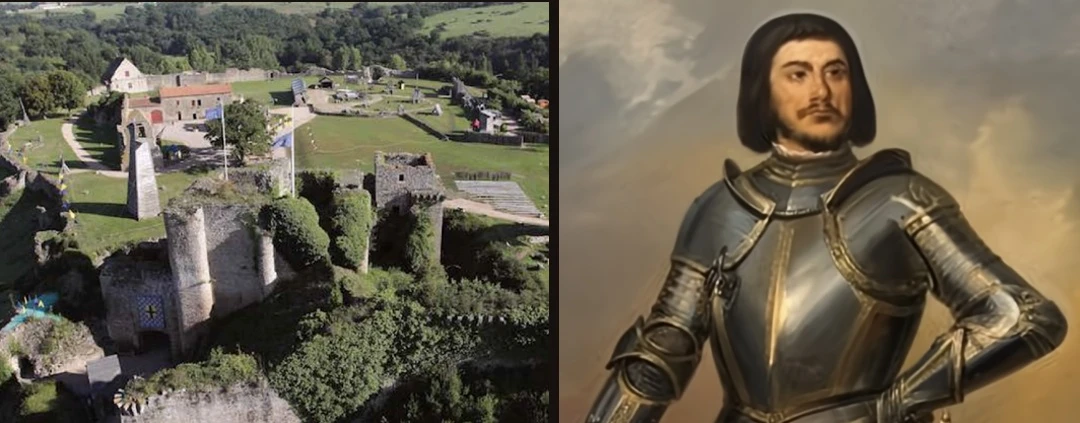
In late 15th-century France, Gilles de Rais knew glory, war, and wealth. He fought alongside Joan of Arc, held the rank of Marshal of France, and lived an extravagant aristocratic life. But his fortune began to dwindle, and the man who once owned vast lands and castles started searching for a way to reclaim what he'd lost. That's when the Italian François Prelati entered his life. Prelati presented himself as an expert in alchemy and spirit summoning, and de Rais saw him as a gateway to riches beyond what trade or war could offer. In Tiffauges Castle, they attempted to summon an entity referred to in records as 'Barron.'
The scene had all the hallmarks of ceremonial magic of the era: symbols, circles, incense, fire, and incantations. The request was clear, money, knowledge, and power. But Barron never appeared before de Rais.
They kept trying, moving some sessions to Bourgneuf-en-Rais. In the end, according to his trial records, de Rais wrote a pact addressed to the entity, signing it in his own blood and offering obedience in exchange for his life, soul, and the things he desired.
Ironically, another confession attributed to him would become more significant than all the horror stories that later surrounded his name: he said he attended two or three attempts to summon demons, but never saw or heard one.
2. Benvenuto Cellini: When the Colosseum Filled with Demons
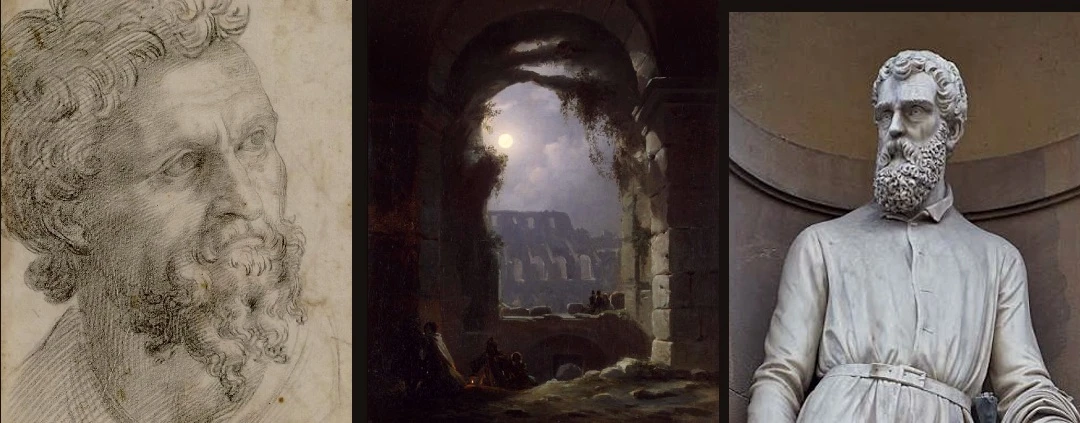
In 16th-century Rome, Benvenuto Cellini was renowned as one of the Renaissance's greatest goldsmiths and sculptors. But his autobiography reveals a very different side of his life. Cellini recounts meeting a Sicilian priest versed in what was then called the arts of spirit summoning. The conversation piqued his curiosity, and he admitted he'd always wanted to witness something from that world himself. One night, they headed to the perfect setting for such a tale: the Colosseum in Rome.
The ancient building was nearly deserted. As night fell, the priest performed a ritual in the arena, drawing boundaries on the ground, lighting a fire, and using incense and aromatic substances before calling out to the spirits.
After a while, Cellini says, the atmosphere changed. Shapes began to appear around them until it seemed to him that the Colosseum was filled with 'legions of demons.' But Cellini wasn't there to ask for gold. When the priest prompted him to state his wish, Cellini asked the spirits to reunite him with a Sicilian woman he loved named Angelica.
He didn't get what he wanted that first night, so he returned for a second attempt. According to his account, the second session was even more terrifying. This time, they brought a young boy, and as smoke filled the air, the child described frightening figures and giants trying to approach. Cellini admits he was terrified, though he tried to hide it from the others. He was told his wish would come true and that he'd be with Angelica within a month. Strangely, this story doesn't come from the records of his enemies' trials; Cellini himself wrote it in his autobiography.
3. Étienne Guibourg: Summoning Demons to Save the King of France's Love
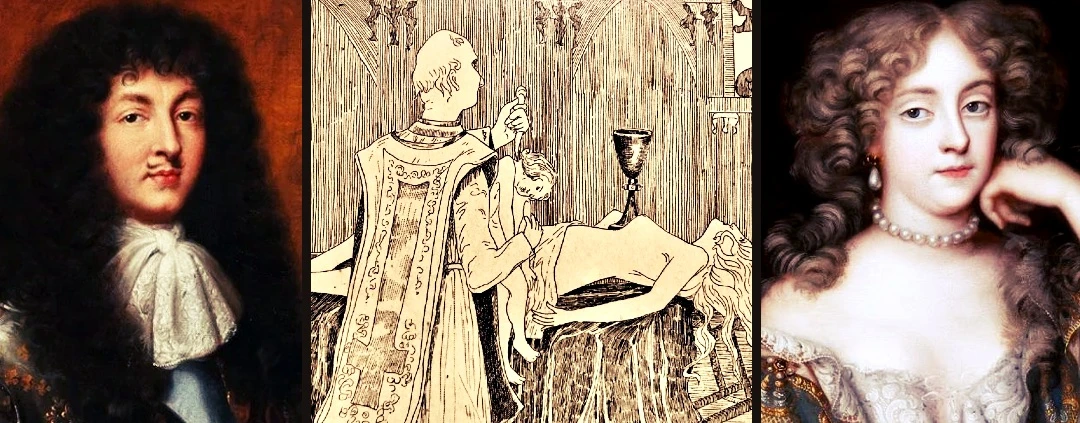
More than a century later, the scene shifted to a very different setting: the court of Louis XIV. Madame de Montespan was one of the most famous mistresses of the French king and among the most influential women at court. But being close to the king also meant living in constant fear that another woman might take her place.
In this world of fierce competition and intrigue, a woman known as La Voisin emerged, her name becoming synonymous with fortune-telling, poisons, and witchcraft. Alongside her appeared an elderly priest named Étienne Guibourg.
Testimonies from the infamous Affair of the Poisons investigation claim that Guibourg performed rituals for Madame de Montespan around 1672–1673.
According to these accounts, the religious ceremonies took a dark turn, invoking entities such as Astaroth and Asmodeus. The requests made to them centered on keeping the king’s love and ensuring Montespan retained her status and influence.
Some stories even describe the woman’s own body being used as an altar during these rites, with blood sacrifices and even darker acts. Despite the horror surrounding these events, the core desire was simple: to keep the heart of the most powerful man in France devoted to one woman.
4. Charles Babbage: The Child Who Wanted to Prove the Devil’s Existence
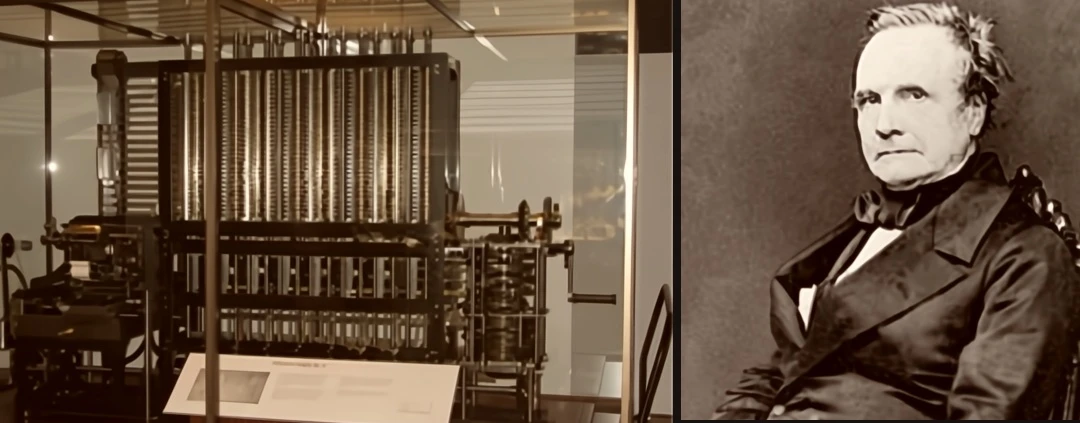
Perhaps the most unusual figure on this list is Charles Babbage, the British mathematician and inventor best known for his work on the mechanical calculator. He is often called one of the intellectual fathers of the modern computer.
But before machines and mathematics, there was a strange childhood experiment that stayed with him for life. As a boy of about ten, Babbage, like many children of his era, heard tales of ghosts and the devil. He began to wonder: what if these stories were just illusions people used to scare each other?
He gathered what older boys knew about the supposed ways to summon the devil.
Then he decided to try it himself. At sunset, he climbed into an abandoned attic, drew a circle with blood from his finger, stood inside it, and followed the steps the others had described. Then he waited.
He stared at the window and chimney, expecting something to appear: a black cat, a raven, an owl, or the cloven-hoofed man from the stories.
No one appeared. What makes Babbage’s story unique is that he wasn’t seeking power, money, or a pact. He later wrote that his only goal was to convince his senses that the devil truly existed.
In its own strange, childlike way, it was an experiment to test a hypothesis. Ironically, the boy who tried to put one of his era’s most terrifying superstitions to the test would go on to dedicate his life to logic, mathematics, and machines.
5. Aleister Crowley: A Confrontation in the Algerian Desert
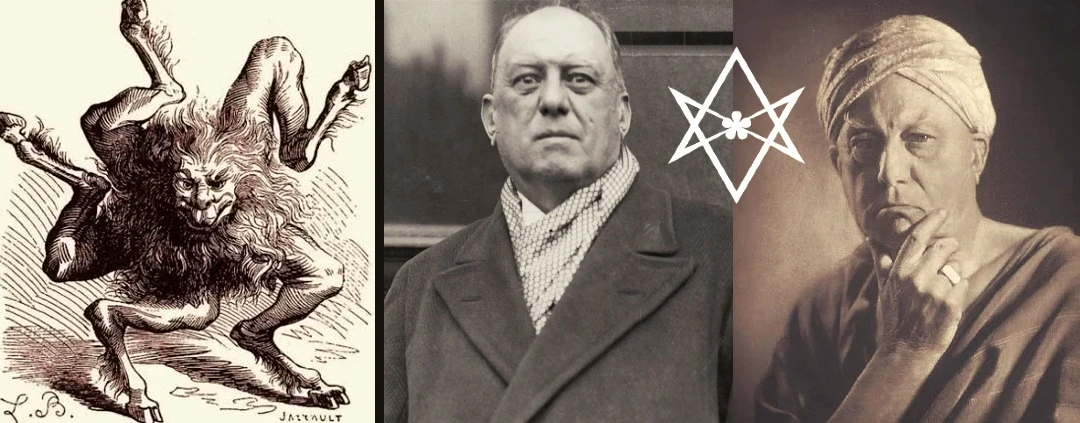
In December 1909, the famous British occultist Aleister Crowley was traveling across North Africa with the poet Victor Neuburg. They reached the Bou Saâda region of Algeria, where the vast desert stretched out before them—a remote place, far from any city, perfect for conducting an experiment away from prying eyes.
At that time, Crowley was working on a series of experiments related to Enochian magic He referred to these as the Aethyrs, spiritual realms or levels within his esoteric system.
But one of these experiences stood out. On December 6, 1909, the name Choronzon entered the picture: a being Crowley associated with chaos, confusion, and the 'Abyss' , a spiritual trial that seekers must confront and overcome.
The ritual took place in the desert. Neuburg played a role in the ceremony and documented what happened, while Crowley approached the event as a confrontation with a force that shouldn't be seen as a typical demon, but rather as the embodiment of chaos resisting humanity's ascent to a higher spiritual state.
Later stories made it sound like a man stood in the desert trying to summon one of the most dangerous demons. Crowley's own writings, however, place the experience within a broader project that began in Bousaada and continued in the desert between Bousaada and Biskra during November and December 1909.
6. Robert Johnson: The Man Who Sold His Soul at the Crossroads
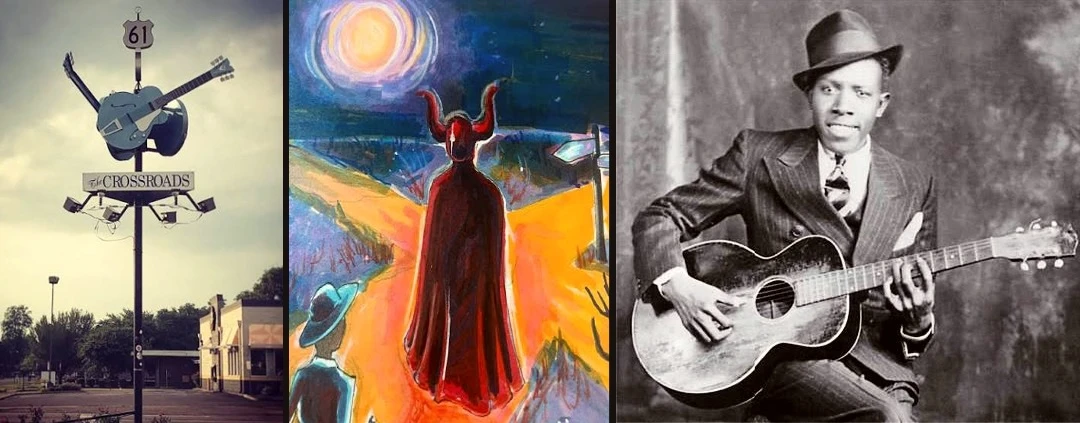
This time, there’s no castle, no magic circle, and no wizard in ceremonial robes—just a lonely road in Mississippi, a young guitarist, and a mysterious man waiting at the crossroads. In his youth, Robert Johnson was an unremarkable musician, even mocked by older players. Then he disappeared for a while.
When he returned, everything had changed. His guitar skills had improved so dramatically that those who knew him suspected something supernatural had happened. And so, one of America’s most famous musical legends was born.
According to the story, Johnson went to the crossroads at midnight, where the devil appeared as a mysterious man. The stranger took Johnson’s guitar, tuned it, played a few notes, and handed it back. From that moment, Johnson possessed extraordinary talent.
The price? His soul.
Over the decades, the intersection of Highways 61 and 49 near Clarksdale became forever linked to the legend. Johnson’s short life, his death in 1938, and his songs filled with devilish references only fueled the myth.
He wasn’t after gold or a king’s love, but the greatest wish any musician could have: the talent that would make him immortal.
7. Jack Parsons: The Rocket Scientist
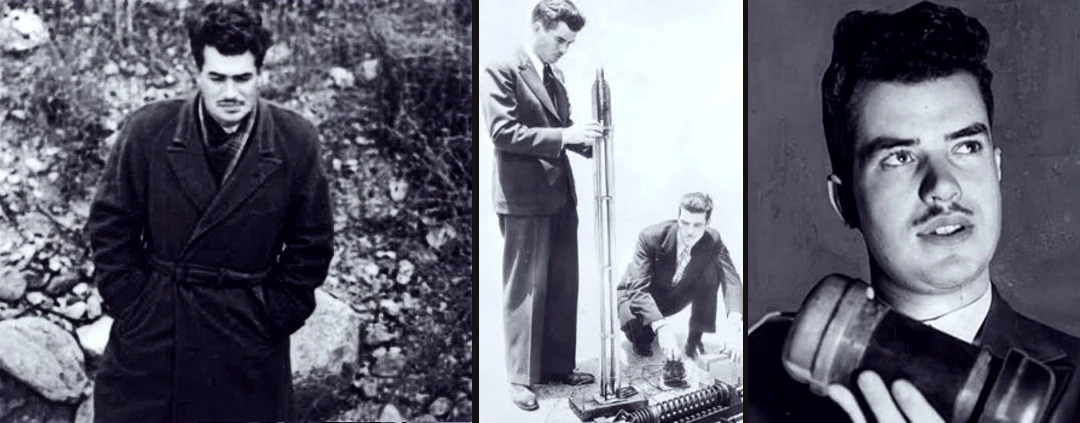
In the first half of the twentieth century, a man emerged who embodied two worlds rarely seen together.
Jack Parsons was an engineer, chemist, and a pioneer in developing rocket fuel in the United States. His research became part of the history of the Jet Propulsion Laboratory.
But in his other life, Parsons was deeply involved in the ideas of Aleister Crowley and the Thelema movement. In 1946, he teamed up with science fiction writer L. Ron Hubbard for a series of rituals later known as the Babalon Working.
The first phase took place in Pasadena and its suburbs, running from January to March. Even by the standards of modern Western occultism, the goal was unusual: Parsons wanted to summon a mystical feminine force called Babalon and reach a point where this force could manifest in or through a woman.
The rituals drew on elements from Enochian magic and Crowley’s system. As the weeks passed, Parsons became convinced that the events around him were starting to respond to his efforts.
When a woman named Marjorie Cameron entered his life, Parsons took it as a sign that the first stage of the ritual had succeeded.
Parsons was far from a fringe figure disconnected from modern science. By day, he worked with rockets, explosions, and equations; by night, he explored forces he believed could transform both humanity and the world.
A 2016 academic study published in the journal Numen examined this episode as a series of rituals performed by Parsons and Hubbard, aimed at summoning and embodying Babalon.
Did these people actually try to summon the 'devil'?
The sensational phrase 'summoning the devil' actually covers a wide range of very different experiences, and it's historically inaccurate to lump them all together.
In the case of Gilles de Rais, we have confessions and trial records that clearly mention summoning demons, listing the names of demons, the locations of the rituals, and de Rais's goals. Importantly, de Rais himself stated he never saw or heard the entity he tried to summon. Still, it's crucial to remember that this material comes from a 15th-century trial, a context that can't be treated the same way as a modern, independent testimony.
For Benvenuto Cellini, our main source is Cellini himself. We have strong evidence that he described a summoning experience, but no independent proof that the 'hordes of demons' he wrote about actually appeared. Later commentators have suggested that fear, smoke, psychological expectation, or even optical illusions could explain what participants thought they saw.
The story of Étienne Guibourg and Madame de Montespan is even more complicated. The information comes from the Poison Affair investigations, with confessions and testimonies—some extracted under harsh judicial conditions. Researcher Joseph Laycock notes that while some events may have happened, the most shocking details could be products of confessions, imagination, and fear. The rituals themselves weren't necessarily 'devil worship' in the modern sense, but rather a mix of spirit summoning, distorted religious rites, and sexual magic.
Charles Babbage is perhaps the clearest case in this group: as a child, he did try to make the devil appear—he told us so himself. But he came away empty-handed, and the failure of the attempt only fueled his skepticism toward the superstitions he'd heard.
With Aleister Crowley, terminology becomes an issue. Choronzon is not the same as Satan in the Christian sense; it's an entity or principle within a specific esoteric system. So, saying Crowley went to Algeria to 'summon the devil' is a catchy phrase, but it oversimplifies a much more complex experience.
This is even more true for Jack Parsons. Babalon is not the devil at all, but a symbolic figure or force within Thelema. The idea of 'summoning the devil' mainly comes from popular culture, which tends to lump most modern Western magic together.
Then there's the story of Robert Johnson, which is the least documented but most influential in popular culture. There's no statement from Johnson himself claiming he met the devil or performed a summoning ritual. Historically, we know he disappeared for a while, trained with other musicians, including Ike Zinnerman, and returned with a strikingly improved style. The famous crossroads deal belongs to the realm of blues folklore.
Why do people keep trying to summon what they fear?
Despite their differences, these stories share one striking feature: in most cases, the devil or summoned entity wasn't the ultimate goal, but rather a means to fulfill a human desire.
Gilles de Rais wanted wealth and power; Cellini wanted the woman he loved; those who sought Guibourg's services wanted love and influence; Babbage sought knowledge and certainty. Crowley wanted to push the boundaries of his spiritual experience; Robert Johnson, according to legend, wanted musical genius; Parsons imagined a force that could transform humanity and the world.
From a distance, these tales of summoning the devil seem less about the devil himself and more about human longing.
In nearly every era, there have been those who believed that beyond the visible world lies a power you can bargain with one that can grant money, love, knowledge, or talent, if only you know how to knock on the right door.
But the history of these attempts leaves us with one final paradox: we have circles, symbols, confessions, diaries, trial records, and entire books about those nights. We have people who swore they saw things they couldn't explain.
The one thing we still don't have is independent evidence that anyone, upon knocking on that door, actually found someone answering from the other side. Maybe people don't turn to the devil because they trust him more than God, but because they're looking for a shortcut to what they desire. Faith teaches patience and waiting; temptation promises you can have it, if you're willing to pay the price.
About the Author