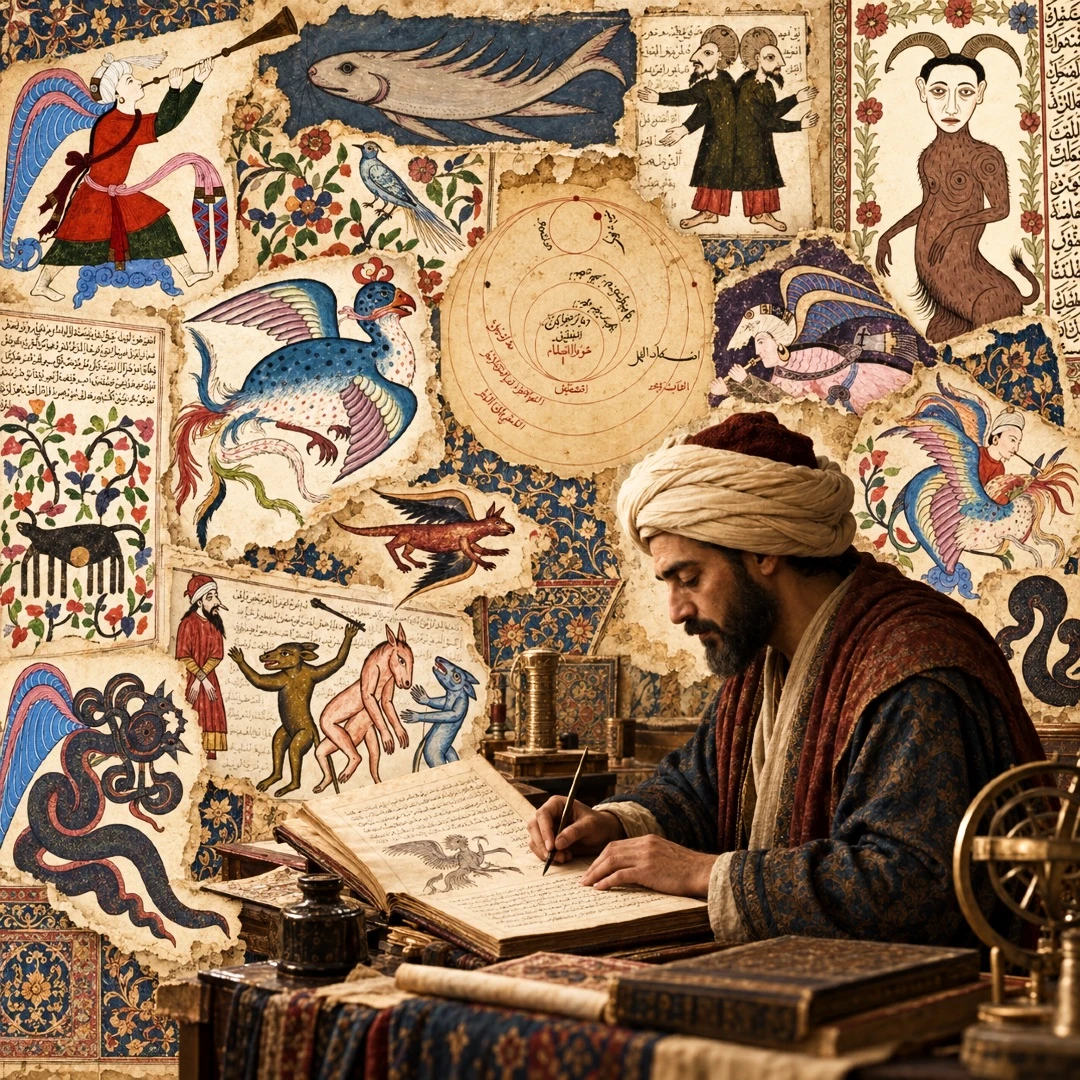
More than seven centuries ago, a reader could open a single book and find everything from the movements of the planets, the properties of minerals, and the mysteries of the seas, to human anatomy and the behavior of bees. Just a few pages later, they might encounter tales of phoenixes, dragons, jinn, demons, islands inhabited by people with the faces of dogs, and sea creatures beyond imagination.
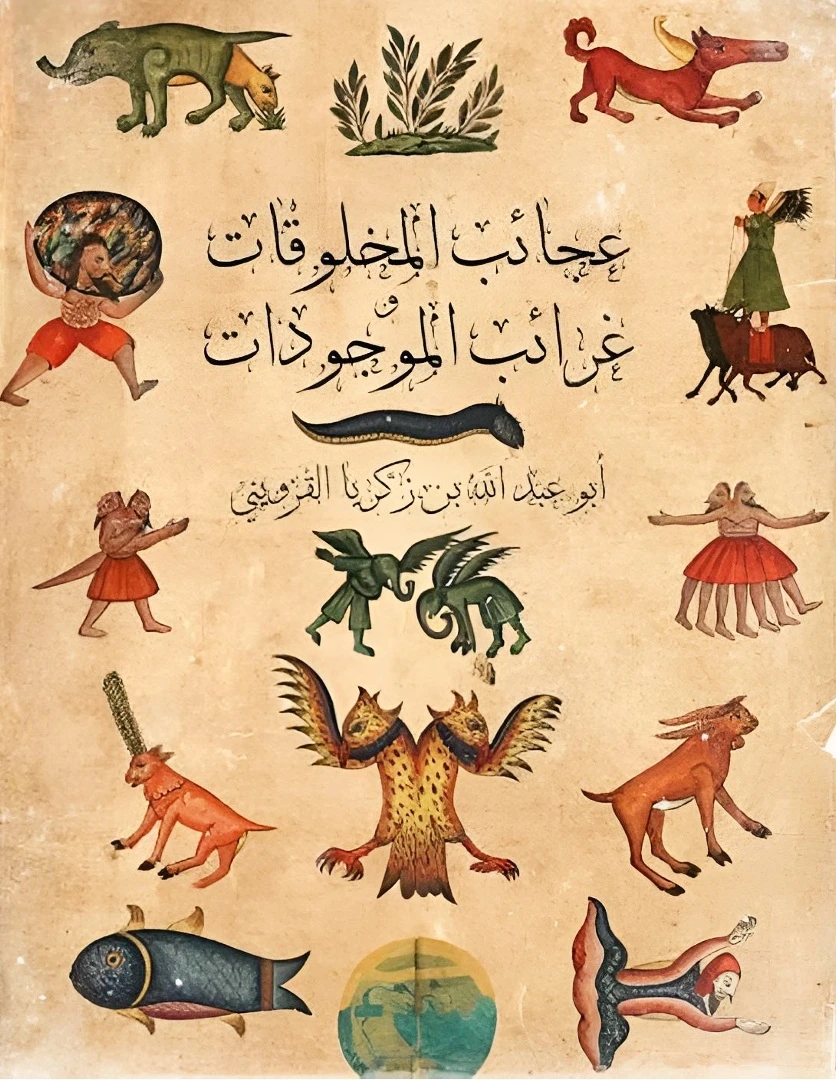
That book is Marvels of Creatures and Strange Things Existing by Zakariya ibn Muhammad al-Qazwini, one of the most renowned encyclopedic works in Islamic heritage. But it’s not a simple "book of myths," nor is it a manual of magic like some of the esoteric texts that appeared in the Middle Ages. Instead, it’s an ambitious attempt to paint a complete picture of the universe as a cultured person in the 13th century might have imagined it: what could be observed firsthand, what was learned from earlier texts, what travelers reported, what stories circulated, and what was believed based on religious understanding of existence.
What’s most fascinating about the book isn’t the dragon or the phoenix. Rather, it’s the fluid boundaries between the natural and the extraordinary. Magnets, eclipses, whales, angels, and talismans all coexist in a single world, because al-Qazwini’s driving question isn’t always, "Is this supernatural?" but rather, "What makes this world so astonishing?"
The Library of Congress describes the book as the most famous work of Islamic cosmography, noting that the sheer number of surviving manuscripts attests to its popularity over centuries. Among the most valuable is a copy completed in 1280, just three years before al-Qazwini’s death, featuring more than 400 illustrations and miniatures.
A Judge Seeking to Understand the Universe
Zakariya ibn Muhammad ibn Mahmoud al-Qazwini was born around 1203 and died in 1283. His name comes from the city of Qazvin, and he lived and worked in regions that are now part of Iran and Iraq. He served as a judge in Wasit and Hilla, and alongside his religious and legal background, he was known for his interest in geography, the natural world, and collecting knowledge and stories.
But al-Qazwini didn’t write his book to be a scientific encyclopedia in the modern sense. In his introduction, he explains that his curiosity was sparked by contemplating the "wonders of God’s creation," and that observing nature should go beyond appearances to explore the causes and unique qualities of things.
This is why the book opens with a central idea that serves as a key to everything that follows.
Al-Qazwini defines wonder as Perplexity arises when a person can't understand the reason behind something. He uses the example of a beehive: a person may know that bees build it, but is still amazed by the precision and order of its chambers, and wonders how such a small creature could construct something so intricate. This observation is crucial, as it changes the way the entire book should be read.
For al-Qazwini, the term 'wondrous' doesn't necessarily mean impossible or supernatural. Something can be entirely real, but its causes are unknown or its features are astonishing. That's why a magnet can be considered as wondrous as a dragon—though the former is a natural phenomenon we now understand, and the latter belongs to the realm of legend.
From the Heavens to the Depths of the Earth
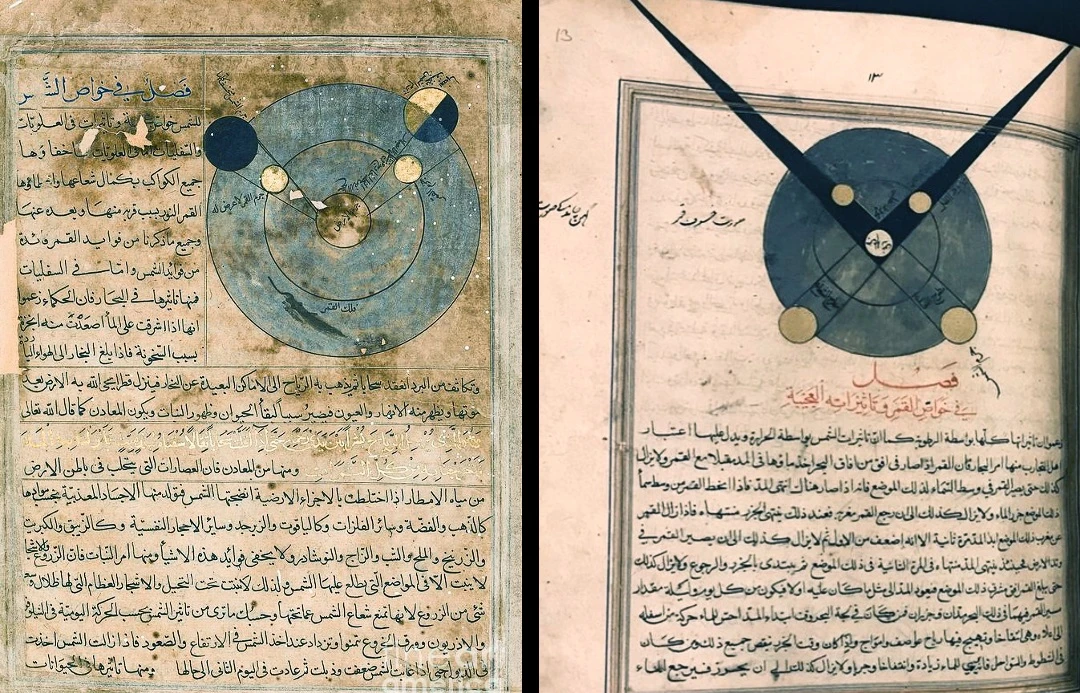
Al-Qazwini organizes the world as a vast cosmic pyramid, starting with the highest realms: celestial spheres, planets, constellations, heavenly phenomena, and angels. He then moves down through the air, winds, rain, and seas, followed by the earth, mountains, minerals, plants, animals, and humans—along with the stories and marvels associated with each of these worlds.
For this reason, Western studies often classify the book as 'Cosmography', a description of the structure of the universe and the world, not just a collection of strange animals. Surviving manuscripts confirm that the first part covers the world above the earth, while the second part focuses on the earthly realm.
This classification itself reveals the mindset of the era. In one of his introductions, al-Qazwini divides all beings into categories that include body, soul, angels, jinn, and more, all within a unified philosophical and religious framework. Angels and jinn aren't just added for dramatic effect—they are integral parts of the map of existence he is constructing.
A World Beyond Sight
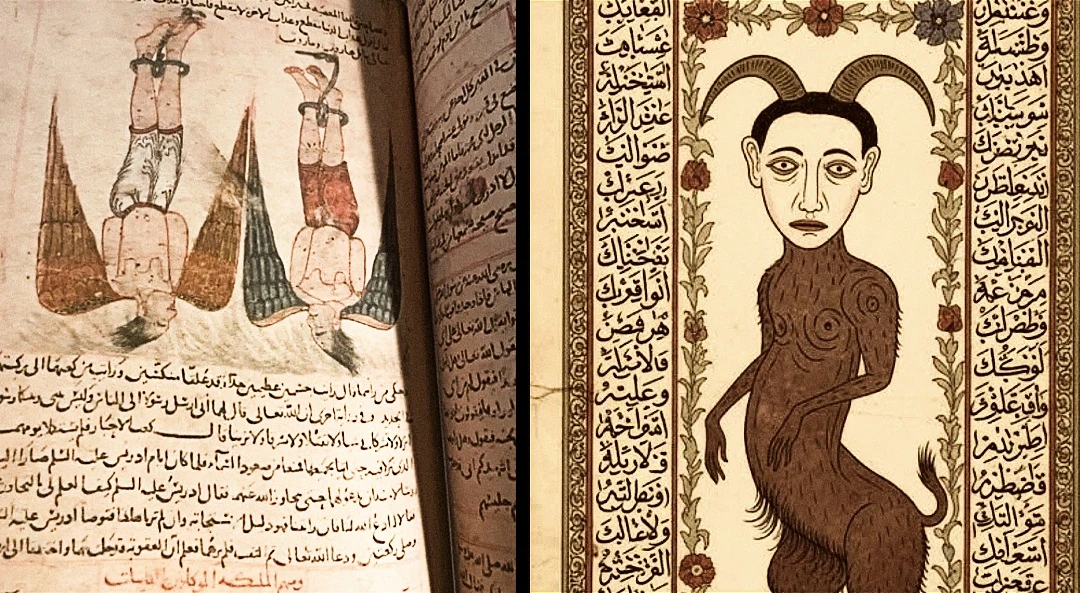
When al-Qazwini discusses the inhabitants of the heavens, he devotes significant attention to angels and their various types, drawing on religious texts and the stories circulating in his time. Angels also appear frequently in the illustrations that made the Marvels of Creatures manuscripts famous; for example, the 1280 edition is known for its vibrant miniatures depicting angels in dynamic forms.
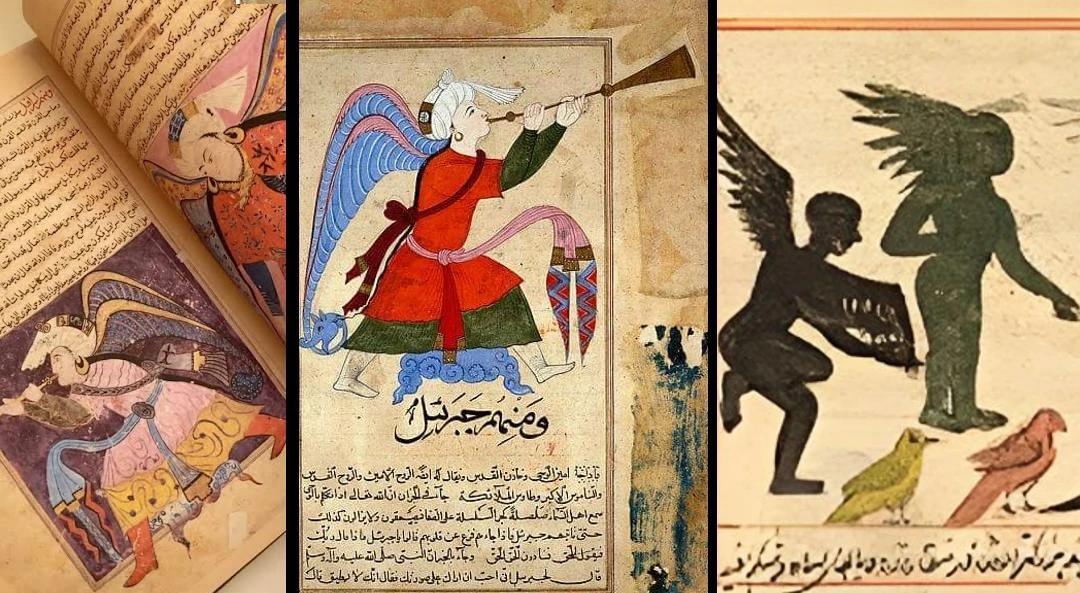
Jinn and devils are included in the same system, with discussions about them blending religious elements with popular tales passed down through generations. This distinction is important for modern readers: just because a story appears in al-Qazwini's book doesn't mean it holds the same status as a religious text. The author often uses phrases like 'it is claimed,' 'it is said,' or 'some say,' signaling that he is relaying material he received, not always presenting it as fact.
The Sea of Endless Wonders
For today's reader, the chapters on seas and islands are among the most entertaining parts of the book. In the medieval imagination, the sea was an unknown expanse stretching beyond the limits of direct experience, making it the perfect stage for giant whales, mysterious islands, and unknown peoples.
Al-Qazwini, for example, describes a massive fish that sprays water from its mouth and nose so that it falls on ships 'like rain.' He also recounts tales of sea creatures with fish bodies and faces resembling land animals, and includes the famous story of sailors who land on what they think is an island, light a fire, and then discover that the 'island' is actually a giant sea turtle that moves when it feels the heat.
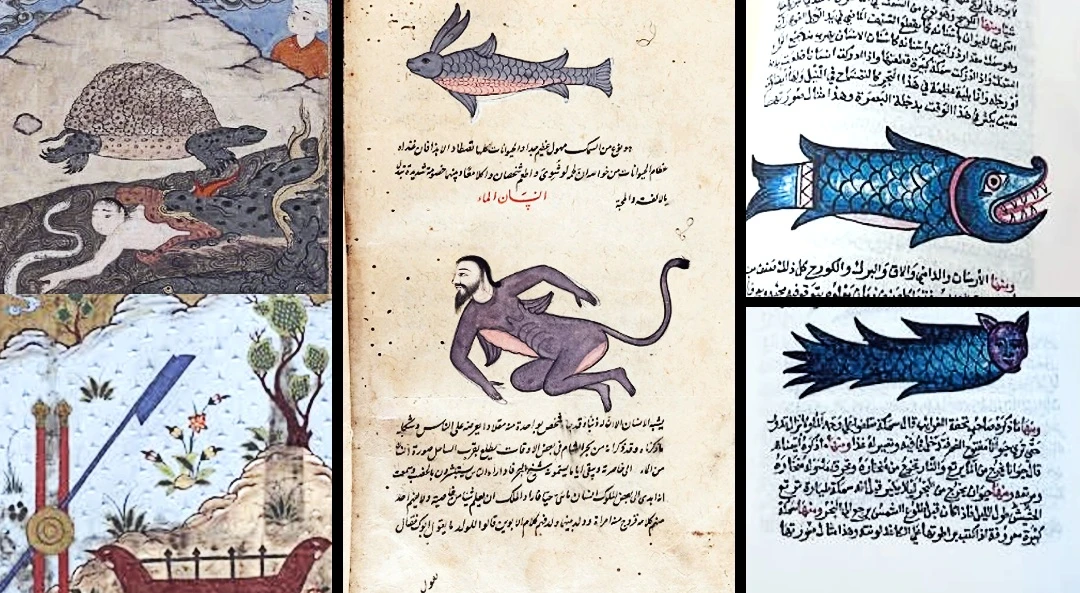
Stories like these shouldn't be read merely as literary inventions. Someone seeing a whale for the first time from a small boat—or hearing about it through a chain of storytellers—could easily turn it into a creature far larger and stranger than reality. In this way, sea monsters were often born in the gap between observation and storytelling.
Things get even stranger when al-Qazwini turns to the islands. He relays sailors' and merchants' tales of islands inhabited by short-statured people, others where the inhabitants have dog-like faces, islands surrounded by mountains and fire, and deserted cities where mysterious noises can be heard despite no visible residents.
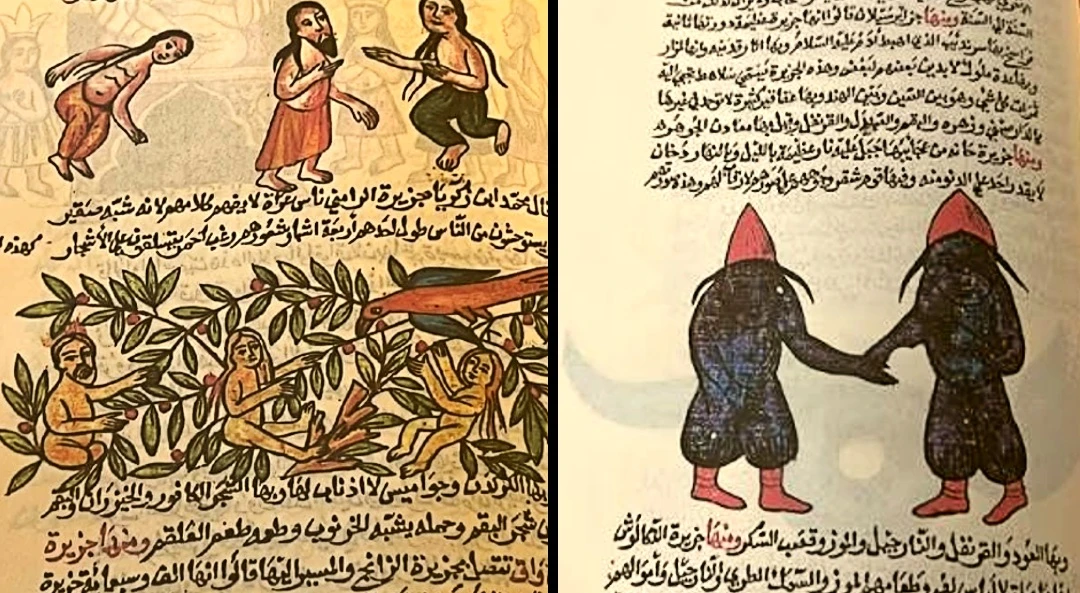
Today, it's difficult to separate the real geography in these stories from the folklore that became attached to them. But that's precisely what makes them valuable: they reveal how the unknown in geography became a breeding ground for impossible creatures.
The Phoenix, the Dragon, and the Peoples at the Edge of the World
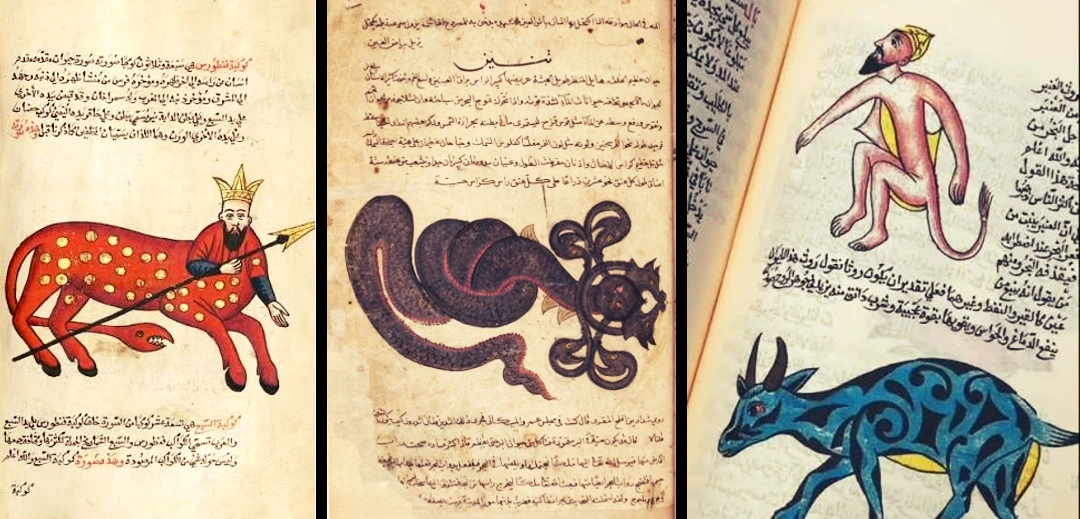
The illustrations accompanying the book make this blend clear: in some manuscripts, real animals appear side by side with mythical creatures.
One of the preserved title pages at the Metropolitan Museum, dating back to the 15th century, features elaborate illustrations of a giant mythical bird attacking an elephant, along with a rhinoceros, tigers, a dragon, a phoenix, and other legendary creatures. The museum describes the book as covering the heavens and the earth, minerals, plants, birds, animals, as well as unusual phenomena and imaginary beings.
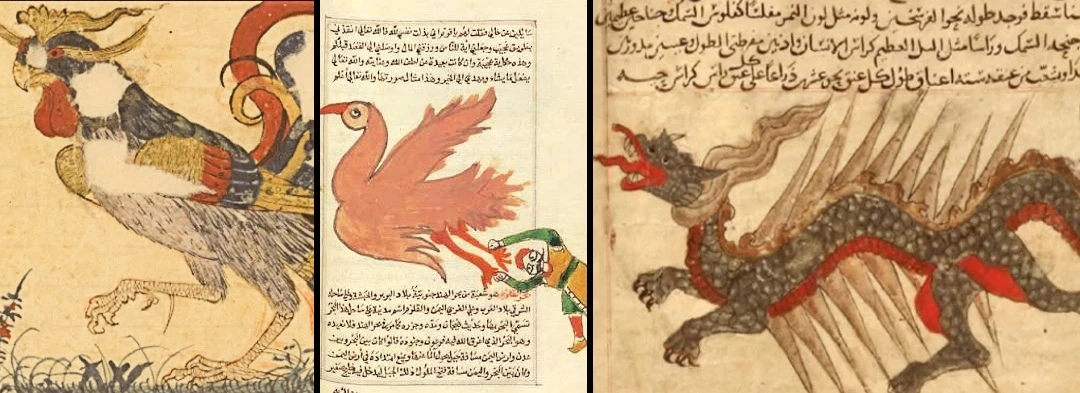
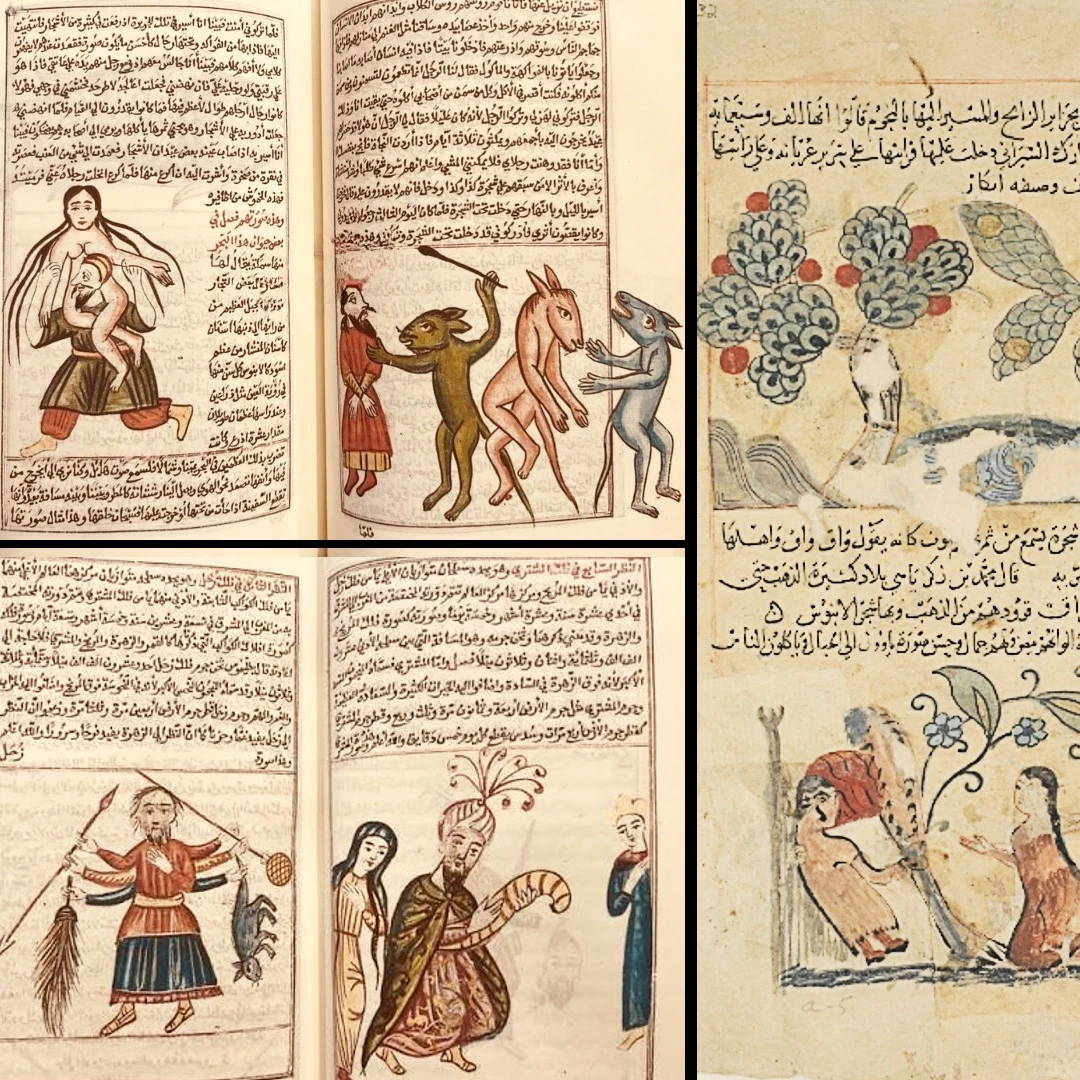
So it's not always appropriate to ask, "Did Al-Qazwini actually believe in every creature depicted in his manuscripts?" The illustrations we have today weren't all created by the author or even from a single copy. These manuscripts were copied and decorated in different countries and eras. Some images directly represent the text, while others reflect the artistic traditions of the illustrators themselves. In this way, the wonders described in the text evolved into a rich visual tradition of their own.
His creatures were reimagined in Iraq, Iran, Anatolia, India, and beyond, with the appearance of each being changing from one version to another. This allows art historians to see not only Al-Qazwini’s vision in depictions of dragons or phoenixes, but also the interpretations of artists who lived centuries after him.
When magnets were considered "wonders"
One of the most telling sections of the book, highlighting the difference between Al-Qazwini’s era and our own, is his introduction on "wondrous things."
He attempts to categorize these wonders: first, effects related to the mind and perception; then, actions attributed to what was known as talismans; and finally, the properties of earthly substances, using the example of a magnet attracting iron.
Today, hardly anyone would group magnets and magic together, but Al-Qazwini didn’t have the concepts of magnetic fields or modern physics. He saw iron moving toward a stone without any visible string or hand, and given the knowledge available in his time, it was natural to consider this property a "wonder."
This is where the book’s historical value becomes clear: what we consider strange or wondrous isn’t an inherent quality, but something that changes as our understanding grows.
Thunder was once mysterious, eclipses were terrifying, meteorites seemed unimaginable, and a magnet’s pull on iron felt like an invisible force. As our explanations for these phenomena advanced, the boundary between the known and the unknown shifted.
Talismans, magic, and special properties
The book also includes material on magic, talismans, and the special properties once attributed to stones, plants, and animals. However, its approach is different from practical magic manuals that aim to teach readers how to perform rituals or summon spirits.
In most of these sections, Qazwini acts as a collector of knowledge and stories. He compiles what has been attributed to philosophers, physicians, and travelers, as well as what has been passed down through books, organizing this material alongside topics like medicine, natural sciences, and astronomy.
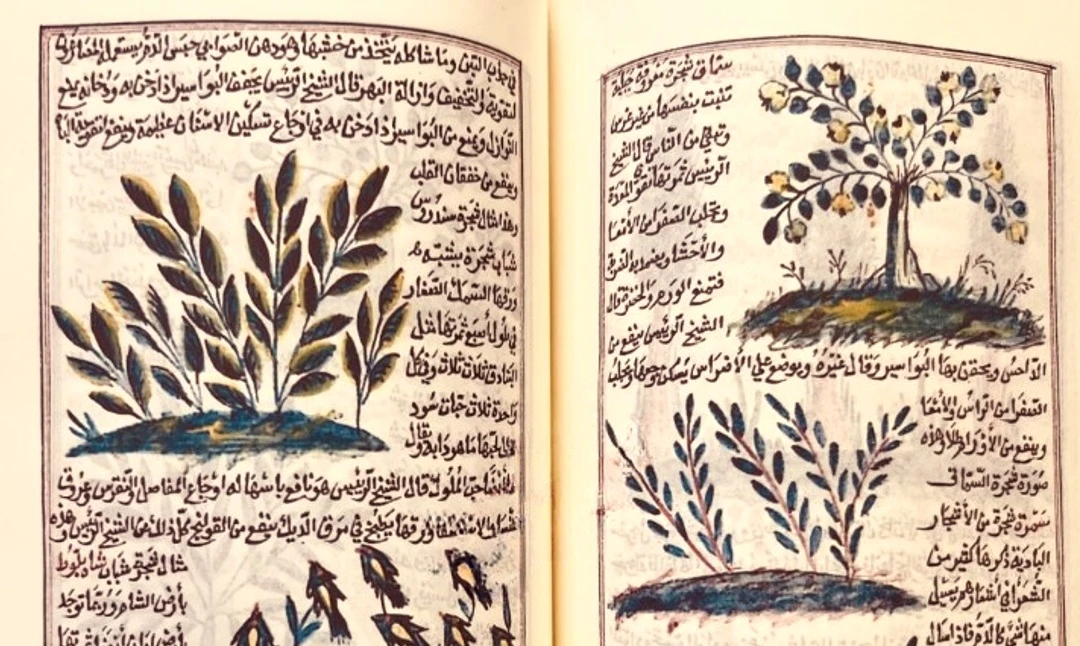
As a result, we find descriptions of strange healing properties attributed to animals and stones, right next to partially accurate observations about their environments and behaviors. From our current perspective, we know that many of these 'properties' lack any medical or experimental basis. Still, their presence helps us understand a world where the boundaries between medicine, natural philosophy, magic, and astrology were far less defined than they are today.
Monsters, or misunderstood human conditions?
One of the book’s most sensitive and intriguing aspects is its descriptions of people with unusual physical features. Qazwini recounts stories of individuals born with uncommon bodies or limbs, including tales of people with two heads or fused bodies. In the same context, he introduces creatures like the nasnas, which some traditions describe as beings with incomplete human forms.
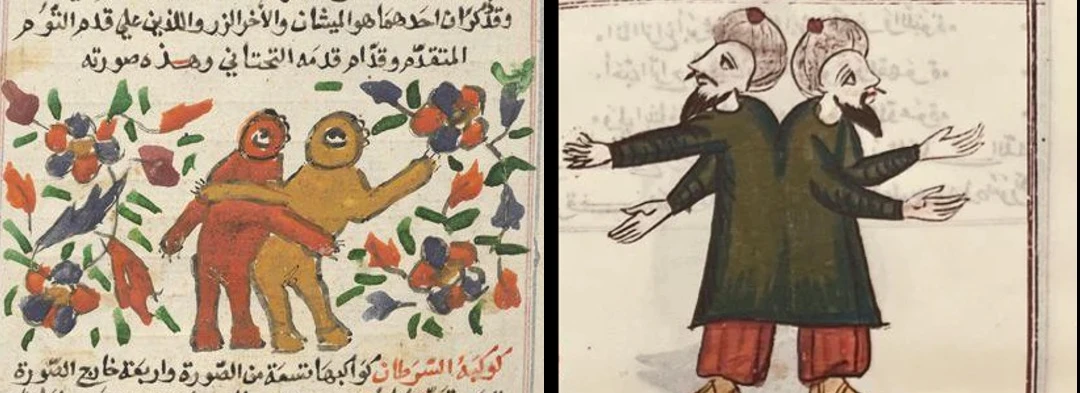
To a modern reader, some of these stories may echo real medical conditions, such as conjoined twins or severe congenital deformities. But in a society without embryology or medical imaging, and as these stories were retold by different people, a rare case could easily transform into an entire species of strange creatures.
So, behind some of the 'monsters' in old books, there may be a kernel of reality that legend has grown around.
But this explanation doesn’t fit everything. There are creatures, peoples, and tales that simply can’t be forced into the mold of old scientific reports. Sometimes, it’s best to let these stories remain where they belong: in folklore and the literature of wonders.
Did Qazwini believe everything he wrote?
This is one of the most important questions when reading the book. It’s easy to pull out ten pages of fantastic creatures, highlight the strangest parts, and present the author as someone who believed every monster and story he heard. But Qazwini’s own introduction makes things more complicated.
He states that he gathered what he found through "hearing, sight, thought, and observation" and sometimes distinguishes between what he considered witnessed or reasonable, and what he presents as stories attributed to their narrators.
This doesn’t make him a modern critic of his sources, he certainly included unfounded stories and repeated scientific ideas that were later proven wrong. But it does mean that his approach to reporting wasn’t the same in every case.
The small phrases he uses, 'they said,' 'it is claimed' ,'some merchants reported,' 'some mentioned', are telling.
These aren’t guarantees of skepticism, but they do let the reader know that Qazwini himself was aware that part of his world came to him through hearsay, not direct observation.
The book as a machine for wonder
Perhaps the most beautiful aspect of Qazwini’s Wonders of Creation is that he doesn’t see strangeness as the exclusive domain of monsters. For him, a beehive is wondrous, the sky is wondrous, the movement of the planets is wondrous, animals are wondrous. In this way, familiarity itself becomes the enemy of wonder. As Qazwini sees it, people stop marveling at things they see every day not because they’re simple, but because they’ve grown used to them, a surprisingly modern idea.
Today, we don’t marvel at a phone that sends images across the world, or at an airplane carrying hundreds of people through the sky, because we were born into a world where these things exist. But if someone had shown such things to a person in the 13th century, they would have undoubtedly ended up in a book of wonders.
At the same time, Qazwini placed things we now understand alongside others that have no basis in modern science. The book doesn't just tell us what people once believed, it shows how the very idea of what is 'impossible' shifts from one era to another.
From Baghdad and Qazvin to Western Libraries
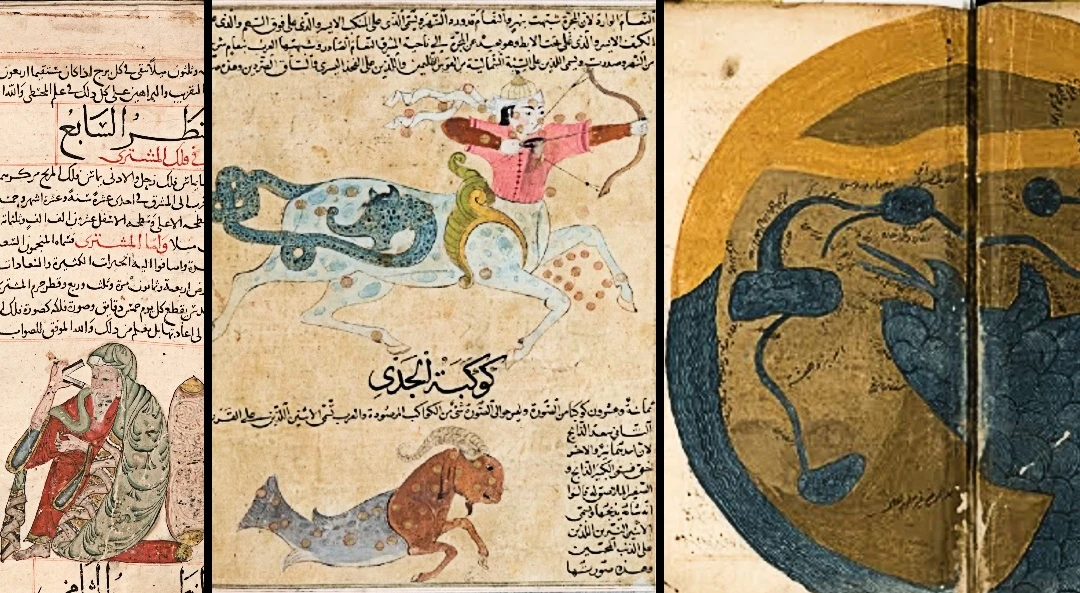
The book’s fame was not limited to its Arabic version. It was widely copied, translated, and adapted into Persian and Ottoman Turkish. Today, libraries hold numerous manuscripts that prove the tradition of marvels endured for centuries after Qazwini’s death. For example, the Library of Congress holds a 17th-century Ottoman translation of the section on the celestial world, while a 1717 Ottoman manuscript at the Walters Art Museum contains 444 illustrations.
In modern Europe, Qazwini’s work entered a new phase: it shifted from being a widely read book in the East to becoming a subject of Orientalist scholarship and the study of Islamic science and art history.
In the mid-19th century, the German orientalist Ferdinand Wüstenfeld produced an edition of the text in Göttingen, titled 'Zakarija ben Muhammed ben Mahmud el-Cazwini's Kosmographie.' Published between 1848 and 1849, it was based on manuscripts held in European libraries, including those in Berlin, Gotha, Dresden, and Hamburg.
This was not simply a popular German translation, but a scholarly project to publish and study the text using original manuscripts, at a time when European researchers were actively collecting, cataloging, and editing ancient Arabic works.
Interestingly, the transfer of these manuscripts to Western libraries and museums also preserved many of the book’s illustrations. Today, pages and manuscripts can be found in the British Library, the Bavarian State Library, the Metropolitan Museum of Art, the Smithsonian Institution, and other collections. The British Library, for example, holds an illustrated manuscript with 368 paintings, and the so-called 'London Qazwini' has become the focus of a dedicated art study by Stefano Carboni.
Modern Western perspectives on the book have also evolved. The focus is no longer just on identifying the scientific errors of medieval Muslim scholars. Instead, historians of science and art are increasingly interested in what the encyclopedia reveals about how knowledge was constructed, and about the interplay between observation, tradition, religion, philosophy, and visual imagination.
A striking example is the McMullen Museum at Boston College, which in 2025 hosted an exhibition titled 'Wonders of Creation: Art, Science, and Innovation in the Islamic World.' The exhibition used Qazwini’s concept of 'wonder' as a framework for its journey from the heavens to the earth demonstrating how a book written in the 13th century, more than seven hundred years ago, can help an American museum explore the intersection of science, art, and Islamic culture.
This is perhaps more significant than simply saying 'the West discovered Qazwini.' The book has moved from being an encyclopedia explaining the world to its original readers, to serving as a document that allows contemporary scholars to ask: how did another society imagine knowledge and the marvelous?
At the same time, there’s no need to exaggerate and claim that Qazwini was the direct source for Europe’s monsters or books of wonders. European culture had its own bestiaries and traditions of marvels. The real value lies in comparing the two traditions, which reveals a shared human phenomenon: every civilization filled the unknown with creatures, stories, and possible explanations.
Qazwini and the Book of Wonders: Two Different Worlds
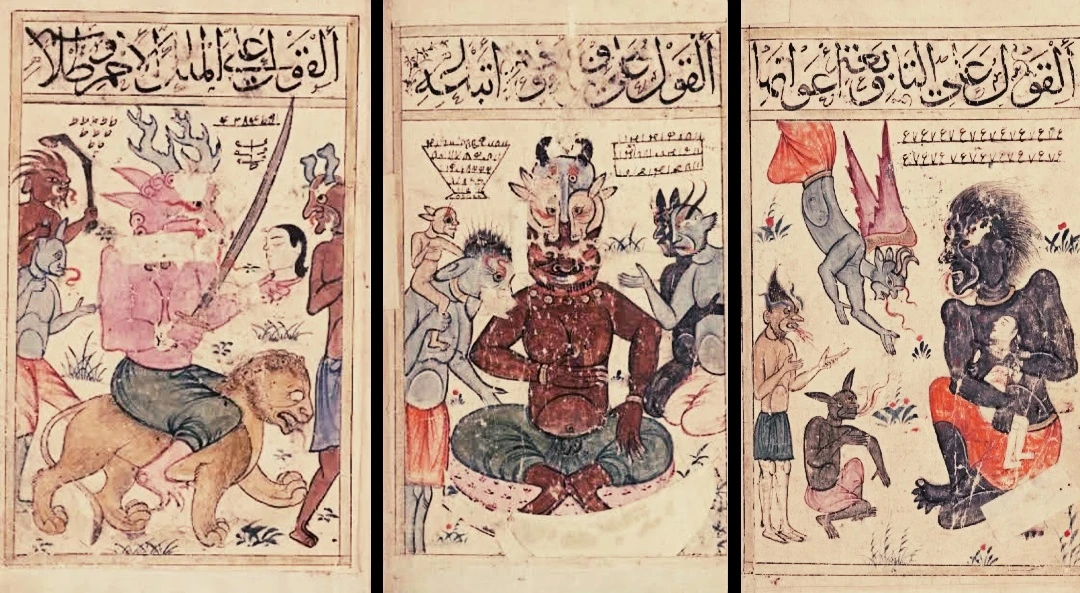
At first glance, Wonders of Creation might seem similar to the Book of Wonders because of their strange illustrations, jinn, and mythical creatures, but the differences between them are significant.
The Book of Wonders quickly draws the reader into a world of astrology, planets, spirituality, magical images, and esoteric traditions.
Qazwini, on the other hand, starts with a much broader question: What exists in the universe?
That’s why, on almost any given page, you might find animals, nature, astronomy, philosophy, religion, and myth side by side. His main goal isn’t to initiate you into a hidden world, but to present the entire world before you, including what was hidden to people of his own time.
This is precisely what gives the book its exceptional value today.
What remains of al-Qazwini’s 'Wonders' today?
Seven centuries later, the fate of many of these wonders has changed. The magnet is no longer a supernatural mystery, though its physics still hold complexities. Eclipses are no longer seen as ominous signs, but as astronomical events that can be calculated to the second. Animals once known to the Islamic world only through travelers’ descriptions now appear in thousands of hours of documentary footage. Birth defects, which once fueled tales of 'strange creatures,' are now studied in embryology, genetics, and surgery.
On the other hand, dragons, phoenixes, nessenases, and the peoples of fantastical islands remain where they’ve always belonged: in myth, folklore, and the human imagination.
Yet the book hasn’t lost its value because of this.
On the contrary, its significance may be even clearer now.
Al-Qazwini captures a historical moment when humanity was striving to expand the boundaries of knowledge into vast unknowns. What he couldn’t witness himself, he gathered from travelers; what he couldn’t explain, he listed among the 'wonders'; and what reached him distorted through stories, he sometimes recorded alongside firsthand observations.
From this blend emerged a world where real whales swam alongside monsters, planets moved above angels, medicinal plants grew next to magical stones, and the magnet’s strangeness was not far removed from that of a talisman.
Reading 'The Wonders of Creation and the Oddities of Existence' today doesn’t require us to believe its marvels, or to mock them.
What’s truly fascinating is to ask ourselves:
Which mysteries or impossibilities of our own time will someone, seven centuries from now, read about and smile at, because they’ve become the simplest facts of their world?
About the Author