In the final years of Egyptian singer and actress Maha Sabry’s life, her home was no longer just the quiet retreat of a star fading from the spotlight. According to her daughter, the house became a gathering place for people claiming to have healing and protective powers. One of them was even given his own room. Strange herbs appeared, mysterious symbols were drawn, and there was talk of a mysterious substance called "red mercury" along with promises of miraculous cures, a worsening illness, and, as her family claims, money that simply vanished.
This is how one of the most bizarre stories in the history of Egypt’s golden-age entertainers began. Over time, it gave rise to sensational headlines like: "Charlatans killed Maha Sabry" and "Red mercury ended her life."
But what really happened?
Looking at the various accounts, there is reasonably solid evidence that Maha Sabry became involved with spiritual healers and charlatans during her illness—mainly based on the testimony of her daughter, Faten Abdel Fattah. However, the claims that magic itself killed her, or that a supernatural substance called red mercury was directly responsible for her death have no medical basis. The distinction between these two narratives is at the heart of the story.
From Stardom to Turbulent Years
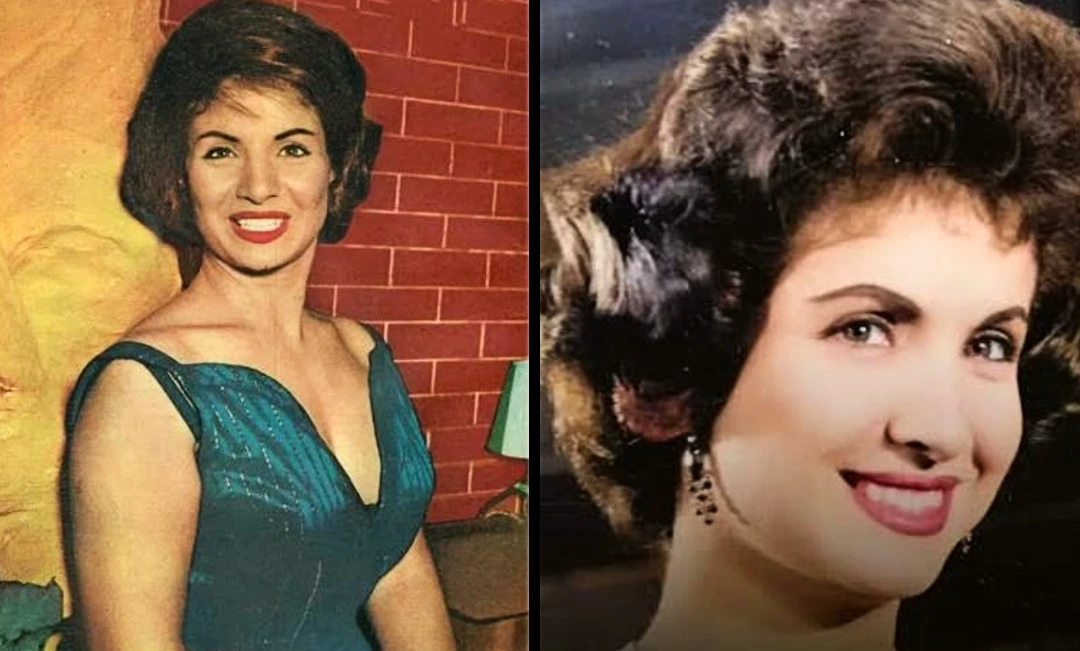
Maha Sabry, born Zakia Fawzi Mahmoud in 1932, rose to fame in the late 1950s as a singer and actress in Egyptian cinema. She became especially known for her lighthearted popular songs, her hit "Ma Tazawqini Ya Mama" remains a classic and appeared in several films throughout the 1960s and 1970s. She died on December 16, 1989, at the age of 57. Despite her cheerful public image, her private life was far more tumultuous.
Her most famous marriage was to Ali Shafik, a close associate and chief of staff to Marshal Abdel Hakim Amer. After the political upheaval following Egypt’s defeat in 1967, their circumstances changed dramatically. Shafik eventually ended up in London, where he was killed in 1977 under circumstances that remain shrouded in conflicting reports and speculation.
It’s hard to prove that these events led Maha Sabry down the path of superstition and spiritual healers, but it’s clear that the final chapter of her life was marked by a series of upheavals: the loss of her husband, a fading career, and a long, debilitating illness that left her desperate for a cure.
The Neighbor Who Opened the Door
When the newspaper Al-Dostour revisited the story, it cited Faten Abdel Fattah’s account from an earlier interview with Rose al-Youssef magazine. No digital copy of the original interview is available, so most of what is known today comes from newspapers that later republished the daughter’s testimony.
According to this account, Maha Sabry met a neighbor who convinced her that certain spiritual healers and charlatans had special powers to protect and cure her, and that they could help her overcome her suffering. That was all it took.
People from this world began to appear in her life, and it quickly became much more than a passing consultation. Faten recalls returning from a trip to find that these charlatans had become a fixture in her mother’s home.
Her testimony includes a striking detail: Maha Sabry had set aside a room in her home for one of these individuals. This fact has been repeated in several articles and media reports, always attributed to her daughter.
If this account is accurate, we're not just talking about an artist who once visited a fortune teller out of curiosity, but rather someone who developed a relatively long-standing relationship, granting this person significant trust and influence.
Herbs, Talismans, and Promises of Healing
According to Faten, some of these individuals gave Maha Sabri herbal mixtures and concoctions, claiming they would help cure her. At the same time, there were also practices involving superstition and talismans.
Some newspapers described her condition at the time as 'obsessive-compulsive disorder,' but there are no published medical records confirming such a diagnosis. The most accurate description, based on her family's account, is that she became extremely anxious about her health and clung to any promise of recovery.
This is a key point in understanding the situation: a charlatan doesn't necessarily need to convince someone who already believes in magic. Sometimes, all it takes is finding a frightened person with an illness that isn't responding quickly to treatment, then offering a simple explanation and a grand promise.
Over time, one word emerged in Maha Sabri's story that would become its most sensational element: red mercury.
The Red Mercury Mystery
Media reports don't fully agree on what Maha Sabri actually took. Some say a charlatan convinced her to use or ingest 'red mercury' as a remedy, while other sources describe what she was given as herbs or mixtures that were simply called by that name. Some accounts even distinguish between the herbs and the so-called red mercury, treating them as separate things.
These differences matter, because they prevent us from saying that Maha Sabri actually ingested a specific, scientifically identifiable chemical substance.
In the world of magic and superstition, 'red mercury' isn't a single, scientifically recognized substance.
The name has surfaced in scams and black markets, accompanied by various legends: a powerful nuclear material, a priceless rarity, a secret hidden inside mummies, or a compound that allows sorcerers to summon spirits and uncover treasures.
Even a 1992 document in the CIA archives discusses the trade in 'red mercury' as a hoax in the nuclear materials market, reflecting just how widespread the myth was internationally at the time.
In Egypt, the legend became especially linked to mummies and ancient artifacts. Archaeologist Zahi Hawass has repeatedly denied the existence of any secret substance like this inside mummies, calling the idea a myth associated with fraud and scams.
But that doesn't mean whatever substance Maha was given whatever it was necessarily harmless.
Could these mixtures have damaged her liver?
The World Health Organization confirms that real mercury and its compounds are toxic, and exposure can affect the nervous, digestive, and immune systems, as well as the kidneys, lungs, and other organs. The effects depend on the type of compound, as well as the method and amount of exposure.
So, if Maha was actually given something containing a mercury compound, it's theoretically possible it could have harmed her health.
However, there is no chemical analysis of what she took, no published toxicology report, and no medical documentation confirming the presence of mercury in her body.
That's why the popular claim that 'red mercury killed Maha Sabri' goes far beyond what the available evidence supports.
What seems more likely, according to her daughter's account, is that Maha took unknown substances and herbs given to her by unqualified individuals. The family later believed these may have contributed to her declining health, but that's a very different matter from proving a direct medical cause.
Al-Shaarawi gets involved
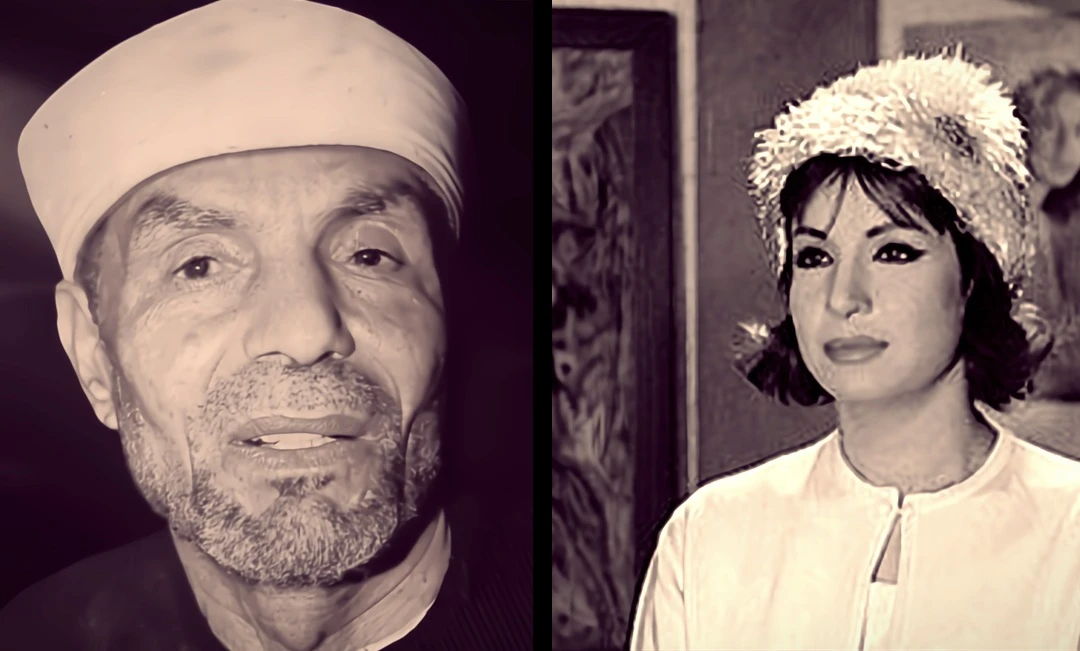
As more charlatans surrounded Maha Sabri, her daughter Faten says she turned to Sheikh Mohammed Metwally Al-Shaarawi for help.
According to several sources, Al-Shaarawi warned against continuing to take the substances and herbs provided by these individuals. Faten recalls him cautioning about their effects on the liver and nervous system. After that, she says, she was able to convince her mother to stop.
Al-Shaarawi's involvement later allowed some websites to frame the story in simple religious terms: on one side, the charlatans; on the other, Al-Shaarawi trying to save her. But the reality is much more complicated.
Accounts of Maha Sabri suggest she wasn't someone who rejected religion or suddenly turned to magic. It's possible for a person to be religious and still believe in the abilities of certain healers or spiritualists, especially when faced with fear and illness. This isn't an uncommon phenomenon in society.
When Deception Turns Into Exploitation
The most troubling aspect of Faten’s account isn’t about magic at all, it’s about the money and influence gained by those around her mother.
According to her daughter, one of the people connected to her mother was involved in trading what he called 'red mercury,' and some of these individuals extended their influence beyond supposed healing into her mother’s finances.
She adds that a woman close to her mother threatened her when Maha tried to distance herself, and that funds held in London were seized. She was also reportedly forced to sign a check for up to 20 million pounds, according to published accounts. Faten also mentioned filing a complaint with the public prosecutor regarding her mother’s possessions after her death.
But there are clear limits to what can be investigated here.
The allegations are serious, but there’s no published court ruling, copy of the check, or official investigation file available to confirm the details of the 20 million or how the money changed hands.
So this part of the story should clearly be attributed to the daughter. What can be said with more certainty is that Faten believed her mother wasn’t just a victim of deception, but of exploitation by people who saw in her a sick, famous woman with financial resources.
A Long Illness
Setting aside the stories of magic, there’s a more concrete medical side to the sources. In her final years, Maha Sabri suffered from long-term health problems, including a stomach ulcer. According to Al-Ahram, her illness lasted about four years and eventually led to hepatic coma before her death on December 16, 1989. This information places the end of her story firmly in a medical context: severe liver failure leading to coma and death.
As for why her condition deteriorated, or what role previous illnesses, medications, herbs, or other substances may have played, there aren’t enough medical records available to reconstruct the answer more than three decades later. This gap in medical information has become fertile ground for myth.
Contradictions Expose Problems in the Popular Narrative
A review of published material about Maha Sabri reveals that much of it simply repeats the same story with minor changes, and some of these changes have introduced obvious errors.
For example, some sources claim she developed a stomach ulcer in 1988, then state, almost in the same sentence that she suffered from it for four years before her death in 1989, which doesn’t add up chronologically.
Some sources refer to 'red mercury' as a specific substance, while others describe it as a type of herb with that name.
Some have turned the daughter’s statement that she believed herbs harmed her mother’s liver into a definitive claim like 'the charlatans killed her.'
This is where journalism and investigation diverge. A story repeated across many outlets isn’t necessarily independent evidence; dozens of websites may ultimately be quoting a single person and source. In Maha Sabri’s case, her daughter Faten’s testimony appears to be the root of most details related to deception.
This doesn’t make her account worthless, but it does mean it’s important to understand its limits.
Did Maha Sabri die because of magic?
There’s no evidence to support a definitive yes. There are no documented cases proving she was the victim of 'sorcery' that caused a physical illness, nor is there any scientific method to establish such a connection.
But the more realistic question is: could her belief in charlatans have contributed to her declining health?
That’s a reasonable possibility. If that belief led her to consume unknown substances, delay proper medical treatment, or overuse unsafe remedies, it could have had real health consequences—without needing to assume any supernatural forces were involved.
In this sense, the more accurate statement is that Maha Sabri was not so much a victim of magic, but—according to her family of believing in the power of magic and quackery to heal. That’s a significant distinction.
Why did a famous star put her trust in these people?
Today, it might seem obvious: how could a successful, educated artist living in a modern city allow a charlatan to move into her home?
But fame and education don’t make anyone immune to fear.
Chronic illness, in particular, creates a unique situation: the longer treatments fail and pain persists, the more tempting the promise of a quick fix becomes. If that promise comes from a trusted friend, neighbor, or acquaintance, it initially seems less suspicious.
Then another dynamic kicks in: after investing money, time, and hope in a healer, admitting you’ve been duped becomes even harder.
In Maha Sabri’s case—if we take her daughter’s account seriously, it appears to have been a gradual process: a neighbor opens the door, then come the healers, then herbal remedies, then talismans, then someone gets a room in the house, and eventually their influence extends beyond treatment to money and personal life.
This pattern closely resembles many cases of psychological exploitation by charlatans.
Red mercury... the perfect addition to the legend
The appearance of 'red mercury' in the story isn’t just a minor detail. This supposed substance sits at the crossroads of alchemy, magic, spirits, antiquities, secret cures, and sudden wealth , which is why, over the decades, it’s become fertile ground for scams.
In Maha Sabri’s story, we don’t even know if what she was given actually contained mercury, or if the name was simply used to add mystery and value to an unknown mixture.
That’s likely the main point of using the name: the charlatan isn’t just selling a substance, they’re selling a secret.
The more mysterious and rare the name, the more convincing it becomes to the victim that they’ve received a cure unknown to doctors and inaccessible to others.
So what do we actually know?
When we separate the different elements, the picture becomes clearer: Maha Sabri fell ill in her later years, and her condition ended in a hepatic coma and her death in 1989.
We have testimony from her daughter stating that she became deeply involved with several charlatans, who gave her unknown herbs and substances, wrote mysterious symbols for her, and that one of them even had a room set aside for him in her home.
We also have the daughter's account that she sought help from Al-Shaarawi to persuade her mother to stop taking those substances, and that she believed some people in that circle took financial advantage of her mother.
What remains unclear is the true composition of the so-called 'red mercury' she was said to have consumed. There is no medical evidence linking it to her illness, nor are there any available legal documents confirming all the details about the money and threats attributed to those around her.
Of course, there is no proof that any supernatural force or 'magic spell' caused her death.
In the end, there is no evidence that magic killed Maha Sabri. However, there is strong testimony from within her family that her fear of illness led her to people who claimed to have mysterious cures, gave her unknown concoctions, and managed to gain unusual influence over her life. Perhaps this is where the real strangeness of the story lies.
You don’t need jinn or hidden powers for something to become frightening. Sometimes, the pressure of illness and fear can push someone to give a stranger control over their body, money, and decisions simply because that person promised something medicine couldn’t provide quickly enough:
Hope for a cure.
About the Author