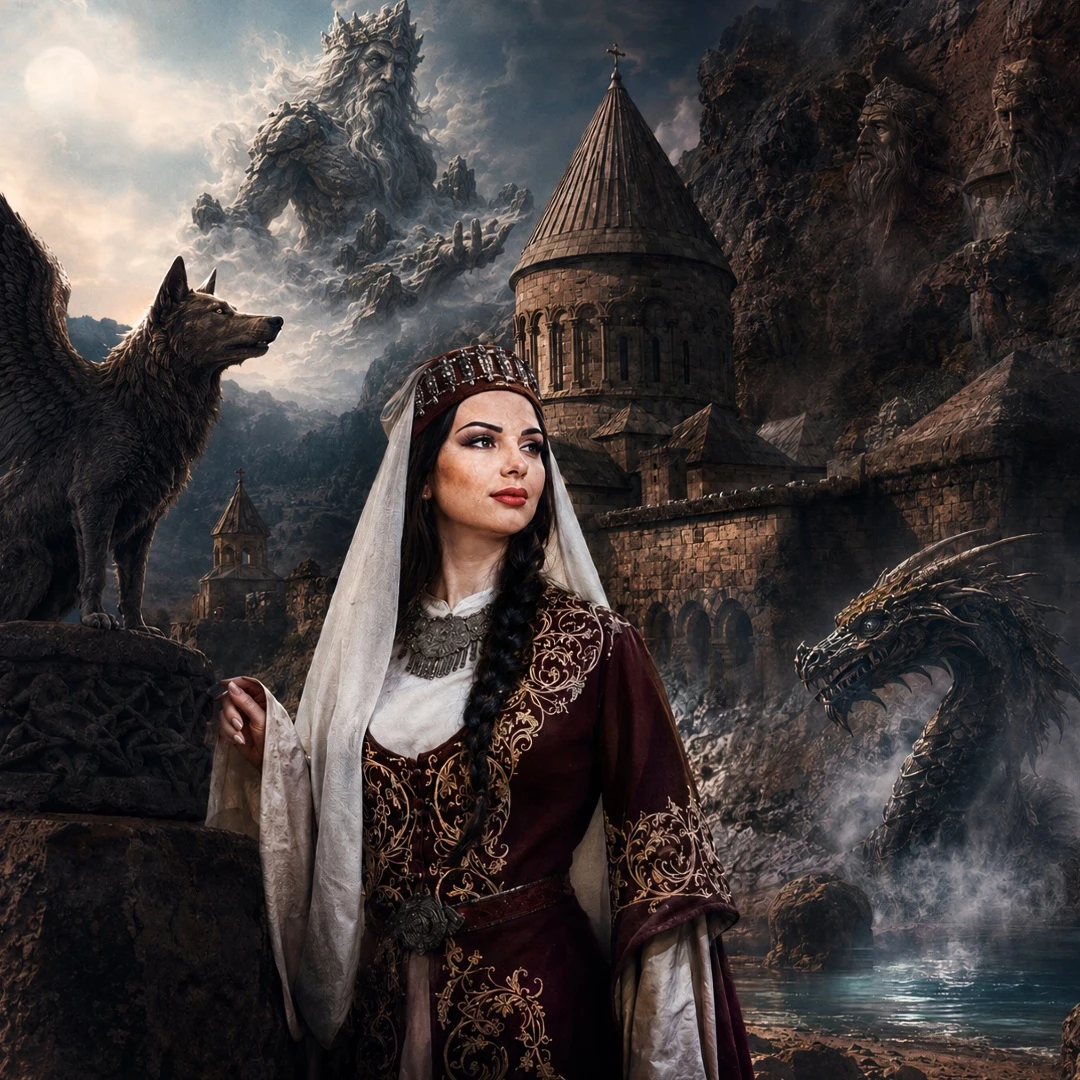
Armenia is more than just a land of mountains, monasteries, and ancient stones. Beneath its well-known image as the first nation to officially adopt Christianity lies a much older layer of folklore: dragons that dwell not in fire but in water, mythical dogs that lick the wounds of the dead to bring them back to life, household spirits guarding flour and ovens, demons that threaten women after childbirth, and protective scrolls worn on the body like shields made of prayer and ink.
This article isn't about proving or disproving the existence of these beings. Instead, it explores something else: How did Armenians imagine the hidden world? How did they deal with illness, fear, envy, birth, and death?
What sets Armenian folklore apart is that the supernatural isn't always portrayed as evil. Some beings cause harm, others protect or heal, and some remind us that in the popular imagination, the home, water, and mountains are not just silent backdrops, they are realms with their own guardians, boundaries, and secrets.
Beings and Legends
Dogs of Resurrection: The Aralez That Lick the Dead
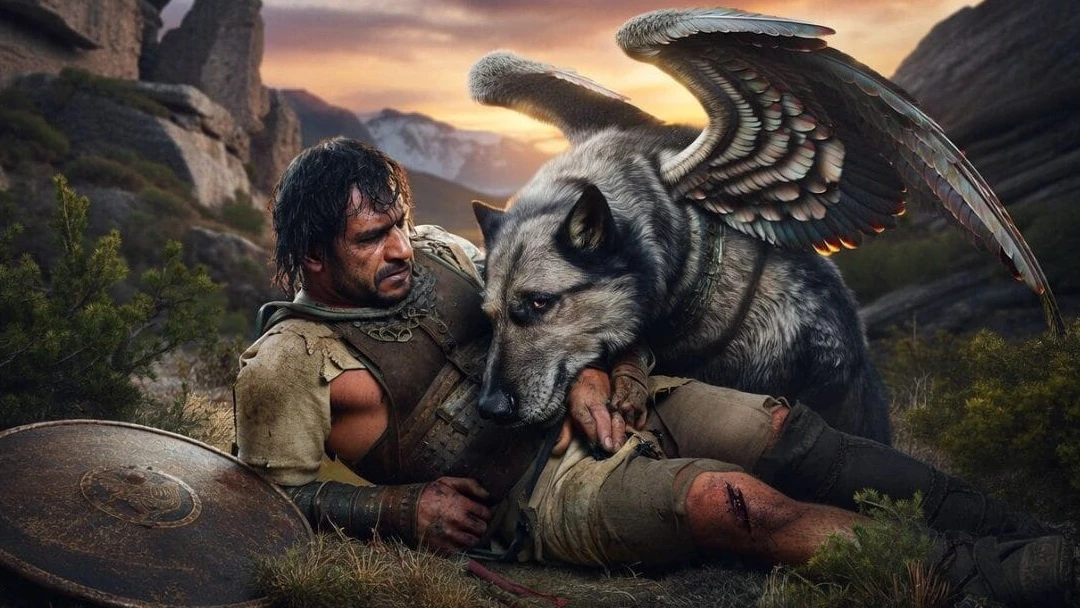
Among the most unusual creatures in Armenian mythology are the Aralez (or Aralezner)—dog-like spirits, sometimes described as winged, who descend onto battlefields to lick the wounds of fallen heroes and bring them back to life. Here, the dog isn't a guardian of the underworld or a hellhound, as in some Western myths, but a healing figure standing between death and resurrection.
The Aralez are especially linked to the legend of the Armenian king Ara the Beautiful. According to the story, Ara was killed in battle, and the Assyrian queen Semiramis tried to bring him back to life with the help of these wound-licking creatures. Later tales describe placing a warrior's body atop a tower in hopes that these mythical dogs would restore him. This image reveals an ancient belief that a body torn apart in war isn't always left to final death, there may be mysterious forces with the power to heal and revive.
What's striking about the Aralez is how they transform the image of the dog in folklore. Here, the dog isn't seen as impure or demonic, nor as a guardian of the abyss, but as a healer. In mythic symbolism, its saliva becomes a ritual for restoring life. It's as if the legend suggests that ultimate loyalty stands by the fallen warrior, trying to keep death from closing its door.
The Vishap: Water Dragon
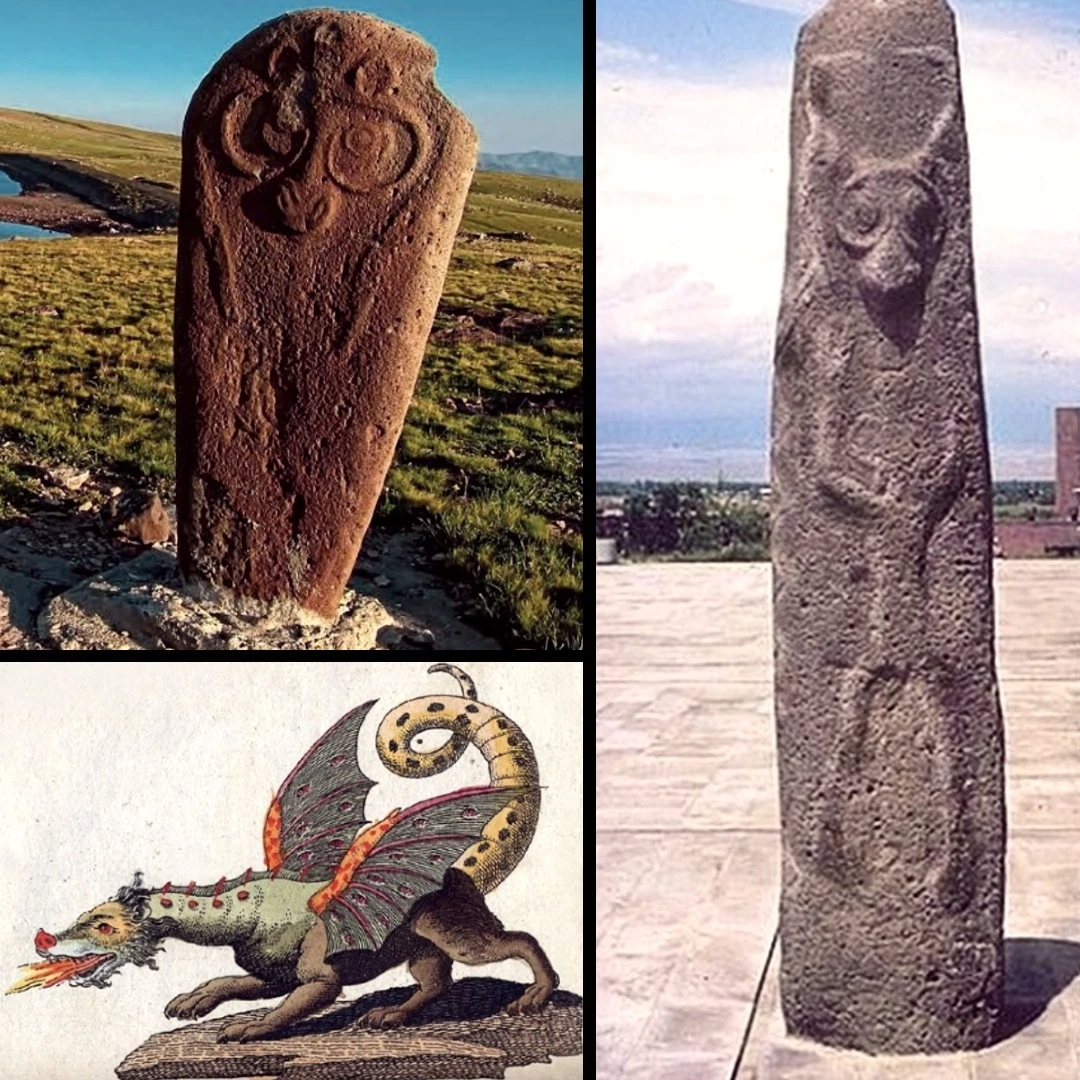
In Armenian imagination, the Vishap is a dragon or giant water creature associated with mountains and springs. The most tangible legacy of this myth is the Vishapakar, or 'dragon stones'—massive stone monuments found in the Armenian highlands, often near springs, water sources, and high mountain areas.
Modern archaeological studies don't treat these stones as evidence of real dragons, but as mysterious ritual artifacts. A 2025 study published in Heritage Science describes these stones as prehistoric monuments discovered in the high mountain regions of modern Armenia and neighboring areas. Analysis of their distribution and elevation supports the idea that they were linked to ancient water rituals. Other research suggests their proximity to springs and ancient water systems reinforces the theory that they were part of a ritual view of water as a life-giving force.
Interestingly, 'dragon stones' rarely depict dragons in the modern sense. Instead, they often feature animal symbols like fish or rams, or composite shapes. According to the Free University of Berlin, the largest known concentration of these stones is at Tirinkatar on Mount Aragats, at an altitude of about 2,850 meters. They can be found in Armenia, as well as southern Georgia and eastern Turkey.
Here, myth becomes stone. The Armenian dragon isn't just a creature flying through the sky and breathing fire, but a lasting presence near water, in the highlands, where springs are born and life begins.
The Vishap reflects ancient people's fear of water's power and their desire to appease it. The spring that gives life could, in the imagination, be home to a mighty being that must not be ignored.
The Kaj: Mountain Demons
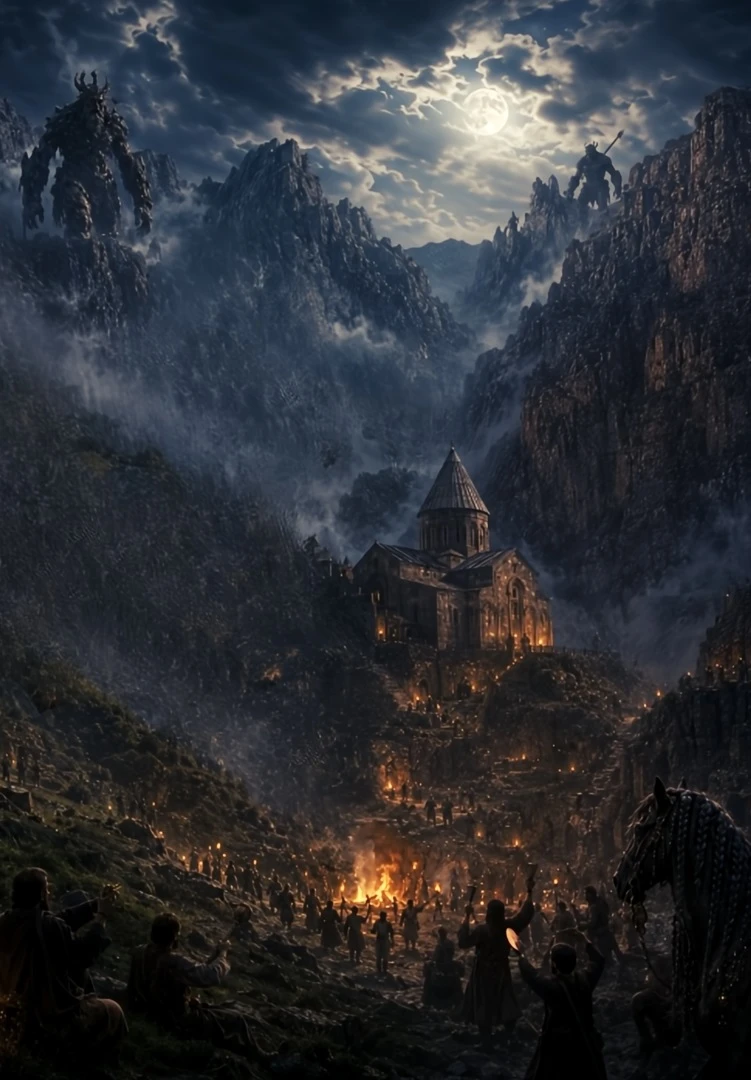
Among Armenia's strange beings are the Kaj (or K’ajk), not demons in the simple sense, but complex mountain entities. In his study 'Armenian Demons Called Kaj,' researcher Armen Petrosyan describes them as dragon-like creatures who live in the mountains, have their own temples, fight, hunt, steal grain and wine from humans, love music, hold weddings, drive people mad, and even braid horses' manes.
These details make the Kaj seem less like mere 'monsters' and more like a hidden society. They act much like humans, but in an invisible world: eating, stealing, celebrating, enjoying music, and influencing people's minds.
This type of being is common in mountain cultures, where mountains are seen as the domain of forces beyond human control. By their very nature, mountains are remote, difficult to reach, shrouded in mist, filled with rocks and mysterious sounds, making them the perfect setting for unseen inhabitants.
Interestingly, the Kaj are not portrayed as purely evil. They are dangerous, yes, but they also have their own rituals, music, and relationships in the imagination. This makes them more like a 'supernatural tribe' living alongside humans, not above or below them, but in the mountains that belong to no one.
Alk: The Demon of Childbirth
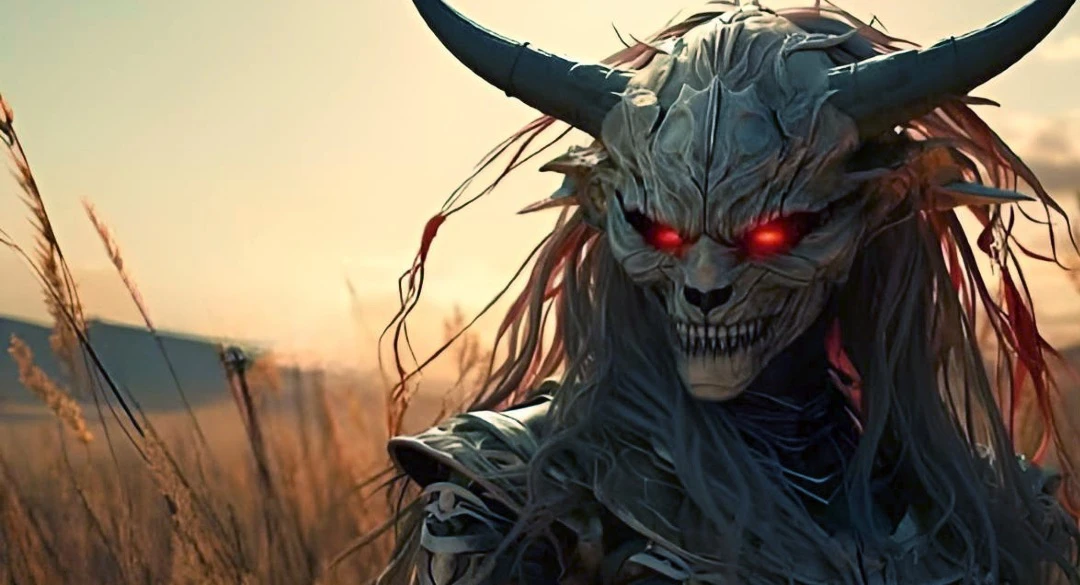
On the darker side of Armenian folklore, there is a creature known as the Alk (Al / Alk), which serves a similar role to Umm al-Subyan in some Arab traditions, and to the 'Al Basti' in Turkish and Iranian folklore. This being is associated with dangers facing women during pregnancy and childbirth, as well as newborn infants.
AGBU, a major Armenian nonprofit organization dedicated to supporting Armenian identity and heritage, notes in an article about Armenian protective scrolls that the story of the Alk appears in prayer scrolls made for women seeking protection from difficult childbirth or miscarriage. The Alk is depicted as an evil spirit causing complications or loss of the baby, but is ultimately defeated in religious texts and promises to leave the woman alone.
This idea shouldn't be dismissed as mere superstition; it's a way for people to cope with fear. In ancient societies, childbirth was a genuinely dangerous event that could threaten the lives of both mother and child. When people couldn't explain sudden death, bleeding, or miscarriage, folklore gave these fears a name and a face, turning medical and social dangers into a creature: the Alk.
A similar belief appears in the stories of the Armenians of Van: the 'Mother of Demons' comes at a woman's time of childbirth, disguised as a human, fox, or wolf, and enters the house as a cat, fly, or even a strand of hair. Women were never left alone before giving birth and would carry metal objects for protection—a blend of religious symbolism and folk practice.
The term 'Armenians of Van' refers to the Armenian community that once lived around Lake Van, now in modern-day Turkey, which was home to a large Armenian population before the genocide and forced displacement of the early twentieth century.
Household Spirits
Not all Armenian supernatural beings are harmful. In the folklore of the Armenians of Van, there are protective household spirits, the most important of which is the Tolvat or Dovlat (tolvat / dovlat). This family spirit often dwells in storage rooms and may appear as a harmless snake, another animal, or even a human. It was believed that the spirit could become angry if the family mistreated their animals or built a new house and neglected the old one. For this reason, some people would leave a lamp burning in the old house until they dreamed of a sign that the protective spirit had moved to the new home.
There’s also a female household spirit known as Goutrat, often imagined as a shy young bride. She’s said to dwell near the oven, the flour storage, or behind the flour jar, watching over children and helping with difficult chores when the family is away. As a gesture of gratitude, it’s customary for the lady of the house to leave a loaf of bread for this invisible helper after baking.
These stories reveal that, in Armenian imagination, a home is more than just a physical space. The oven, flour, bread, pantry, and even domestic animals are all believed to be infused with spirit. The house is almost a living being, and if it’s abandoned or neglected, its unseen inhabitant must be respected. This is why household spirits are so often linked to bread: bread isn’t just food. it’s the heart of the home.
Haunted Places
The House of Scientists
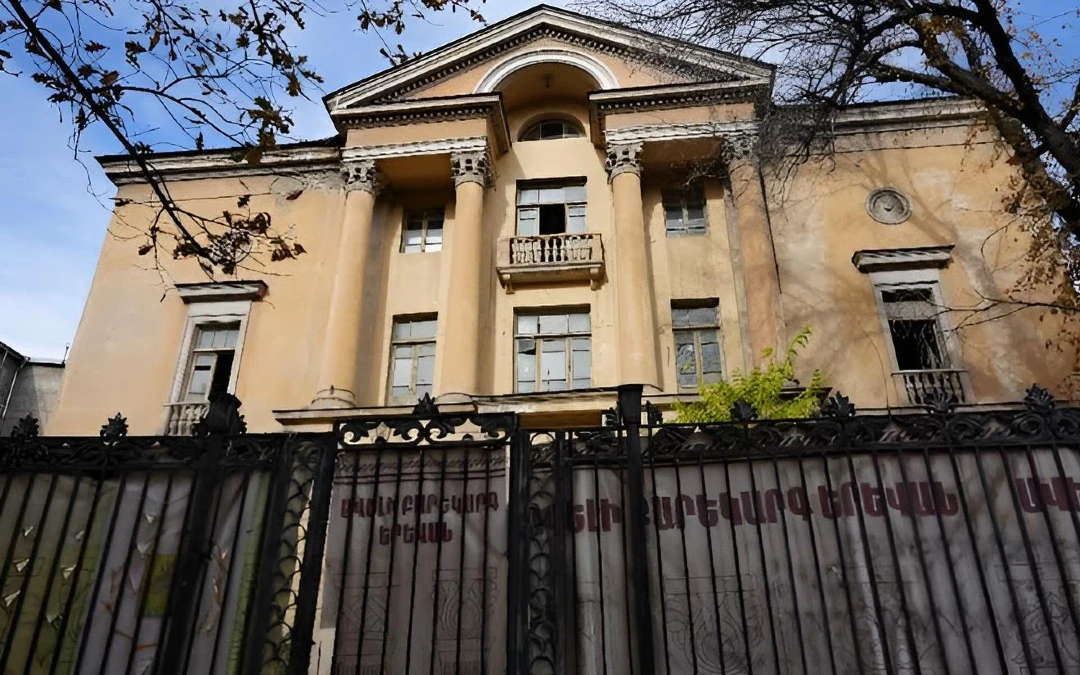
Moving from ancient folklore to modern Armenia, some places don’t need centuries-old legends to feel eerie. In the capital, Yerevan, there’s a building at 22 Moskovyan Street known as the House of Scientists. An investigation published by Media.am describes it as Yerevan’s "ghost building," noting that official archives have little information about it, while the internet is full of unverified stories and urban legends.
This example shows how a modern urban legend is born, not from a grave or a crime, but from a closed building, a mysterious Soviet past, a lack of information, and public curiosity. When explanations disappear, legends take their place. The abandoned building becomes a symbol: people don’t know what happened inside, so they fill the gaps with stories.
Mher’s Door: The Mountain That Echoes
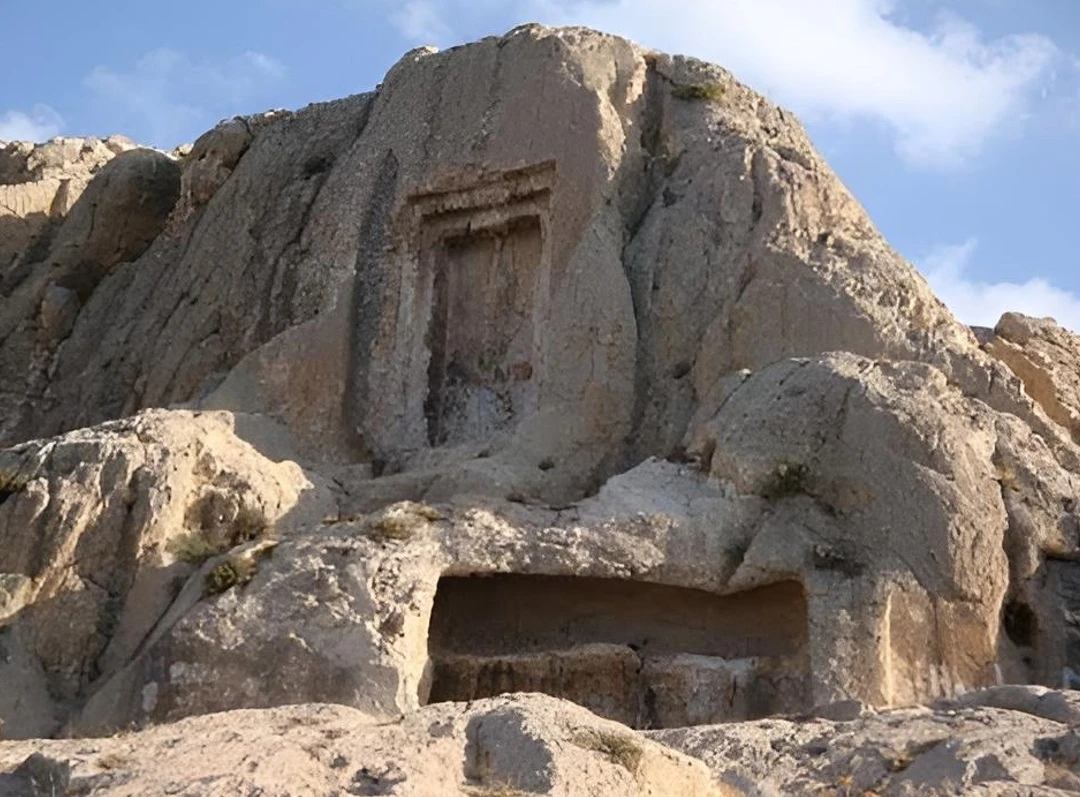
Among the Armenian tales from Van, one especially captivating place stands out: Mher’s Door, a carved mountain site steeped in legend. Houshamadyan notes that some storytellers spoke of mysterious "voices" coming from a cave behind this door, and the site was associated with local holiness and water believed to have healing properties.
The Cave Village and Other Sites
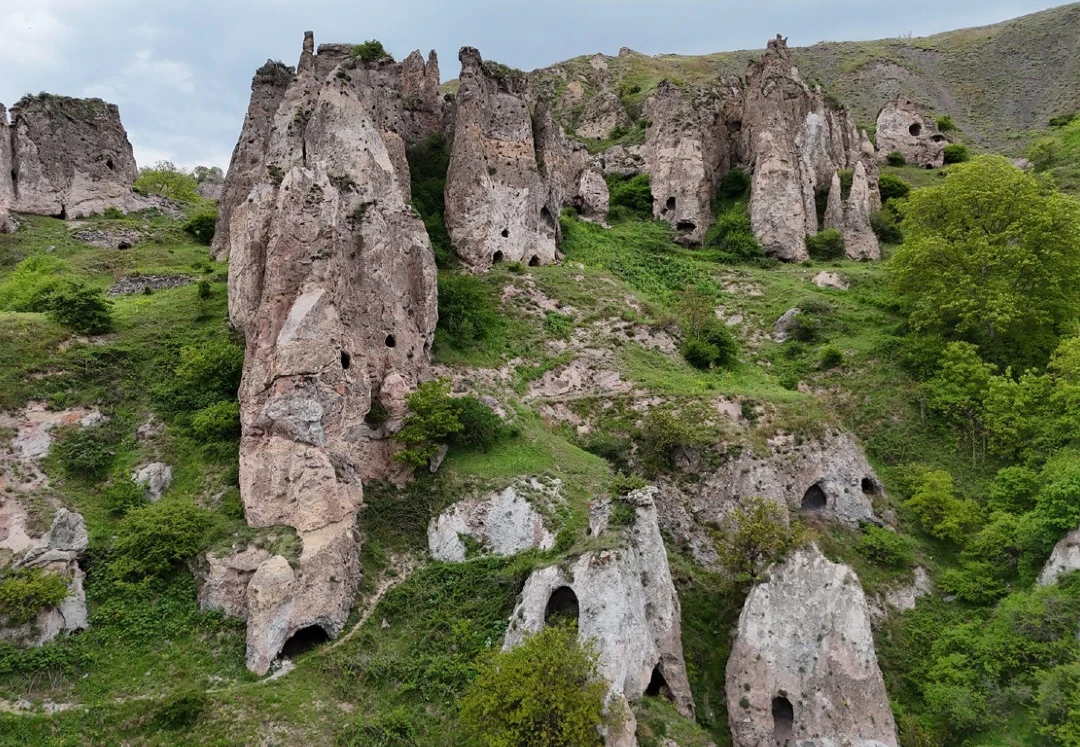
These places aren’t necessarily haunted by ghosts, but by memory, isolation, and the heavy atmosphere that lingers when a place loses its original purpose. Sometimes, ruin alone is enough to inspire fear.
Rituals and Practices
Hmayil: Protective Scrolls
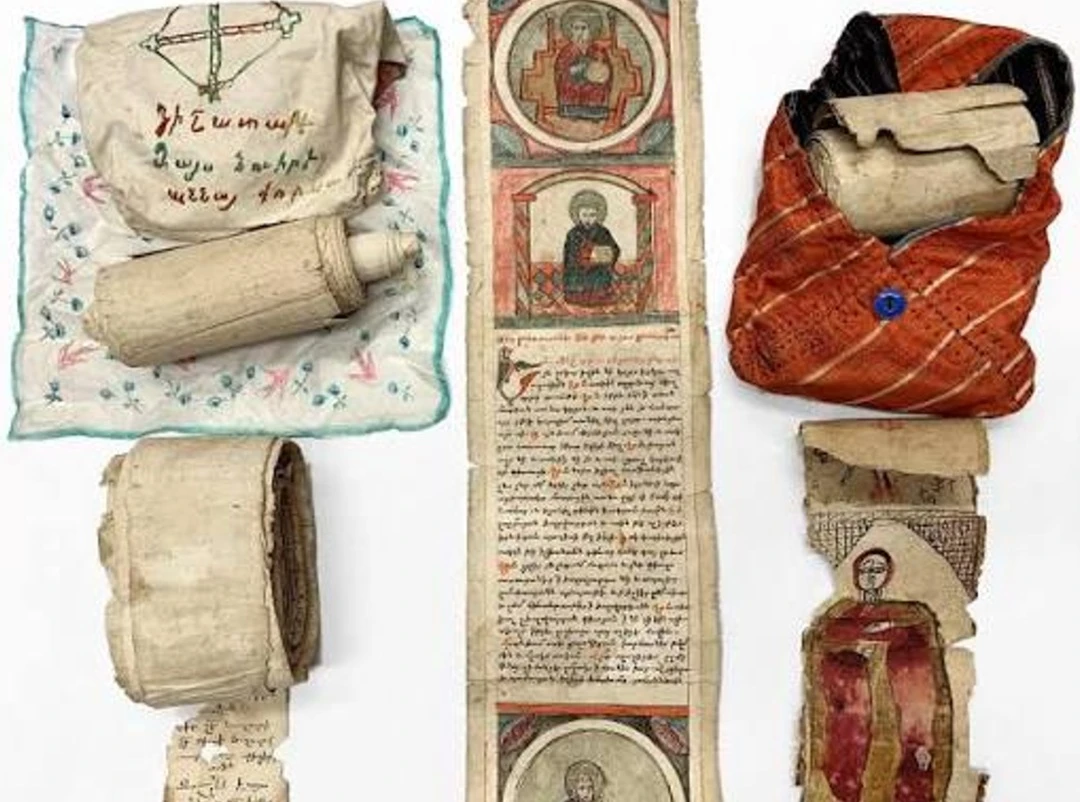
One of the most fascinating elements of Armenian supernatural tradition is the Hmayil. a protective prayer scroll written on long strips of paper, carried or hung for safeguarding. These scrolls combine religious texts, prayers, illustrations, Gospel passages, and sometimes elements of folk belief. They aren’t "magic" in the commercial sense, but occupy a space between popular religion and protection from evil, illness, or envy.
According to AGBU, Hmayil scrolls were used to ward off illness, misfortune, and evil, often featuring stories of defeating harmful spirits—like the tale of Al, associated with childbirth. Some scrolls were made specifically for women for protection during pregnancy and childbirth, while others were used by men seeking success in business, travel, or dealings with authority.
Portland State University showcases a physical example of an 18th-century Armenian Hmayil scroll, made of rolled paper and decorated with religious drawings, measuring nearly 478 centimeters long. Here, the scroll is more than just text, it becomes a physical shield: folded, carried, hung, and transformed into a symbolic barrier between the person and harm.
The Evil Eye: When Praise Becomes Dangerous
Fear of the evil eye exists in many cultures, but in Van Armenian tradition it’s known as "nyat." It was believed that admiration or praise could bring harm to a child or animal, especially if it came from someone known to have a "strong eye." So, compliments weren’t always innocent—they could require caution, a protective charm, or a ritual response.
Traditional stories recount various methods for warding off the evil eye, such as asking the person believed to have cast it on a child to 'withdraw' their gaze, burning locks of hair or pieces of clothing so the child can inhale the smoke, or mixing dust from the accused person's footprint into the child's bathwater. While these rituals may seem strange today, they reveal that the evil eye was once seen as a quasi-physical force—something that could be transferred, attached, and removed through counter-rituals.
In this sense, the evil eye isn't just about envy, it's a social system that regulates speech. Not every compliment is safe, and not all praise is harmless. That's why communities develop protective phrases and small traditions to safeguard what they cherish: children, animals, bodies, and livelihoods.
Rituals for 'Catching Fear'
One notable folk practice in Armenia is known in some studies as 'Catching Fear' or 'removing fear.' The idea is rooted in the belief that intense fear can make a person especially a child, ill, and that an experienced woman or folk healer can remove this fear through a specific ritual. According to a field study archived at the University of Tartu, this practice is common in villages and is based on the notion that fear is not just an emotion but something that can cling to the body and must be extracted.
This concept offers a fascinating lens for understanding folk medicine. In modern medicine, fear is seen as a psychological or neurological state. In folk imagination, however, fear can take on an almost physical presence: it enters the child, makes them sick, disrupts their sleep, and needs to be 'caught' and removed. Here, folk healing is not just a treatment but a ritual that restores the child's sense of safety.
Coffee Cup Reading
A more modern and social face of Armenian paranormal traditions is coffee cup reading, a popular custom in many Armenian communities, especially at family gatherings and among women. The ritual involves drinking coffee, then turning the cup upside down and interpreting the shapes left by the grounds on the bottom and sides.
The Armenian Mirror-Spectator published a piece about an art exhibition in Glendale that explored Armenian coffee and the ritual of tasseography, reading patterns in coffee grounds or tea leaves. This is as much a social and cultural event as it is a mystical one: coffee, waiting, stories, jokes, a gentle anxiety about the future, and a way to share worries. People don't just want to know the future—they want to hear it in symbols: a bird, a road, an eye, a door, a woman, or a mountain. In the end, the coffee cup becomes a mirror for people's hopes and fears.
Magic Within the Modern Family
Some might assume Armenian magic is just a relic of the past, but recent field studies show that magical practices and related accusations still surface in certain social contexts. A study on 'harmful magical practices in the modern Armenian family' notes that fortune-telling, healing, and harmful magic are still common in contemporary Armenia, and accusations of witchcraft often arise during family conflicts, especially among women in extended families.
Sometimes, 'magic' isn't just an explanation for illness, it's a language of conflict: a wife accusing a relative, a mother fearing for her son, a woman sensing that someone wants to harm her home, marriage, or children. In this way, magic becomes a social tool for expressing jealousy, power struggles, and anxiety within the family.
In this respect, Armenia is not so different from many societies, East or West. When direct confrontation is difficult, talk of 'magic' emerges as a moral and supernatural explanation: someone wishes harm, a hidden ritual is at play, and there is a need for protection or healing.
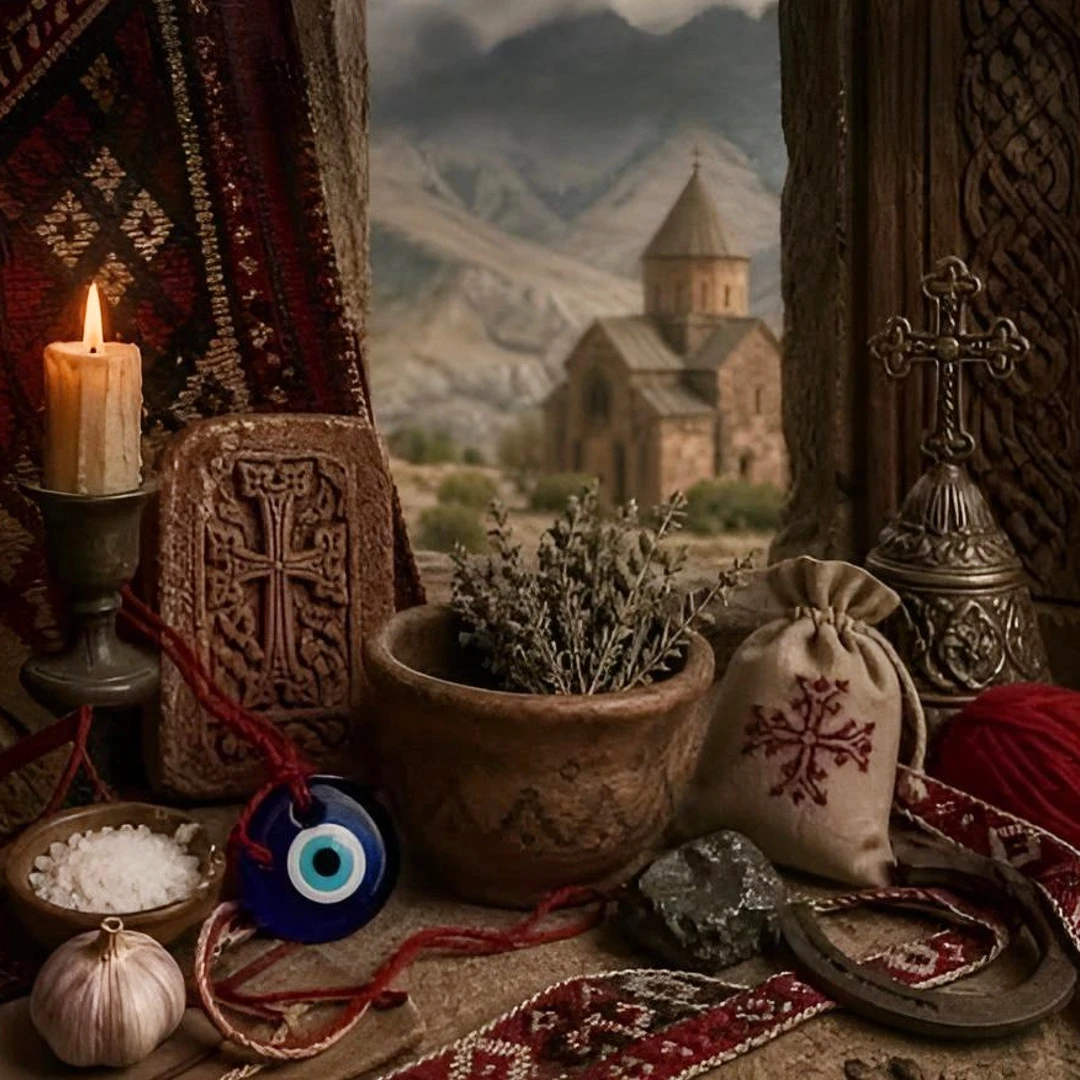
Ultimately, Armenia's folk imagination paints it as a land that stretches beyond geography—a place where monasteries stand alongside legends, prayers mingle with amulets, mountains coexist with dragons, and homes are watched over by guardian spirits. Between fear and protection, body and soul, stone and water, the ancient Armenian story reminds us that, for many peoples, the world has never been entirely visible.
About the Author