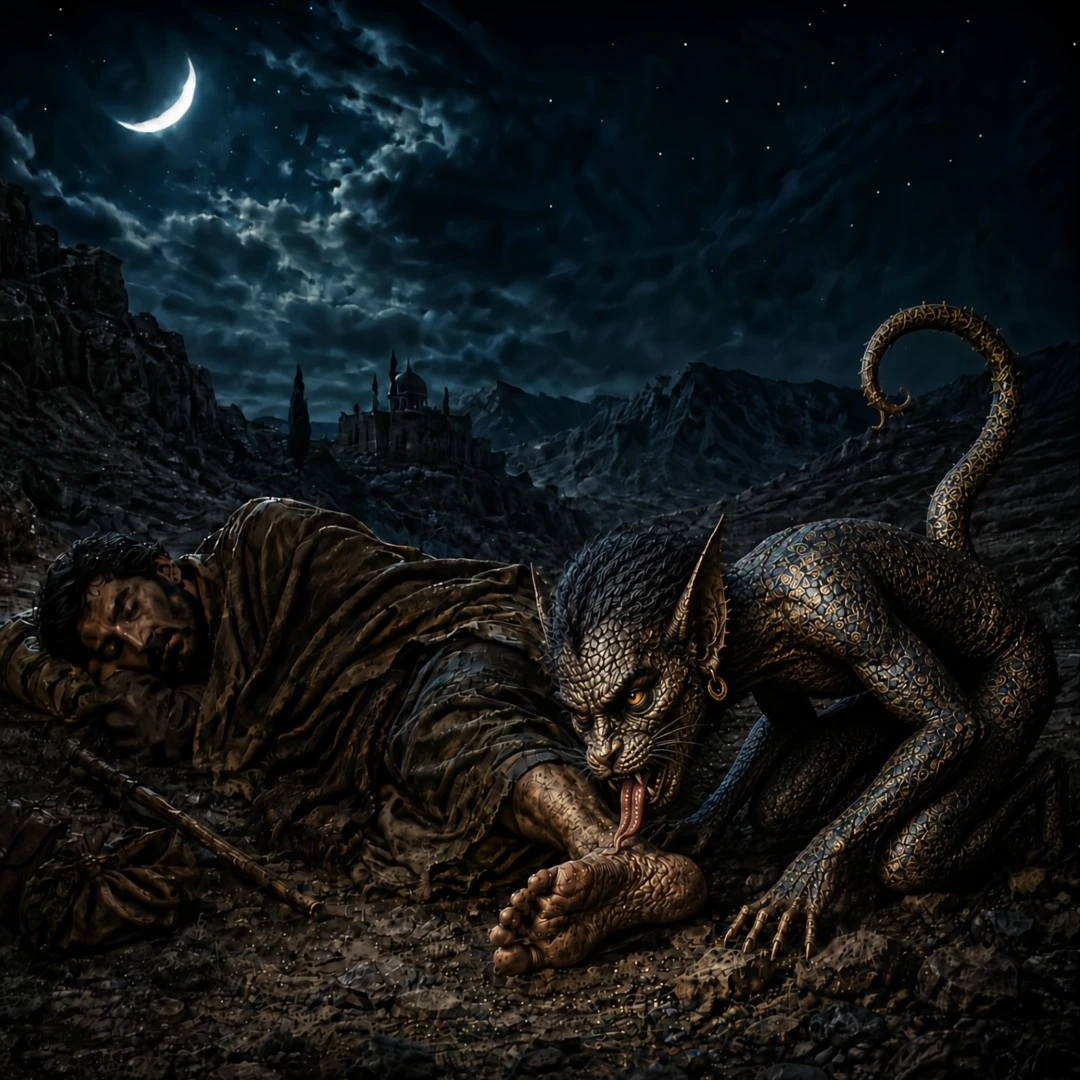
On the old desert roads, travelers had more to fear than just thirst, cold, or bandits. According to Persian folklore, a creature would wait for weary passersby to drift off to sleep, then silently approach and lick the soles of their feet, draining the very 'life blood' from their bodies.
This creature was called the 'Pa-lis,' meaning 'foot-licker.' It's one of the most unusual nocturnal beings in Persian tradition, a vampire without fangs, who doesn't attack the neck or rise from graves, but instead preys on sleeping victims by starting at their feet.
A creature stalking travelers
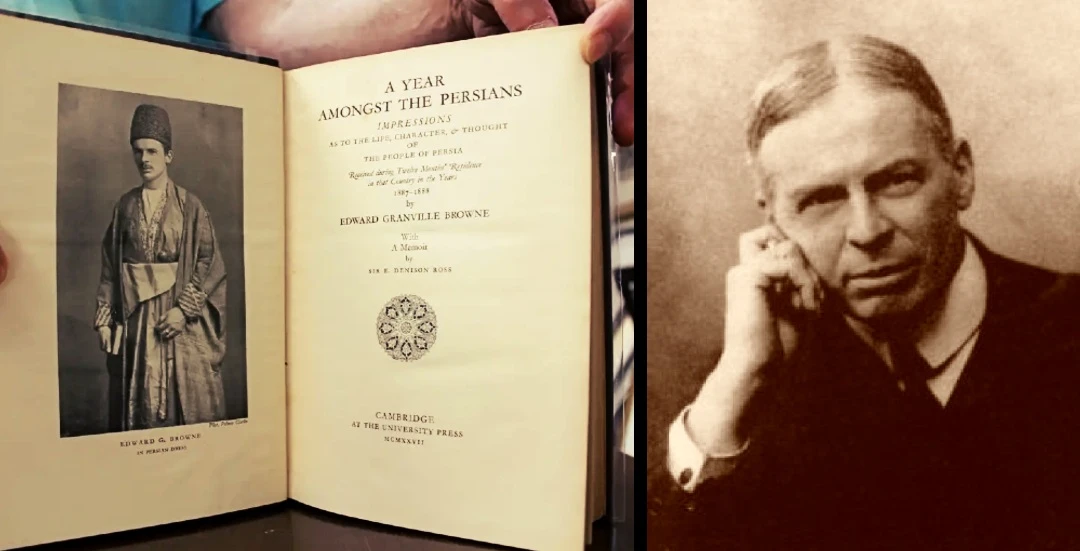
One of the most famous accounts of the Pa-lis comes from British orientalist Edward Granville Browne, who traveled across Iran between 1887 and 1888 and published his observations in his 1893 book, 'A Year Amongst the Persians.'
While crossing a desolate region known locally as the 'Valley of the Angel of Death,' Browne heard tales of ghouls and spirits lurking near caravans. Some would mimic the voices of loved ones to lure travelers, while others appeared as frail old people before revealing their monstrous nature.
The Pa-lis, however, didn't pursue alert travelers. It waited until they fell asleep outdoors, then crept up to their feet and licked the soles, draining away their blood and life.
Browne didn't provide a clear description of the creature's appearance , it's unclear whether it resembled a human, an animal, or something in between. In these stories, the bizarre method of killing seemed more important than the monster's looks.
How did the two-headed man trick it?
According to the story, two mule drivers from Isfahan were forced to spend the night in the desert. Knowing the danger of the Pa-lis, they lay down under a blanket in opposite directions, so their feet met in the middle and a head was visible at each end.
The Pa-lis arrived and circled the blanket, searching for a foot to lick. Each time it approached one end, it saw a head; when it tried the other, it found another head. Convinced it was facing a strange two-headed man with no feet, the creature was baffled.
The creature withdrew in astonishment, reportedly saying:
"I've crossed a thousand and thirty-three valleys, but I've never seen a man with two heads!"
This story reflects a common theme in folklore: the monster is dangerous but not very clever, and humans can outwit it. There's also a practical message, traveling alone makes you easy prey, but staying close to a companion can save your life.
The foot-licking demon in a Persian manuscript
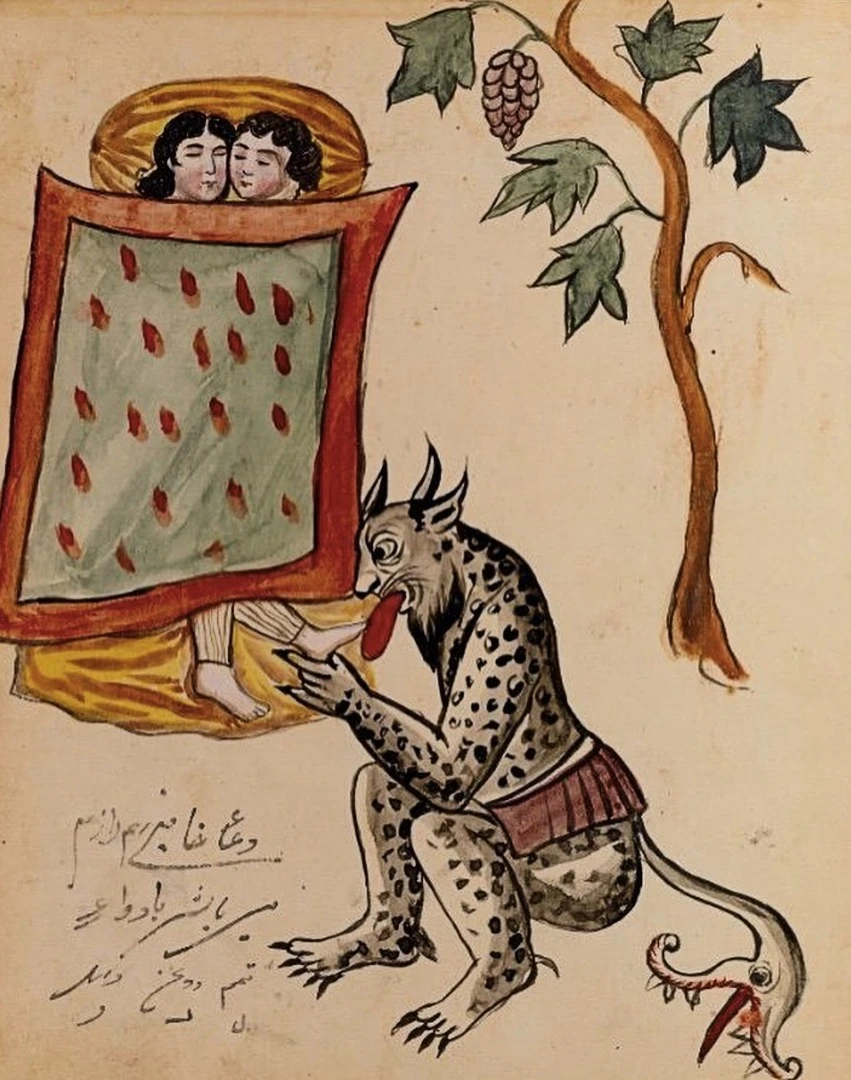
The name Pa-lis resurfaced recently with the circulation of an image from a Persian manuscript held in Princeton University's Islamic Manuscripts Collection. The illustration shows a sleeping man while a strange, cat-like creature crouches at his feet, extending its tongue toward the sole.
The manuscript is linked to the city of Isfahan and dates back to the early twentieth century. Its author appears to have been a fortune-teller, including texts on astrology, talismans, and spells, along with illustrations of creatures and spirits associated with zodiac signs.
The manuscript contains dozens of watercolor illustrations, not all of which depict demons. There are also angels and animals symbolizing the zodiac, but the most unsettling images show creatures visiting people in their sleep approaching their eyes, pulling out their teeth, or tormenting their feet.
The creature known as the 'licker' appears to be a cross between a cat and a reptile, with a strange tail ending in a mouth full of teeth. Over time, this image became the most widely recognized depiction of the Balis.
However, none of the available sources explicitly name the creature in the illustration as the Balis itself. The association is mainly based on their shared behavior: a being that approaches a sleeping person and licks their feet. So, the drawing might represent the Balis, or it could be another demon believed to perform the same act according to the manuscript's magical traditions.
The manuscript was not a horror book.
These creatures were not drawn simply to entertain or frighten readers. The manuscript belonged to a world where divination, astrology, and protective magic intertwined. Each spirit or demon was thought to have its own identifying signs and rituals or talismans that could be used for protection.
In this context, a nightmare wasn't seen as just a random dream, but as a visitation from a specific entity. After hearing a description of the dream, a fortune teller would try to identify which demon had appeared and then prescribe a spell or amulet to ward it off.
The illustrations served as a guide for identifying these creatures: what they looked like, how they interacted with humans, and what people should do to protect themselves.
However, this manuscript doesn't reflect mainstream religious beliefs in Iran; instead, it offers a glimpse into the world of fortune-telling and talismans during its era.
Why does it lick the feet?
The Palis differs from the well-known European vampire. It doesn't bite necks, nor does it need to enter homes or seduce its victims. Instead, it preys on exhausted travelers, waiting for them to fall asleep.
The focus on feet may be tied to the story’s setting. For travelers, feet are especially vulnerable to injuries, cold, and bites from scorpions or insects especially when sleeping outdoors in the desert. Someone might wake up with pain, numbness, or a burning sensation, not knowing what happened during the night. The legend offers a chilling explanation: an invisible creature was licking their feet.
Feet might also carry symbolic meaning, they’re the part of the body that touches unknown ground, the point where a person connects with the wilderness. It’s from this boundary that the monster begins to infiltrate a person’s strength and life.
These are just possible interpretations; there’s no evidence that the legend was specifically created to explain animal bites or foot pain.
Sleep and the Moment of Losing Control
The power of the Palis story lies in the fact that it only appears during sleep. While sleeping, a person can’t watch what’s approaching or know what’s touching their body, and might wake up unable to move or speak.
This scenario appears in many cultures: demons sitting on a sleeper’s chest, spirits choking them, witches paralyzing them, or creatures stealing their breath or blood. The names differ, but the experience is nearly the same consciousness returns before the body can move again.
Today, this condition is known as sleep paralysis or sleep paralysis. It occurs when the mind wakes up while the body remains temporarily paralyzed, a state linked to sleep. This can be accompanied by vivid hallucinations seeing shadows in the room, hearing footsteps, sensing someone nearby, or feeling something touch the body.
Did the Palis legend originate from experiences like these?
It's possible, especially since exhaustion, disrupted sleep, and fear of the road can increase the likelihood of unsettling nighttime experiences. Still, sleep paralysis can’t fully explain the legend; it shows how someone might feel attacked at night, but it doesn’t prove that every Palis story came from this phenomenon.
A Monster That Acts as a Guardian
Ancient roads were full of real dangers: getting lost, cold, poisonous animals, thieves, and being separated from the caravan. The Palis may have served as a warning—don’t sleep alone in the desert, don’t stray from your companions, and don’t doze off in exposed places.
The story of the two men reinforces this message: they survived because they stayed together and helped each other, while the isolated sleeper became the perfect victim. In this way, the monster indirectly became a guardian, forcing travelers to be cautious and stick with the group.
A direct warning might be forgotten, but a story about a demon that licks your feet until it drains your blood is something you’ll never forget.
Between Story and Image
There’s no real evidence that a creature once roamed the deserts of Iran, preying on the feet of sleeping travelers. What we actually have are two distant sources: a folk tale recorded by Brown in the 19th century about a being called the Palis, and an illustration from a later Isfahani manuscript showing a demon licking a sleeping man’s foot.
The internet brought these two together, giving the old story an image it never had before turning the crawling, feline-like monster into the most recognizable form of the Palis.
But the mystery surrounding its true identity only adds to the legend’s power. It taps into a deep, human fear: sleeping far from safety, and losing control over your body in a place where you have no idea what might be lurking.
Maybe the Palis doesn’t need to appear in full. Sometimes, it’s enough for a traveler to wake in the dead of night and feel something cold and wet slowly sliding across the sole of their foot.
About the Author