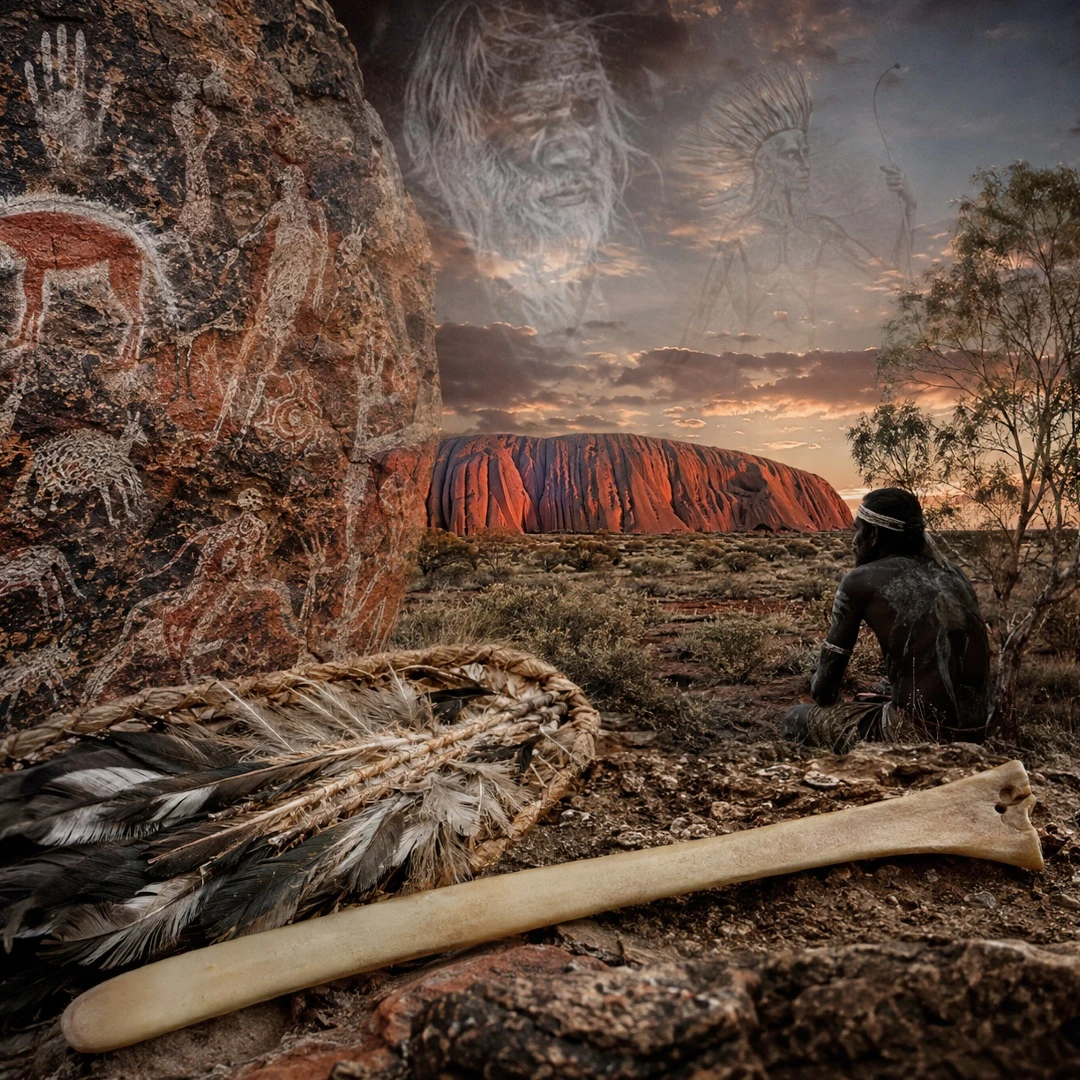
Imagine a man standing before someone sentenced to death. He doesn't stab, poison, or even touch him. Instead, he kneels, points a slender bone prepared in a previous ritual toward the condemned, utters specific words, and then walks away.
There’s no wound, no bleeding, no visible mark. Yet, stories from central Australia tell of people who, upon realizing they were targeted by this ritual, fell into terror and despair, sometimes even dying later. This practice is known as Bone Pointing, and in some traditions, it's linked to a mysterious figure called the Kurdaitcha.
But the so-called 'killing bone' is just a small doorway into a much broader world. Among many Indigenous Australian cultures, there are beliefs in spirits inhabiting rocks and water, ancestral beings who shaped the land, people said to see what others cannot, sacred places with strict ritual rules, dreams that carry knowledge, and songs and paintings that not only tell myths but also preserve maps of an entire spiritual landscape.
What we now call the 'paranormal' was never seen as a separate realm by these cultures, it was simply part of reality.
A world where the spiritual and material are inseparable
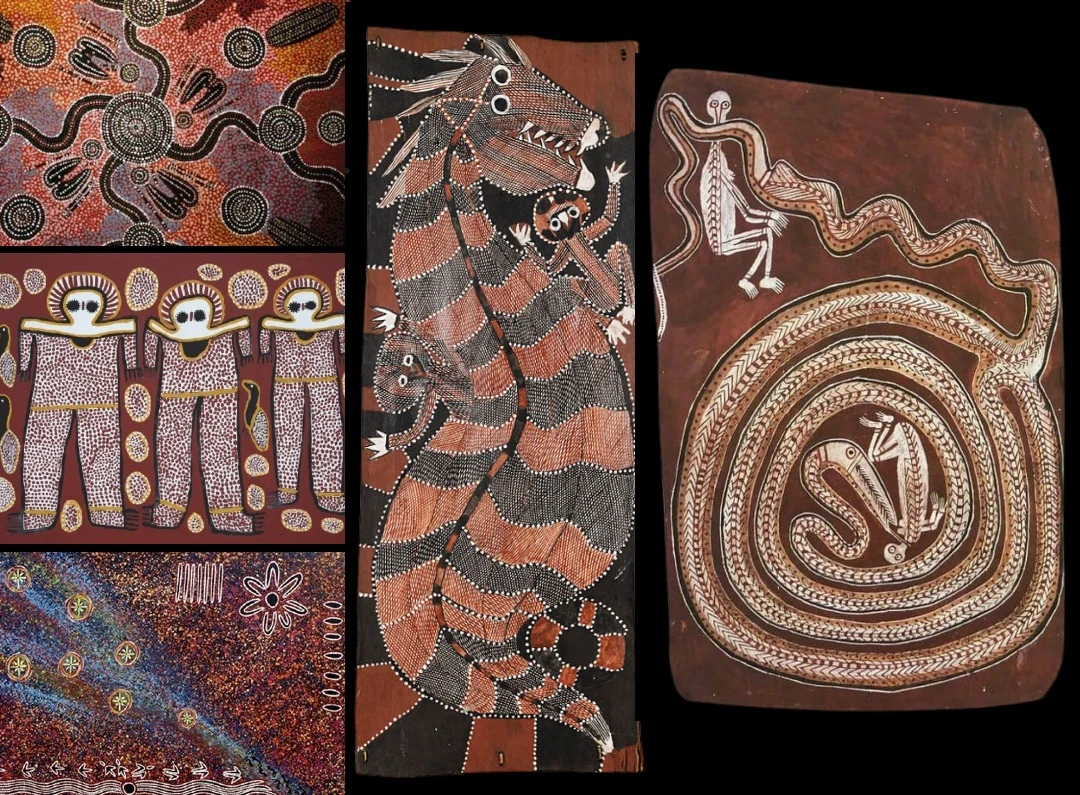
It's a mistake to talk about 'the religion of Indigenous Australians' as if it were a single faith. Hundreds of peoples and language groups have lived on the continent, each with its own stories, names, and rituals. Still, a recurring idea is that the land isn’t just inert ground for humans to live on; it’s deeply connected to ancestors, stories, laws, and spiritual forces.
Researchers use the term 'The Dreaming' and sometimes the older term 'Dreamtime' to refer to this world of sacred stories and knowledge. It goes by different local names, such as Jukurrpa or Tjukurpa in parts of central Australia.
Translating it as 'Dreamtime' can be misleading. It’s not about dreams during sleep, nor is it simply a mythical era that ended long ago.
According to these beliefs, ancestral beings moved across the land, shaping its features, creating water sources, mountains, and valleys, and giving humans laws, rituals, and knowledge. The traces of their journeys remain in the landscape. So a particular rock, waterhole, or hill is more than just a natural feature, it’s part of a sacred story that continues to this day.
When the ancestral beings shaped the world
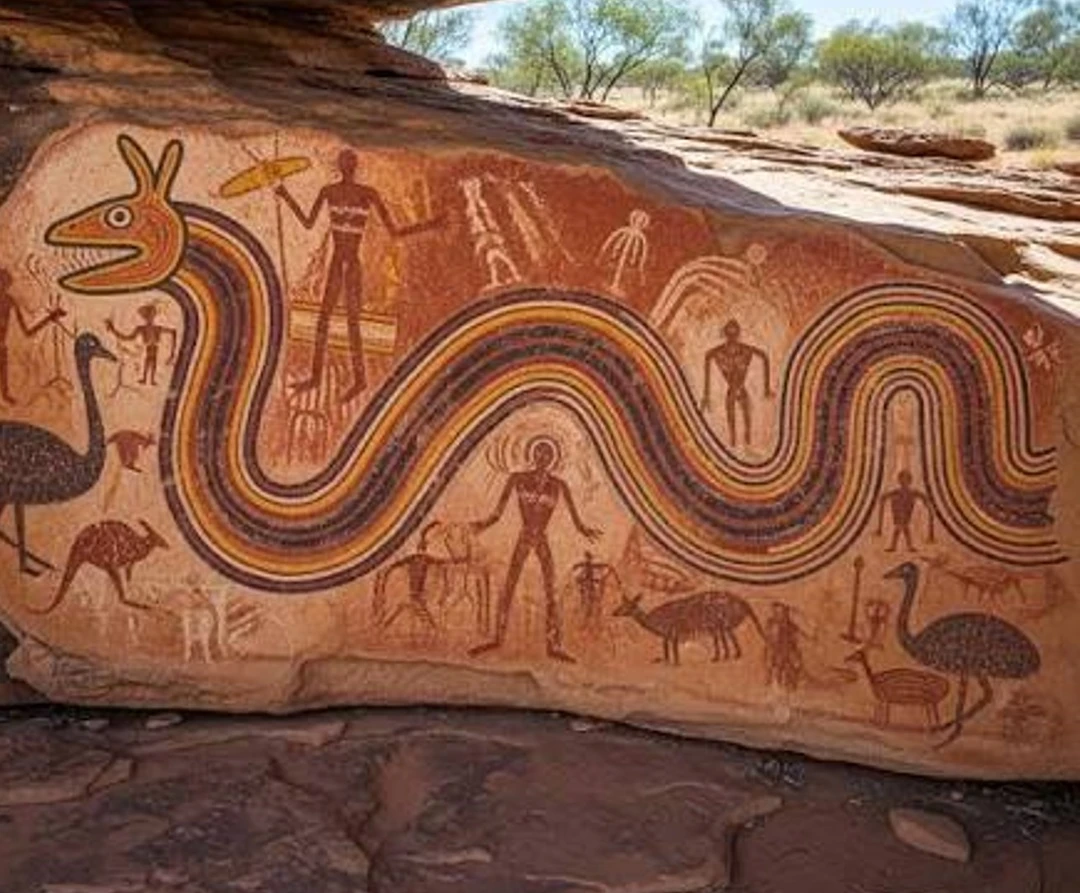
One of the most famous beings in various Australian traditions is the Rainbow Serpent. Its stories, names, and characteristics vary greatly from region to region.
In many accounts, the Rainbow Serpent is associated with water, fertility, rain, and the shaping of the land. But it's not always a benevolent force, it can be a source of life and protection, but also a dangerous being that punishes those who break taboos or approach certain places.
In some stories, the serpent moves through the land, and rivers, valleys, or waterways form in its wake. The myth isn’t just an explanation for a landscape, the land itself becomes physical evidence of the story. This is one of the remarkable features of Indigenous Australian heritage: geography and myth are deeply intertwined.
Songlines: Maps that aren’t drawn on paper
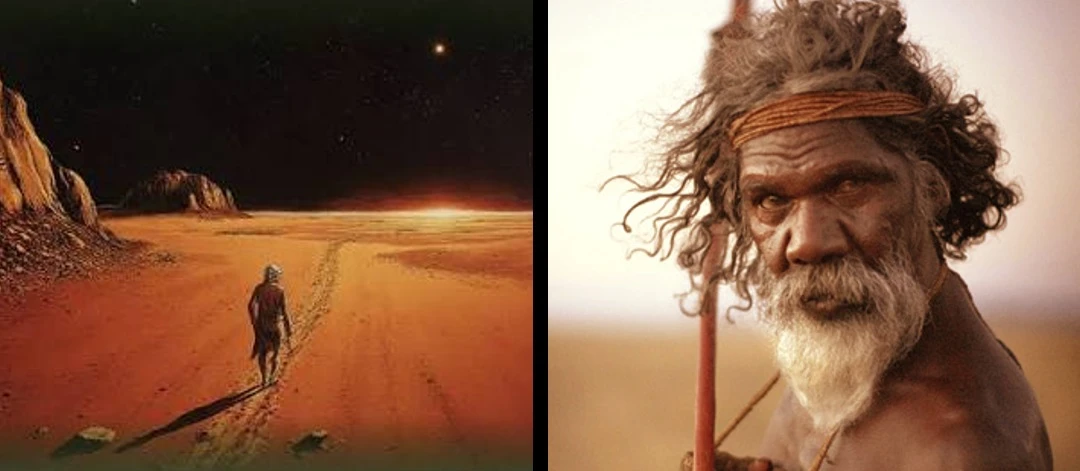
Closely related are the so-called Songlines, networks of stories, songs, and sites that trace the journeys of ancestral beings across the land. Some of these routes stretch for vast distances, crossing the territories and languages of many groups. Through songs, people remember the locations of water, mountains, crossings, and travel directions. But these paths also carry events, laws, and spiritual stories.
Some have compared them to maps stored in memory rather than on paper. But they’re more than maps: traveling along a Songline can mean retelling the journey of an ancestor and passing through places connected to their actions. The path itself is a story, and the story is geography.
Mimi: The slender rock-dwellers
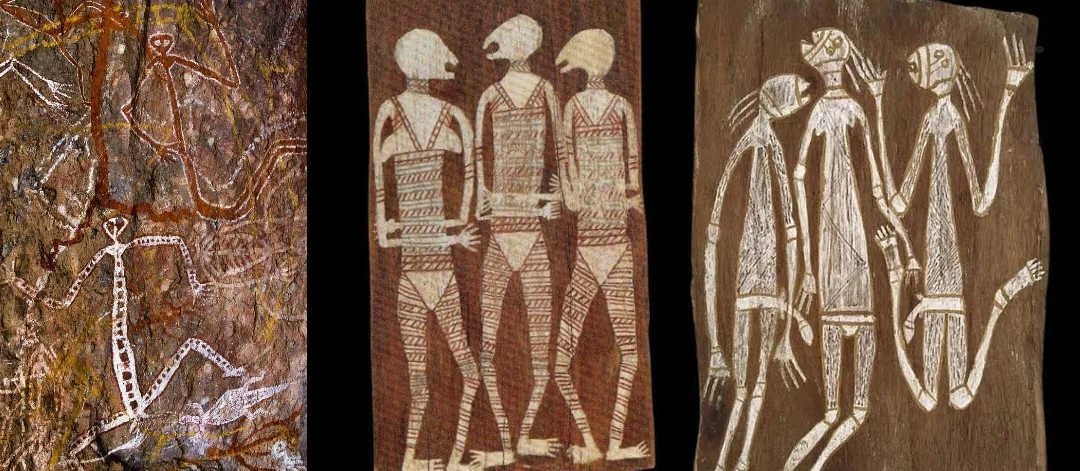
In northern Australia, especially in Arnhem Land, stories and traditional art feature beings known as Mimih or Mimi. They're often depicted with extremely tall, slender bodies , so fragile, some tales claim that strong winds could pose a danger to them.
Mimih are believed to dwell within cracks and crevices in rocks, inhabiting a world that's largely inaccessible to ordinary people. Fascinatingly, some traditions credit them with teaching humans essential skills like hunting, dancing, singing, and painting. However, they're not always portrayed as friendly; certain stories warn that Mimih might lure people into the rocks or their own realm, from which they may never return. Like many figures in global folklore, Mimih occupy a mysterious space between being spiritual guides and beings to be wary of.
Yawkyawk – Water Women
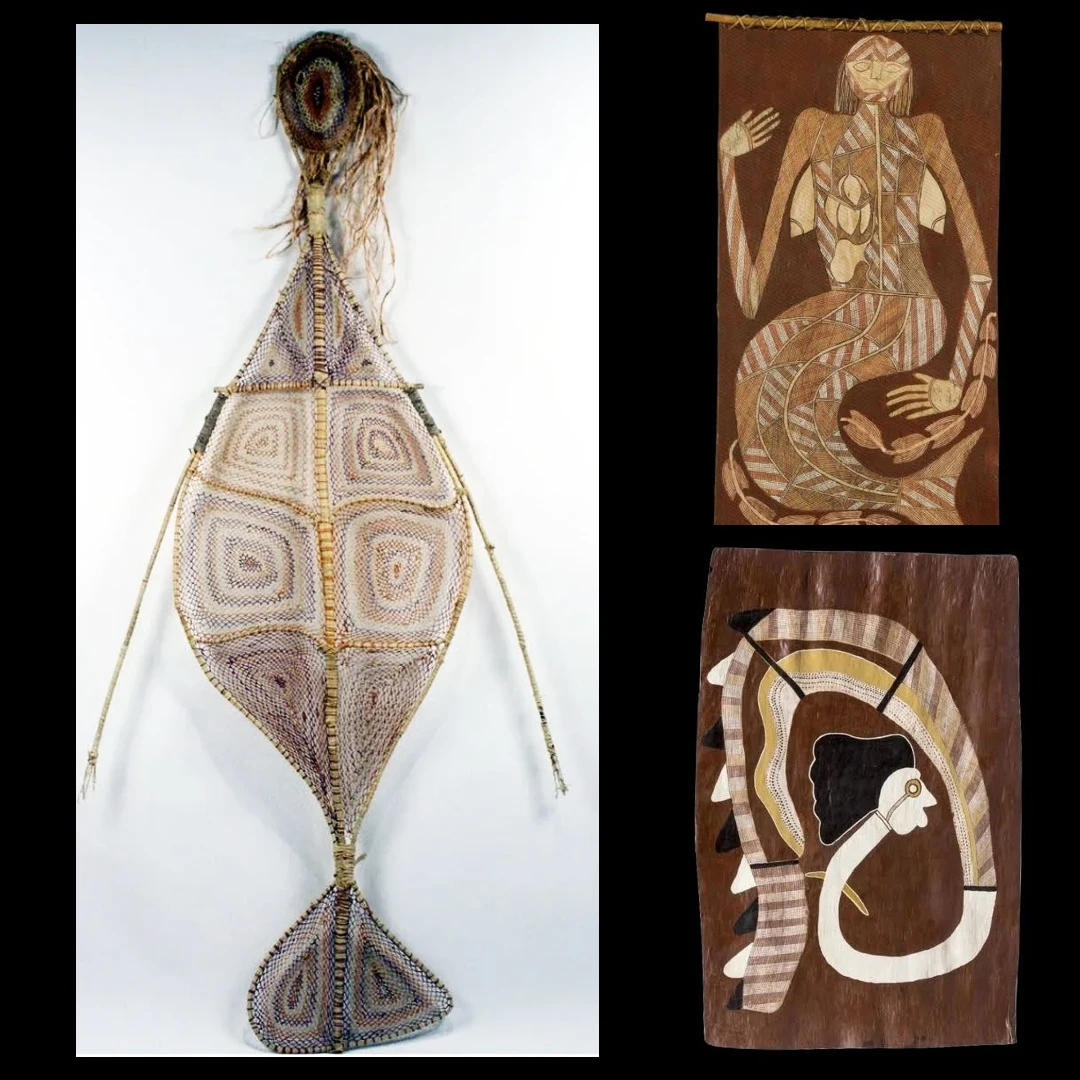
From a similar environment come other beings known as Yawkyawk. These are typically depicted as female spirits associated with waterholes, streams, and springs. Traditional art sometimes shows them with fish-like tails and long hair resembling aquatic plants.
Because of these features, modern writers often compare Yawkyawk to mermaids, though this comparison is superficial and doesn't capture their true cultural significance. Yawkyawk are linked to water, fertility, and sacred sites, and some stories describe their ability to leave the water and move about on land.
Once again, we see the recurring idea: water is not just a source of life, but also a boundary between the human world and the realm of spirits.
Bunyip – Swamp Monsters
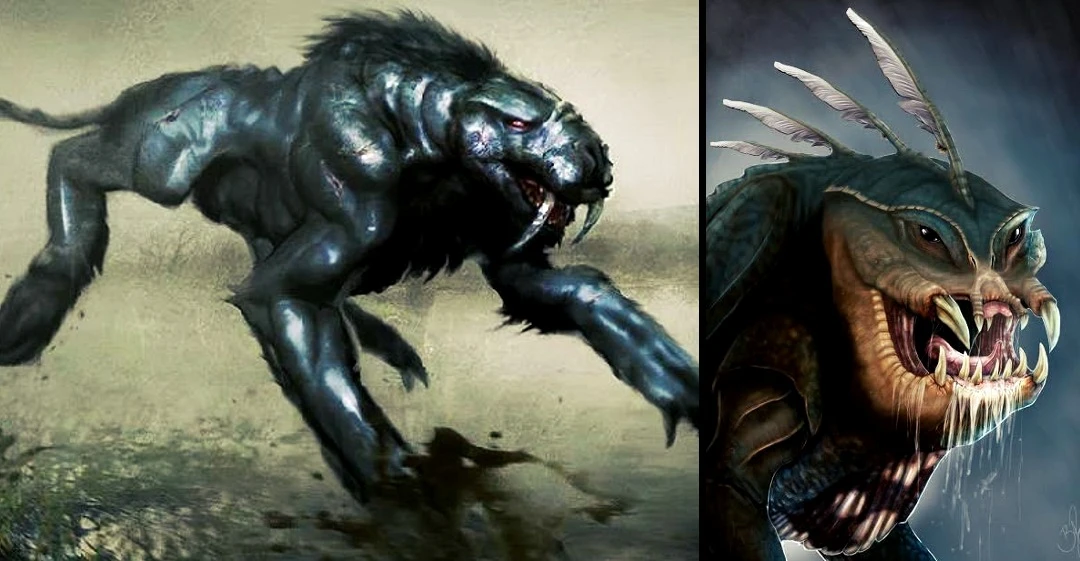
The Bunyip is one of the most famous names to make its way from Australian folklore into modern popular culture. Stories of mysterious creatures living in swamps, rivers, and lakes were widespread, but their descriptions varied—sometimes appearing as huge animals, other times as strange aquatic beings. Their calls were often described as terrifying sounds heard at night near the water.
Over time, the Bunyip became known in Australian media and literature as a kind of 'swamp monster.' It's difficult to know how closely this modern image matches the original beliefs, as local stories became mixed with interpretations from European settlers.
Still, the tales reveal a recurring theme: deep bodies of water were often regarded as home to powerful forces that deserved both respect and caution.
Kurdaitcha – The Silent Executioner
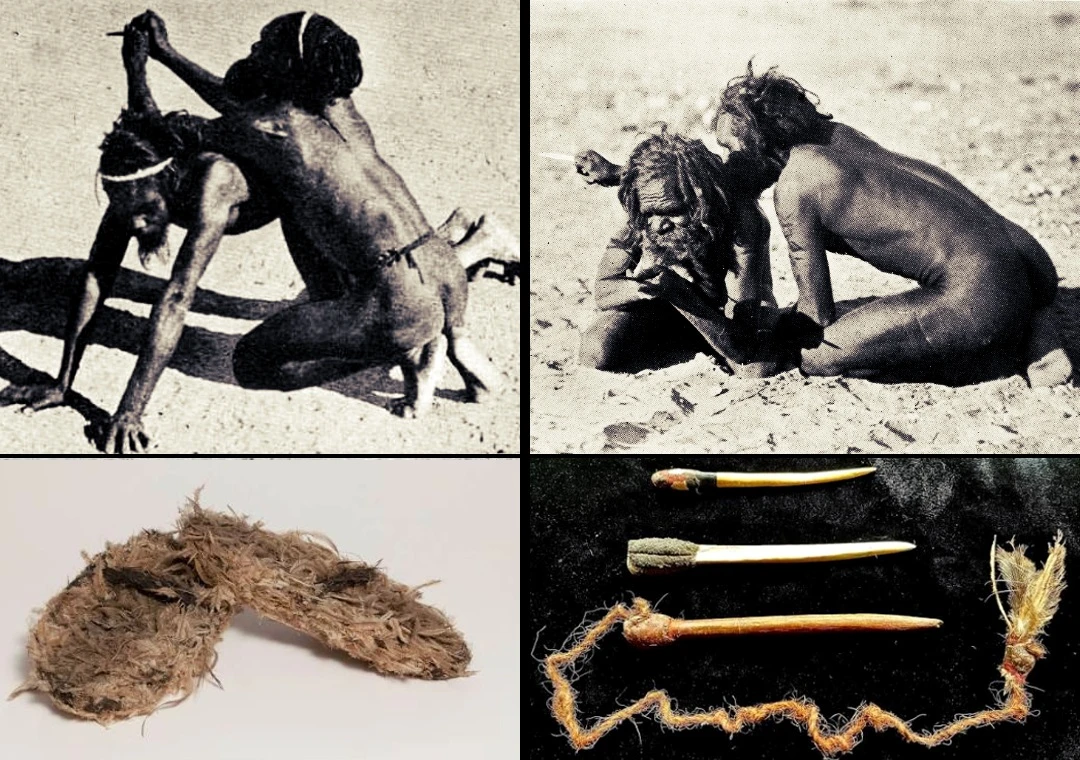
In central Australia, a very different figure emerges: the Kurdaitcha, a name closely tied to the traditions of the Arrernte/Aranda people. Historically, the Kurdaitcha became known as an enforcer of ritual punishment, targeting those accused of serious offenses, sorcery, or causing another's death. One of the most unusual aspects associated with the Kurdaitcha is the use of special sandals made from emu feathers, plant fibers, and human hair.
Authentic examples of these sandals are preserved in museums. Lightweight and feather-covered, they inspired stories claiming they allowed the wearer to move almost silently, making it possible to track their target without leaving a trace.
This is where the image of the Kurdaitcha, which later fueled the imagination, takes shape: a silent man emerging from the wilderness, carrying out a sentence that requires no sword.
Pointing the Bone
The most famous ritual associated with this image is known as 'Pointing the Bone.' A bone or sharp object is prepared through a specific ceremony, then pointed at the intended target. In some accounts, the practitioner kneels, aims the bone, and recites special words, believing the object has acquired ritual power. The bone doesn't need to physically touch the victim. the fear begins as soon as the person learns the ritual has been performed against them.
This is where the phenomenon becomes truly strange. Researchers and doctors have described cases where people believed to be cursed fell into states of extreme fear, despair, loss of appetite, and physical collapse.
Can belief be deadly?
Science offers no evidence that a bone can be supernaturally charged to kill someone from a distance. However, there is a well-known psychological and physiological phenomenon called the Nocebo Effect the negative counterpart to the placebo effect. When someone is deeply convinced that something will harm them, real symptoms can appear due to expectation and fear. In extreme cases, chronic terror can severely disrupt the nervous system, heart, and circulation, especially in communities where curses are believed to have absolute power and escape seems impossible. This raises a more complex question: if someone dies because they truly believed the bone would kill them, was it the bone—or their belief—that caused their death?
Men who see what others cannot
Beyond harmful magic, various groups have recognized figures similar to healers or wise men, sometimes referred to by researchers as 'Clever Men,' though local names and roles differ from region to region.
Some of these individuals were believed to diagnose illness through spiritual means, see or communicate with entities, enter altered states of consciousness, and uncover hidden causes of disease.
Some stories describe them extracting symbolic objects from a patient's body or sending forces into the body to heal illness.
Reducing them to the term 'sorcerers' misses a crucial part of their role. The same person might be a healer, a keeper of knowledge, a spiritual intermediary, and a respected community figure all at once.
Magic through images
One of the most intriguing practices involves forms of sympathetic magic—the belief that what happens to a representation of a person can affect them directly. In some drawings linked to harmful magic, the target is depicted in a distorted way, or objects are shown piercing parts of their body.
This idea is similar to those found in other, geographically distant cultures: creating a link between a person and their image or a symbol representing their body, then harming the symbol in hopes that the effect will transfer to the original. Remarkably, this principle appears in many forms around the world, even where there is no clear direct contact between cultures.
Dreams are more than just dreams
Dreams also hold an important place in several Indigenous Australian traditions, though they should not be confused with the concept of The Dreaming. Personal dreams may carry messages, warnings, encounters with deceased relatives, or spiritual beings, depending on local beliefs. In some cases, visions in dreams can provide knowledge or explain mysterious events. Sleep thus becomes a state where the boundaries between the human and the unseen world may blur. This idea is not unique to Australia, belief in dreams as a channel for spirits and ancestors is found from Siberia to Africa and the Americas.
Places You Should Never Enter
When land is tied to ancestral events, certain locations naturally hold a special status. Some sites are considered sacred, and access may be restricted based on age, gender, group membership, or specific ritual knowledge.
The risks associated with these places aren't always limited to social consequences. It's often believed that unauthorized entry can expose a person to dangerous spiritual forces, blurring the line between religious taboos and physical boundaries.
The real question isn't, 'Is this place haunted?' but rather, 'Who does this place belong to, and what happened here in the time of the ancestors?'
Where does the ordinary end and the supernatural begin?
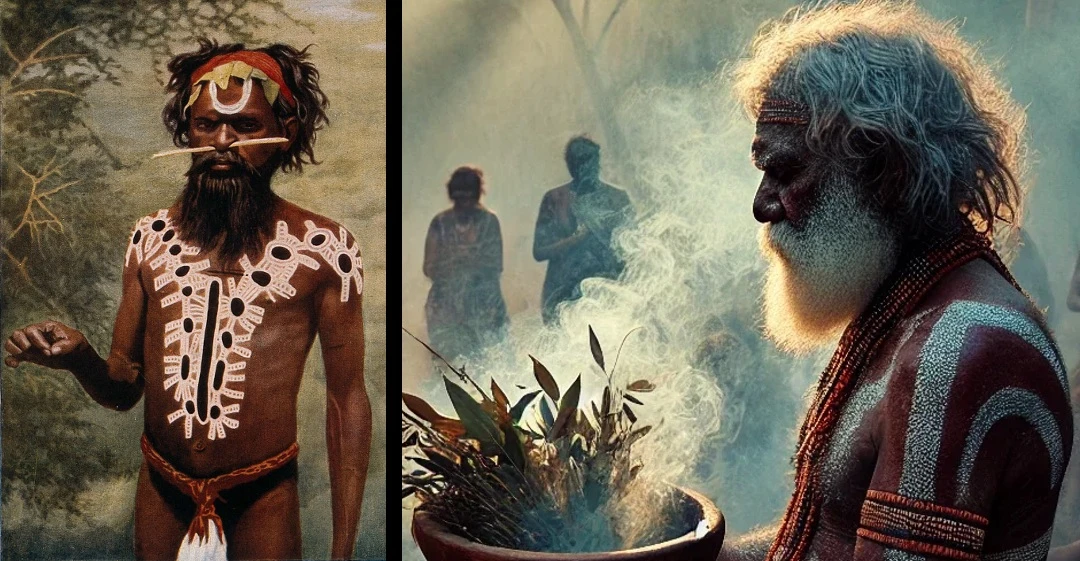
From an outsider’s perspective, it’s easy to label these beliefs as 'myths,' 'magic,' or 'superstition.' But such terms often fail to capture how these ideas actually function within their original cultures.
The spiritual world isn’t necessarily a separate realm that only opens up in moments of the extraordinary. Instead, it’s woven into the land, animals, water, people, and memory.
Spirits might inhabit rocks, songs can serve as maps across the desert, a mountain could be the remnant of a legendary being, and a single bone might become a death sentence if everyone believes in its power.
This doesn’t mean we have to accept these beliefs as scientific fact. there’s no experimental evidence for spirits inside rocks or for curses transmitting deadly energy from afar.
But reducing everything to 'mere illusion' also misses the point. These symbolic systems have endured for thousands of years, shaping how people relate to land, community, and memory. That’s why the supernatural world among Australia’s Indigenous peoples feels so different from the usual stories of ghosts and magic. The hidden world isn’t something that begins after death or exists in some distant place, it’s under the water, in the rocks, along ancient paths, within a song, or in a dream.
Sometimes, it’s found in a small bone that doesn’t break the skin, but simply pointing it at someone can be enough to make them believe their end has begun.
About the Author