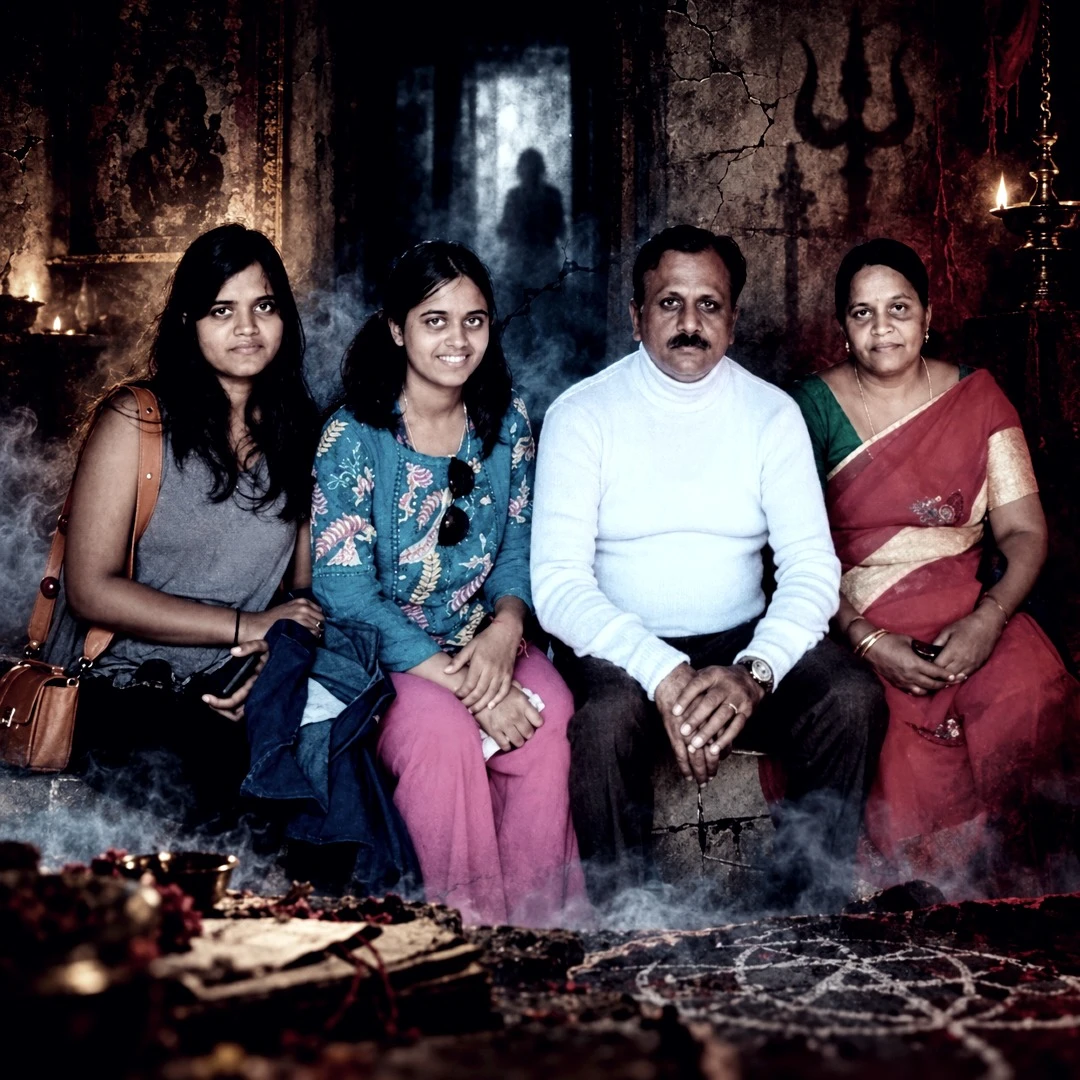
On the evening of Sunday, January 24, 2021, police arrived at the home of an Indian family in Madanapalle, Andhra Pradesh, and were confronted with a horrifying scene: two young sisters had been killed in separate rooms, ritual objects were scattered throughout the house, and their parents appeared to be in a strange state of shock as if what had happened was not a murder, but an incomplete spiritual ritual.
According to initial investigations, the tragedy began around 1 p.m., when the younger daughter, Sai Divya (22), was stabbed with a trident known as a 'trishula' and struck on the head with metal gym weights. About four hours later, her older sister Alekhya (27) suffered a similar fate—her head was violently struck with one of the weights, a small copper pot was placed in her mouth, and her hair showed signs of burning. Police linked these objects to mysterious rituals practiced by the family, though the exact meaning of each item remained unclear. As for who carried out the attacks, conflicting accounts emerged during the investigation and psychological assessments.
What shocked investigators even more than the brutality of the crime was the parents' reaction. Instead of showing grief or asking for help, they insisted that the rituals should not be interrupted and claimed their daughters would return to life at dawn. The Times of India quoted them telling police:
"Give us until the end of the night, and we will bring them back to life." ».
According to their initial statements, this was not simply an attempt to avoid responsibility. The parents genuinely seemed to believe that their daughters' deaths were only a temporary stage before their rebirth into a new world after the end of a dark era and the beginning of a golden age they had been awaiting.
An educated family united by spiritual beliefs
The father, V. Purushotham Naidu, was an associate professor of chemistry and deputy director at a government women's college, holding advanced degrees including a PhD. His wife, V. Padmaja, had a master's degree in mathematics with an academic excellence medal and managed a private educational institution.
They had two daughters: the elder, Alekhya, studied at the Indian Institute of Forest Management in Bhopal, while the younger, Sai Divya, was a business graduate pursuing her musical talent at a conservatory associated with renowned Indian musician A. R. Rahman.
From the outside, the family appeared successful and stable. Neighbors knew them as educated people living an ordinary life, and the father's colleagues described him as professional and above suspicion.
But beneath this image, the family had gradually become immersed in spiritual and meditative beliefs, taking an interest in the teachings of Indian figures such as Osho Meher Baba and Sai Baba. While these interests alone did not indicate any danger, the investigation later revealed that some family members had developed increasingly unusual beliefs about life and death.
With the outbreak of the COVID-19 pandemic in 2020, both daughters returned home and the four family members spent most of their time together. According to police, their social isolation deepened to the point where they even barred household staff from entering during this period.
In this closed environment, spiritual ideas about death, rebirth, and salvation began to take up more and more space in their lives.
The final days before the tragedy
According to the remand report submitted by police and detailed by the Times of India on January 27, 2021, the chain of events leading up to the crime began when the younger daughter, Sai Divya, took her dog for a walk and felt she had stepped on something unknown. After this incident, she became deeply afraid of dying and convinced she was about to lose her life.
These details come from the parents' statements recorded by police and have not been independently verified, but they shed light on the fears that dominated the family's final days.
As the girl's condition persisted, her father turned to a local practitioner who performed traditional rituals to ward off evil influences. On January 23, this person visited the family home, conducted prayers and ceremonies, and gave protective amulets to the family members. However, these efforts did little to ease Sai Divya's fears—in fact, anxiety seemed to spread among the rest of the household.
Earlier, the father had taken leave from work from January 19 to 26 to participate in a spiritual ritual known as 'Deeksha.' He asked his college supervisor not to disturb him during this period. Notably, he also mentioned that he planned to return to work on January 27, just days after the tragedy that would upend his life. This detail suggests the family was preparing for a special ritual, but it does not prove that the killing of the two daughters was premeditated.
On Sunday, January 24, events reached a tragic climax. According to the initial police report, Sai Divya was violently assaulted and killed, followed by the murder of her older sister Alekhya a few hours later. At the crime scene, investigators found metal gym weights, a trident, and a ritual bowl items that, according to the investigation, were connected to the rituals performed that day.
That evening, the father called an acquaintance to report the deaths of his daughters. When the police arrived at the home, they discovered that the parents did not see the deaths as final. Instead, they asked for more time, insisting they were waiting for what they described as a miracle.
The End of the Dark Age and the Dawn of the Golden Age
What belief led the parents to connect the killing of their daughters with the possibility of their return to life?
The couple told investigators they believed that January 24, 2021, marked the end of an era in Hindu belief known as 'Kali Yuga,' and that the following day would usher in 'Satya Yuga,' the golden age characterized by truth and purity.
In traditional Hindu cosmology, the world passes through long cycles of time, each with its own moral and spiritual qualities. Kali Yuga is seen as an age of decline and darkness, while Satya Yuga represents a period of virtue and harmony.

The concept of reincarnation, or rebirth after death, is also present in some Hindu beliefs. However, the idea that killing someone could bring them back to life within hours is not a recognized teaching in Hinduism, nor is the claim that Kali Yuga ended in January 2021 consistent with mainstream interpretations of these eras.
It appears that the family blended various religious and spiritual ideas with their own interpretations, ultimately convincing themselves that their daughters would return in a purer form with the arrival of the new age.
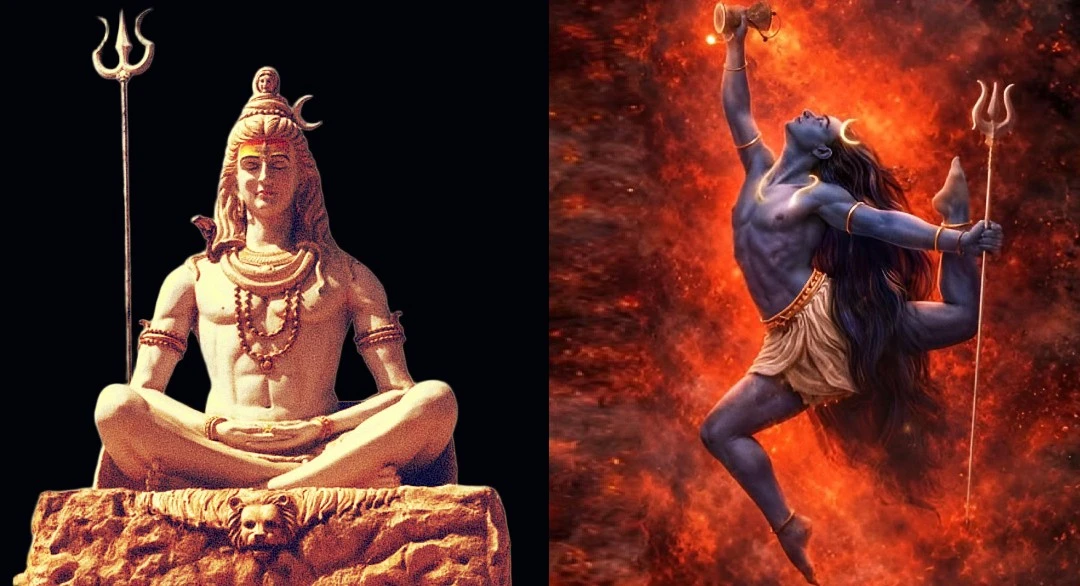
The presence of symbols associated with the god Shiva, such as the trident Trishula, led investigators to believe that the rituals were based on unusual religious interpretations. However, this does not mean the crime was an enactment of mainstream Hindu teachings; rather, it reflected a deeply personal and troubled understanding of these ideas.
The Mother Who Believed She Was Shiva
After the parents were detained, signs emerged that raised concerns about their mental health. During an attempt to test Padmaja for COVID-19, she refused to cooperate with medical staff and made bizarre statements, claiming the virus did not come from China but from the god Shiva. She even insisted that she herself was a manifestation of Shiva. These were not simply religious musings; she appeared genuinely convinced of her divine powers and believed her daughters would actually return from the dead.
Media reports, citing people who knew the family, described previous incidents in which the mother claimed to hear voices and see her deceased father. Social media posts by the older daughter, Alekhya, also revealed a growing interest in meditation, resurrection, and spiritual salvation.
However, having such interests or experiences alone does not prove the presence of a mental disorder, nor does it justify concluding that the older daughter was responsible for spreading the beliefs that preceded the crime.
As the investigation expanded, the central question became more complex: Was the family consciously practicing extreme religious rituals, or were they experiencing a shared psychological state that blurred the line between belief and reality?
Conflicting Accounts of the Killings Emerge in the Investigation
In the early days of the case, police attributed the killing of the two girls to their mother, Padmaja, noting that the father was present but did not intervene. However, details from the remand report published later indicated that both parents participated in the assault on their daughters.
A third version surfaced on February 23, 2021, when the Times of India cited medical sources at the psychiatric hospital in Visakhapatnam, sharing preliminary findings from the couple’s evaluations.
According to this account, the older daughter, Alekhya, may have killed her younger sister during the ritual, after which the mother killed Alekhya, believing she could bring both girls back to life. These details came from separate statements given by the parents during psychiatric assessments, so they cannot be considered definitive legal proof of what happened.
Given these conflicting accounts, the exact identity of the perpetrator and the father's level of involvement remain unclear in the available legal records. Both parents were charged, but their shared belief in the possibility of resurrection is not enough to determine each person's direct responsibility.
Regardless of the precise sequence of events, it is clear that the two sisters lost their lives inside a home that should have protected them, in the midst of rituals and beliefs about resurrection and salvation that consumed the family.
Psychiatric Evaluation: Did the Family Experience Shared Delusions?
After their arrest, the parents were sent to a government psychiatric facility in Visakhapatnam for evaluation and treatment. Here, a different explanation emerged from the simplistic media narrative that linked the crime solely to black magic. A team of psychiatrists who conducted an initial assessment suggested that the mother may have been suffering from a delusional disorder, and that the father might have adopted some of her beliefs after prolonged isolation with her. This phenomenon is known in psychiatry as 'shared delusions,' and the term 'folie à famille' describes cases where several family members share fixed, false beliefs.
In some cases, one person develops an unrealistic idea, which then spreads to those close to them especially when there are strong emotional bonds and the group is isolated from outside influences. Eventually, the belief can become so entrenched that no one within the group dares to question it.
Indian researchers documented a similar case in a 2010 study published in the Indian Journal of Psychiatry, involving a family of five who shared persecutory delusions. The study found that temporarily separating family members reduced the intensity of these beliefs for some of them.
This context makes the COVID-19 lockdown particularly significant in the Madanapalle tragedy. The family's isolation and constant contact may have reinforced unrealistic beliefs, with little opportunity for outside intervention or correction.
However, it is important to distinguish between this possible explanation and a confirmed diagnosis. I found no published medical report definitively proving that all four family members suffered from shared delusional disorder. Moreover, having a psychotic disorder does not necessarily lead to violence, and most people with mental health conditions do not commit crimes of this nature.
However, the parents’ actions after the crime lend real weight to this possibility. According to a medical report published in February 2021, after receiving treatment, the father began to come to terms with the fact that his daughters would not return, showing signs of severe depression and suicidal thoughts. Meanwhile, the mother continued to display more pronounced psychotic symptoms. It was as if a certainty that had gripped the family for weeks began to crack when one member was finally confronted with the reality of death they had refused to acknowledge.
When science fails to protect its followers from delusion
The Madanapalle tragedy reveals a painful irony: the father, a PhD in chemistry, and the mother, an accomplished mathematician, were both highly educated, yet their backgrounds did not prevent them from embracing beliefs that defy the most basic truths about life and death.
But academic achievement doesn’t guarantee immunity from superstition. A person can be an expert in one scientific field and still adopt untestable or unprovable ideas in other areas. These beliefs can become even more deeply rooted when they’re tied to fear, a longing for salvation, or the conviction of possessing unique spiritual insight.
In this particular case, religious beliefs provided the language and symbols the family used to interpret their experiences. At the same time, the possibility of underlying mental health issues remains a crucial factor in understanding how these ideas turned into deadly actions.
It’s impossible to say the crime resulted solely from religious belief, mental illness, or the influence of a single family member. The facts point to a complex mix of factors, some of which remained unclear even after medical evaluations and initial investigations.
Perhaps the most chilling aspect of this story is that, according to their own statements, the parents weren’t waiting for their daughters to be gone—they were waiting for them to return. They replaced the reality of death with a false certainty that they would witness a miracle at dawn.
But the morning of January 25, 2021, arrived without the promised miracle.
Alekya did not wake up. Sai Divya did not come back to life. The golden age they awaited never began.
The family of four was reduced to two parents facing criminal charges, psychological evaluations, and the aftermath of a tragedy. Two young women, once preparing for entirely different futures, were gone.
This tragedy raises questions that go beyond India and its religious landscape: When does belief in the supernatural become a danger to those who hold it? And how can an entire educated family lose its ability to test the reality of what it believes?
About the Author