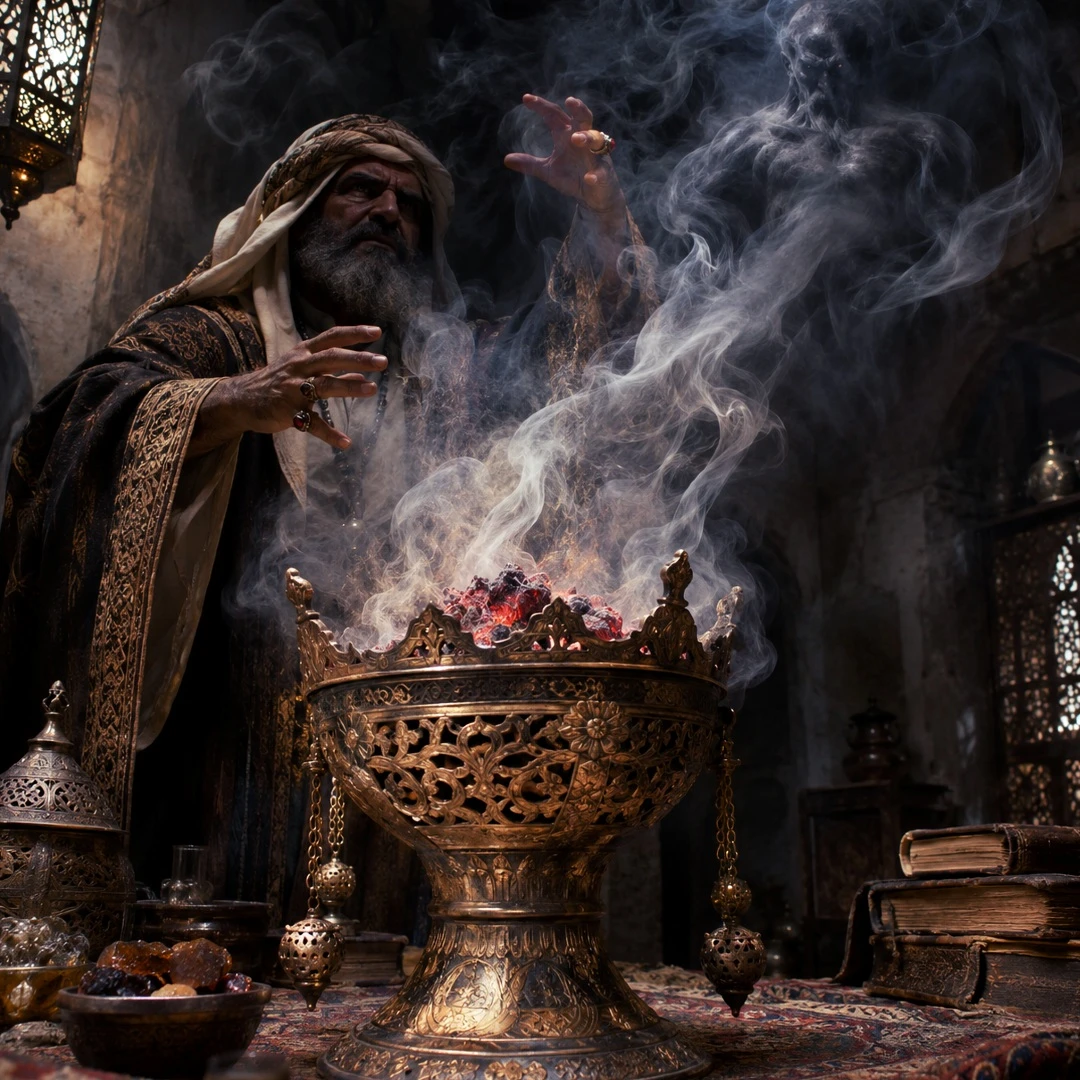
From the incense of ancient temples to rituals for summoning spirits and jinn, how did smoke come to be seen as a bridge between our world and the unseen? And why did magicians believe that certain scents could attract specific entities, while others would drive them away?
The Ink Mirror and Summoning Smoke
In Cairo in the 1830s, a boy no older than nine sat in front of a man who claimed he could summon beings from the invisible world. Between them was a censer filled with burning embers. The man began to chant mysterious phrases, preparing for a ritual known as Mandal Practice. Instead of holding a glass mirror, the boy had a pool of ink poured into a square drawn on his palm. He was told to stare into it without looking up, as the smoke of frankincense and burning coriander seeds filled the room.
According to the account, the boy began to describe a man sweeping the floor, then colorful flags, soldiers, and tents as if entire scenes were unfolding inside that black spot. As the ritual continued, the man added more substances to the embers, making the smoke thicker and stinging to the eyes.
This wasn’t just a story passed down about an unknown magician. The British orientalist Edward William Lane described the event in his 1836 book, An Account of the Manners and Customs of the Modern Egyptians, after witnessing it himself.
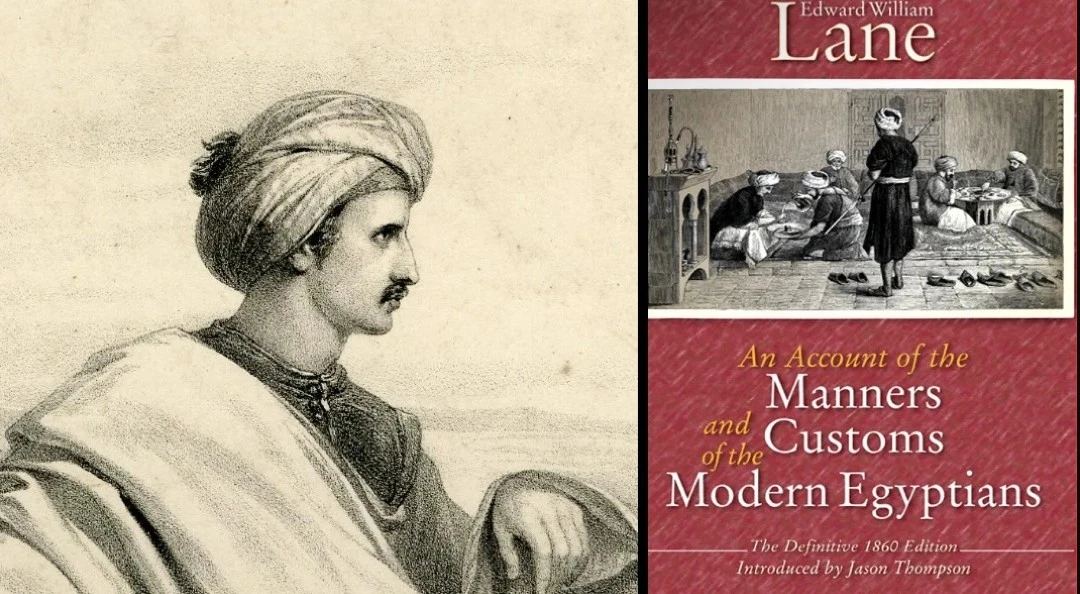
Lane noted that the magician attributed his abilities to jinn, whom he considered helpful spirits. However, Lane found no independent evidence that the images the boy described actually came from an unseen world. This was one of many practices where smoke played a central role, not just to scent the air, but as part of an attempt to contact entities believed to respond to calls and incantations.
But why did the magician need incense in the first place? What was smoke supposed to do to reveal the secrets of a world invisible to the naked eye?
Why Smoke?
Since ancient times, burning aromatic substances has been tied to religious ceremonies and rituals involving supernatural forces. Smoke rose from the altars of Egyptian, Greek, and Roman temples, played a role in ancestor veneration in Asia, and later became a familiar element in some books of magic and incantations. The choice of smoke was not random. To ancient people, smoke was extraordinary: it began as a solid material you could touch, then transformed into something that moved and spread, visible but impossible to grasp, and finally vanished without a trace.
Perhaps this fleeting nature is why smoke became linked to the invisible world. Just as wood or resin turns into smoke, some ancient cultures imagined that physical offerings could transform into a form that gods and spirits could receive.
In Greek and Roman religion, the smoke rising from sacrifices wasn’t just a byproduct of burning, it symbolized the offering’s passage from the human world to the realm of the gods. Sometimes, the scent itself was seen as a kind of symbolic nourishment for divine powers.
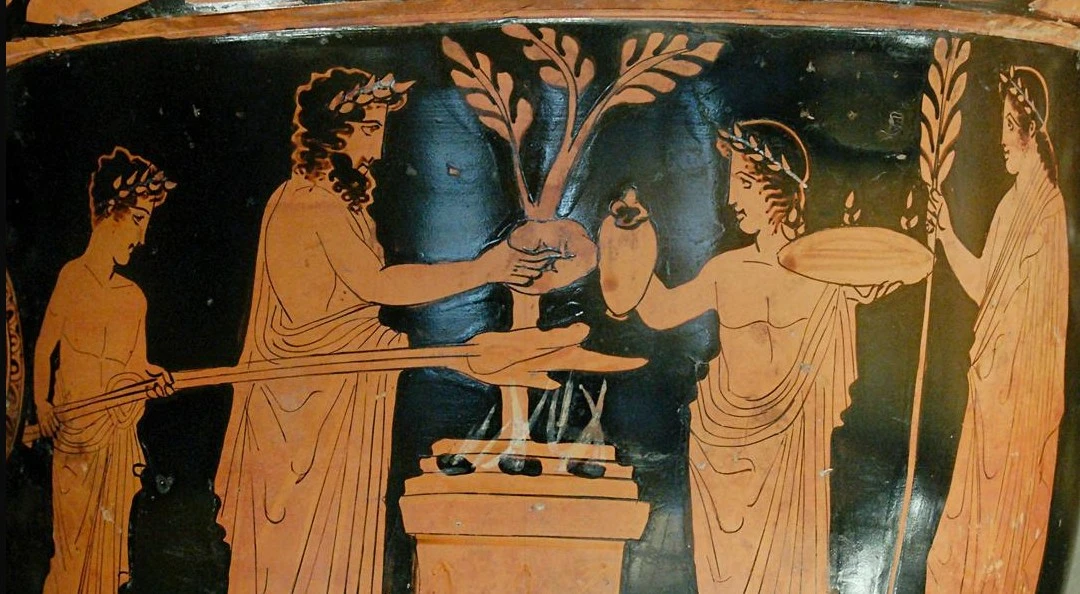
French scholar Véronique Mehl, in her study of incense and divine presence in ancient Greece, notes that smoke bridges the material and immaterial. This made it a fitting way to imagine the nature and presence of the gods.
From this perspective, incense served three main purposes: as an offering to a supernatural being, to prepare a space believed suitable for its presence, and as a tangible medium for connecting with something intangible.
However, these roles varied across cultures. Using incense in worship didn’t always mean it was used in magic or spirit summoning.
Atmosphere: Nighttime Incense in Ancient Egyptian Temples
One of the most notable historical examples of ritual symbolism in scents is Kyphi incense, known in ancient Egyptian as something close to 'Kapet.' Kyphi wasn't just a single aromatic resin, but a complex blend of various ingredients, closely associated with religious use in Egyptian temples.
The Greek philosopher Plutarch, in his book Isis and Osiris, notes that the Egyptians offered three types of incense to the sun at different times of day: resin at sunrise, myrrh at noon, and Kyphi at sunset. Plutarch explains that Kyphi was chosen for the evening because of its complex nature, in contrast to the simpler substances thought to suit the daytime. He also attributes to Kyphi a calming scent that helps induce sleep and prepares the mind for dreams.
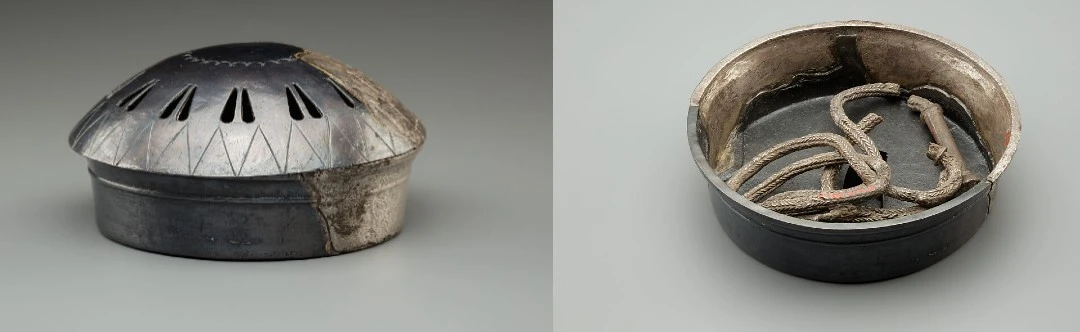
This account reveals something important: aromatic substances weren't chosen solely for their scent, but also for their symbolic connection to a specific time and the nature of the power being honored. However, it's inaccurate to label Kyphi as incense for summoning demons or spirits simply because it was used in religious rituals. Plutarch's testimony relates primarily to veneration, offerings, and dreams, and doesn't provide evidence of a direct link between this incense and the invocation of evil entities. Still, the case of Kyphi marks a significant stage in the belief that each ritual or time has its own appropriate scent.
A Unique Incense for Every Entity: The Secrets of the Seven Scents
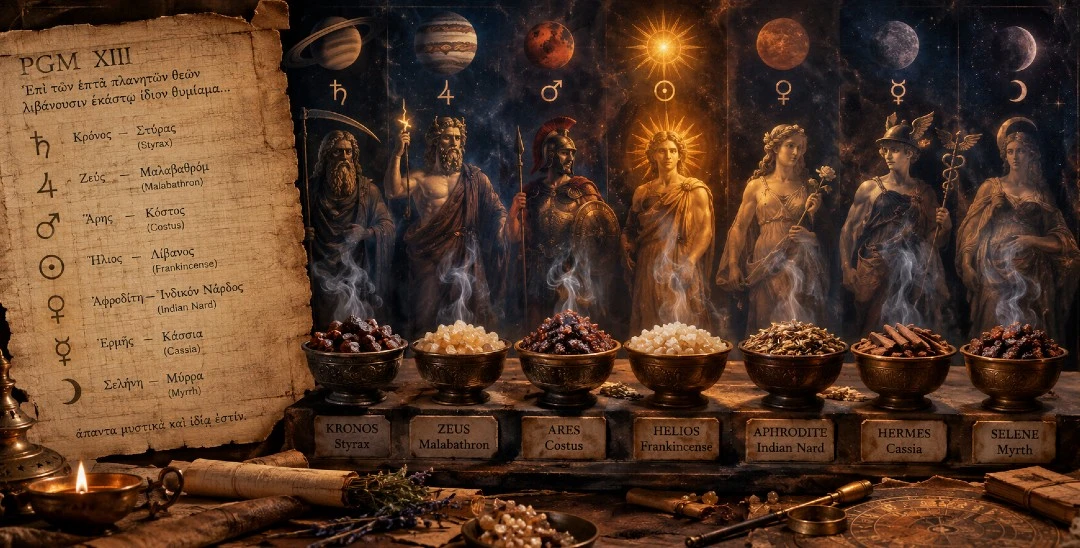
This idea becomes even clearer in the collection of texts known as the Greek Magical Papyri, which date from the Hellenistic and Roman periods. These texts include spells, rituals for invocation and divination, and various magical practices. In one papyrus, PGM XIII, there's a striking list assigning a specific incense to each of seven gods associated with the seven classical planets known in ancient astronomy.
For example, the god Kronos, linked to Saturn, was assigned styrax incense. Zeus, associated with Jupiter, was paired with malabathrum leaves, while Ares, the god of war and counterpart to Mars, was given costus.
Frankincense was chosen for Helios, the sun god; Indian nard for Aphrodite, associated with Venus; cassia for Hermes, linked to Mercury; and myrrh for Selene, the moon goddess.
The text doesn't just list these associations, it describes them as secret, specialized types of incense. It even explains the choice of styrax for Kronos by referencing its heavy, aromatic scent. This raises a fundamental question: why should a particular entity respond to the scent of styrax, while frankincense is more suitable for another?
To understand this, we need to look at one of the dominant theories in ancient magical thought: the theory of Magical Correspondences.
What is the secret behind the connection between an entity and a scent?
Some ancient magicians and astrologers believed that the universe wasn't made up of entirely separate things, but rather of a network of hidden relationships. According to this view, each planet had a particular nature reflected in certain stones, metals, colors, sounds, and aromatic substances found on earth. In this way, a scent became part of a larger system, linking earthly matter to the celestial force it was thought to correspond with.
For example, a substance associated with the sun wasn't valued just for its pleasant aroma, but because it was believed to possess solar qualities that made it compatible with the intended power. This way of thinking is clearly seen in the book Ghayat al-Hakim—one of the most influential Arabic works on astral magic from the Middle Ages, which became known in Europe as Picatrix..
A key idea in this tradition is that the success of a ritual depends on harmony between the nature of the force being addressed, the materials used, the timing according to the stars, and the accompanying symbols.
In the sixteenth century, the German writer Heinrich Cornelius Agrippa discusses these ideas in his book Three Books of Occult Philosophy, dedicating chapters to the influence of incense and scents and their connection to planets and spirits. According to Agrippa, the incense used in rituals associated with the Sun should match its nature, while that used for the Moon should correspond to its own qualities, and the same applies to the other planets. In this belief system, incense was not simply a fragrant offering meant to please a spirit, but a substance intended to attune the ritual to the specific 'nature' of the entity involved.
Symbolically, this concept is similar to choosing a specific signal to reach a particular recipient, just as every addressee has a name or address, magicians believed that certain supernatural forces could be identified by unique scents and substances.
However, this system was not based on scientific knowledge of these entities’ properties, but rather on a set of beliefs rooted in astrology, natural philosophy, and inherited magical traditions.
Did magicians agree on which incense was appropriate for each entity?
Interestingly, the answer is no. When comparing the Greek Magical Papyri with another Greek tradition known as the Orphic Hymns, notable differences emerge, showing that the connection between a deity and a particular incense was not fixed. For example, Papyrus PGM XIII assigns costus incense to the god Ares, while the Orphic Hymn dedicated to Ares mentions frankincense. Similarly, Zeus is associated with malabathrum in one list, but the Orphic Hymns directed to Zeus mention various types of incense, including frankincense. Even more striking, some hymns distinguish between different aspects of the same deity: Hermes, in one context, is linked to frankincense, while the underworld aspect of Hermes is associated with storax. This suggests that the choice of incense sometimes depended on the specific role attributed to the deity, not just their identity. These variations likely reflect the diversity of local traditions and the different sources from which these recipes were drawn, as well as multiple layers of symbolic interpretation. This challenges the common belief among some enthusiasts that there is a universal, fixed list specifying the exact incense required to summon each spirit or demon.
If scents had an objectively necessary and inherent correspondence with certain entities, why did ancient texts disagree on which to use?
While this question doesn’t provide a definitive answer about all supernatural beliefs, it does reveal that many of the associations between incense and spirits arose from varied human traditions rather than universally agreed-upon truths.
Pleasant and Unpleasant Scents: Between Welcome and Compulsion
One of the most intriguing aspects of the history of magical incense is the distinction between pleasant and unpleasant odors. Fragrant substances like frankincense, myrrh, and certain aromatic woods have been linked in many cultures to purity, holiness, hospitality, and offerings. In contrast, foul smells—such as those produced by pungent burning or decaying organic matter—have played very different roles.
This distinction is made explicit in the book The Key of Solomon is one of the most famous European books of magic, traditionally attributed to King Solomon, though there is no historical evidence confirming this link. In the tenth chapter of the second book, which discusses incense, fumigations, and perfumes used in magical arts, the text distinguishes between pleasant scents offered to benevolent spirits and foul odors reserved for malevolent ones. However, the relationship between scent and spirit was not always so straightforward.
In her 2022 book The Scent of Ancient Magic, researcher Britta K. Ager reveals that some Greco-Roman magical practices used foul odors not just as offerings to evil entities, but as a means of threat and coercion. According to these beliefs, if a spirit did not respond to the usual ritual, it could be forced to comply through the use of particularly offensive fumigations.
Ager describes how certain magical texts treated foul smells as a kind of weapon to be directed against summoned powers. In this context, the role of incense changes dramatically: instead of serving as a polite invitation to a spirit, it becomes a supposed tool for compelling a response.
It's important not to assume that foul odors are always linked to demons or that pleasant scents are always associated with gods and benevolent spirits. The meaning of a substance can vary between traditions—a pleasant aroma might be used in a ritual to banish spirits, while a repellent smell could serve a protective purpose. Ultimately, it is belief that gives scent its meaning, not any inherent moral quality in the substance itself.
Did magicians believe that smoke could make spirits visible?
Beliefs about incense went beyond attracting or repelling spirits. Some texts introduced the more unusual idea that smoke could help invisible entities appear in a tangible form.
Agrippa In his book Occult Philosophy, Agrippa discusses claims that certain fumigations can cause spirit images to appear in the air or elsewhere. He references ancient ideas about the connection between smoke, airy forces, and the ability to produce unusual visions. This belief fit with the notion that the world contains beings of a subtle, airy nature, unlike dense human bodies. The very nature of smoke—forming visible shapes, drifting in ever-changing patterns—helped fuel this idea. Sometimes, smoke can seem to take on human or animal forms before dissipating. This visual property may have reinforced the belief that certain entities could temporarily manifest within smoke. However, this does not prove the phenomenon is real; what the eye perceives in swirling clouds is influenced by lighting, expectation, and the brain's tendency to recognize familiar patterns even in randomness, as in the phenomenon of pareidolia.
Incense in Jinn and Zar Rituals in the Arab World
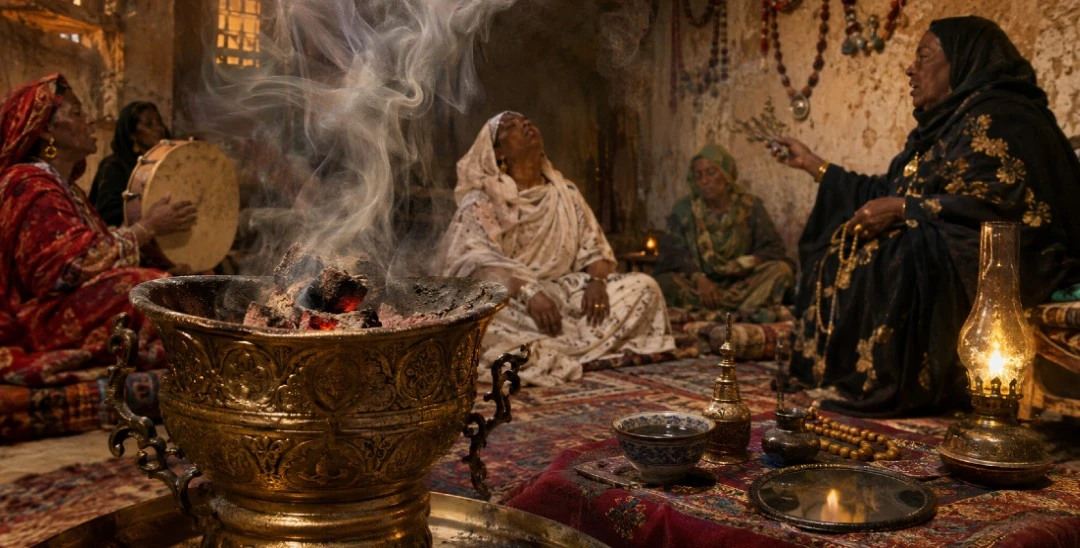
In Arab societies, burning incense is part of many practices, some are everyday and social, involving fragrance and hospitality; others are religious or folk customs linked to purification and protection; and some are used in divination, incantations, and claims of communicating with jinn.
The practice of 'striking the mandal,' described by Edward Lane, is a historical example of incense being used in rituals said to involve jinn to reveal hidden information. Another example, more closely tied to spiritual mediation, is found in Zar rituals which are known in Egypt, Sudan, and other regions.
According to beliefs associated with Zar, certain physical or psychological suffering may be attributed to spirits with their own desires and personalities. These spirits can be negotiated with or appeased through rituals involving music, chanting, dance, offerings, and incense.
Anthropologist Hager El Hadidi, in her book Zar: Spirit Possession, Music, and Healing Rituals in Egypt, provides a field study of these practices and discusses the role of incense in opening some Zar ceremonies. From this perspective, burning incense can be seen as an announcement of the start of ritual communication with the world where participants believe spirits reside.
Popular beliefs about frankincense, harmal, and benzoin offer a different view of incense, where smoke is used to ward off the evil eye, envy, or harm attributed to jinn. An anthropological study on frankincense in Oman, published in 2023, documented the ongoing use of incense as both a daily and ceremonial practice shaped by social, cultural, and religious beliefs.
This diversity highlights an important paradox: the same smoke believed to attract a spirit during a summoning ritual might be used in another home to drive away harmful forces. There’s no evidence that all these practices are based on a single theory, or that the materials involved have consistent supernatural effects.
Incense in Asia: A Message to the Gods and Ancestral Spirits
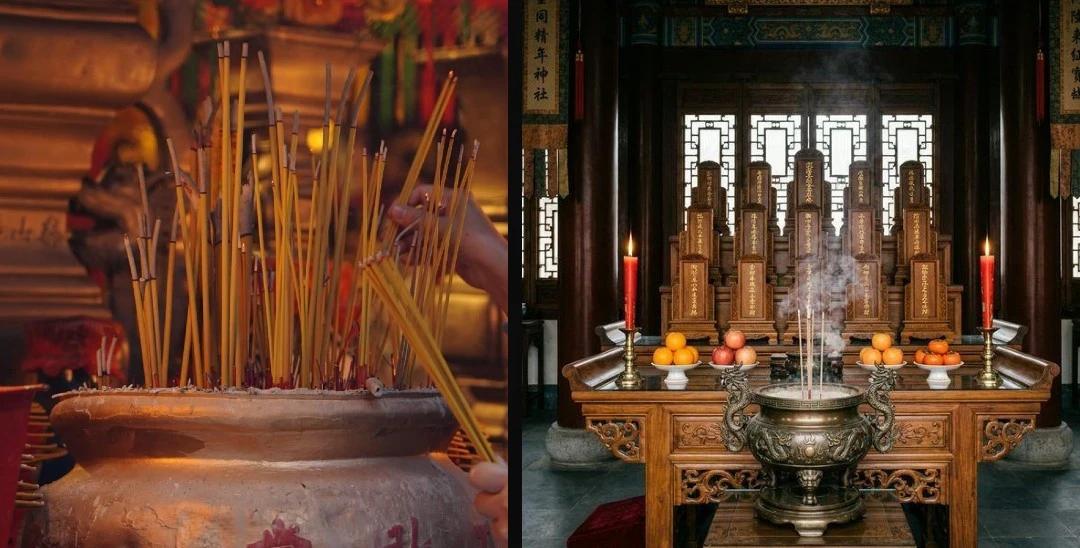
The idea of smoke as a means of connecting with the unseen world isn’t limited to Egypt, the Middle East, or Europe. In China, burning incense sticks has become a central part of rituals honoring gods and ancestors, with the belief that lighting incense opens a symbolic channel for prayers and wishes to reach spiritual powers.
In a study on incense in traditional Chinese religion, researchers Scott Habkirk and Hsun Chang explain that incense isn’t just about communicating with deities, it also helps build bonds within temple communities and preserves their identity.
In southwest China, a field study among the Bai people of Shaxi documented the use of aromatic blends burned near temples, graves, and household stoves to connect with ancestors, spirits, and gods according to local beliefs. Interestingly, researchers found that the scent of the smoke itself was a key factor in choosing the materials. Still, it’s important to distinguish between summoning a spirit in a magical ritual and offering incense to ancestors in a religious or family tradition. Just because there’s a belief in communicating with the spirit world doesn’t mean all these practices are forms of sorcery. What they share is assigning a symbolic role to smoke and scent, while the nature of the entities involved and the intended goals can vary widely.
How Do Scents Affect Awareness and Perception?
Beyond spiritual beliefs, smoke and scents have real sensory and psychological effects that can be studied scientifically. Our sense of smell is linked to brain regions involved in emotion and memory, such as the amygdala and hippocampus. That’s why a particular scent can suddenly trigger old memories or strong feelings. A certain fragrance might become associated in someone’s mind with a sacred place, a funeral gathering, or a frightening ritual from childhood. When that scent is encountered again, the emotions tied to the earlier experience can resurface—even if the person doesn’t immediately realize why.
This opens up an important possibility: if someone is used to a certain scent being present during a ritual said to summon spirits, the scent itself can become a psychological cue that heightens anticipation. Combined with darkness, repetitive sounds, chanting, and prolonged focus, this can make a person more likely to interpret ambiguous sensations as signs of an unseen presence. However, it’s not accurate to assume that all experiences of sensing entities are caused by scents alone, or that every strong smell can trigger hallucinations.
There’s a big difference between the emotional impact of scents, the effects of inhaling polluted smoke, and changes in perception caused by other factors.
There are also no universal sensory standards that make a scent pleasant or unpleasant to everyone. Cross-cultural studies have shown some agreement on which smells are liked or disliked, but there are significant individual and cultural differences.
Assigning a spiritual or demonic quality to a particular scent is therefore a cultural interpretation that goes beyond the known chemical properties of the substance.
Can Smoke Explain Some Alleged Visions?
The smoke from burning itself deserves attention apart from the effects of scent. Burning incense doesn’t just release aromatic compounds—it can also produce fine particles, gases, and chemicals that vary depending on the material, how it’s burned, and the ventilation in the area.
A 2013 scientific study on incense smoke in the UAE found that burning certain types indoors can release pollutants such as carbon monoxide, fine particles, and substances that irritate the respiratory system. Experiments also showed inflammatory responses in lung cells exposed to smoke components. However, these findings don’t prove that incense necessarily causes supernatural visions or hallucinations—they simply highlight the need to consider smoke exposure, ventilation, and health effects when studying any experience involving heavy incense use.
It’s also important to distinguish between common aromatic vapors and burning substances with psychoactive properties. Some ancient societies used various materials in ritual contexts, but it’s not accurate to assume that the effects of one substance apply to all types of incense.
Looking back at the "ink mirror" ritual described by Edward Lane, the child wasn’t just exposed to the scent—he also experienced the magician’s instructions, repeated questions, irritating smoke, and prolonged visual concentration. All these factors should be considered together before attributing what the boy described to the appearance of spirits or independent entities.
Does Incense Affect Spirits, or Does It Affect People?
Perhaps the most important question revealed by the journey of incense through the history of magic and sorcery is this: In ancient texts, it was believed that the scent would reach an invisible entity—attracting, pleasing, repelling, or compelling it to respond. From a psychological and perceptual perspective, however, the only response we can truly verify is that of the people present in the space.
Changing the scent of a room transforms the experience of being in it. A familiar place can suddenly feel strange, sacred, or awe-inspiring, depending on the fragrance, the context, and the expectations associated with it.
Burning incense also serves a social function: it signals the start of a ritual, marks the boundary between everyday life and a special event, and gives participants a shared sensory cue that they are entering a different phase.
From this perspective, some of incense’s historical significance can be understood without assuming it has supernatural effects on unseen entities. Still, these beliefs remain historically valuable—they reveal how people imagined the relationship between the senses and the hidden world, and how they tried to use sensory experiences as tools for engaging with the unknown.
The smoke that carried the secrets of the unseen world
From Egyptian temples where kyphi incense was burned at sunset, to magical papyri assigning specific scents to gods and planets; from European grimoires distinguishing between pleasant perfumes and foul-smelling fumigations, to the rituals of zar and incantations known in some Arab societies—smoke has always served as a symbolic bridge between humans and what they believed to be an invisible realm.
In some of these practices, incense was more than just an offering—it was believed to summon, compel, banish, or even help make entities appear in a visible form.
Yet historical comparisons show that assigning a specific incense to a particular entity was never a fixed rule. The materials and scents varied widely across traditions, authors, and eras—even when the intended recipient was the same deity.
There is no scientific evidence that any particular scent can summon jinn, spirits, or demons. What we do know is that smells influence memory and emotion, that smoke can alter the sensory environment, and that people’s expectations shape how they interpret what they feel or see.
Perhaps the most intriguing irony is that magicians believed they were using scent to influence supernatural beings, while in many cases, the scent may have been affecting their own minds first.
So the question remains open in the history of beliefs: Did people choose incense because they thought it opened doors to the unseen world, or did they imagine those doors existed because the smoke gave them a sense of crossing into another realm?
About the Author