
In Yemen, coffee is far more than a morning ritual, it's seen as a living entity that carries the memory and spirit of its homeland. For centuries, Yemeni coffee beans, grown on rugged mountains and in remote farms, have been intertwined with the supernatural world of the jinn.
Yemenis have long believed that coffee is not just a symbol of hospitality and social connection, but also an invisible bridge between humans and other realms. Its intense aroma, distinctive flavor, and role in communal and spiritual rituals have given it a special energy, one that might attract or appease the jinn.
The Legend of Discovery
Interestingly, coffee wasn't always known by its current name. Some ancient accounts describe it as 'wine', not because it intoxicated, but because of its noticeable effect on alertness and mood. This unfamiliar impact made some people suspicious of the drink when it first appeared.
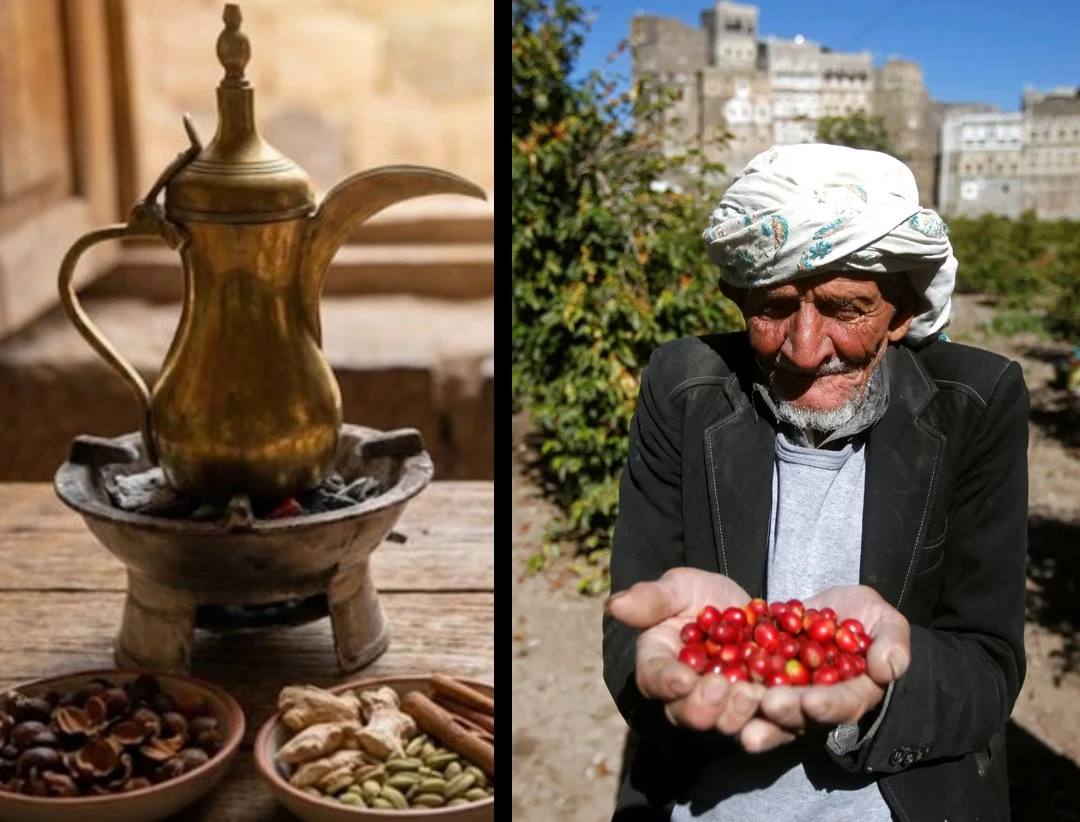
The most famous legend about coffee's discovery tells of a shepherd who noticed his goats becoming unusually energetic after eating red berries from a wild tree. The goats would leap and move restlessly through the night, as if charged by a mysterious force. Unable to explain this, the shepherd suspected something supernatural, perhaps the work of the jinn. Driven by curiosity and concern, he brought the berries to a local ascetic. At first, people were wary, fearing the fruit might be linked to unseen powers or even 'possessed.' But after boiling the beans, they produced a dark drink that kept those who drank it awake for hours, its effects clearly went beyond simple nourishment.

Over time, this story became more than just an explanation for a new plant—it evolved into legend. In some southern Arabian tales, it's said that the jinn themselves guided humans to the coffee tree, or watched over and guarded it in the mountains. Thus, coffee's discovery was no longer seen as mere chance, but as a secret passed from a hidden world into the human one.
The Jinn: Invisible Guardians of the Coffee Fields
In Yemeni folklore, the jinn aren't always viewed as evil beings. They're seen as invisible neighbors living in the mountains, valleys, and beneath the coffee trees. Among tribes like Bani Matar, stories tell of jinn who guard the coffee crops, allowing only those with 'pure hearts' to harvest them. Harvesting was more than agricultural work, it was a ritual that demanded respect and reverence. In some villages, farmers would recite prayers before picking the beans or leave a small offering of coffee as a symbolic gesture, as if seeking permission from these unseen beings. It was also believed that the aroma of coffee would attract the jinn at night, drawing them to wander the fields, following an irresistible scent.
Harvest Rituals: Between Earth and the Unseen World
Coffee harvesting in Yemen was never just a routine task, it was surrounded by great caution. The beans were treated not just as a crop, but as a precious secret to be protected.
Historical accounts suggest that Yemenis took great care to prevent the coffee plant from spreading beyond their borders. Sometimes, they would even boil the beans before export to keep them from being cultivated elsewhere. This wasn't just about economics, it carried a near-magical significance, as if they were safeguarding a secret tied to their land, identity, and perhaps an unspoken pact with hidden forces. Yemeni coffee thus became a kind of 'guarded treasure,' protected not only by mountains but also by the beliefs woven around it.
Coffee as an Offering to the Jinn
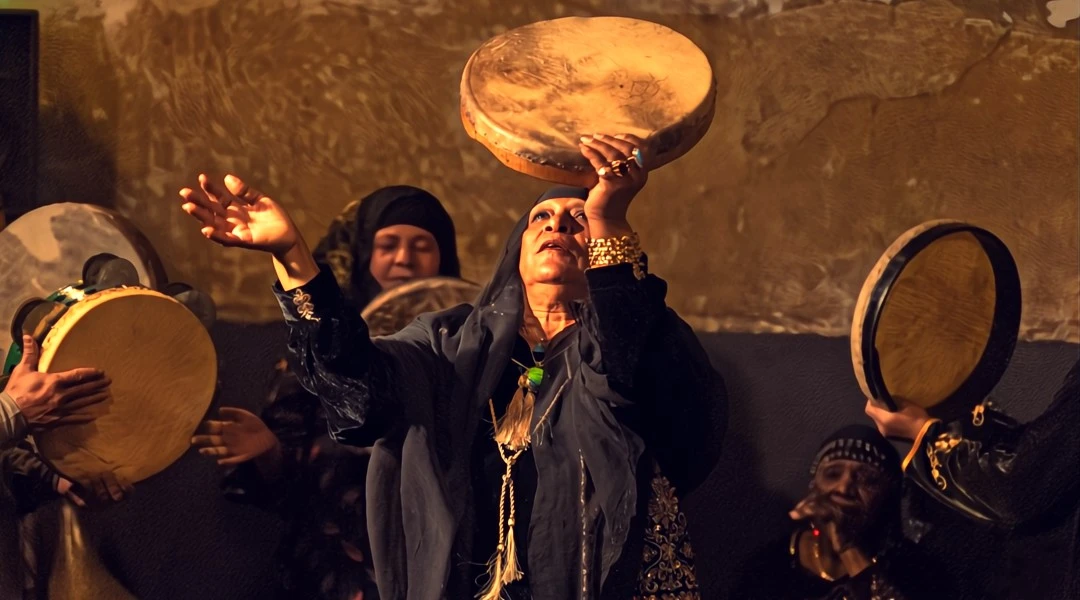
In Zar Rituals In some parts of Yemen, such as Taiz and Aden, coffee plays a role that goes beyond hospitality, it becomes a means of communicating with the jinn. During zar rituals, coffee is prepared with cardamom, saffron, and sometimes cinnamon, then poured into small cups and offered as a kind of 'sacrifice.' It may also be sprinkled around the ritual space for purification, as if its aroma creates a special energetic field.
It's believed that this scent can summon benevolent jinn or soothe troublesome spirits. With music, rhythm, and dance, participants enter a trance-like state, where the boundaries between worlds are thought to become thinner.
Coffee and Sufism
In Sana'a, Sufi mystics , especially followers of the Shadhili order, used coffee to help them stay awake during spiritual chanting and meditation. But it wasn't just about physical alertness; they believed the aroma of coffee could ward off negative entities and invite a higher spiritual presence. In this context, coffee became a tool for spiritual 'purification,' uniting body and soul.
From 'the Devil’s Drink' to a Global Beverage
When coffee made its way from the port of Mocha in the 15th century to the rest of the world, it carried with it an air of mystery. In Europe, it was initially dubbed 'the Devil’s Drink,' as if Yemeni legends about spirits had crossed the seas along with it. Yet before long, coffee became a global phenomenon, replacing tales of jinn with bustling cafés and lively conversation—though those old stories never fully disappeared.
Between Fact and Legend
In Yemen, coffee is more than just a crop or a commodity, it's a story woven through centuries, where fact and legend intertwine. From a herder who thought his livestock was bewitched, to farmers speaking to spirits, to rituals where coffee is offered as a tribute, these small beans have carried more than just caffeine. They have long symbolized humanity’s connection to the unknown—a way to make sense of an unseen world that still lives on in stories.
About the Author