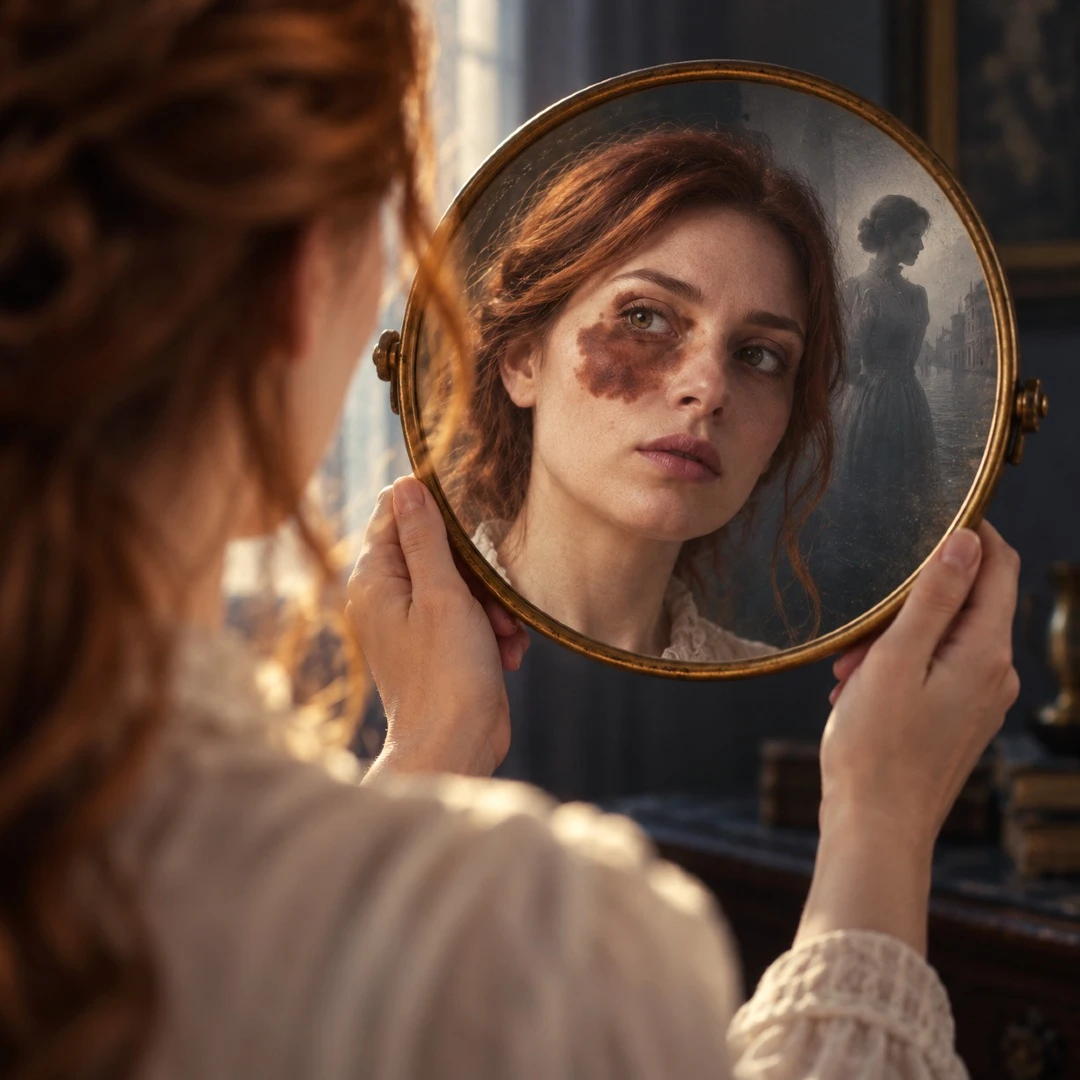
A child is born with a mark on his neck that looks like an old wound. As soon as he learns to speak, he starts talking about someone who was killed by having their throat cut. In another place, a girl is born with large skin markings and claims to remember dying in a fire. These stories might sound like scenes from horror fiction, but they come from case files collected by a psychiatrist investigating an unusual question: Could some birthmarks be linked to injuries suffered by someone who died before the child was born?
That psychiatrist was Ian Stevenson who spent decades studying children said to remember past lives. He believed that certain physical marks deserved closer examination, since they could be photographed and compared to documents and witness accounts, alongside the children’s own statements.
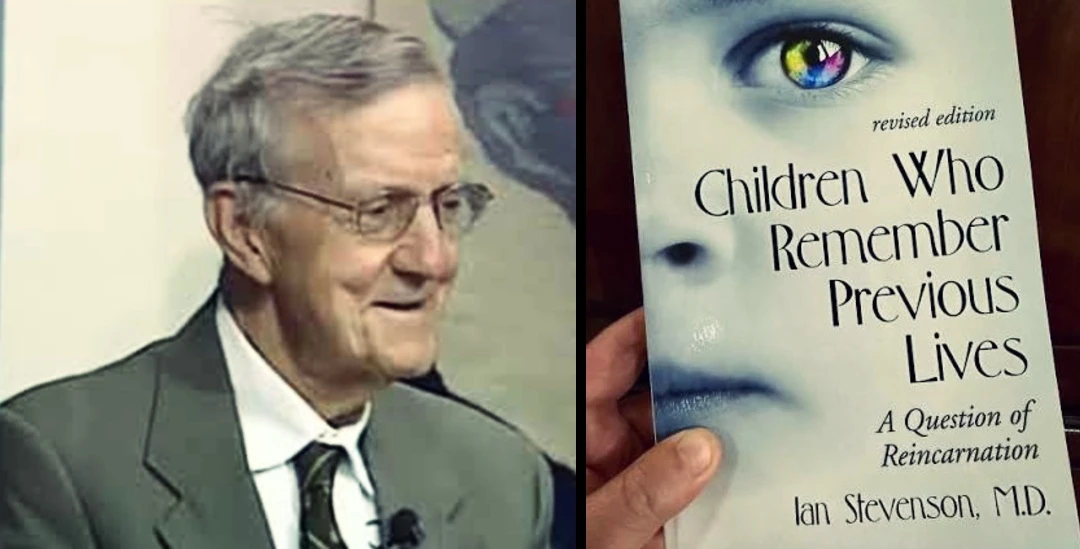
But there’s a big gap between noticing a striking similarity and proving that a soul has passed from one body to another. It’s in this space that the stories of birthmarks and reincarnation exist, cases that make us pause, attempts to document them, and questions whose strangeness alone isn’t enough to settle the debate.
Stevenson’s interest in these marks began as part of his investigations into claims of "past lives." He explored the idea that some children have birthmarks or congenital differences that match injuries suffered by deceased individuals people the children claim to have been.
His approach went far beyond simply listening to an intriguing story. He described conducting repeated interviews with both families and other witnesses, searching for death certificates and autopsy reports when available, asking whether the mark was present from birth, checking for similar marks in the family, and investigating ordinary ways the child might have learned about the deceased.
In a 1993 published study, Stevenson reported that birthmarks or congenital differences attributed to a previous life appeared in 309 out of 895 cases in his collection. He closely examined 210 of these cases, obtaining medical documentation for 49. Of those, he found the match between the mark and the injury to be acceptable or better in 43 cases, based on his comparison criteria. These numbers describe files selected and evaluated by the researcher; they do not mean that 35% of people with birthmarks remember a past life, or that reincarnation was proven in 43 cases.
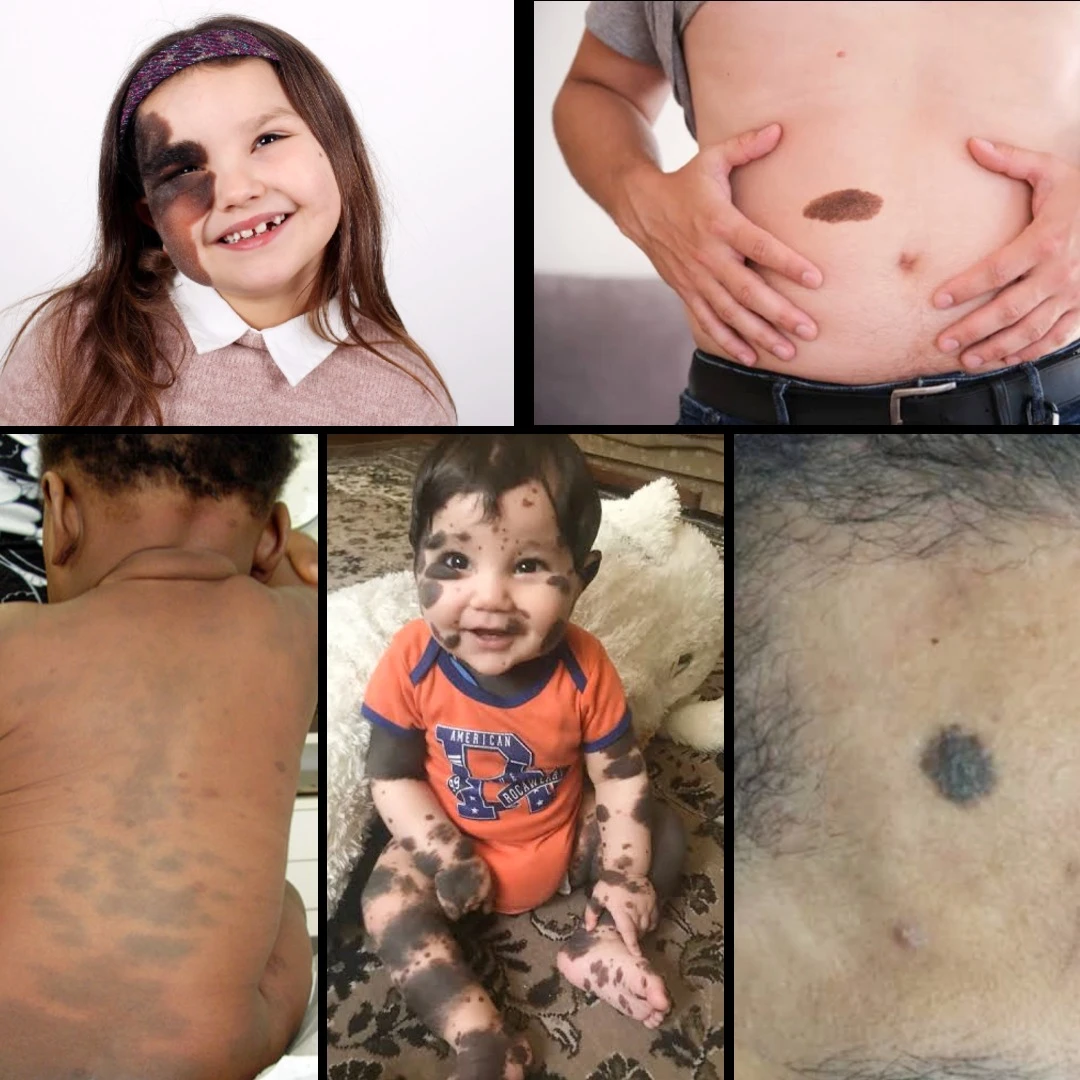
One of the most striking stories is that of a Burmese girl named Ma Khin Hsann Oo. According to the account, she was born in 1974 with large, dark skin marks. In early childhood, she began talking about the life of a woman who died when a vehicle overturned and caught fire. Around age three, she gave the woman’s name: Ahmar Yee. Her family connected her statements to a truck accident that had occurred about six and a half months before her birth, in which a woman named Ahmar Yee was killed.
What set this story apart from a simple claim of remembering another life was the appearance of her skin. Some of her marks were described as raised and compared to healed burn scars, and she was said to have an intense fear of fire. For those interested in the case, the combination of a story about dying in a fire, physical marks, and matching behavior seemed significant.
However, documentation imposes an important limitation here: Stevenson was unable to obtain medical records for the deceased woman’s injuries. The girl’s marks were also described as pigmented birthmarks—areas of increased skin pigmentation—covering parts of her face, torso, and limbs. So the resemblance to burns is based on narrative and appearance, not on a confirmed match by autopsy report.
Another case takes us to India, with Ravi Shankar. According to the account, he was born in 1951 with a scar-like mark across the front of his neck. In his early years, he said he had been a boy named "Munna," who was killed by having his throat cut.
According to the account, Ravi spoke about the deceased child's family and the circumstances of his death, and he was credited with knowing people and details that were said to match Muna's life. As for the mark on the neck, Stevenson described it as wrinkled and dotted, resembling the appearance of a scar.
The narrative's power lies in this combination: a mark that looks like a scar, and a child who talks about an injury in the same spot. But evaluating this requires more than simply putting the two elements side by side. It's important to know what the child said before any contact with the deceased's family, what was already known about the crime in the community, and how attempts were made to identify people. Naming a suspect by the child, on its own, does not constitute legal evidence of guilt.
The case of Dahham-Cemil Fahrici draws attention to two marks linked to the path of a bullet. Stevenson recounts that the child was born in Antakya in 1935, just days after the death of a distant relative named Cemil Hayik. The child had a scar-like area under the right side of his chin, which bled after birth and, according to the family, required stitches at the hospital. The family connected this mark to the way the relative died—reportedly by shooting himself under the chin. When the child began to speak, he insisted, according to the story, that his name was Cemil, until his parents eventually changed the name they had chosen for him.
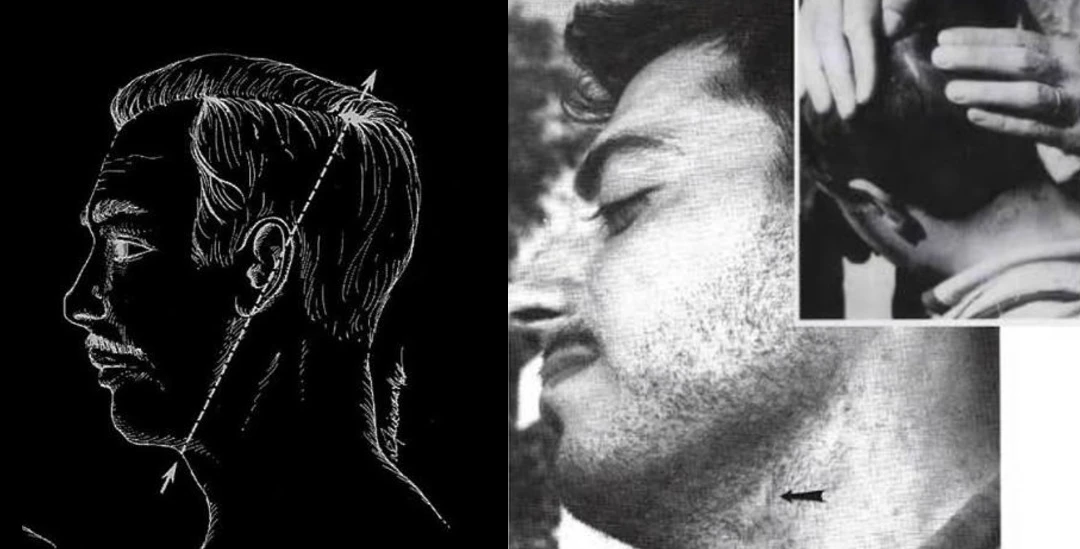
Years into the investigation, Stevenson heard a description of the bullet exiting from the top of the deceased's head. He asked the subject if there was another mark, and the person pointed to the top of his head, where there was a linear, hairless area.
However, the story itself includes a detail that affects its interpretation: the child's father had dreamed of the deceased relative before the child was born, and both parents were already inclined to believe he would return in their son. While this doesn't explain the physical marks by itself, it makes the possibility of the deceased's identity and story being transferred to the child an essential part of the investigation. Also, the description of the bullet's exit wound was based on witness accounts, not an autopsy report.
These examples illustrate why Stevenson was so interested in birthmarks. A physical mark gives the story something tangible, and when combined with specific statements, it can seem more compelling than either alone. However, the existence of a mark is a separate matter from the truth of the story attached to it, and the accuracy of some story details is different from proving the proposed explanation.
From a medical perspective, birthmarks are not a single phenomenon with a single cause. Some are related to the formation of blood vessels, others to clusters of pigment-producing skin cells. Their shapes, colors, and locations vary, and some may be raised or irregular. The American Academy of Dermatology explains that their causes differ by type, with some aspects still not fully understood. (American Academy of Dermatology: Causes of Birthmarks.)
But not knowing why a particular birthmark appears in a specific spot does not make it evidence of a past life. Saying "We haven't found a definitive explanation for this case" simply describes the limits of our knowledge; whereas saying "Therefore, the injury of a deceased person was transferred to this child" adds a claim that requires independent evidence.
There's also the issue of comparison after hearing the story. If someone knows the deceased was injured in the neck, any mark near the neck may seem significant. To assess the strength of the resemblance, it's important to ask about its accuracy and limits: Do the location, shape, and size match? Are there marks that don't correspond to anything in the deceased's story? Could the mark have been linked to injuries of other people?
Documentation becomes more valuable when the birthmark is photographed early and the child's statements are recorded with clear dates before the deceased is identified, and then the match is assessed using stated criteria. Comparisons made by someone unaware of the story can help reduce the impact of expectations. On the other hand, testimonies collected years after the story has circulated are subject to forgetfulness and the rearrangement of events, even when the witnesses are sincere.
These observations don't mean accusing families of lying or denying that some stories remain puzzling. But they do prevent turning uncertainty into certainty, or treating birthmarks as a map revealing how someone died before they were born.
Stevenson left behind files worth critical reading and saw them as evidence supporting the reincarnation hypothesis. But documenting marks and testimonies is not the same as proving the transfer of souls. Perhaps the more useful question in these cases is: What do we actually know, and what have witnesses, researchers, and expectations added to what we see? This way, we can preserve our sense of wonder without mistaking it for proof.
About the Author