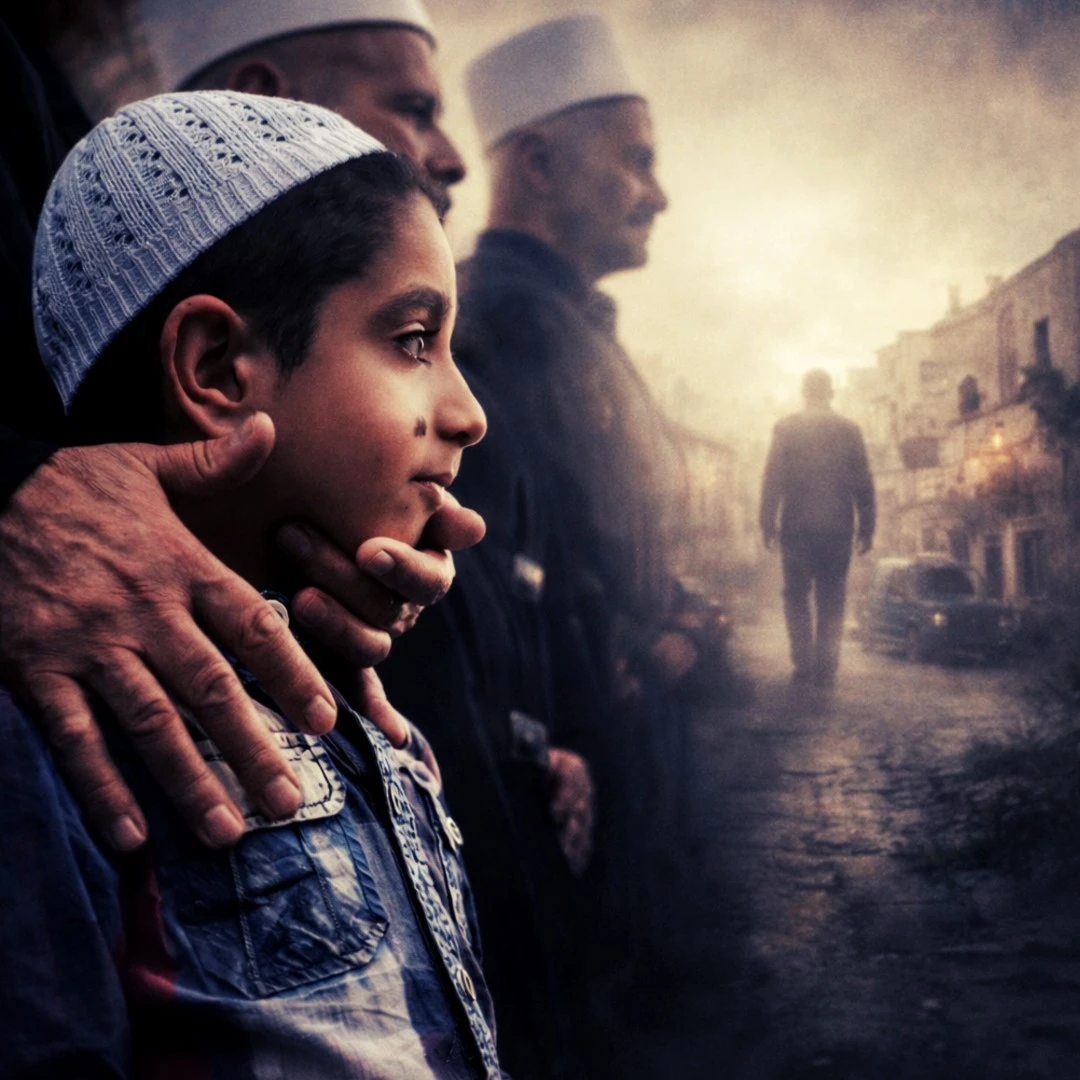
In some communities, stories of reincarnation are shared quietly, almost as curiosities or odd tales. But within the Druze community, reincarnation is woven into the very fabric of belief, shaping how people understand death, kinship, and the continuation of the soul beyond the body.
That’s why stories of children who recall past lives aren’t just fleeting anecdotes—they’re part of the collective memory, often taken seriously, and can even shape real relationships between families, villages, and generations.
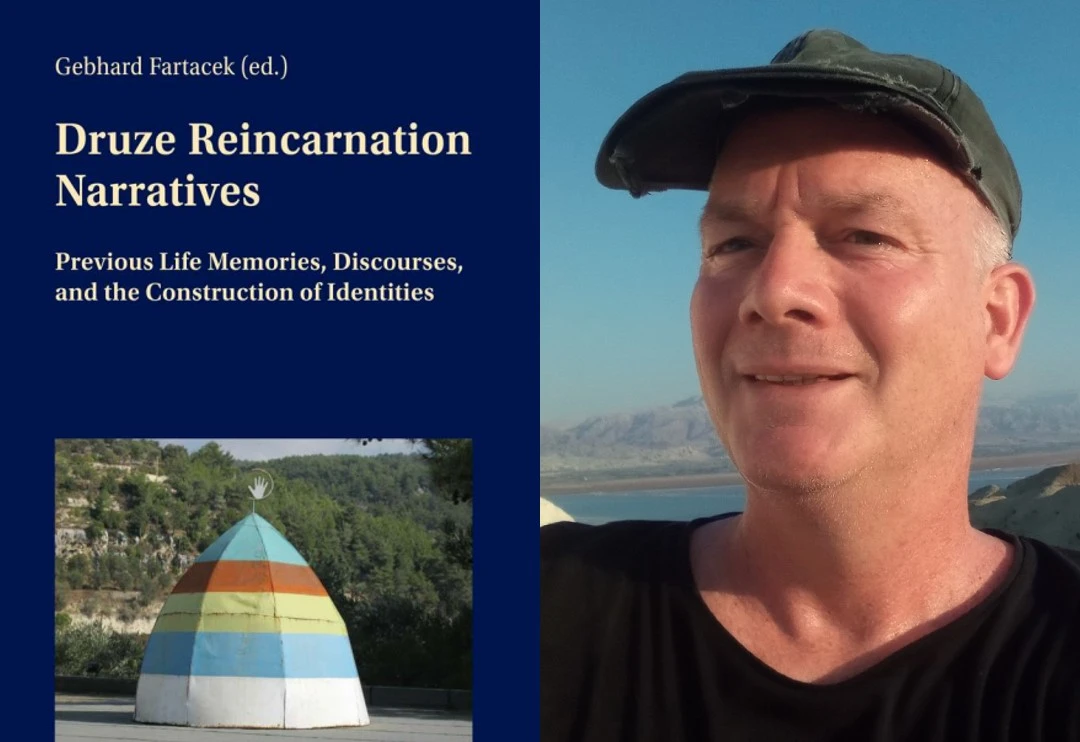
This gives the book at hand a unique significance. In his 2021 work, "Druze Reincarnation Narratives," Austrian researcher Gebhard Fartacek explores accounts of reincarnation from an ethnographic and anthropological perspective—not simply as ready-made "proof" of the soul’s persistence, nor as mere illusions to be dismissed, but as a cultural and social phenomenon with its own identity. The book, spanning about 220 pages, centers on field interviews and oral histories as told by those who experienced them, focusing on how these stories give meaning to life, death, and belonging.
A study of narrative and identity—not just the unusual
Fartacek’s book is important not just because it collects stories of children who speak of past lives, but because it places these accounts within their social and religious context. The author doesn’t simply ask whether these children are telling the truth; he goes deeper, asking: What role do these stories play in society? How do they reshape families? How do they redefine kinship? And how do they contribute to both individual and collective identity?
From this angle, Druze reincarnation narratives are a rich resource for anyone interested in the paranormal. These aren’t just isolated "cases"—they reveal a whole world where memory, belief, and social emotion intersect. The three stories we’ve selected from the book are especially compelling, not just for their intrigue, but for how they show a spiritual idea shaping tangible social realities.
Who are the Druze? And what makes their storytelling tradition unique?
The Druze, or the "People of Monotheism" as they prefer to be called, are a religious community with roots in the Middle East. Emerging in the complex historical context of the 11th century, they developed a distinct identity, esoteric teachings, and a tightly knit social structure. The Druze are primarily found in Syria, Lebanon, and Palestine, with smaller communities in Jordan and diaspora groups elsewhere. The community is known for its strong internal bonds, religious privacy, and for keeping much of its doctrinal heritage within the group.
Among the beliefs associated with Druze tradition is the idea of reincarnation—the soul passing into a new body after death. Here, death isn’t seen as an absolute end, but as a transition. This belief gives rise to the phenomenon of the "speaker": a child who, often at a young age, begins to talk about names, places, and events said to belong to a previous life.
Reincarnation among the Druze: The soul does not die, it moves on
In Druze belief, a person’s existence doesn’t end with the death of the body—the body returns to the earth, but the soul continues its journey. That’s why stories often emerge of children who seem to carry memories of lives they haven’t lived—or at least, not in their current bodies. A child might mention a previous name, a town they’ve never visited, details of their death, or names of another family. Sometimes, they visit these places, recognize homes or photos, or reveal family secrets.
What sets these stories apart from similar tales in other cultures is that the Druze community doesn’t usually dismiss them as childish fantasy. Instead, they’re treated as serious possibilities to be investigated. Common elements recur: a child begins speaking at age three, four, or five, insists they don’t belong to their current family or village, recalls a name or place, and is then taken to the location they describe. There, the previous family tests them: Do they recognize people? Remember how they died? Know a family secret or hidden spot? Their success or failure determines their place in the story.
Case 1
In the first case presented in the book, a Druze man from Yarka—a town on the western slopes of the Upper Galilee in Palestine—describes how memories of a previous life began surfacing when he was four or five years old. He would have recurring dreams and tell his mother he didn’t belong there. He was especially drawn to a neighbor’s truck, convinced he’d owned a similar one before. Then he revealed something more startling: his name had been "Wael" and he had been killed.
These memories led his family to the town of Hurfeish, where they visited the shrine of Prophet Sabalan. There, a powerful moment unfolded when the child recognized the shrine’s caretaker as his cousin from his previous life, and she embraced him in tears. The story didn’t end there—the child led his family to his former home, guided by memory, and underwent tests from his previous family. He recognized photos, named people, described marital and family relationships, spoke about his former son, and shared details unique to his first family.
What makes this case especially striking is not just that he 'remembered'—he actually lived between two lives. His connections with his previous mother, son, wife, and relatives continued, so his childhood was split between two worlds: his current family and his former one. Here, reincarnation isn't just a metaphysical idea; it becomes a full social reality, where a person belongs to two family trees at the same time.
Case 2
In the second case, it's not the 'speaker' himself who tells the story, but his son, recounting his father's experience. As a young child living in a house believed to be haunted in Palestine, the father began insisting that his current mother was not his real mother and that he was originally from the town of Maghar. When his family took him there, he claimed to know the way and led them straight to his previous home. There, he was tested and asked about the circumstances of his death. He described dying from a snake bite after falling off a horse. He recognized his former mother and sisters, and revealed the hiding place of toys he had stashed before his death,which, according to the story, were actually found.
This case highlights another aspect of the phenomenon: reincarnation here doesn't just serve as 'evidence' of a soul's journey, but actually reshapes the meaning of family itself. As the narrator describes, the two families became almost like one, visiting each other during holidays and special occasions. The father felt a deep emotional connection to his previous relatives, and even his son (the storyteller) says he felt that his relatives in the other town were his true family as well.
This account is especially significant because its focus isn't on the initial moment of remembering, but on the long-lasting impact it had on relationships. Here, reincarnation becomes a tool for reweaving the fabric of the community, not just a story about a child who knows things he shouldn't.
Case 3
The third case is one of the most intriguing and complex. The individual recalls that in his previous life, he was a man from Julos in northern Palestine who died from an accidental gunshot. His closest friend at the time is now his father in this life. As a child, he would say to him, 'You're my friend, not my father.'
He remembers dying around 1984 while trying to free a jammed weapon inside a car, when a bullet accidentally discharged and struck his skull. He also recalls being reborn in Yarka at that very moment. From the age of three, he began talking about his previous life, his old home, his former wife, and even secret weapon caches that no one else knew about. When he visited Julos with his parents, he recognized people, the house, and his former wife, and revealed secrets that were reportedly unknown to others.
But the conclusion of this case is the most telling. His old friend, Yazan, had been suspected of possibly killing him. When the child began to 'speak,' he was asked directly: Was he murdered? Did Yazan shoot him? He answered clearly that his death was an accident, not a murder, clearing his friend of suspicion once and for all. Afterward, his current and previous lives became remarkably intertwined: he lived in his current home next to his old one, his former and current wives became friends, his children from his previous life participated in his current wedding, and they even asked him to take on fatherly roles at their weddings.
In this story, reincarnation isn't portrayed as a wound between two eras, but as a kind of profound reconciliation. The man doesn't feel torn between two identities; instead, he feels as if he's living in two generations at once, as though death didn't end his story but simply extended it along a different path.
What do these three cases reveal?
Looking at these three cases, a clear pattern emerges: a young child speaks, mentions a previous life, identifies a place or people, is taken there, undergoes testing, and then the story doesn't end—it moves into a phase where the two families merge. This pattern is significant because it shows that these aren't just tales of 'mysterious memories,' but rather a well-understood narrative structure within the community that produces them.
Why do cases of reincarnation appear only among the Druze?
The key isn't that only the Druze have these experiences, but that their community provides the cultural and religious framework that allows such stories to be told, heard, taken seriously, and developed into full narratives. In other societies, a child might say something similar, but parents would dismiss it as imagination, scold the child, or quickly forget about it.
In the Druze environment, however, a strong belief in reincarnation means that when a child speaks, there are people willing to listen, to test, and to weave the story into a coherent social narrative. In other words, the belief doesn't necessarily 'create' the story from nothing, but it gives it the language, the form, and the path it follows.
Between the Paranormal and the Social: How Should We Read These Accounts?
It's easy for readers to split into two camps here: one sees these stories as strong evidence for consciousness surviving after death, while the other attributes them to environmental influences, suggestion, selective memory, or a psychological need for meaning. But the value of Fartacek's book and of these accounts in general—is that they resist such quick categorization. Whether you view the stories as paranormal events or as complex products of belief, culture, and memory, they undeniably have real-world effects.
A child who leads his family to another household changes the lives of real people. A man who clears his friend of an old accusation alters reputations and relationships. Two families that become as one aren't just a linguistic illusion—they're a social reality born from the power of belief. That's why Druze reincarnation stories deserve to be read not just as curiosities, but as a rare window into how the paranormal and the social, the metaphysical and the everyday, the spiritual and the familial, are deeply intertwined.
When Death Isn't the End
The power of these stories lies in how they present death , not as a final wall, but as a turning point. This helps explain why the tales of 'speaking children' in the Druze community are so emotionally charged: the child isn't just claiming to have been someone else, but seems to carry with him remnants of an entire world that hasn't faded away.
The question remains: Are we witnessing genuine memories transferred from one body to another, or are we seeing the powerful influence of a deeply rooted social belief?
No one may have a definitive answer, but what can't be ignored as the book reveals is that these stories aren't just tales of lost souls. They're testimonies from people trying to make sense of loss, to find continuity, and to seek meaning in one undeniable truth: in human consciousness, death is rarely silent.
About the Author