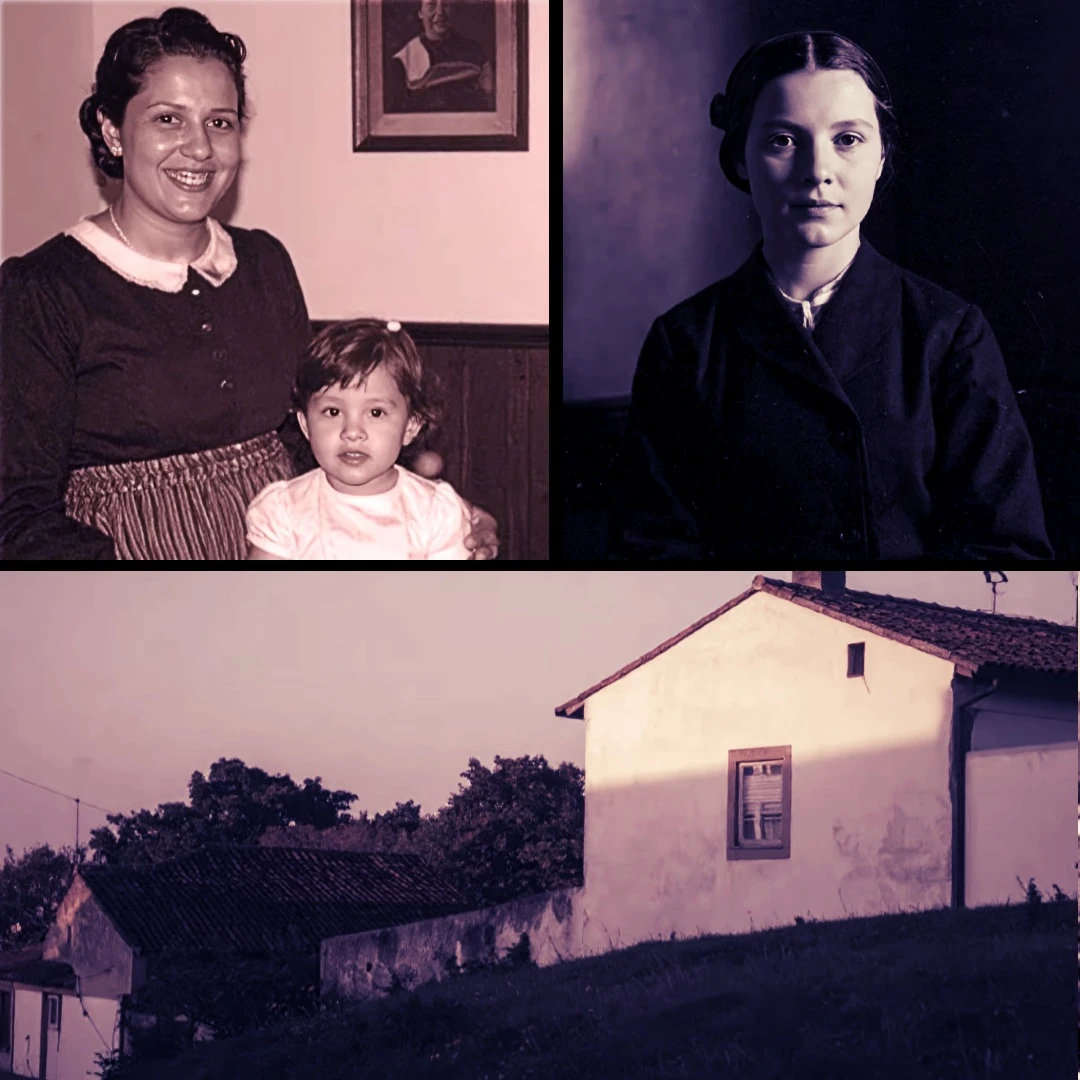
Imagine someone on their deathbed telling you they’ll come back to life, not in some distant place or to another family, but as your own child. Then, they make an even stranger promise: once that child learns to speak, they’ll share memories from their previous life to prove their identity.
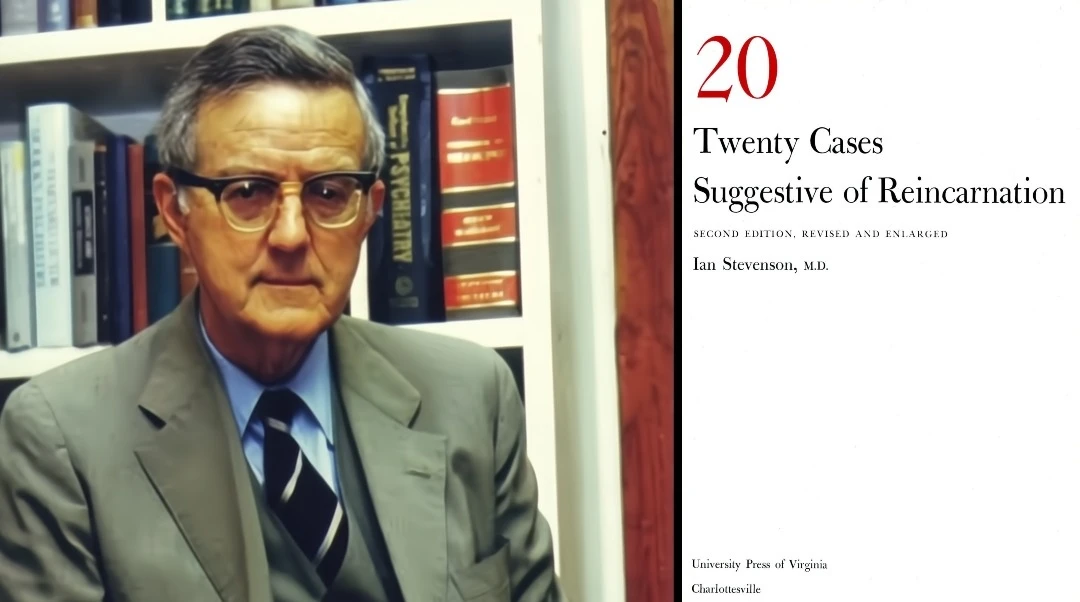
It might sound like the plot of a novel about reincarnation, but it’s actually at the heart of a real case studied by the Canadian-American psychiatrist and researcher Ian Stevenson and featured in his well-known book "Twenty Cases Suggestive of Reincarnation".
This is the story of Marta Lorenz from Brazil, a story that didn’t begin with her birth, but nearly ten months earlier, when another woman named Maria Januaria de Oliveira, known as Sinhá, was preparing for death.
A Promise Before Death
Sinhá was born around 1890 into a well-off family in southern Brazil. Her father owned a large farm near the town of Dom Feliciano in the state of Rio Grande do Sul. Outwardly, her life seemed comfortable and stable, but emotionally, it was far more turbulent.
She fell in love twice, but both times her father refused to let her marry. It’s said that one of the men she loved died after their relationship ended, plunging her into deep grief.
After that, her health began to decline. She neglected herself, exposing her body to cold and dampness until she developed a serious lung illness, eventually contracting tuberculosis. Sinhá had a close friend named Ida Lorenz, and shortly before her death, according to later testimonies, Sinhá told Ida something extraordinary: death wouldn’t be the end, and she would return to life—as Ida’s own daughter.
She went even further, promising that when the child was old enough to speak, she would remember her past life and share details and events that would prove to Ida that she was truly Sinhá.
Sinhá died in October 1917 at about 28 years old. Less than ten months later, on August 14, 1918, Ida gave birth to a daughter.
She named her Marta Lorenz.
"Hello, Father"
In most cases studied by researchers of alleged past-life memories, the story begins with a child making a strange statement, talking about another home, another family, or a death they couldn’t possibly know about. But Marta’s case was different.
The supposed identity existed even before the child was born, and as the girl grew, events began to unfold that convinced the family she might truly be the return of the mother's late friend.
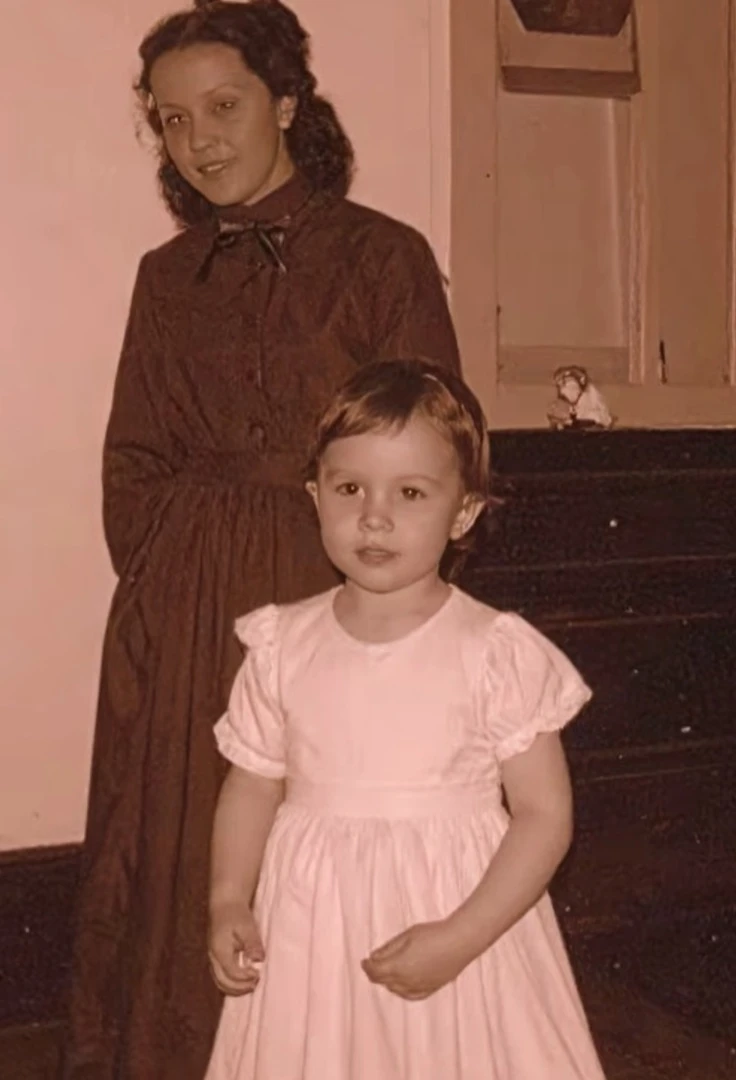
When Marta was still young and met Senia's father, she showed an unexpected familiarity with him. She approached, touched his beard, and reportedly spoke to him as if he were her own father. One of the first striking things she said, attributed to her when she was about two years old, stood out to the family.
She asked her older sister Lola to carry her, and when Lola refused, Marta replied:
"When I was big and you were little, I used to carry you all the time."
Her words were strange enough to catch the family's attention. Soon, Marta began talking about having lived in another house, having different parents, and that her name was Maria. Then another name surfaced: Senia, the same name as her mother's late friend.
120 memories... then the record was lost
Marta's father, Francisco Valdomiro Lorenz, began documenting his daughter's statements and the things she recognized. According to accounts, there were around 120 different statements, recognitions, and memories. This became one of the most important and problematic, aspects of the case: the original record where her father wrote down these details was later lost when a family member unknowingly discarded it.
Because of this, when Ian Stevenson took up the case years later, he was unable to study the complete original list or verify when each statement was recorded. However, the father's published account from 1946 remained, along with testimonies from family members and people who had known Senia.
Stevenson managed to reconstruct about 28 of Marta's statements and recognitions in more detail. Some were relatively ordinary, while others were hard to ignore.
Memories from the life of a woman who died before Marta was born
Marta spoke about Senia's family farm, the animals there, and the orange trees. She described Senia's father, his beard, and his rough voice—even imitating the way he spoke. She also mentioned a servant who worked on the farm and an incident where Senia intervened to protect him from her father's harsh treatment. For Stevenson, the significance of these details depended on one key question: Did Marta's family already know them?
Since Ida, Marta's mother, was a close friend of Senia, it would be natural for her to know much about Senia's life. Stevenson tried to distinguish between information the family already knew and details that, according to witnesses, were unknown to them.
Marta also talked about trips Senia had taken, including a visit to the city of Pelotas during carnival season, and about heavy rain on the way back that forced the family to spend the night in a house along the road. She mentioned a white horse and a white cat that Senia was especially fond of.
According to witnesses, Marta recognized some people connected to Senia's life. But one incident remained the most striking part of the case: "the watch."
For years, Marta asked to visit what she called her "old home." According to the account, the visit didn't happen until she was about twelve. When Marta entered the Oliveira family home, she began looking around and then pointed to a watch.
She said it had belonged to her and added something even more specific: her name should be engraved on the back.
The watch was taken and the back examined, revealing an inscription:
Maria Januaria de Oliveira, the full name of Senia.
If this incident had been documented at the time it happened by independent witnesses, it would have been one of the strongest pieces of evidence in the case. However, the subsequent investigation ran into a problem: decades later, Stevenson was unable to obtain full independent verification of every detail of the clock incident. This is precisely where the line is drawn between a compelling story and scientific proof.
Memories from a Time She Wasn't Alive
Perhaps the strangest aspect of Marta's case isn't just her memories of Senia's life, but her recollections of events that took place after Senia's death and before Marta was born. She described Senia's funeral, mentioning who attended and who didn't. Marta said a large number of Black people were present, while there were few white women, as some people were afraid of catching tuberculosis.
She also recalled her father, Francisco Lorenz, being at the funeral. Marta mentioned two cows associated with Senia, saying they gave birth to calves in the period between Senia's death and Marta's birth.
If these memories truly came from a child and weren't learned from those around her, they present an even more complex challenge than the idea of 'past lives' itself.
How could someone remember events that happened after their own death?
Intermission Memories
In studies of children who claim to remember previous lives, researchers have identified a curious category of accounts known as 'Intermission Memories'—recollections of the period between death and the next birth.
Some children in these studies don't just talk about their past lives; they also describe their own funerals, what happened to their bodies after death, or events that took place in their previous families before they were born again.
Researchers like Jim B. Tucker have noted that such accounts appear in a significant number of cases collected in this field. While this doesn't prove the existence of a life between lives, it does make cases like Marta's even more complex, not only do they require explanations for past-life memories, but also for information that supposedly comes from a time when the previous person was no longer alive.
"I Died Too"
One of the most striking statements attributed to Marta, which clearly expressed her sense of identity, occurred when she overheard a grieving woman talking about her father's death. The woman said that the dead never return, to which Marta replied, "Don't say that. I died too, and look... here I am alive again." Notably, Marta didn't usually talk about Senia as if she were a separate spirit inhabiting her body.
She spoke about it as if it were a previous phase of her existence: 'When I was Senia...' or 'When I was an adult...'
It was as if the child saw no real boundary between the two identities. Did the body retain memories as well?
There was another coincidence that caught Stevenson’s attention. Senia died after a severe respiratory illness and, in her final days, suffered from throat and voice problems. As a child, Marta experienced repeated respiratory infections, hoarseness, sore throats, and even temporary loss of voice. During some of these episodes, she would say she felt as if her body had grown large and that she was about to die.
Stevenson wondered if these symptoms might represent what he tentatively called an 'internal birthmark'—a physical reflection, not outwardly visible, of an illness or injury from a previous life.
However, there’s no medical basis to consider this connection proven, and it could simply be a coincidence between two relatively common illnesses. It’s also important to note that, according to the accounts, Senia’s exposure to cold and dampness wasn’t a direct cause of tuberculosis; tuberculosis is an infectious disease caused by a specific bacterium.
The same person?
People who knew both women also noted similarities in certain traits: both loved cats, both enjoyed dancing, and it was said that Marta, like Senia, disliked rain and was afraid of the sight of blood. Even their handwriting was reportedly somewhat similar.
But comparisons like these are highly susceptible to expectation bias. When a family believes a child is the return of someone they knew well, it becomes easy to notice similarities and overlook differences.
Stevenson himself was aware of this issue.
More than forty years later, the researcher arrived.
Ian Stevenson never met Marta as a child. He traveled to Brazil to investigate her case in 1962, when Marta was about forty-four years old. He interviewed her, many family members, and people who had known Senia, and returned again in 1972 to follow up on the case.
He later included her case among the Brazilian examples discussed in his book Twenty Cases Suggestive of Reincarnation.
Her father had written about her and published his account in 1946, about sixteen years before Stevenson arrived in Brazil. But this doesn’t mean the documentation was perfect—the long gap between Marta’s childhood and the systematic investigation remains one of the case’s biggest weaknesses.
Where does the strength of the case lie?
No single detail in Marta’s file can prove anything on its own; the strength comes from the accumulation of elements:
A woman tells her friend before she dies that she will be reborn as her daughter.
She dies.
About ten months later, the child is born.
At a young age, the girl begins talking about the deceased woman.
She uses her name.
She recognizes people, places, and objects connected to her.
She claims to remember her own funeral and events that happened after her death.
Over time, certain behavioral and physical similarities between the two become apparent.
This sequence of events is what caught Stevenson’s attention, but there’s an equally important issue to consider.
Could she have learned all this information through ordinary means?
Senia wasn’t an unknown woman living in a distant village—she was a close friend of Marta’s mother. This means there was always a channel for information to pass between the families. Ida knew about Senia’s life, her sorrows, her family, details about her home and relationships, and, crucially, she knew before Marta was born that Senia had said she would return as her daughter.
So Marta was born into a family that already had expectations about her identity, which opens the door to several natural explanations:
Perhaps the child overheard more adult conversations than anyone remembers, or maybe she was asked questions that nudged her toward certain answers.
It’s also possible that the story was retold within the family so many times that, decades later, it’s hard to separate what Marta actually said from what was added to the story over time.
The loss of the original record, which contained about 120 statements, also means we’re missing the most important tool for comparing the child’s claims with details that were later verified.
For these reasons, no matter how intriguing the case may seem, it can’t serve as definitive scientific proof of reincarnation.
And yet... the problem remains.
Some aspects of Marta’s case are easy to explain because the families were so close, but it’s not always clear what actually happened in every instance.
Did the child ever mention information her mother didn’t already know?
Did the recognition of the watch really happen the way it was described?
Did Marta talk about the funeral before hearing about it from others?
Was the promise attributed to Senia before her death actually recorded prior to the child's birth, or was it later reshaped by family memory?
More than a century later, there's simply no way to answer all these questions with certainty—and that's perhaps what makes the case so intriguing.
If Marta had been born into a family with no connection to Senia, and then managed to identify her relatives, home, and belongings, the case would have been far more compelling from a documentation standpoint.
But that didn't happen.
On the other hand, the existence of a promise to return before birth, followed by a long series of memories and recognitions attributed to the child, also makes it hard to dismiss the story as mere coincidence.
Caught between these possibilities, Marta Lorenz remains one of the cases that led Ian Stevenson to always use his cautious phrasing:
Cases that 'suggest' reincarnation,He never claimed they proved it.
Perhaps the real strength of the case lies in this very uncertainty—the narrow space between what can be explained and what remains a mystery.
Did Senia truly return as she promised? Or did a child, raised amid the story of a deceased woman, gradually absorb that narrative into her own memory and identity?
Whatever the answer, the most striking line in Marta's file is the one Senia is said to have spoken before her death:
"I'll come back to you... and you'll know that I've returned."
About the Author