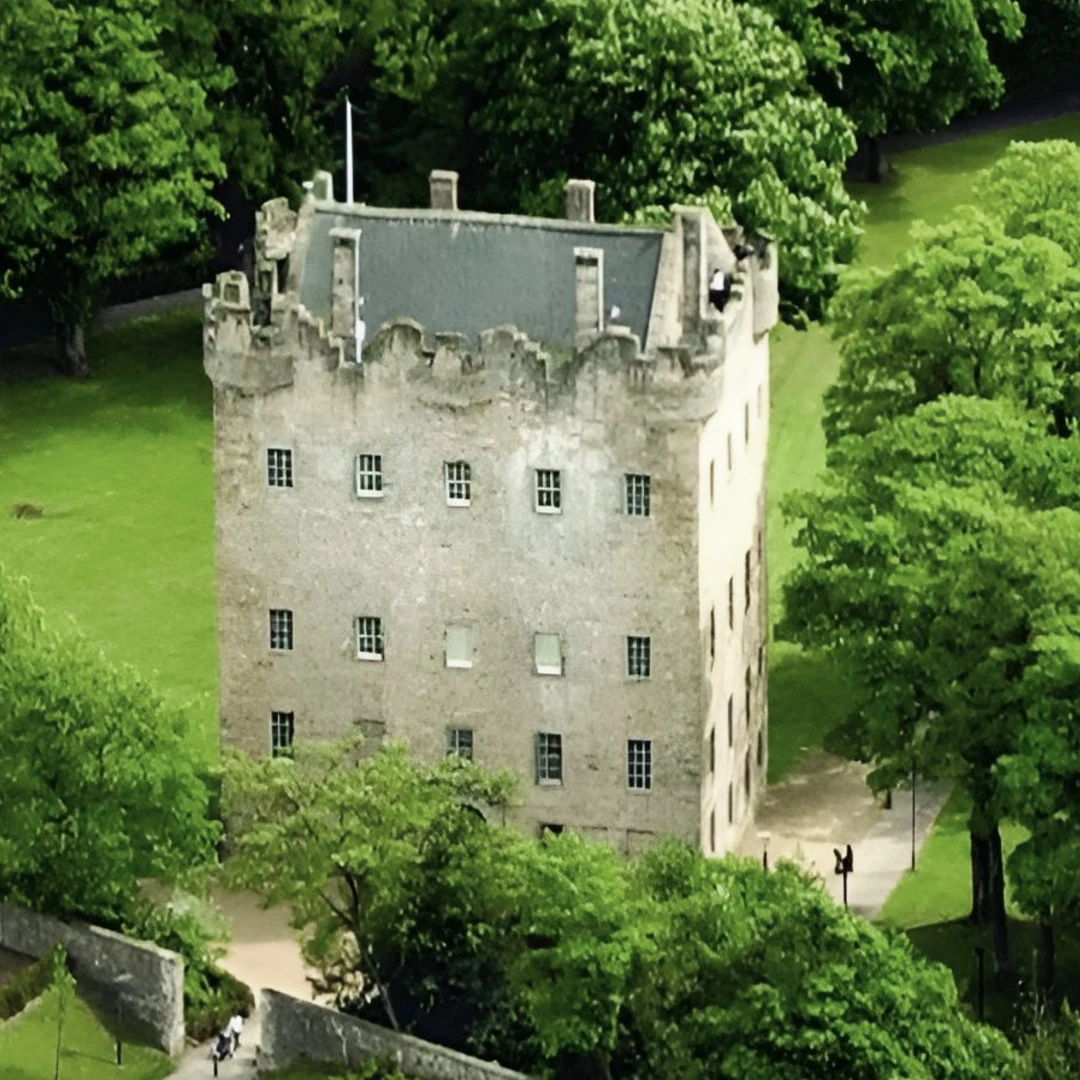
In the heart of Scotland, within stone walls that have stood for over six centuries, Alloa Tower rises as a testament to the rise of one of the country’s most influential families, and to a series of fires, wars, confiscations, and family tragedies that, over time, became the story of a so-called curse that was said to have predicted almost everything that happened.
This legend isn’t about a single mysterious death or one ill-fated event. Instead, it tells of a sweeping prophecy that shaped the fate of an entire family: a man who would sit in the king’s place, a palace that would never be finished, estates lost to outsiders, a home consumed by fire, three sons who would never see the light of day, horses roaming the halls of nobility, a weaver working in the council chamber, and finally, a small ash tree sprouting from the top of the tower to mark the end of their misfortunes.
Strangely enough, many of these events actually happened, in ways that seemed, at least to those who believed in the curse to fulfill the prophecy point by point.
But when we look back at the historical record, another surprise emerges: some parts of the curse do match documented events, while other details appear to have changed or been added later to better fit what actually happened.
So, were the Erskines truly the victims of a centuries-old curse, or is this a perfect example of how folklore is born from the heart of history?
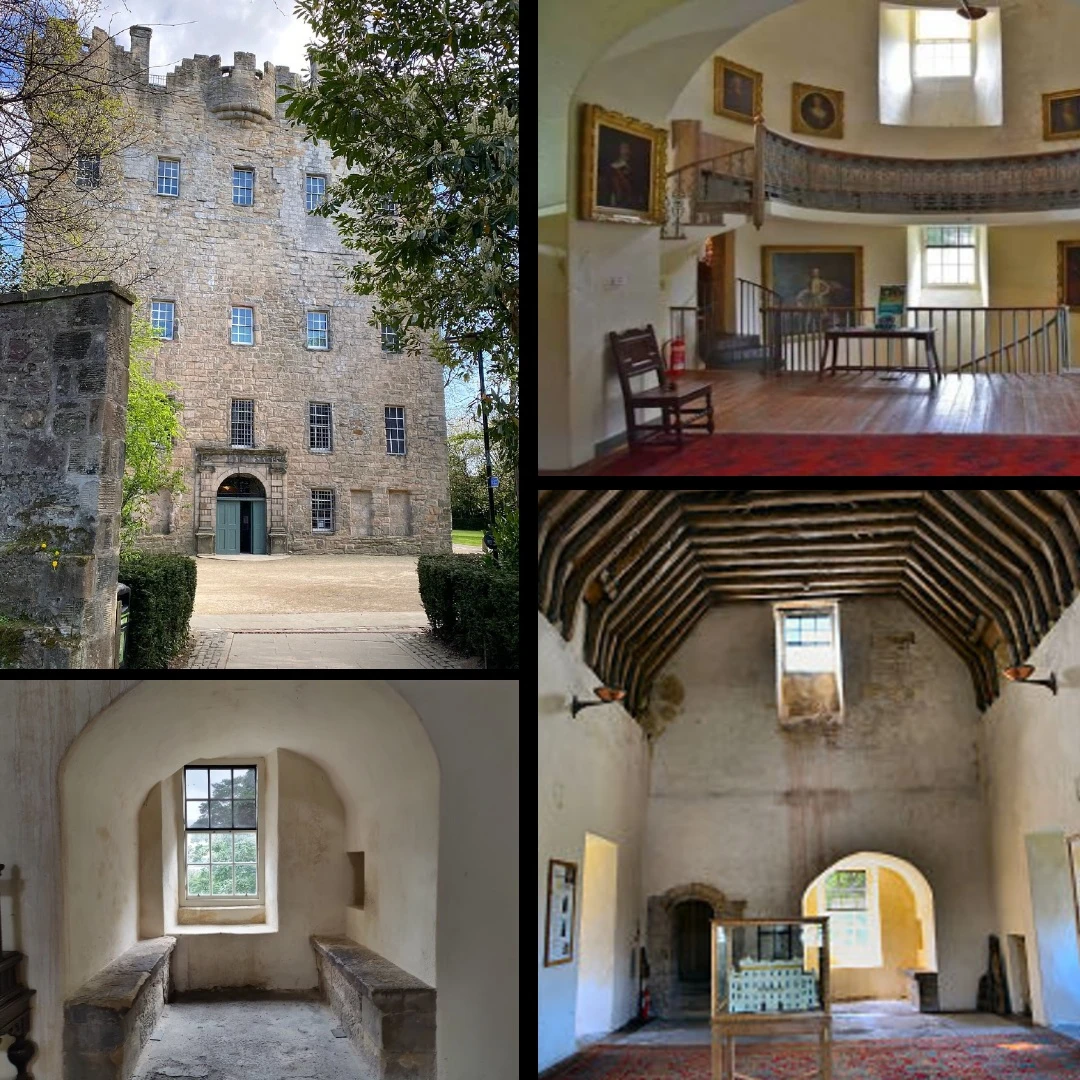
A Tower Linked to Kings
Alloa Tower stands in Clackmannanshire, central Scotland. Its oldest sections date back to the 14th century, and today it remains one of the largest surviving fortified tower houses in the country, with some walls measuring nearly 11 feet (3.3 meters) thick.
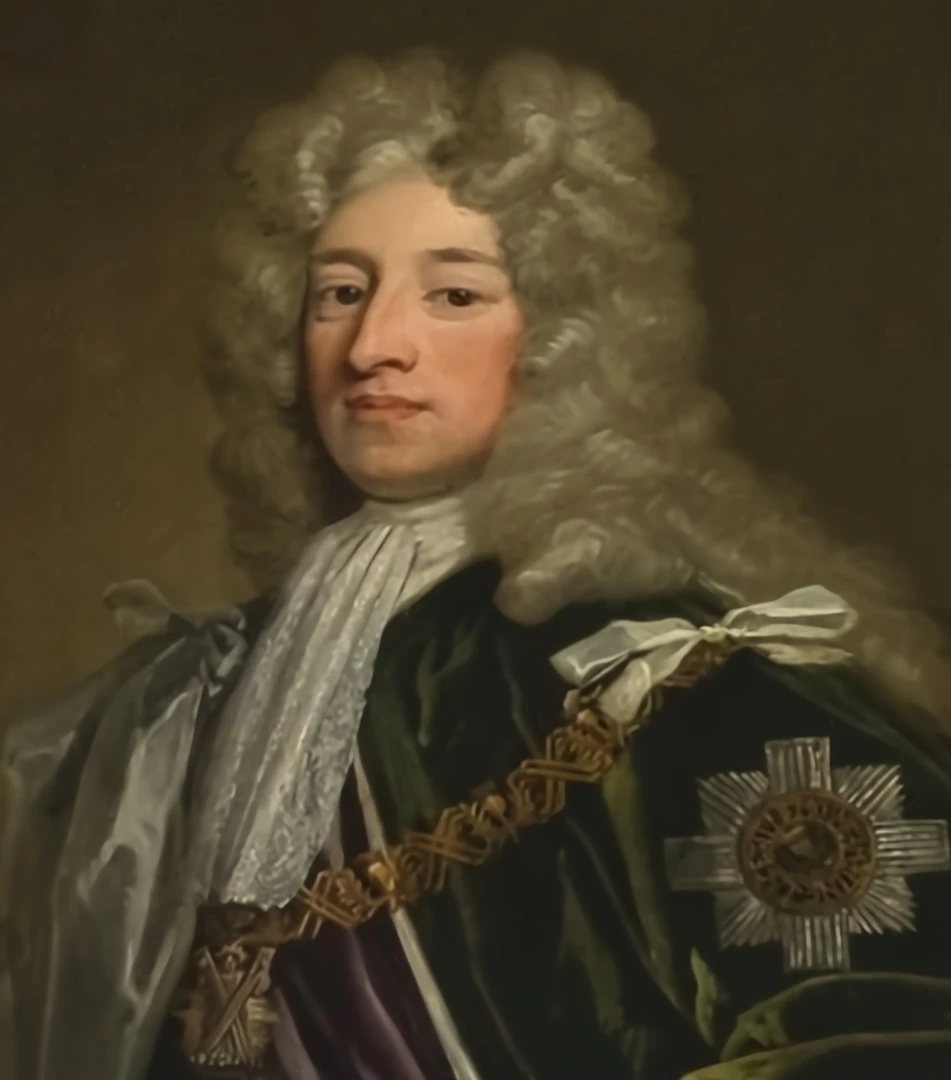
From early on, the tower was closely tied to the Erskine family, who held a unique position at the Scottish court. Members of the family served as guardians and protectors of royal children, including Mary, Queen of Scots, and her son, King James VI, who spent part of his childhood under the Erskines’ care. But the story of the curse begins with John Erskine, the first Earl of Mar in the 16th century, pictured here.
Monastery Stones and the Origin of the Curse
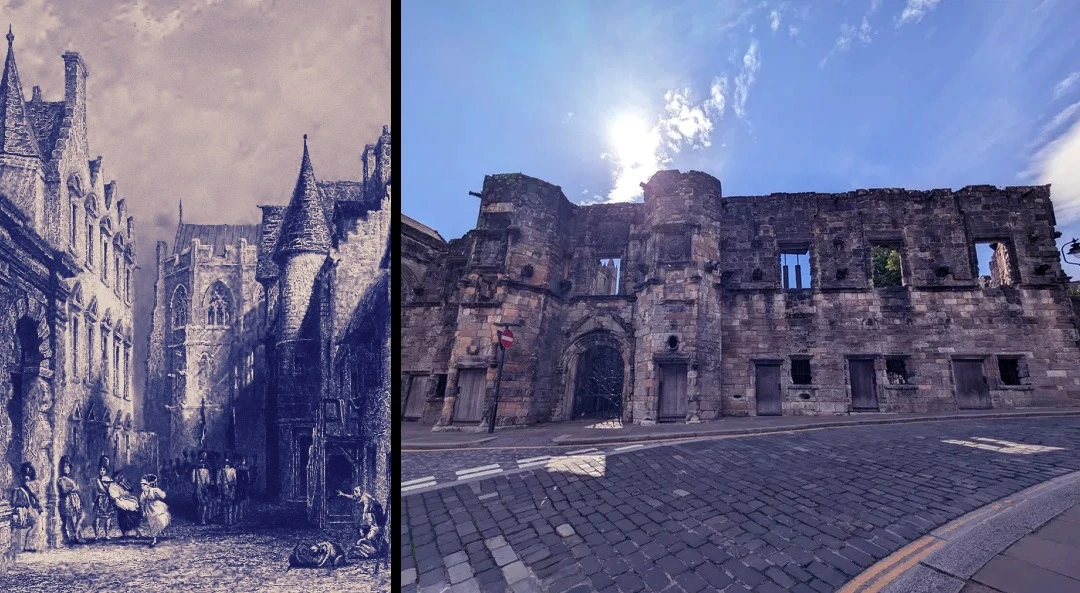
In the 1560s, John Erskine began building a grand residence near Stirling Castle, later known as Mar’s Wark.
According to local legend, he needed vast amounts of stone and took them from the nearby Cambuskenneth Abbey, using the monastery’s stones to construct his new palace.
The story about reusing the abbey’s stones isn’t pure fiction; Scotland’s official heritage organization notes a strong historical tradition supporting the use of stones from Cambuskenneth Abbey in Mar’s Wark. In fact, some stones in the building bear old religious markings, lending weight to the tale and that’s where the legend begins.
As the story goes, a clergyman from Cambuskenneth Abbey was outraged by the desecration and looting of the sacred site. He placed a long and detailed curse on Erskine and his descendants, known as The Doom of Mar. This wasn’t just a vague threat of misfortune, it was a prophecy with strikingly specific details.
According to the legend, Erskine was told he would rise so high that he woulds it in the king’s place , The building he constructs will bear his name, but it will never be finished. His family will reach the height of glory before collapsing, and their royal banner will be raised in...the Field of Blood...but their lands will pass to strangers, and their titles will disappear.
The prophecies grow even stranger: a house once home to a king will burn, the wife of one of his descendants will perish in the flames, and though he will have many children, three will never see the light of day. The family will fall so low that horses will be stabled in their ancestral hall, and a weaver will set up his loom in the state room. As for the end, it will be marked by a clear sign:
When a sapling ash tree grows from the highest stone of Alloa Tower, the family's misfortunes will end and their titles will be restored..
A longer version of this prophecy was circulating in folklore by the nineteenth century, and history seemed to begin fulfilling it.
"You will sit in the king's place."
The first remarkable fulfillment of the prophecy came not long after Erskine's own time. In 1571, John Erskine became Regent of Scotland, effectively ruling the kingdom on behalf of the child king James VI. Storytellers saw this as the first line of the curse coming true:
"You will rise until you sit in the king's place."
Erskine was one of the most powerful men in the country, but his time in power was brief; he died the following year, in 1572. His palace, Mar’s Wark, was never completed as planned, and today only parts of the facade and surrounding structure remain. In popular imagination, the building itself became the first stone witness to the curse.
The royal banner in the 'Field of Blood'
Decades passed, and then another descendant, John Erskine, the sixth Earl of Mar, emerged.
In 1715, Erskine was a leading figure in the Jacobite uprising, which aimed to restore the Stuart dynasty to the British throne. His supporters raised the banner of James Francis Edward Stuart, known to his followers as the rightful king. But the uprising failed after a military campaign highlighted by the Battle of Sheriffmuir. Erskine fled into exile, his estates were confiscated, and his titles were stripped. Suddenly, the old words of the curse resurfaced:
" You will raise your king's banner in the Field of Blood... then your time will come, your land will pass to strangers, and your titles will be lost to history."
Historical records confirm that the failure of the 1715 uprising led to the Earl of Mar's exile and the seizure of his estates, including Mar's House.
For those who believed in the curse, the parallels became increasingly hard to ignore.
The night fire consumed Alloa House
Then came the night of August 28, 1800. Between 11 p.m. and midnight, a massive fire broke out at Alloa House, the grand residence attached to the old Alloa Tower. With no effective firefighting equipment and the nearby watercourse dry, the flames spread rapidly. By 2 a.m., the roofs had collapsed, and by dawn, most of the house was reduced to ashes.
But one thing remained standing: the old stone tower. This matches almost exactly what storytellers attributed to the prophecy the house would burn, but the old tower would survive. Historical records confirm the fire of 1800 and the destruction of the residential buildings surrounding the tower.
This is where the story takes a more suspicious turn. According to popular legend, John Francis Erskine’s wife died in the fire, supposedly fulfilling the part of the prophecy that said his wife would fall victim to the flames. However, historical records tell a very different story.
The wife who died before the fire
John Francis Erskine’s wife was Frances Floyer, but she didn’t die in the 1800 fire. She passed away in Alloa on December 20, 1798 about twenty months before the fire broke out. More importantly, a detailed historical account of the Alloa fire clearly states: 'No lives were lost in the fire.'
Residents managed to save papers, books, some furniture, and paintings, but the house itself was completely destroyed. This is where the first real cracks in the curse appear.
At some point as the story was passed down through generations, the wife’s death before the fire was woven back into the narrative, turning a woman who died before the incident into a 'victim of the flames.' This made the prophecy seem more accurate than the historical facts allow.
Three children 'will never see the light'
But there’s another, even more mysterious part. The prophecy claims that three of the family’s children will never see the light of day. Later accounts explained this by claiming that three of John Francis Erskine’s children were born blind.
Interestingly, blindness wasn’t entirely a fabrication; there are historical references to blind members of the Erskine family, including Lady Jane Erskine.
The real challenge is confirming that three specific children were all born blind, as the curse supposedly foretold. Much of this detail comes from 19th-century family lore and folklore collections, rather than any contemporary record of the prophecy itself. As a result, this claim remains one of the story’s most intriguing, and most difficult to verify aspects.
Horses in the Great Hall
The prophecy grows even stranger with the claim that the family would fall so far that:"Horses would be tied up in your hall.""
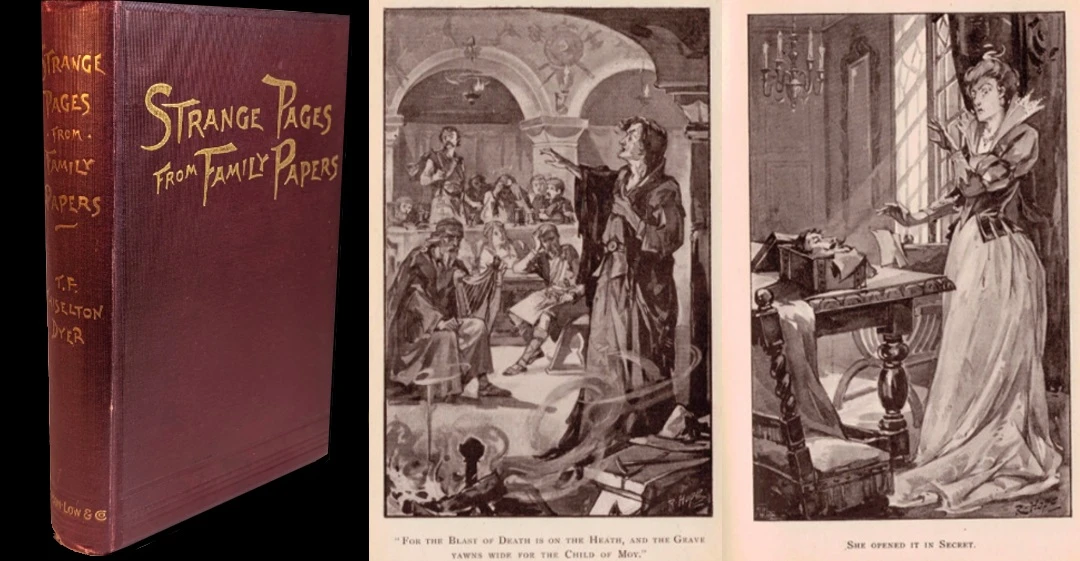
According to the 1895 book "Strange Pages from Family Papers," fears of a French invasion in the early 19th century led local forces to use Alloa Tower. Reportedly, around fifty horses were stabled in the great hall for a week.
The next line reads: "A weaver will throw his shuttle in the state room."".
The same book recounts that visitors to the tower in 1810 were surprised to find a weaver working his loom in one of its grand old rooms.
These details may be accurate, or they may have become more dramatic as the story was passed down. Either way, they became central to the 19th-century narrative of the curse’s fulfillment. Yet, one final sign remained. "The Ash Tree".
The Branch of Fate Above the Tower
The prophecy claimed that Alloa Tower would remain in ruin until an ash sapling sprouted from its highest stone. When this happened, the Mar family’s misfortunes would end and their titles would be restored.
According to various accounts, between 1815 and 1820, a small ash sapling did appear among the stones at the top of the tower. Some visitors, the story goes, would touch its branch and wonder if they were witnessing the very "branch of fate" mentioned in the curse. Then, the story reached its perfect conclusion.
On June 17, 1824, Parliament passed a law restoring the Earl of Mar titles to John Francis Erskine, which had been confiscated after the 1715 uprising. Official Scottish records confirm the titles were returned that year, and after his death in 1825, they passed to his eldest son, John Thomas.
The ash tree appeared... then the title was restored. For those who believed in the curse, this was no mere coincidence. But for the historian, this is precisely where doubt should begin.
Who cast the curse in the first place?
Recent versions of the story claim that the abbot of Cambuskenneth Abbey cursed Erskine for looting the abbey’s stones. Some accounts name him as 'Abbot Patrick,' and occasionally add mysterious traits involving magic and prophecy.
However, the historical timeline doesn’t support this version. Cambuskenneth Abbey was already destroyed during the turmoil of the Scottish Reformation. Official records describe it as 'ruined and demolished' in 1559, before it passed to John Erskine in 1562. Afterward, parts of it were used as a stone quarry.
This is quite different from the popular image of Erskine demolishing a thriving abbey full of monks and then being cursed in revenge. Even folklore sources can’t agree on who delivered the prophecy; sometimes it’s attributed to a clergyman from the abbey, other times to a legendary figure or prophetic poet.
The uncertainty about the curse’s origin leads to a more important question: when did the words of the curse, as we know them today, first appear?
Where is the original text?
If we had a sixteenth-century manuscript containing the full prophecy before the later events took place, that would be truly remarkable. But so far, there’s no known contemporary evidence from John Erskine’s time that includes such a detailed prophecy.
One of the most widely cited sources that preserves the story in detail is 'Strange Pages from Family Papers' by Thomas Firminger Thiselton Dyer, published in 1895.
And here’s the problem: by the time that book was published, nearly all the events the prophecy supposedly predicted had already happened.
The 1715 uprising had occurred, the estates had been confiscated, the fire happened in 1800, the horses and the weaver are linked to the early nineteenth century, the ash tree appeared according to the stories, and the title was restored in 1824.
This changes the question entirely:
Did the prophecy truly predict the future, or did it gain its details only after the events had already taken place?
When folklore rewrites history
Researchers studying prophecies recognize a phenomenon known as "postdiction" prophecies written after the fact.
A story might begin with a vague phrase or a simple oral tradition. As new events unfold, storytellers reinterpret the old words in light of what’s happened, or add new details without anyone noticing when they entered the tale.
Generations later, we’re left with a text that seems uncannily accurate, even though it’s hard to prove that this accuracy existed before the events themselves. The Mar family curse is a perfect example.
There’s no doubt that dramatic historical events took place: Erskine’s rise to power, the failure of the Jacobite uprising, the confiscation of the estates, the Alloa fire, the survival of the tower, and finally, the restoration of the title.
But there are also clear embellishments and errors, like the story of the wife who supposedly died in the fire, even though she had actually passed away about two years earlier, or the inaccurate account of Erskine destroying a thriving monastery. Over time, history, coincidence, and folklore have become so intertwined that it's nearly impossible to separate one from the other.
The tower still stands.
Today, Alloa Tower remains in the heart of the city, having undergone extensive restoration in the late twentieth century. Now managed by the National Trust for Scotland, visitors can explore its historic halls and rooms, admire the medieval wooden ceiling, and view artifacts from the Erskine family.
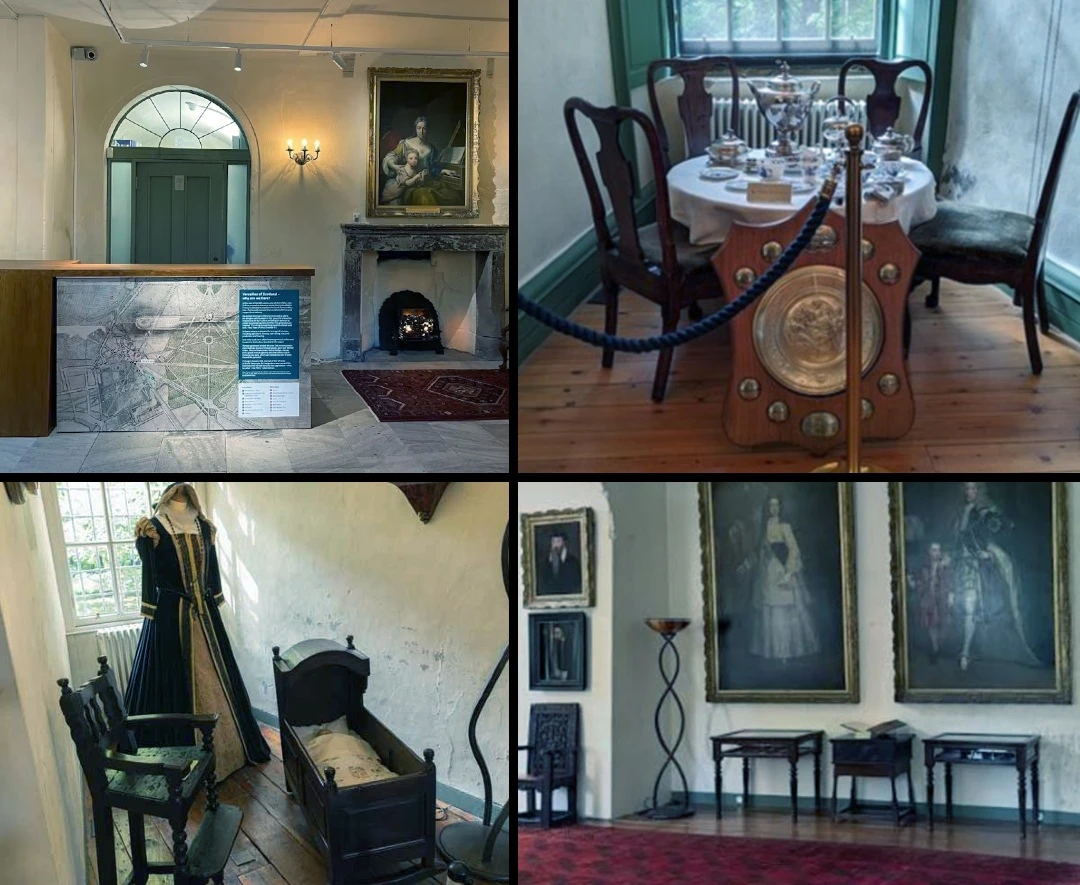
Over the years, the site has also become associated with tales of ghosts, shadows, and strange sensations within the tower, stories that have undoubtedly helped keep its mysterious reputation alive into modern times.
But perhaps the most evocative part of the legend doesn't involve a ghost at all. Sometimes, all it takes is to stand before the ancient stones and remember the story of a small tree that was said to have sprouted from the top of the tower centuries after a prophecy foretold its appearance would mark the end of the curse.
And just a few years later, the title of Mar was indeed restored to the family.
Was it simply a remarkable historical coincidence that fueled an old legend?
Or is there something about the story of Alloa Tower that the records never captured?
We may never know when the first words of the curse were spoken, who uttered them, or how much the tale changed before it reached us.
What is certain is that the curse of Alloa Tower didn't need to be real to leave its mark on history. For centuries, it has shaped the way every fire, defeat, birth, and death in the Erskine family was understood, until the legend itself became inseparable from the tower and its people.
And perhaps that's where its true power lies, not in predicting the future, but in making the past feel as though it was always meant to be.
About the Author