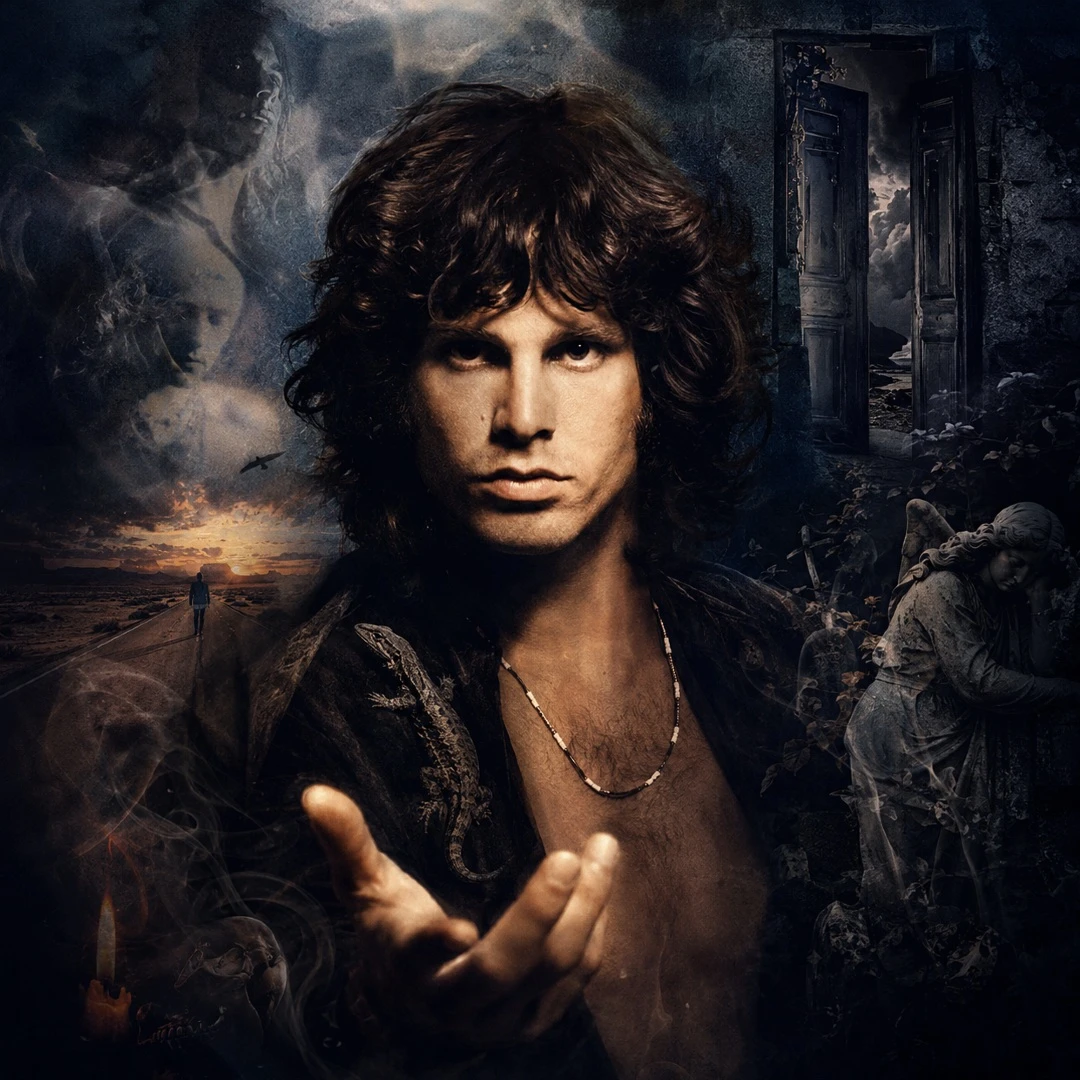
In a cemetery Père Lachaise in Paris, where poets, musicians, and rebels from different eras are laid to rest, Jim Morrison’s grave stands out, not just as a tomb, but as a small gateway to an unfinished legend. Visitors from around the world leave flowers and notes, snap photos, and some quietly recite lyrics from The Doors, as if the singer who died at 27 never truly left, but simply crossed over to the 'other side' he sang about all his life.
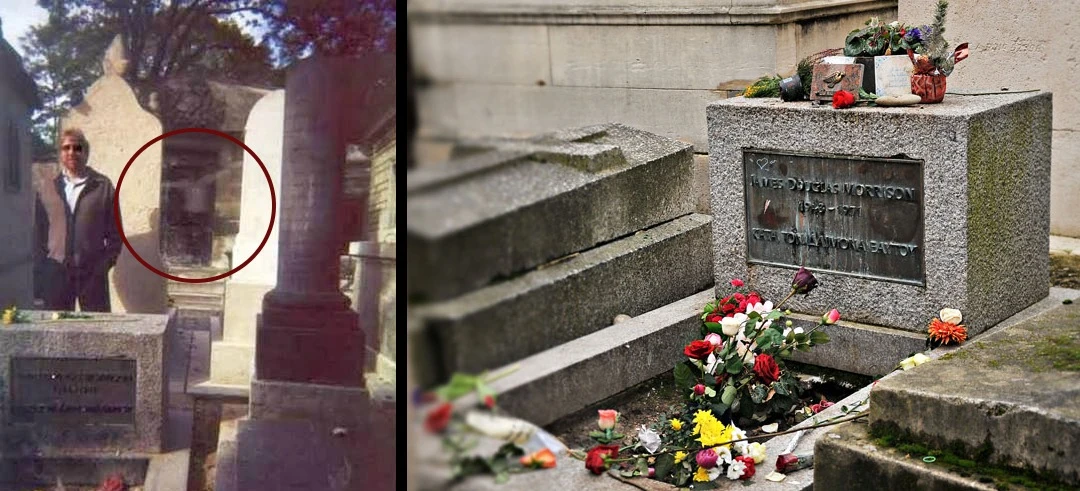
Perhaps the strangest story linked to this grave is a photo taken in 1997, which shows a white, misty shape in the background. Some fans claimed it resembled Jim Morrison himself.
Was this photo proof of his ghost appearing? Or just an optical illusion created by the background and shadows? As odd as it sounds, this story is just the latest chapter in the life of a man whose entire art was about crossing boundaries: of perception, of the body, of the stage, and of death itself.
So who was Jim Morrison, really? A rock singer? A rebellious poet? A master of the shaman persona? Or a man consumed by the myth he built around himself?
From Film Student to Theatrical Shaman
Jim Morrison, full name James Douglas Morrison, was born on December 8, 1943. Before becoming the iconic lead singer and lyricist of The Doors, one of the twentieth century’s most legendary rock figures, he was a film student at UCLA. There, he met Ray Manzarek, who would later become the band’s keyboardist.
UCLA archives show that Morrison and Manzarek were both film students from 1961 to 1965. The roots of The Doors can be traced back to this creative environment, where image, sound, and artistic experimentation blended together.
In the summer of 1965, Morrison and Manzarek met on Venice Beach in California. Morrison had started writing poems and songs, and when Manzarek heard them, he saw the potential for a different kind of rock band.
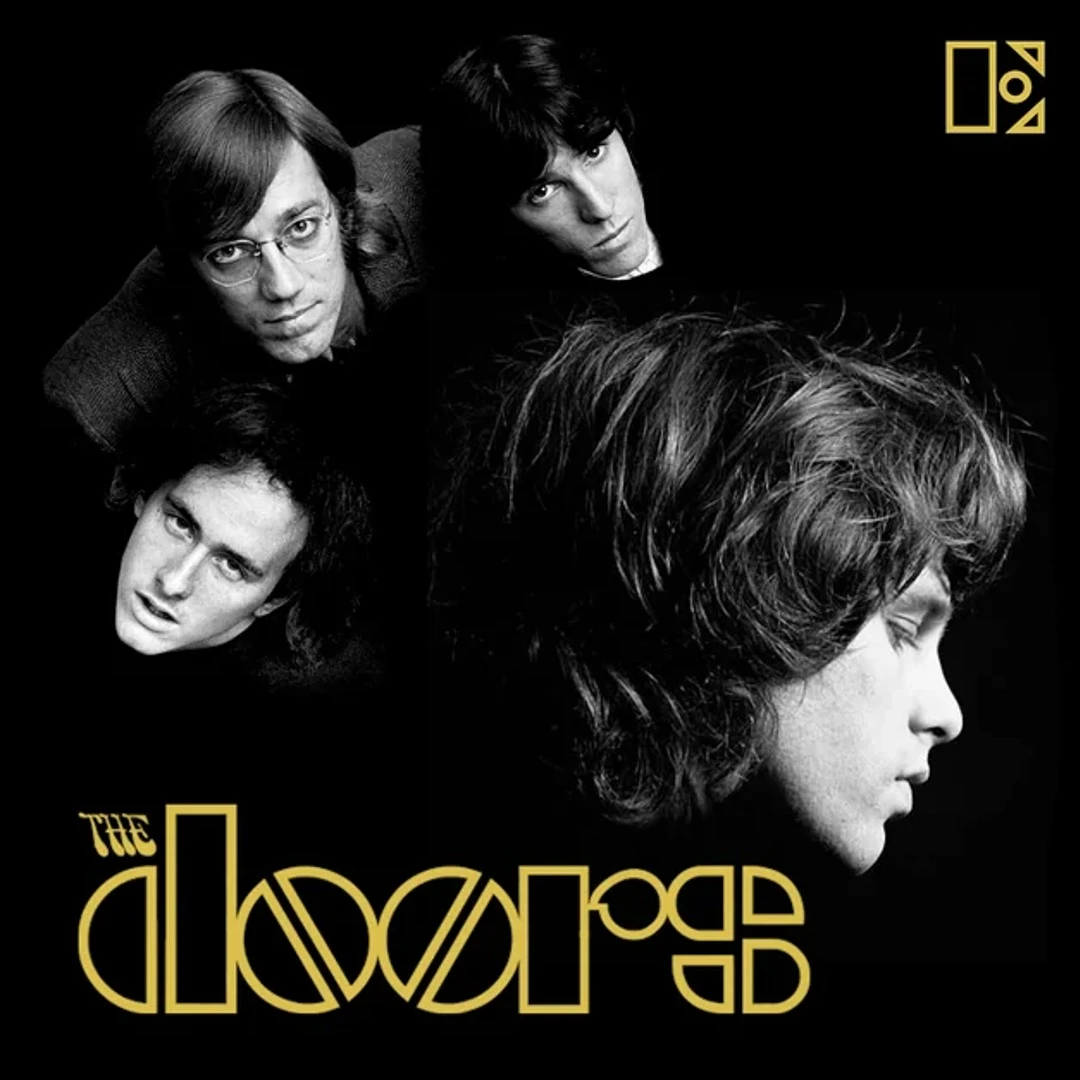
Guitarist Robby Krieger and drummer John Densmore later joined, and together they formed one of the most enigmatic and influential bands in music history. According to the band’s official website, the name The Doors was inspired by Aldous Huxley’s book The Doors of Perception Aldous Huxley itself a reference to William Blake’s idea of the 'doors of perception.'
So the band’s name wasn’t just a catchy choice; it was an artistic statement: there are closed doors within us, and art has the power to open them.
Was Morrison a shaman?
The word 'shaman' shouldn’t be used lightly. In traditional cultures, a shaman is a spiritual mediator, healer, or ritual leader, working within a specific religious and social framework. In that sense, Jim Morrison wasn’t a true shaman, nor was he part of any tribal tradition or organized healing practice. But he embraced the image of the modern shaman: an artist who enters a trance, stirs the crowd, invokes symbols of death, animals, and spirits, and transforms performance into a journey into the unknown.
This isn’t just a modern interpretation. In an interview titled 'The Shaman As Superstar,' Morrison himself describes the shaman as someone who enters a trance or altered state, through dance, spinning, drink, or drugs—then embarks on a mental journey and recounts it to the rest of the tribe.
This idea reveals how he saw the artist’s role: not just as a performer on stage, but as a guide leading the audience into a different state of consciousness.
That’s why Morrison’s concerts felt more like rituals than simple musical performances. Sometimes his body moved with a slow, serpentine grace, only to suddenly erupt in screams, spins, or collapses. His voice shifted from whispers to howls, and his lyrics didn’t always follow a logical narrative, they were more like incantations, layered with images of blood, desert, sex, death, and freedom. For him, the stage wasn’t just a place for entertainment; it was a space of danger.
The Desert Incident: Spirits Enter the Body
At the heart of Jim Morrison’s legend lies a mysterious childhood story. Morrison often recounted witnessing a horrific accident as a child on a desert road in New Mexico, where injured Native Americans or workers lay sprawled on the ground. In his poetic memory, this wasn’t just a fleeting scene, it became a moment of spiritual awakening. He later imagined that the spirits of the dead or dying entered his body and stayed with him.
From a historical perspective, it’s difficult to treat this story as a fully verified event. Morrison’s family didn’t always confirm the dramatic version he told, and childhood memories can easily turn into myth over time. But what matters most isn’t just what actually happened, but what Morrison did with the incident. He transformed it into a personal origin story, a founding myth as if he didn’t become a singer by choosing music, but because he carried other voices within him.
Echoes of this story appear throughout his poetry, especially in works like "Dawn’s Highway" and "The Ghost Song," and in the atmosphere of "Peace Frog," which evokes images of blood on roads and in cities. Here, he’s not just a poet writing about an accident, but an artist crafting a unique identity: a man inhabited by the dead, speaking for them or at least imagining that he does.
Doors of Perception and Crossing to the Other Side
"Break On Through (To the Other Side)" isn’t just the opening track of The Doors’ career—it’s a key to understanding Morrison’s entire vision. The title alone sums up his philosophy: break the barrier, cross over, don’t stay in ordinary consciousness. Morrison was fascinated by the idea that what we see isn’t all there is, that beyond everyday perception lies a deeper, more dangerous world.
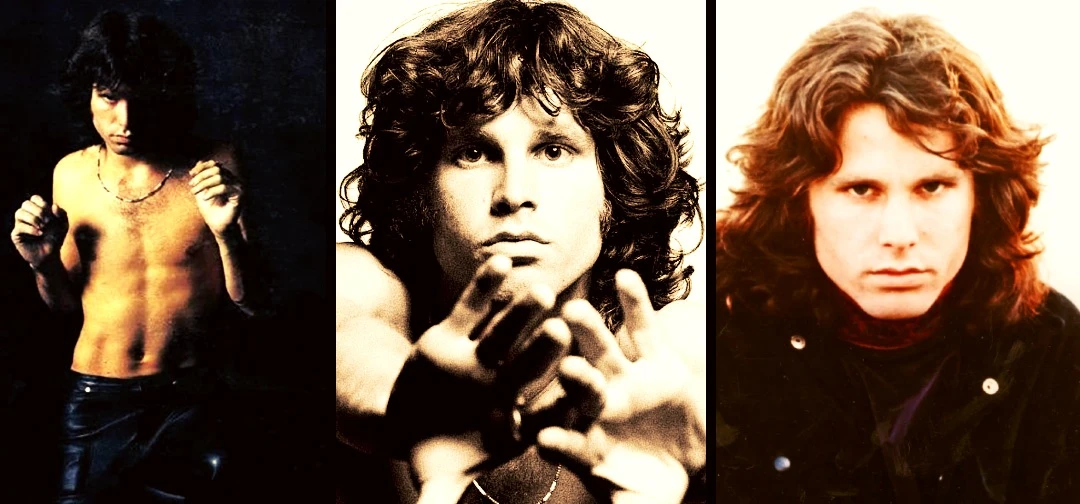
Morrison was influenced by writers like William Blake, Nietzsche, and Aldous Huxley, as well as the cultural atmosphere of the 1960s, where rebellion against authority mixed with the search for new consciousness, psychedelic drugs, experimental art, and a return to rituals and myths. What set him apart was that he didn’t treat these ideas as intellectual decoration, he made them part of his image, his voice, and his presence.
On the band’s official website, Morrison is described as a "singer-poet" and "Lizard King" who brought a shamanic intensity to the microphone. His lyrics are linked to themes of sex, violence, freedom, and the spirit, with a Dionysian energy that continues to inspire artists and audiences alike.
This is where Morrison differed from many other rock stars, he didn’t just want to be loved, he wanted to be dangerous. He wasn’t interested in pleasing the audience, but in unsettling them.
The Song "The End": More Like a Death Ritual
If there’s one song that encapsulates Jim Morrison, it’s "The End." On the surface, it’s a farewell, but it gradually transforms into a dark journey inward, where the end of love merges with the end of innocence, and personal relationships become a mythic stage for violence, desire, and rebellion against father and authority.
The song lasts over ten minutes, but it doesn’t behave like a typical track. It’s more like a theatrical ritual: the voice starts as if coming from a distant room, the rhythm expands, and then the lyrics enter forbidden territory that society would rather not hear. In some interpretations, the song feels like a shamanic descent into the underworld, a plunge into darkness, a confrontation with paternal symbols, and a return that’s either distorted or liberating through collapse.
It's no surprise that The End became one of The Doors' most iconic songs associated with death, cinema, and psychological horror. Rather than delivering a clear message, it opens a wound and invites the listener to look inside.
The Lizard King: The Symbol He Chased
"The Lizard King" is one of Jim Morrison's most famous nicknames. It emerged from his poetic world and was especially tied to his long-form project, The Celebration of the Lizard. Morrison was fascinated by reptiles and desert symbolism. In the interview The Shaman As Superstar, he spoke about his strong attraction to reptiles—even wanting one of his projects to have a snakeskin-inspired cover.
But Morrison later distanced himself from taking the nickname too seriously. In a Rolling Stone interview, when asked if he still considered himself "The Lizard King," he replied that it was meant to be ironic and somewhat playful, and that people took it far more seriously than he ever intended.
This contradiction is crucial: Morrison would create a symbol, then mock it; wear a mask, then deny it; open the door to myth, then step back. But the audience could no longer separate the man from the mask. "The Lizard King" became a cultural reality, even if Morrison himself only meant it partly as a poetic game.
The lizard itself is a fitting symbol for Morrison's world: a desert creature, close to the earth, silent, primitive, resilient, and in popular imagination, associated with renewal and shedding its skin. In Morrison's context, it can be seen as a metaphor for someone wanting to break free from their old self, from the constraints of body and mind.
Is there a connection to the occult or magical practices?
It's easy to tempt readers with headlines claiming Jim Morrison practiced magic or summoned spirits, but a fair investigation requires caution. There's no strong evidence that he was a ritual magician in any organized sense or a member of an occult group with specific rites. More accurately, he was immersed in mystical and symbolic imagination: shamanism, myth, death, the desert, sacred animals, ecstasy, transformation, and hallucinatory visions.
Morrison was a product of his era the 1960s when rock music blended with political rebellion, sexual liberation, psychedelic drugs, and a fascination with Eastern religions, shamanism, and indigenous cultures. But he wasn't just following the trend; he turned these influences into personal and poetic material, becoming a living ritual himself.
You could say that Morrison's 'magic' wasn't found in a book of spells, but on stage. His power lay in transforming the audience into a collective, restless, entranced group unsure whether they were at a concert or a mass séance.
A Voice from the Storm
Late in his time with The Doors, the song "Riders on the Storm" arrived like a message from the edge of the world. Rain, thunder, the open road, a wandering killer, and the haunting whispers in the background—all combine to make the song feel as if it's being performed not in a studio, but somewhere between life and death.
The song appears on L.A. Woman, the last album Morrison recorded with the band before moving to Paris and passing away in 1971. While the song isn't overtly supernatural, its funereal atmosphere has made it feel like a sonic epilogue to his career. It's a road song, but the road is under a storm; a song about life, but life haunted by death.
Listening to it now, it's hard to separate the song from Morrison's fate as if he was singing from within the very storm that would soon consume him.
Paris: A Mysterious Death and a Grave Turned Pilgrimage Site
In 1971, Morrison left the United States for Paris with Pamela Courson, hoping to escape the pressures of fame, legal troubles, and the public image that had trapped him. He wanted to write, wander the streets, and rediscover himself as a poet rather than a rock star surrounded by scandal.
But on July 3, 1971, he was found dead in his Paris apartment at the age of 27. No autopsy was performed, and the circumstances of his death remain shrouded in mystery and speculation.
Many reports attribute his death to heart failure, but the lack of an autopsy and his association with a culture of excess have made his passing fertile ground for rumors.
The official website for The Doors notes that he died in Paris in 1971 at the age of 27, though later news reports point out that the exact circumstances remain shrouded in mystery.
Morrison was buried at Père Lachaise Cemetery, which has since become a pilgrimage site for his fans. Strangely, his grave has never truly been at rest. In 1981, a marble bust sculpted by Croatian artist Mladen Mikulin was placed on the grave, but it was stolen in 1988.
In May 2025, news outlets reported that French police had stumbled upon the missing bust during a search related to a fraud case—37 years after it vanished. Even the statue seemed to return like a ghost from the past.
The Ghostly Photo: Did Morrison Return to His Grave?
Perhaps the most intriguing story is tied to a photograph taken at the grave in 1997. Rock historian and critic Brett Meisner visited Jim Morrison’s grave at Père Lachaise, and a photo was snapped of him standing in front of it. In the background, a white, misty figure with outstretched arms appears.
Some later claimed the figure resembled Morrison. According to various accounts, no one noticed the shape until years later. The photo was analyzed and, reportedly, no obvious digital manipulation was found.
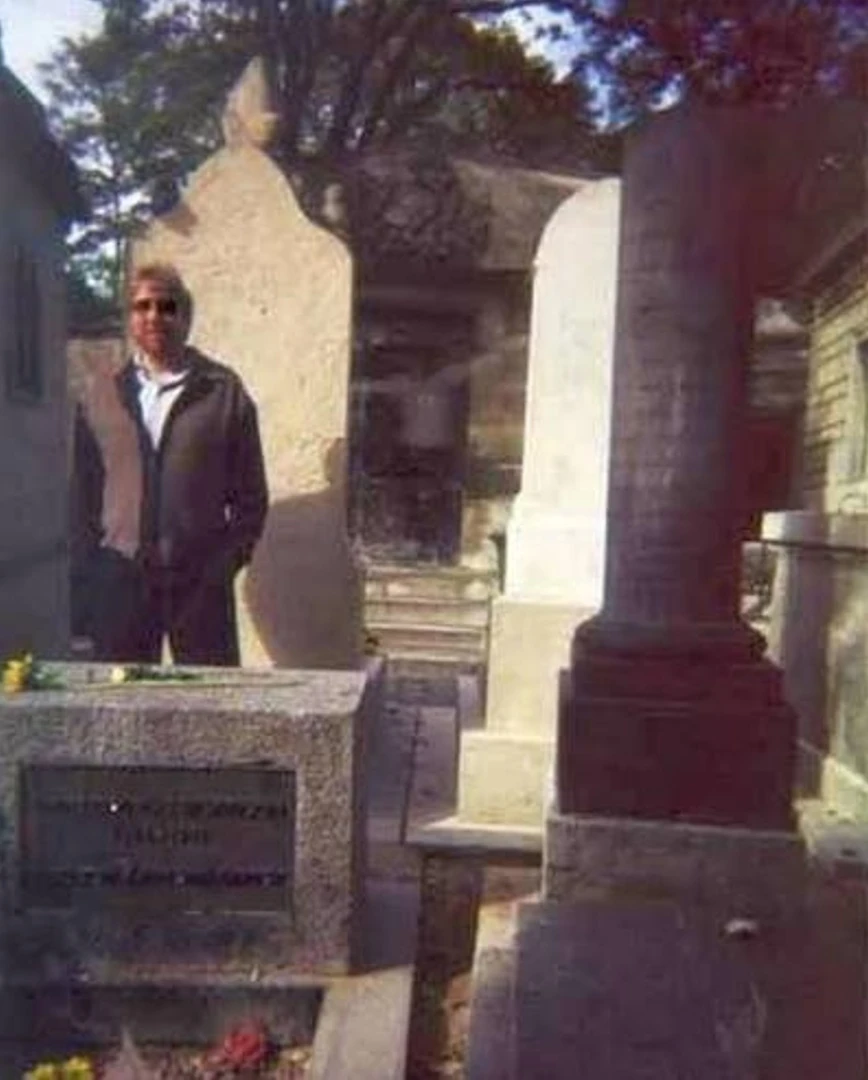
Another important version of the story appeared on the Trailers From Hell website, where writer and director Allan Arkush stated that he was the one who took the photo in Paris in 1997. He says it was later mistakenly attributed to others, even to Tom Petty.
Arkush himself admits he can't explain the figure, but insists the photo is his and that what appears in it is both strange and convincing.
Skeptical interpretations are just as significant. Some analyses suggest the 'ghost' is nothing more than a shadow or visual artifact perhaps the outline of a background, a door, or a wall behind the grave. In other words, the shape may have appeared on the film, but that doesn't necessarily mean it was a spirit; the photo could be unaltered and still have a perfectly ordinary visual explanation.
That's where the real value of the story lies. It doesn't offer definitive proof that Morrison appeared after his death, but it does reveal something deeper: the legend he created around himself is still powerful enough to conjure ghosts.
The man who sang about crossing to the other side now has a grave where people expect something from that side to appear.
Between Fact and Legend
When it comes to Jim Morrison, it's nearly impossible to draw a clear line between the man and the myth. He blurred that line himself talking about shamans, then mocking the title 'Lizard King'; invoking death in his songs, then living recklessly as if it were chasing him; opening doors of perception, then leaving audiences wondering: was he a guide to another world, or a brilliant performer playing the role of a primitive priest?
Most likely, Morrison wasn't a real shaman or a ritual magician, and there’s no evidence he summoned spirits like spiritualist groups do. But he was something just as compelling: an artist who understood that modern people, despite their science, cities, and noise, still need ritual, someone to shake them, scare them, pull them out of their daily consciousness, and make them stare into the abyss, if only for a moment.
In this sense, Morrison was the shaman of rock not because he held any documented spiritual authority, but because he fulfilled the shaman’s role in popular culture: leading his audience into ecstasy, turning the stage into a temporary tribe, and transforming the song into a rite of passage.
About the Author