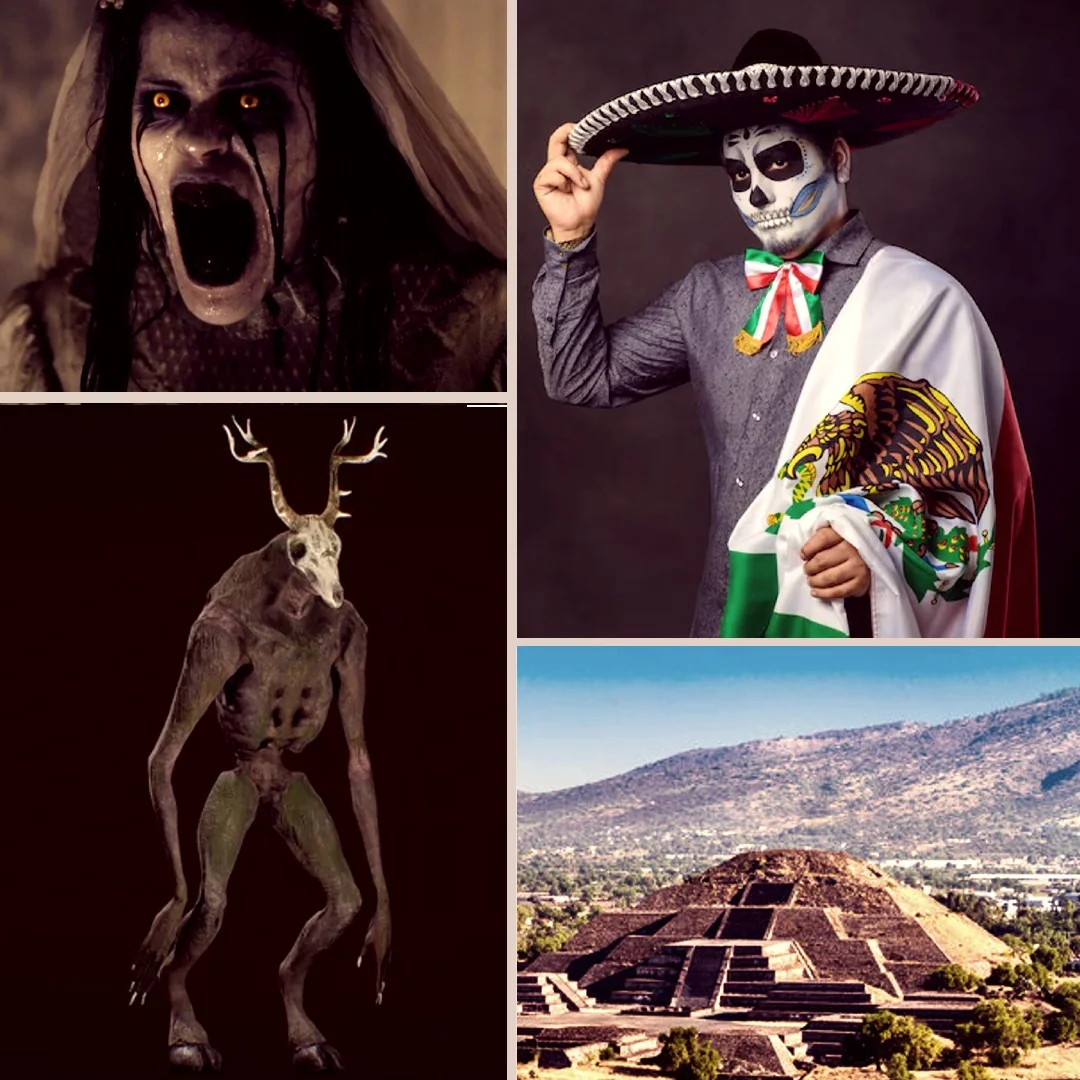
When you think of Mexico, images of colonial cathedrals, mysterious Aztec temples, vibrant flowers, and the scent of spices might come to mind. But beneath this lively surface lies a deeper, more enigmatic layer: a world of the supernatural, where spirits meet rituals, legends blur with reality, and life and death intertwine.
In this report, we take you on a journey through Mexico as you've never seen it before—a journey into the unknown, filled with spirituality and mystery. Here, spirits are said to linger, stories of hidden creatures are whispered by elders, and ancient rituals are still practiced as if time has stood still.
1- La Llorona: The Weeping Woman Who Never Sleeps
La Llorona is one of the most terrifying legends in Mexican folklore. According to the story, she drowned her children in a moment of despair, then took her own life.
Since then, she is said to wander the riverbanks, searching for her lost children, crying and wailing especially at night.
Hearing her cries is considered an omen of misfortune or impending death. In places like Xochimilco, locals warn against going out at night for fear of encountering her. The legend is widespread across Mexico, especially near rivers and lakes.
2- Nahual: The Sorcerer Who Turns Into an Animal
In Aztec and Mayan beliefs, a Nahual is someone who can transform into an animal such as a wolf, jaguar, or owl—at night using magical rituals. It’s believed that everyone is born with a spiritual animal, but some sorcerers have learned to fully embody theirs. In mountain villages, mysterious attacks on livestock are sometimes blamed on a disguised Nahual. This legend is especially common in southern Mexico, particularly in Oaxaca and Chiapas.
3- El Cucuy: The Night Creature That Snatches Children
Similar to the 'ghoul' in Arab folklore, El Cucuy is said to be a small creature that hides in the shadows or under beds at night, snatching children who stay up late or disobey their parents. While the story is often used to scare kids, many locals believe El Cucuy is more than just a myth—especially when strange things happen at home. This tradition is especially strong in northern Mexico.
4- Día de los Muertos: When Spirits Return
This is more than just a celebration, it's a profound spiritual ritual. On November 1st and 2nd, it's believed that the gates to the other world briefly open, allowing the spirits of the dead to visit their loved ones. Families prepare home altars, known as Ofrendas, decorated with candles, flowers especially the marigold Cempasúchil, and the favorite foods of the departed. It's said that the spirits follow a path of flowers and incense back to their homes. The Day of the Dead is widely celebrated across all Mexican states, with especially vibrant traditions in Mexico City and Oaxaca.
5- Isla de las Muñecas: Where Spirits Take Shape in Dolls
Hidden among the tranquil canals of Xochimilco lies a haunting island, its trees draped with hundreds of dismembered, staring dolls. According to legend, a man named Don Julián began hanging the dolls after a young girl drowned near the island, hoping to ward off her spirit. Some claim the dolls' eyes move and that whispers can be heard at night.
6- Aztec and Maya Rituals: Divine Blood and Offerings to the Spirits
Before the Spanish conquest, local beliefs held that human blood was food for the gods. Priests would offer human sacrifices atop pyramid temples to appease cosmic forces, especially the sun and rain. It's said that some temples particularly at Teotihuacán and Chichen Itza still pulse with a strange energy, and visitors often report feeling chest pressure or mysterious headaches.
7- Brujería: Folk and Sacred Magic
Brujería is a form of folk magic practiced by both women and men, used for both good and ill. Spiritual healers, known as Curanderos, act as intermediaries between spirit and body, performing rituals with perfumes and incense, or using a chicken egg to diagnose the evil eye or envy. The purposes of these magical practices range from protection such as reciting spells over newborns, to harm, using hair, blood, or ashes, and to healing, with herbal remedies, vision-based treatments, or the 'sacred breath.' These traditions are especially common in rural villages in Veracruz, Tabasco, and Yucatán.
8- Xibalba: The Mayan Underworld
In Mayan mythology, there is a dark underworld called Xibalba, inhabited by the spirits of the dead and gods of death. Some believe that certain water-filled caves, known as Cenotes, serve as gateways to this realm. In the past, offerings were thrown into these cenotes, and today they are popular for diving, though many still consider them places of luck or misfortune depending on local beliefs. These sites are found throughout the Yucatán Peninsula.
9- Other Places Steeped in Mystery
Notable among them is the Nacxa Cave in Oaxaca, said to be a site for ancient spirit-summoning rituals. There's also the Sonora Market (Mercado de Sonora) in the heart of Mexico City, a marketplace dedicated to magic where you can find everything from skulls and talismans to herbs, binding dolls, and even exorcism tools.
Mexico: Where Death Never Ends
Mexico is not only a land bursting with color and life, but also a place where death is sacred, shadows linger, and the boundaries between worlds blur. You can't truly experience this country without pausing to take in its murals, rituals, and monuments, reminders that what we see is not all there is. Here, the supernatural isn't a luxury, it's a way of life.
About the Author