At the crossroads of Asia and Europe, where mountains whisper ancient tales and seas guard untold secrets, Turkey stands as a land steeped in legend and mystery. More than just a cultural bridge between East and West, it is also a gateway between the seen and the unseen.
From underground cities said to be inhabited by supernatural beings, to caves rumored to be portals between dimensions, and from folk magic practices to Sufi rituals, this country conceals another realmو one that is truly paranormal.
Derinkuyu: The Underground City of the Djinn
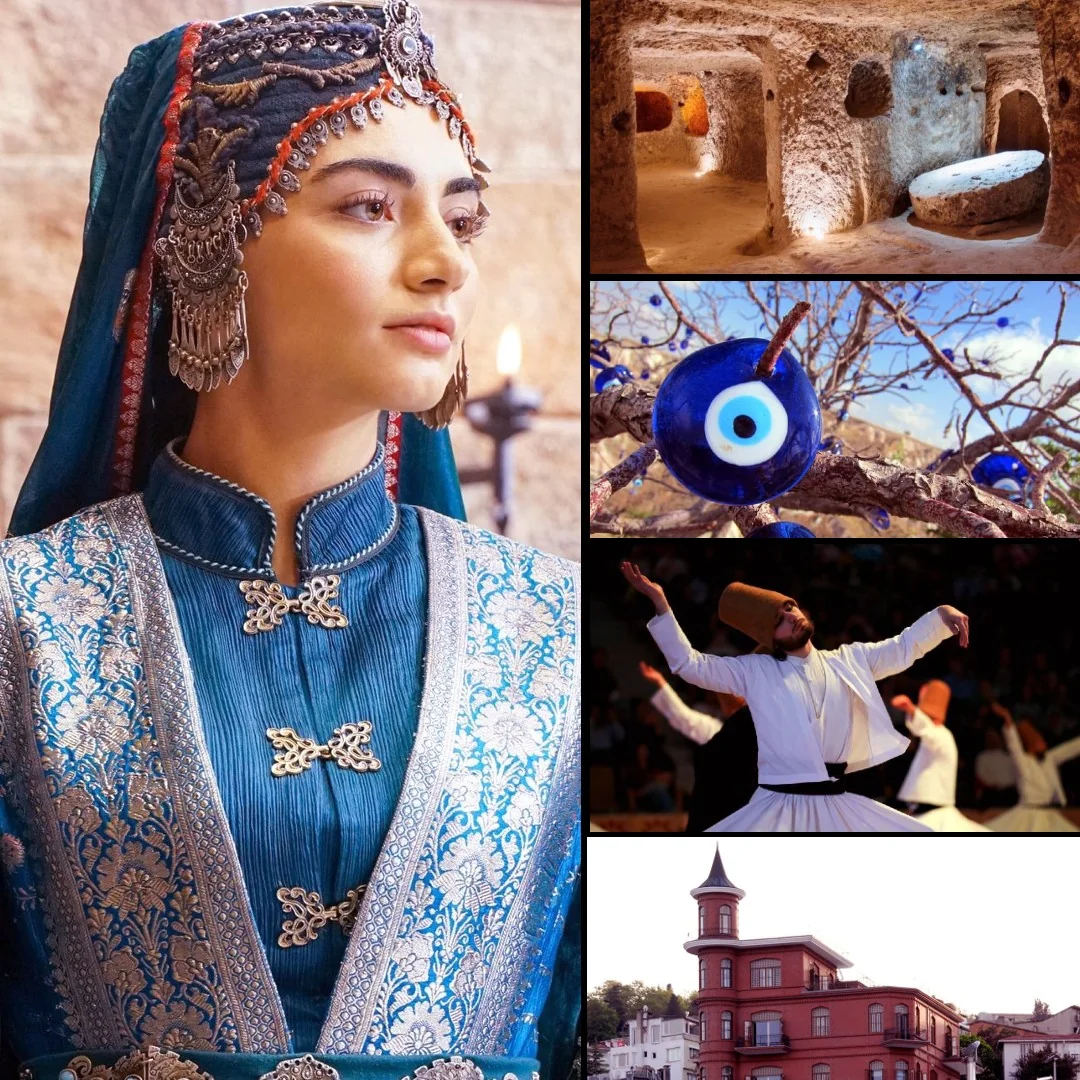
Deep in Cappadocia, where volcanic rock has been sculpted by both nature and human hands, lies the underground city of Derinkuyu. Stretching down as far as 60 meters, this labyrinth of tunnels and chambers is said to have sheltered thousandsو some say not all of them human. Locals call it the "City of the Djinn" because of the constant strange noises, and visitors often report an eerie sense of being watched or losing track of time within its winding corridors.
It is believed that Derinkuyu was not built for comfort or asceticism, but as a refuge from bloody persecution. Throughout centuries of turmoil, Anatolia was the stage for religious conflicts, pagan invasions, and later, the oppression of early Christians. As danger grew, people began diggingو not just shelters, but entire cities with massive stone doors that could only be locked from the inside. Derinkuyu had schools, storage rooms, wine presses, and even small temples, suggesting that people lived there for extended periods, completely cut off from the surface world.
Despite the clear historical explanations, legends persist. Some say the inhabitants of Derinkuyu were fleeing enemies "not of this world." Certain tunnels have been found mysteriously sealed or leading nowhere—just empty, concrete voids, as if meant to bury secrets forever. Locals claim there are still unexplored passages where explorers have vanished, and that at night, the tunnels echo with inhuman whispers, as if ancient spirits still guard the place.
Folk Magic and Ancient Curses
In rural Turkey, people still hang the blue bead Nazar Boncuğu on children and homes, believing it protects against the evil eye. But that's not the only tradition. In some villages, a spiritual healer (Hoca)و a man or woman skilled in "reading and breaking curses" is called upon, using eggs, fire, or secret prayers to lift misfortune.
There's also the legend of Azem, a type of magic said to summon djinn to harm someone. Locals say, "If you see smoke creeping from under your door with no fire in sight, Azem has paid you a visit."
Djinn and Spirits in Turkish Folklore
In Turkey, djinn are not just the stuff of storiesو they are woven into everyday life:
Karakoncolos
A creature said to appear on winter nights, with bent legs and glowing red eyes, attacking anyone who walks the alleys after dark.Tepegöz
A one-eyed giant who lives in the mountains and preys on both livestock and humans. He is believed to be the origin of the 'ghoul' legend.
Arçura
A forest-dwelling creature, half-human and half-tree, who lures travelers and then devours them.The Lover Jinn (Cin Aşığı)
Some people claim to experience it: they dream of a being that visits them at night or prevents them from getting married.Perili Köşk Mansion – Istanbul’s ‘Haunted House’
Perili Köşk
This grand Ottoman mansion was never completed. Legend has it the pasha’s wife died before it was finished, and ever since, her ghost has appeared on the upper floor. People report hearing piano music with no one playing, and lights turning on and off by themselves.Kayaköy Village – The Ghost Village
Kayaköy is an abandoned village near Fethiye, empty for a century. The houses stand deserted, windows shattered. Yet witnesses claim to have seen 'shadows walking the alleys' and heard children crying in the middle of the night, even though the village is completely deserted.Sufi Rituals: Spinning Between Worlds
In Konya and other cities, the Mevlevi Sema ceremony takes place: dervishes in white robes spin in search of spiritual transcendence. They whirl to the sound of the ney and the drum, their bodies seeming to fade as if entering another dimension. One dervish describes it: 'When I reach ecstasy... I forget who I am. Something opens inside, like the soul taking flight.'
Mount Nemrut: Temple of the Ancient Gods
In southeastern Anatolia, Mount Nemrut rises high, crowned with massive statues of ancient gods and the eccentric King Antiochus I. Legend says the mountain was a gathering place for the gods, and the wind sometimes carries whispers in extinct languages. Some believe a 'time portal' opens here on winter solstice nights, and those who spend the night have dreams that defy explanation.
Göbekli Tepe: The Oldest Temple Known to Humanity
Long before the pyramids or Stonehenge, there was Göbekli Tepe, with its mysterious stone structures built over 11,000 years ago. Why? No one knows.
Researchers believe the temple was used for spiritual rituals involving animal and possibly even humanو sacrifice. Locals call it 'the place of heavy energy.' Even animals avoid it at night.
The Lake Van Monster
Much like Scotland’s Nessie, Lake Van in eastern Turkey is rumored to hide a giant aquatic creature. Fishermen have reported seeing a 'neck rising from the water' and hearing strange roaring sounds, but authorities have neither confirmed nor denied its existence.
The Princes’ Islands – Isles of Exile and Spirits
In the Sea of Marmara, there are islands once inhabited by exiles and outcasts. On Büyükada Island, an abandoned orphanage stands rumored to be haunted by the spirits of children who were left there to die during an old famine.
Eerie, Abandoned Temples
Stories circulate about deserted churches in eastern Turkey, where monks are said to have returned after death to guard their monasteries. Some claim that ancient rituals are still secretly performed there. In certain old mosques, like the Zeytinburnu Mosque, people say the underground dormitory is inhabited by a sleepless entity.
Why Türkiye ?
Because it’s a crossroads where Islam meets shamanism, Christianity meets Zoroastrianism, Anatolia meets Armenia, and Europe meets the East. This rich tapestry of civilizations has created a culture steeped in the supernatural still alive today in its stories, rituals, and everyday practices.
About the Author