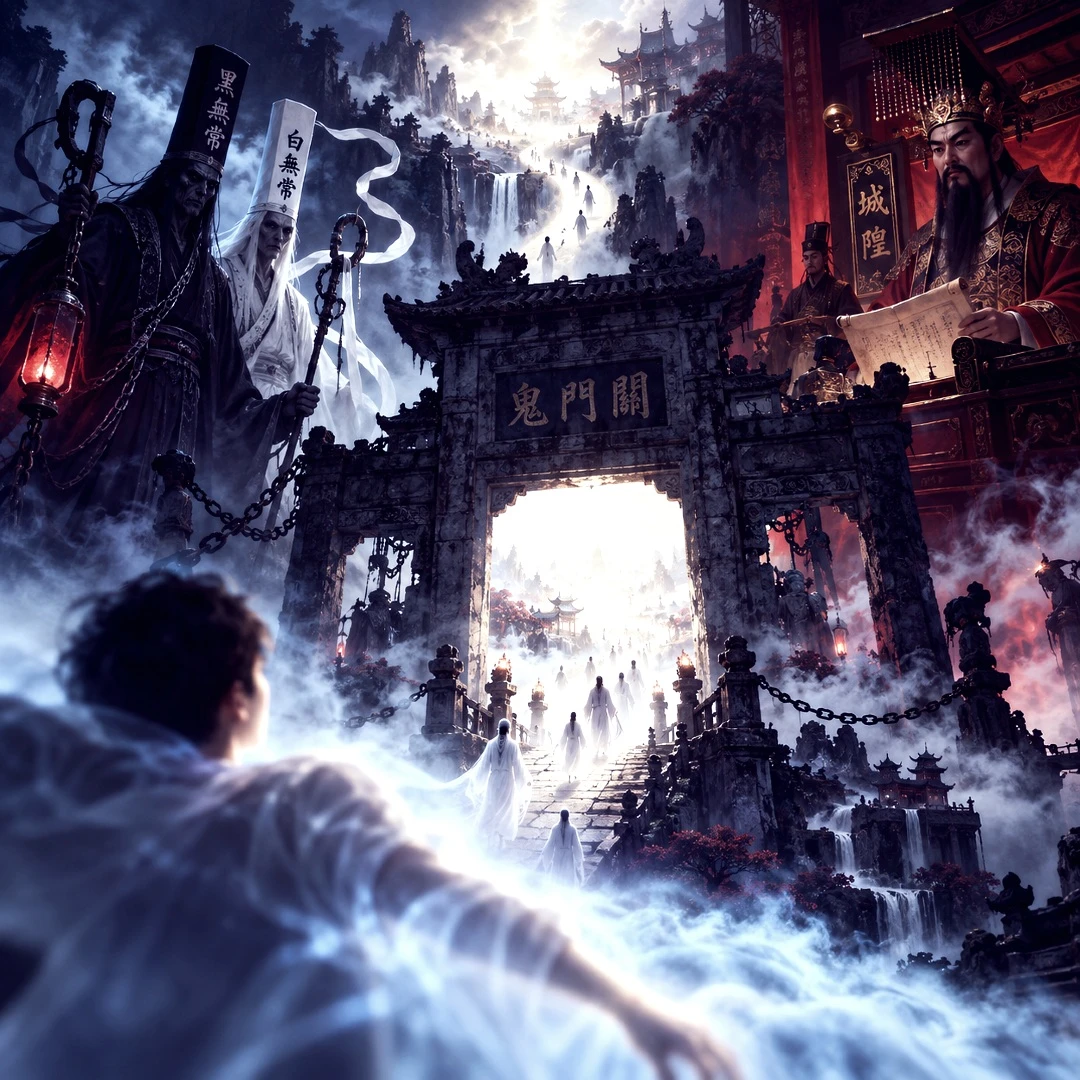
What do people see when they approach death? In many Western accounts of near-death experiences (NDEs), certain images have become familiar: Leaving the body passing through a tunnel, encountering a bright light, feeling a profound sense of peace, meeting deceased relatives, or seeing one's life flash before their eyes.
But what happens when the experience comes from a completely different culture?
A recent study conducted with a Chinese sample revealed an intriguing paradox: some elements described by participants closely resembled those found in near-death experiences around the world, but in a few accounts, distinctly Chinese figures and places rooted in traditional beliefs about the afterlife, also appeared.
Instead of the familiar Western imagery of the afterlife, participants described the Guimen Gate, the Black and White Impermanence spirits, Lord Chenghuang, and scenes involving judgment, karma, and reincarnation.
So, does the near-death experience change depending on the culture in which a person was raised?
63 Participants and Experiences on the Brink of Death
The study was published in Frontiers in Psychology and led by Yufei Xue, with contributions from consciousness researcher Steven Laureys, Haibo Di, and others.
Researchers recruited participants through Chinese social media platforms, then used a specialized Chinese scale to assess the content of near-death experiences, along with open-ended narratives where participants described their experiences in their own words.
The study included 63 people: 23 cases were classified as near-death experiences based on participant reports and the scale used, 25 as NDE-like experiences, and 15 fell below the threshold. The researchers conducted a detailed qualitative analysis of 48 valid narratives.
It's important to note from the outset that the classification relied on participants' self-reports; the researchers did not have medical records to confirm that all those classified as NDEs were in medically life-threatening situations.
Even so, some strikingly familiar patterns emerged.
Among the 23 near-death experience accounts, 12 described a sense of peace, 10 mentioned a bright light, 10 reported leaving the body, and 7 described seeing their life events replayed.
Some participants also spoke of meeting entities, deceased individuals, or spiritual presences—elements well-known in NDE literature from other cultures. Yet, within these accounts, there were also scenes that were unmistakably Chinese in character.
Guimen Gate: Crossing into the Realm of the Dead
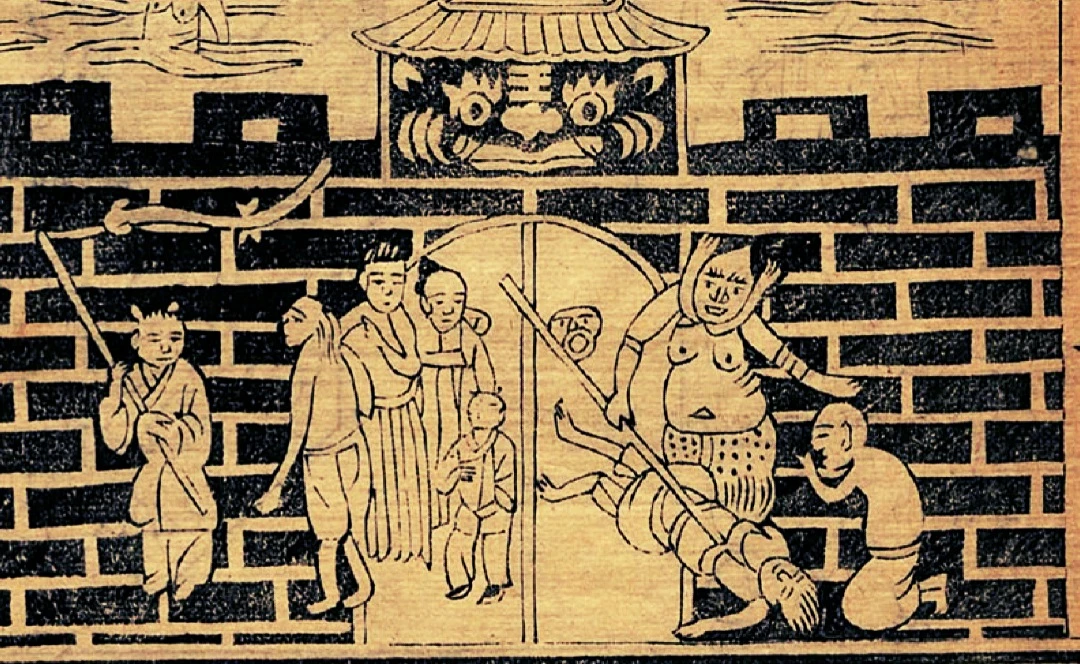
In one account, the person described reaching a vast, white expanse after passing through a tunnel, where he encountered a crumbling stone gate. He somehow knew this was Guimen Guan—known as the 'Ghost Gate' or 'Ghost Passage.'
Guimen Gate isn't a real, physical place, but rather a deeply rooted image in Chinese folk beliefs and religious traditions about death and the afterlife.
Traditionally, the gate marks the boundary between the world of the living and the dead. When a soul leaves the human world, it begins its journey to the other side, where it faces judgment and its ultimate fate.
So, encountering a gate during a near-death experience (NDE) isn't surprising from a symbolic perspective. The idea of a 'threshold,' 'passage,' or transition appears in stories from many cultures. Here, though, the name, appearance, and meaning of this boundary are drawn from Chinese cultural traditions.
The Black and White Impermanence
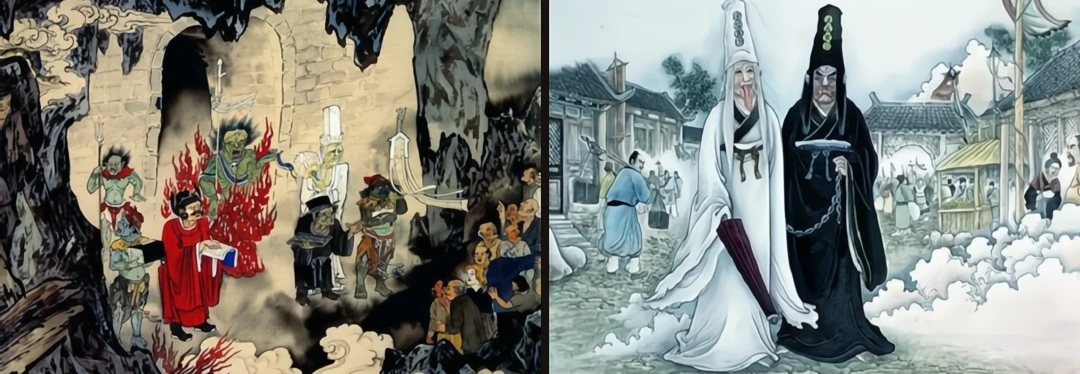
Another account features two figures unfamiliar to most Arab readers: Hei Bai Wuchang, commonly known as the 'Black and White Impermanence.' These are well-known characters in Chinese folk religion and depictions of the underworld. One is usually dressed in black, the other in white, and their role is to escort the souls of the dead to the afterlife, where judgment awaits.
In terms of narrative function, they can be compared to 'messengers of death,' though their background and status are quite different from the concept of the Angel of Death in Abrahamic religions.
One study participant said he expected the Black and White Impermanence to come for him, linking his experience to the idea that the soul continues in a realm between 'yin' and 'yang,' and that a person's actions are recorded and reviewed after death, influencing their next reincarnation.
This statement is especially important for understanding the results. He didn’t just say he saw two strange figures and later recognized them, he also mentioned expecting their arrival. This immediately raises the question of how prior knowledge and beliefs might shape near-death experiences, or at least influence how people recall and describe them afterward.
Lord Chenghuang did not allow him to enter.
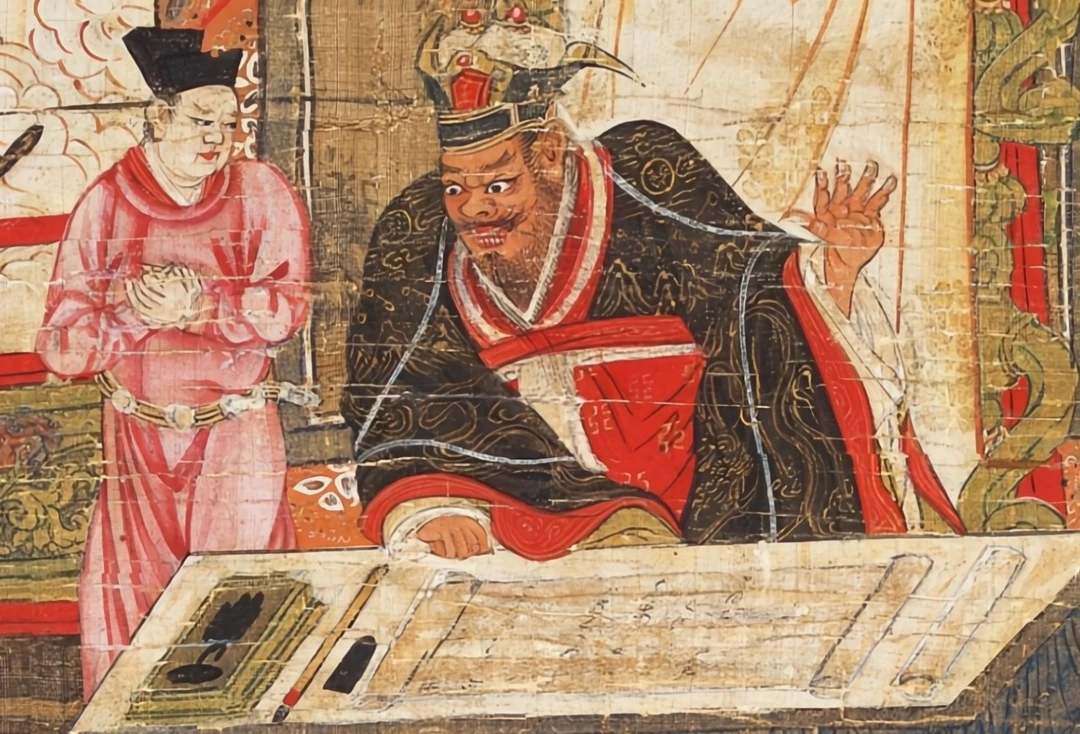
Another figure that appears in one of the accounts is Chenghuang, or the 'City God,' a deity from Chinese folk beliefs.
Historically, Chenghuang was associated with protecting cities and their inhabitants. Over time, he also took on a role in religious ideas about the afterlife, becoming linked to moral judgment and the investigation of the dead within a system that resembles an organized bureaucracy or court, complete with officials and ranks.
One account in the study describes two individuals who prevented the person from entering and told him that Lord Chenghuang would not receive him.
For those who grow up surrounded by these symbols, Chenghuang can become part of the mental language used to imagine death and judgment, just as someone from another culture might use different religious imagery to describe what is, at its core, a similar experience.
An Underworld with Chinese Characteristics
The imagery wasn’t limited to these figures. Researchers also found references to post-mortem judgment, records of wrongdoing, karmic consequences, reincarnation, and underworld courts—ideas shaped by the historical blending of Buddhism, Taoism, and Chinese folk religion. But here’s one of the study’s key findings: these distinctly Chinese scenes were actually uncommon.
They appeared in only 4 out of 23 people in the NDE group, and in just 1 out of 25 in the group with NDE-like experiences. In other words, most participants did not describe the Guimen gate, the black-and-white figures, or Chenghuang.
In fact, after adjusting for multiple comparisons, the differences between the two groups in terms of Chinese imagery were no longer statistically significant. So, the study doesn’t reveal 'what Chinese people see after death.'
What it found is actually more nuanced and intriguing: cultural elements can appear within an experience that also contains features found across different cultures.
What is universal, and what is shaped by culture?
This brings the research to its central question. Leaving the body, seeing light, feeling peace, moving to another place, meeting entities, and reviewing life events, these aren’t uniquely Chinese images. They’ve appeared repeatedly in NDE studies from other societies as well.
But the 'entity' someone meets, the gate they pass through, the place they believe they’ve reached, and the meaning they assign to the experience can all be colored by what they already know.
The researchers propose a layered model: there may be general, recurring features in near-death experiences, while culture provides the symbols, characters, and language people use to organize, interpret, and recount what happened.
This doesn’t mean that culture necessarily 'creates' the entire experience.
The study itself acknowledges that it can’t determine whether prior beliefs produced these images, or if culture mainly influenced how participants interpreted the experience afterward.
Do we see what we expect to see?
There are two main ways to interpret these results: from a neurological and a psychological perspective. Near-death experiences may be triggered by processes in the brain during extreme physiological or psychological states. The mind then draws on memories, beliefs, and cultural imagery to make sense of what’s happening. For example, someone from China might see the Guimen Gate, while someone from another background might visualize different religious or spiritual symbols.
However, supporters of spiritual explanations for NDEs often raise another question: If culture shapes these experiences, why do core elements like out-of-body sensations, encounters with light, feelings of peace, and passing through boundaries or tunnels appear across people from vastly different societies?
The new study doesn’t resolve this debate. The researchers were careful to point out that their findings do not prove that prior religious beliefs caused the images described by participants.
Important limitations before discussing the "afterlife"
Despite the compelling stories, the study has significant limitations. The sample size is small and selective, with participants volunteering online meaning those already interested in spirituality or unusual experiences may have been more likely to take part.
More importantly, the researchers did not have access to medical records confirming the participants’ physiological states. For example, it’s unclear who actually experienced documented cardiac arrest, coma, or a specific critical condition, and who simply believed they were close to death. The accounts are also retrospective, and some may have been influenced by time, memory, or later interpretation.
For these reasons, the researchers call for future studies involving medically documented patients—such as those who have experienced cardiac arrest, intensive care, or coma—and for interviews to be conducted soon after the event.
So, is there a universal core to the human near-death experience, which the mind then fills in with familiar imagery? Or do the similarities themselves reflect how the human brain responds under extreme conditions?
Between visions of light, out-of-body experiences, and various gateways to death, perhaps the real question isn’t just: What do people see when they approach death?
But also: How much of what they see comes from the experience itself, and how much do they bring with them from the world they’ve lived in?
About the Author