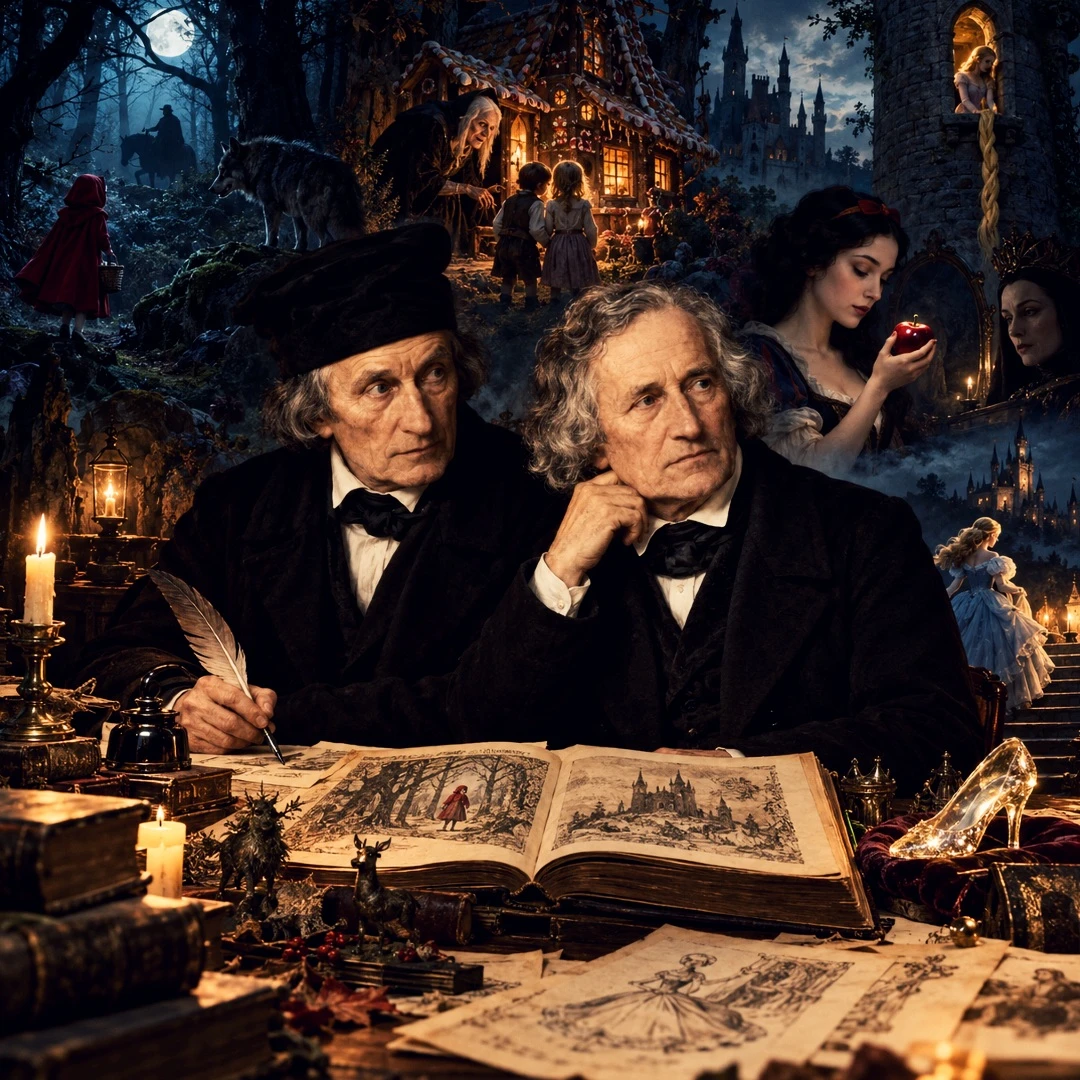
Behind the childhood memories of Cinderella, Snow White, and Rapunzel, stories of princesses and happy endings, lies a much darker history. These tales blend folklore with violence, death, sexual undertones, and magic. Where did these stories originate? How did the Brothers Grimm collect and reshape them before they gradually became some of the world’s most famous children’s stories?
The Dark Side of Snow White
In a royal palace in a fictional Germany, preparations are underway for the wedding of Princess Snow White, who has miraculously survived repeated assassination attempts and is finally about to start a new life with the prince who loves her. But the story doesn’t end with a happy marriage. At the wedding, a woman arrives, once a beautiful queen, known for standing before her magic mirror and asking who is the fairest of them all. This woman had tried multiple times to kill Snow White, unable to bear the thought that the girl had surpassed her beauty. Upon her arrival at the palace, a gruesome punishment awaits: she is forced to wear red-hot iron shoes, heated until they glow, and dance in front of the guests. She is not allowed to stop until she collapses and dies.
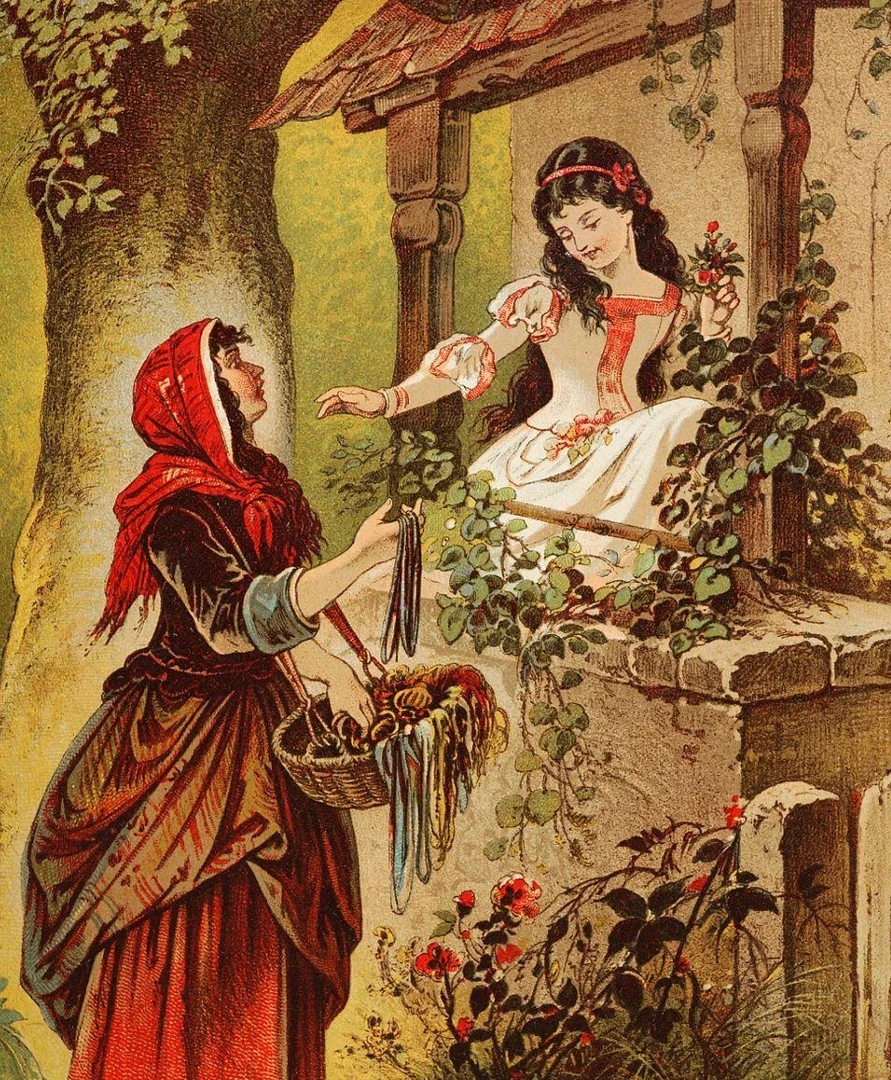
This brutal ending isn’t a modern addition by a writer trying to turn an innocent tale into a horror story. It actually appears in the version of "Snow White" published by the Brothers Grimm in the nineteenth century. But the biggest surprise lies in the identity of the evil woman.
In the first edition, published in 1812, the villain wasn’t Snow White’s stepmother, as most children know her today, but her biological mother. In the second edition, released in 1819, the Grimms changed this: the mother dies after giving birth, and the king remarries a woman who becomes jealous of the girl’s beauty and tries to kill her. The identity of the would-be murderer changed, but the gruesome ending remained.
This seemingly small change opens the door to a much larger story than just princesses and witches: the story of the Brothers Grimm themselves, who spent decades collecting and rewriting European folklore, ultimately shaping the foundation of modern children’s literature.
How did this transformation happen? And why were some sexual references removed, while scenes of torture, murder, and mutilation remained?
Who Were the Brothers Grimm?
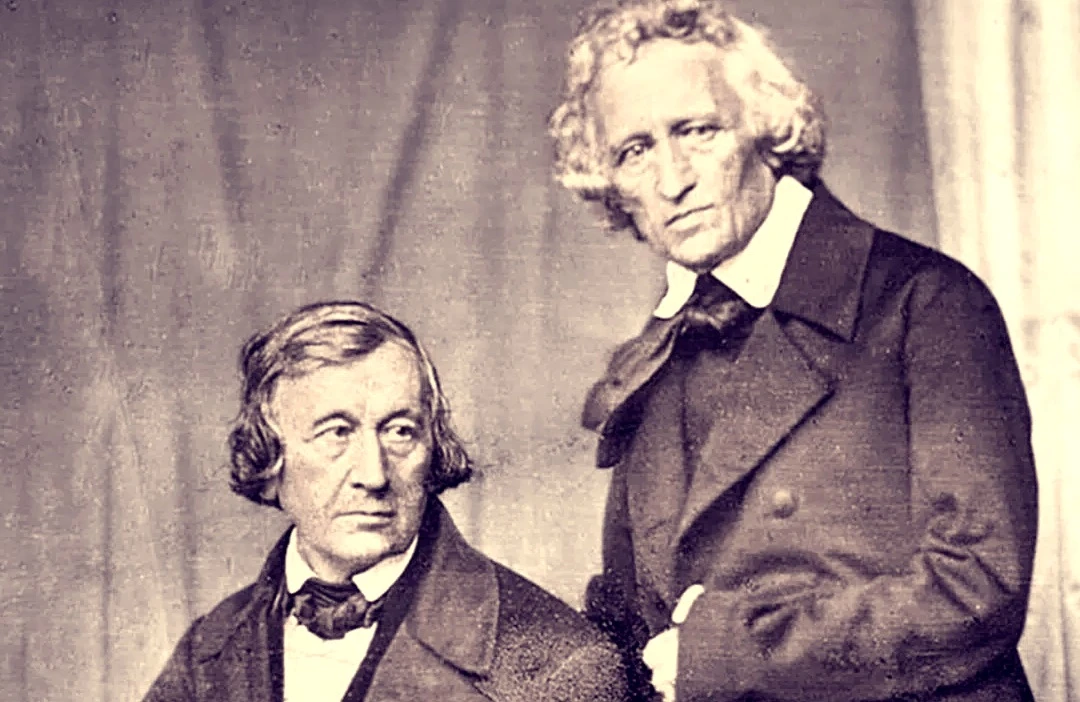
Jacob Grimm was born on January 4, 1785, followed by his brother Wilhelm Grimm on February 24, 1786, in the German city of Hanau. At the time, Germany wasn’t a unified nation as we know it today, but rather a patchwork of principalities, kingdoms, and political entities.
The brothers grew up in a middle-class family, but after their father died in 1796, the family faced financial hardship. Despite these challenges, both studied law at the University of Marburg, where they developed a deep interest in ancient Germanic language, literature, and historical manuscripts.
Europe at the time was in turmoil, with the Napoleonic Wars shifting the balance of power and bringing parts of Germany under French influence. Amid this upheaval, the German Romantic movement emerged, viewing language, songs, and folk tales as expressions of a community’s spirit and cultural identity.
The Brothers Grimm were influenced by this intellectual climate and became convinced that oral traditions held valuable insights into the lives, beliefs, and ways of thinking of their ancestors. They believed that collecting these stories could help illuminate the cultural history of German-speaking peoples.
But it would be a mistake to see the brothers only as storytellers for children. They were also scholars of language, literature, and folklore. Jacob, in particular, was a pioneer in comparative Germanic linguistics, and his name is associated with Grimm’s Law, which describes historical sound shifts in Germanic languages.
In 1838, the brothers began work on a massive historical dictionary of the German language, known as the Deutsches Wörterbuch. The first volumes were published in 1854, but the project wasn’t completed until 1961, more than a century after their deaths. Nevertheless, their fame as collectors of folk tales has often overshadowed their other scholarly achievements.
How Did the Project to Collect Folk Tales Begin?
The Grimms’ systematic interest in collecting folk tales began in the early nineteenth century, influenced by Romantic writers like Clemens Brentano and Achim von Arnim, who were themselves passionate about gathering folk songs and literature.
In 1810, the brothers sent Brentano a manuscript containing dozens of stories they had collected, hoping he would use them in a literary project. When that project didn’t materialize as expected, and with encouragement from von Arnim, the brothers decided to publish their own collection.
In December 1812, the first volume of "Kinder- und Hausmärchen" (Children's and Household Tales) was published, containing 86 stories. A second volume followed in 1815, adding 70 more tales.
The first edition wasn't a picture book for children in the modern sense, but rather a collection of folk narratives accompanied by scholarly notes and commentary. The stories featured witches, spirits, giants, talking animals, abandoned children, deals with the devil, murder, and revenge—tales that would be considered too dark or suggestive for children today. The main goal was to preserve these stories and study cultural heritage, not simply to provide pleasant bedtime reading.
Still, the collection wasn't entirely neutral from a literary standpoint. From the very beginning, the Brothers Grimm selected, edited, and organized the stories, starting a long process that would ultimately reshape the tales themselves.
Did the Brothers Grimm really travel from village to village in search of stories?
Popular imagination paints a charming picture of the Grimms wandering through German forests and villages, sitting by the fireside in peasant homes, and carefully recording every word of old women's tales. However, historical research shows this image is exaggerated. Many of the stories reached them through a network of friends and acquaintances—often educated women from middle-class or noble families—as well as earlier written sources. Women, in particular, played a key role in passing down these tales. One of the most notable contributors was Dorothea Viehmann, renowned for her storytelling skills, who provided around forty stories for the Grimms' project.
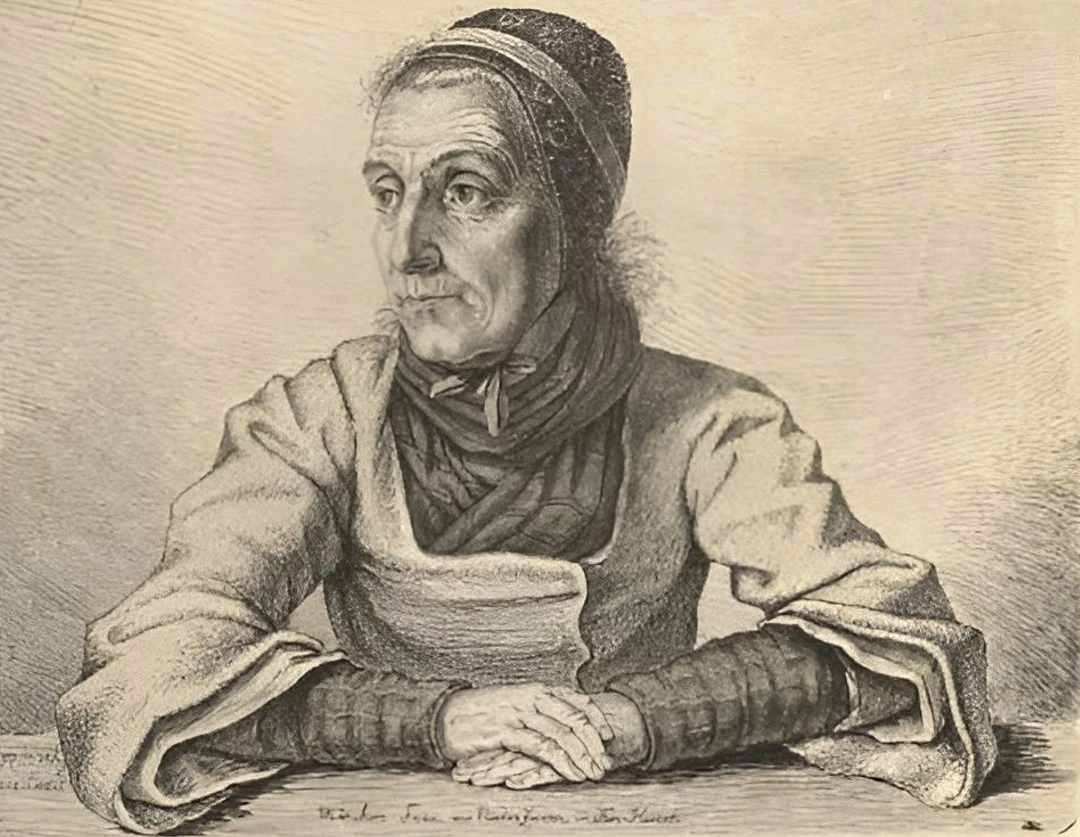
In some contemporary accounts, Viehmann was described as a peasant from Hesse, but later research revealed she was the wife of a tailor and came from a family of French descent. Other important contributors included the sisters Marie, Amalie, and Johanna Hassenpflug, as well as Dorothea Wild—who later married Wilhelm Grimm, all of whom helped collect stories.
Interestingly, some of these families were of French Huguenot origin, which explains how elements from French tales found their way into what became known worldwide as the "Grimm's German Fairy Tales."
For example, the story of "Little Red Riding Hood" was already well-known in French literature before the Grimms, with Charles Perrault publishing a famous version in 1697.
The German collection was also preceded by Italian works, most notably Giambattista Basile's "Pentamerone," published in the seventeenth century.
This means the Brothers Grimm didn't invent most of their characters from scratch, nor did they collect a uniquely German tradition isolated from the rest of Europe. Instead, they worked with cultural material that had traveled across countries, languages, and generations. They were not just collectors, but also among the most influential editors and shapers of these tales.
Seven Editions That Changed the Stories
Between 1812 and 1857, the Grimms published seven major editions of their collection. These weren't simple reprints; each edition brought significant changes in style, plot, characters, and moral details. Wilhelm Grimm was especially responsible for literary revisions, adding descriptions and dialogue, refining the narrative flow, introducing religious and moral expressions, rearranging events for better coherence, removing entire stories, replacing some versions with others, and blending elements from multiple sources. Over time, the stories became more polished and literary, moving away from the terse style of oral storytelling.
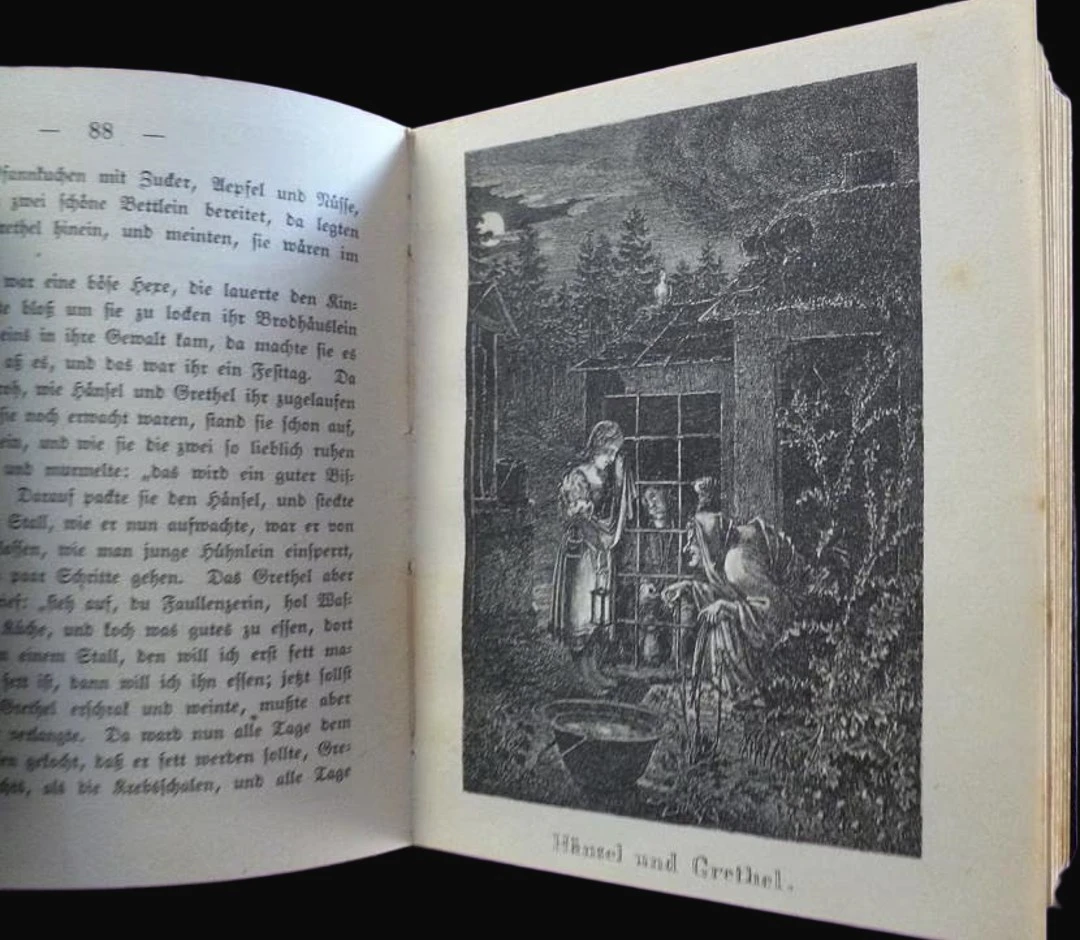
One of the most significant changes came with the "Kleine Ausgabe" (Small Edition) in 1825, which featured fifty selected tales with illustrations by Ludwig Emil Grimm, the younger brother of Jacob and Wilhelm. This edition helped popularize the stories among families and cemented their reputation as suitable for children. The final edition, published in 1857, included 200 main tales and ten short legends for children.
But what actually changed in the content?
Rapunzel: The Vanishing Pregnancy
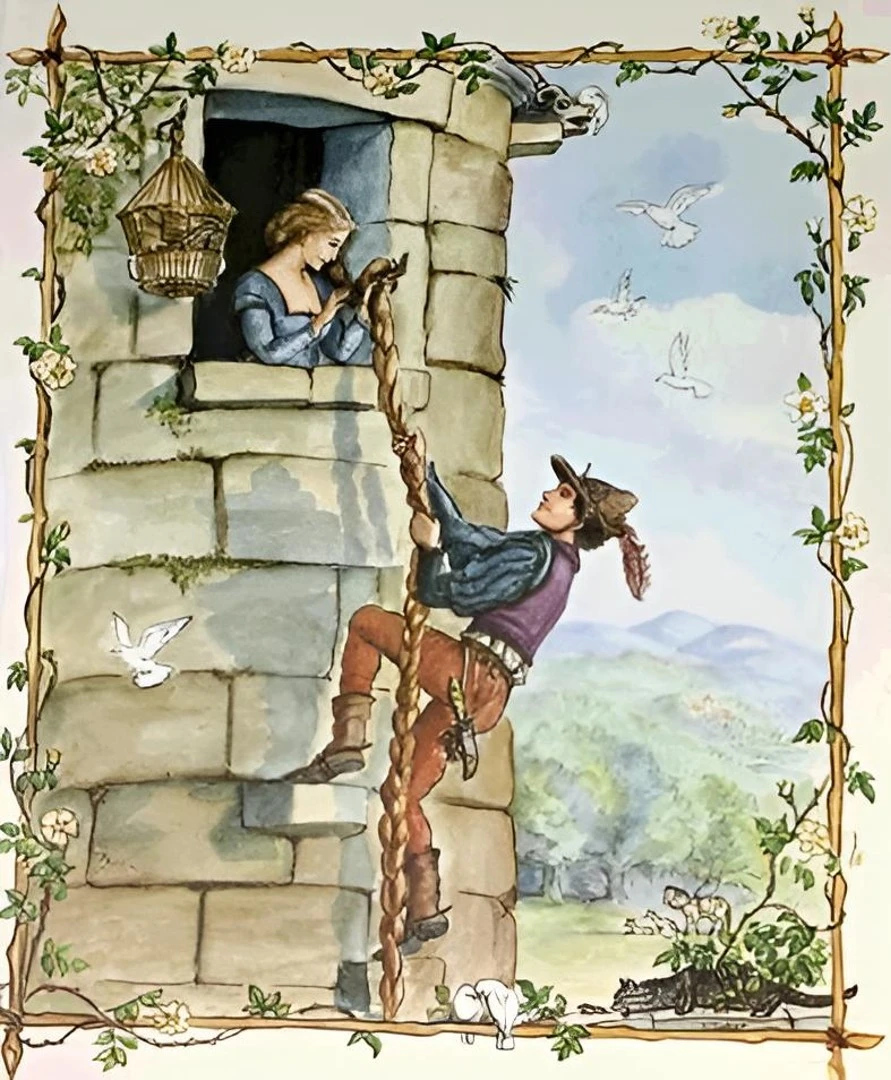
The story of Rapunzel is a prime example of how sexual references were removed from early versions. The tale centers on a girl with long hair locked away in a tower, accessible only by climbing her braids. In the 1812 edition, a prince secretly visits Rapunzel, and their relationship becomes intimate. Rapunzel, unaware of the implications, remarks that her clothes no longer fit, an unmistakable sign of pregnancy. When her captor discovers this, she punishes Rapunzel by cutting her hair and banishing her to the wilderness. In later editions, the direct reference to pregnancy was omitted, replaced by a different way for Rapunzel to reveal the prince's visits. The relationship between the two became more reserved, though their twin children still appear at the end of the story. Rather than erasing the event entirely, the editors concealed its sexual meaning behind language more in line with the moral values they wanted to promote. This shows that the revisions weren't just about reducing violence, but also about aligning with societal ideas of chastity and propriety.
Cinderella: The Blood-Stained Shoes
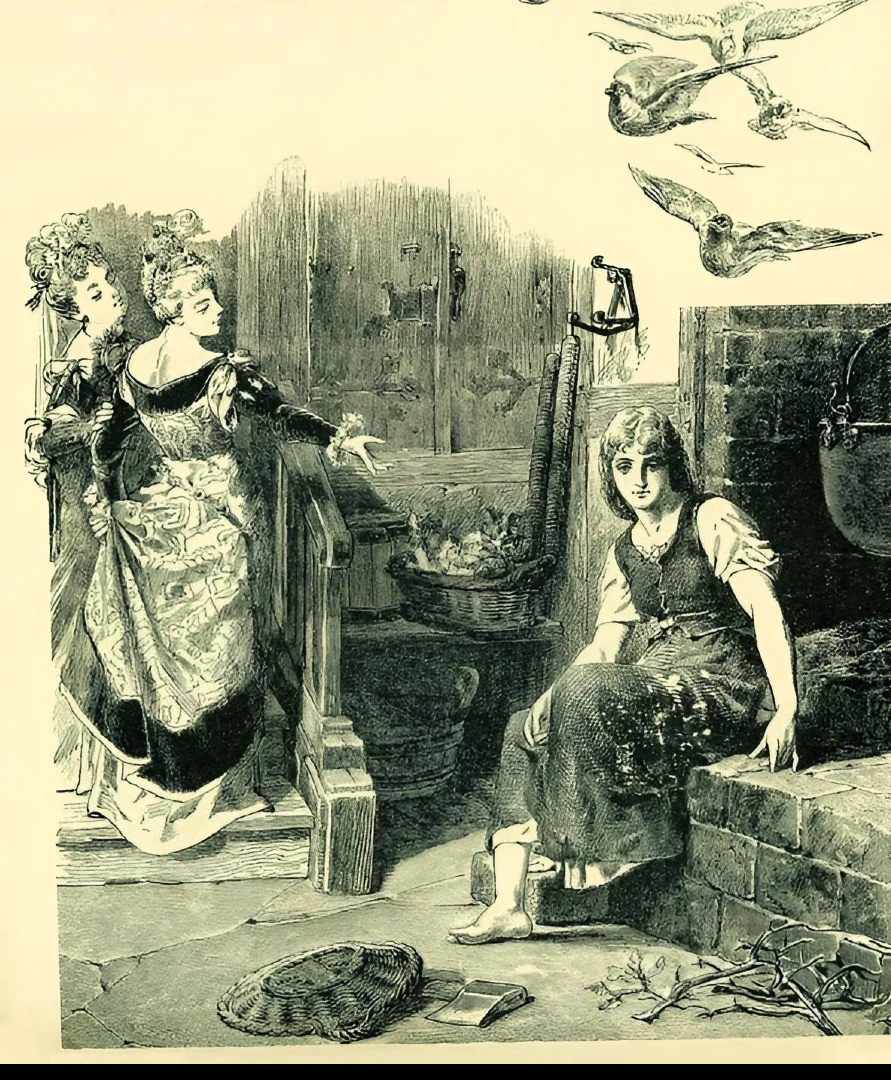
Today, Cinderella is known as a poor girl whose life changes thanks to magical help and a glass slipper that leads the prince to her. But the Grimms' version, called Aschenputtel in German, differs from the familiar movie adaptations. Instead of a fairy godmother, a tree growing on her mother's grave and helpful birds play key roles in granting her wishes. The shoe is gold, not glass—the glass slipper comes from the famous French version by Charles Perrault. When the prince searches for the girl who fits the shoe, the two stepsisters try to force their feet into it. Their mother urges them to cut off parts of their feet to fit: one slices off a toe, the other a piece of her heel. But the blood gives away their deception.
The story doesn’t just end with the sisters being denied marriage. As punishment for their cruelty, birds peck out their eyes. Notably, this kind of violence wasn’t removed from the final version by the Brothers Grimm, physical mutilation remained acceptable within the logic of the tale, serving as a punishment for lying, cruelty, and greed. This raises questions about the kind of morals these stories aimed to instill: Should children be shielded from violent imagery, or taught that evil deserves harsh consequences?
Hansel and Gretel: Why Did the Mother Become a Stepmother?
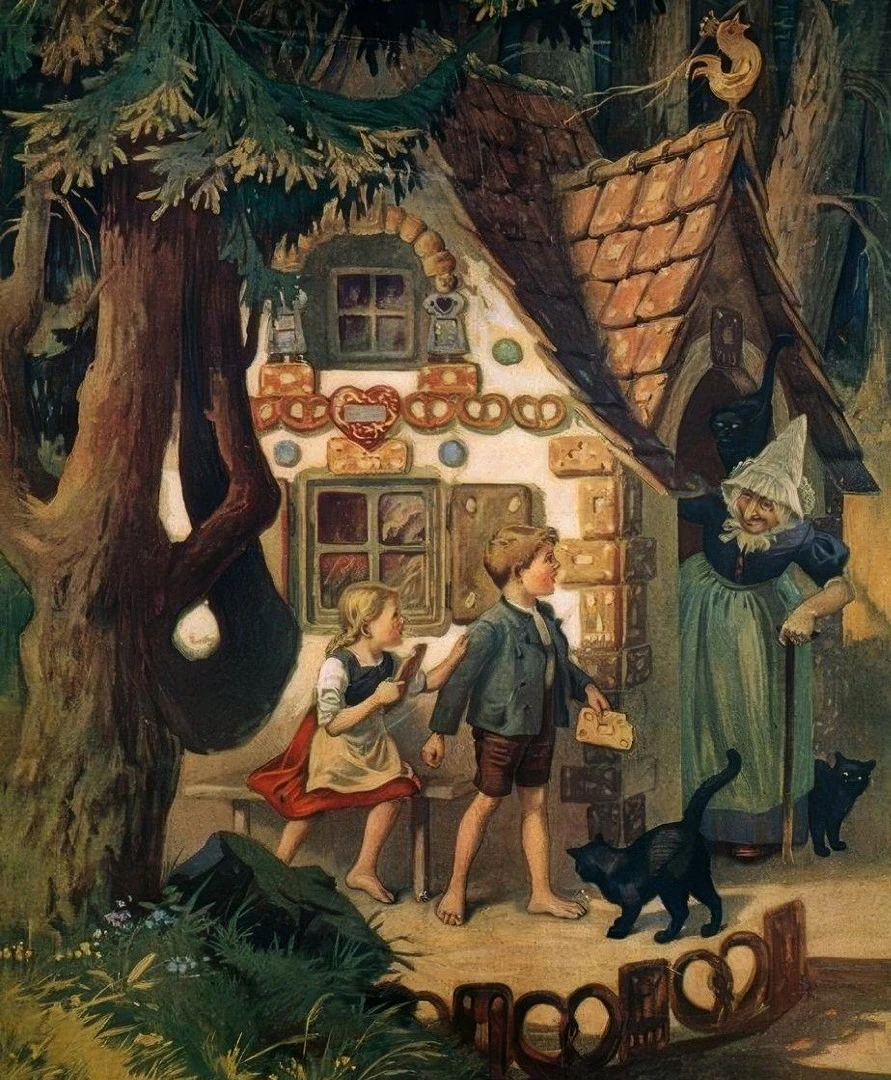
The story of Hansel und Gretel begins with a family facing hunger and poverty so severe that they abandon their children in the woods. In the first edition published in 1812, it was the children’s biological mother who suggested getting rid of them, and this detail remained clear in the 1819 edition as well.
Starting with the 1840 edition, however, the Brothers Grimm introduced the character as a 'stepmother.' Some inconsistencies remained at first, but in the final version, the image of the evil woman became associated with the stepmother rather than the biological mother.
This change is similar to what happened with Snow White, reflecting an editorial trend to soften the conflict between the protective image of a real mother and acts of cruelty, abandonment, or murder. Still, the main elements of horror remained: two children lost in the woods, a house made of candy used to lure them in, and a witch who plans to eat one of them.
In the end, Gretel survives by pushing the witch into the oven. The revisions didn’t remove the horror—they simply shifted the moral roles. The mother became less blameworthy, while the witch retained her role as the embodiment of evil that must be destroyed.
Stories Too Frightening for Children
Not all of the Brothers Grimm’s tales are about princesses, brides, and kings. In 'The Juniper Tree,' a stepmother kills a child, cooks his flesh, and serves it to the unsuspecting father. The child’s sister gathers his bones and buries them under a tree, and through supernatural means, the remains transform into a bird that sings a song revealing the crime.
In 'The Robber Bridegroom,' the story features violent scenes where men murder women. The heroine survives after witnessing a crime and exposing the truth about the man she was supposed to marry.
The collection also includes stories about demons, conditional bargains, enchanted herds, and the dead returning to life.
Two particularly striking examples, both titled 'How Some Children Played at Slaughtering,' appeared in the first 1812 edition. These stories depict children imitating violent acts with tragic consequences. They were removed from later editions after concerns were raised about whether such content was appropriate for children.
This example shows that some violent stories were indeed removed during editing, but there was no consistent policy to eliminate violence from the collection as a whole. Certain scenes or tales disappeared, while others remained—and in some cases, the endings became even harsher.
Why was sexuality censored, but violence remained?
This question gets to the heart of how the Brothers Grimm's tales evolved. To a modern reader, it might seem odd that any hint of a girl's pregnancy would be removed, while scenes of feet being cut off, eyes gouged out, or people burned alive were left in. But this needs to be understood in the social and moral context of 19th-century Europe. At that time, the German middle class was redefining its ideas about family, education, and childhood, with a growing emphasis on literature that delivered clear moral lessons. Overt sexual references—especially outside of marriage—became less acceptable in books intended for families.
Violence, on the other hand, was not always seen as a problem in itself. It could serve a moral purpose, acting as punishment for wrongdoers or as a warning to children about danger. So, an ending where a witch is put to death or two deceitful sisters are mutilated could be seen as part of a lesson about justice—even if, by today's standards, it seems extremely harsh.
That doesn't mean German society was unanimous in these views, or that the Brothers Grimm followed a strict plan to remove sexual content while keeping violence. Comparing different editions of their work reveals a mix of influences: readers' tastes, criticism of the books, editorial decisions, religious attitudes, and ideas about child-rearing all played a part.
As a result, the tales became more refined in some respects, but retained their dark and frightening elements in others.
Witches, Dwarves, and Spirits: Echoes of Ancient Beliefs
One reason the Brothers Grimm's stories are so valuable for studying the supernatural is that they preserve many images rooted in European folk beliefs. Magical events aren't always brought about by gentle fairies; sometimes, evil witches, mysterious dwarves, household spirits, talking animals, and other beings who strike bargains with humans play a role.
In some tales, magic is a force that helps those in need; in others, it poses a threat to families or children. These characters overlap with the broader Germanic tradition, which included beings like the Kobold—associated with homes and mines—as well as various types of fairies, spirits, and woodland creatures.
However, it's important to distinguish between folk tales and religious beliefs.
The appearance of a witch or dwarf in a story doesn't necessarily mean people literally believed in that character, nor does a resemblance to ancient mythological beings mean the story preserved a single identity for that figure over the centuries.
Stories reshape beliefs, blending them with imagination and social symbolism. A creature that was once feared or revered in an older context might become a comic or villainous figure in a later retelling.
A striking example is the story of "Rumpelstilzchen," which centers on a small being who can spin straw into gold but demands the queen's child in return, and is only defeated when his secret name is discovered.
Even the ending of this story changed between editions: in 1812, the creature simply runs away in anger, but by the 1819 edition, he tears himself in two. The tale reflects a widespread folk belief in the power of knowing a supernatural being's true name.
Examples like these show why the Brothers Grimm's project is so important, not just for children's literature, but for understanding the history of popular beliefs.
Did the Brothers Grimm invent the princess stories?
It's a common misconception that the Brothers Grimm were the original authors of all the stories associated with their names. Many of these tales had been told for centuries before, both orally and in various literary works. For example, "Cinderella" belongs to a widespread folk tradition with many European and Asian versions. "Sleeping Beauty" was preceded by an Italian story called "Sun, Moon, and Talia," published by Giambattista Basile in the 17th century. In that version, the sleeping girl is sexually assaulted by a man who finds her, and she gives birth to twins before waking up—elements that are very different from the romantic image we know today. Charles Perrault also published a French version of Sleeping Beauty in 1697, which differs from the Grimm version in its details and ending.
It's important to avoid labeling any single version of a folktale as the 'original.' Folk stories often have multiple roots, evolving through both oral tradition and written literature, and it's rarely possible to pinpoint a single starting point.
The Brothers Grimm made their mark by collecting, selecting, documenting, and rewriting folk tales, giving many of them a compelling literary form that helped them gain worldwide popularity.
From Folklore to Film: How Did the Modern Image Take Shape?
The transformation of the Grimm tales didn't end with the brothers' deaths. Throughout the 19th century, English and French translations and illustrated editions brought their stories to children everywhere. Publishers adapted and simplified the texts for their audiences, and in the 20th century, theater, cinema, and animation gave these tales entirely new forms.
One of the most significant milestones was the release of Walt Disney's 'Snow White and the Seven Dwarfs' in 1937. The film created a visually captivating world, with characters children could relate to, along with music and comedic and romantic scenes. It reimagined parts of the story to fit a family-friendly format, for example, instead of the evil queen being punished with red-hot iron shoes, she falls from a cliff during a chase. The more brutal elements of the original text were omitted. Over the decades, animated films and picture books have become the main reference point for how audiences imagine these stories.
However, it's important not to credit Disney alone for this transformation. The process of adapting, refining, and modifying these tales began much earlier, involving publishers, translators, playwrights, and illustrators. Not all modern adaptations have been gentle, either, darker versions of the tales have continued to inspire horror and fantasy works aimed at adults.
Today, we have multiple layers of each story: oral traditions, old literary texts, the Grimms' versions, and then modern educational, theatrical, and cinematic adaptations.
What Do These Tales Reveal About Human Fear?
Beyond the details of editing and publishing, it's striking how many Grimm tales explore deep human fears. The forest isn't just a place full of trees—it's a space where the line between safety and danger blurs. The home, which should protect the child, can become a place of cruelty or betrayal. The witch often represents a hidden threat, disguised as a kindly old woman offering food or help.
Hunger is central to 'Hansel and Gretel,' generational jealousy drives 'Snow White,' while 'Rapunzel' deals with control and isolation, and 'Rumpelstiltskin' revolves around greed and risky bargains.
These images can be seen as reflections of anxieties about poverty, illness, death, family relationships, and authority, fears that were very real in the societies where these stories were told.
Psychologists and analysts have taken an interest in these tales, most notably Bruno Bettelheim, who explored their psychological symbolism in his 1976 book 'The Uses of Enchantment.' However, his interpretations aren't definitive scientific facts, they've been criticized for being overly broad and based on theories that are hard to test. So, reading the forest as a symbol of the unknown, or the witch as a stand-in for a cruel mother, is just one possible interpretation, not the only meaning or the definitive historical origin of the tale.
Still, these readings help explain why the stories remain so compelling: they aren't just about magic, but about familiar human situations, even if they're told in the language of fantasy.
Did the Brothers Grimm Distort Folklore or Save It?
This is the question researchers face after comparing different editions and sources.
On one hand, the Grimms are credited with preserving many stories that might otherwise have remained scattered or been lost over time. Their notes and manuscripts have allowed scholars to study how these tales evolved, and their work helped spark academic interest in European folklore. On the other hand, their collection isn't a pure, literal record of old oral traditions.
The brothers selected from various sources, cut and added material, changed characters and endings, and shaped some stories to fit the literary and moral expectations of their era.
Presenting the tales as expressions of German heritage sometimes obscured their complex European origins and connections to French, Italian, and other sources. This shouldn't be seen as deliberate falsification, folklore documentation in the early 19th century didn't follow the strict academic standards that later distinguished between a storyteller's words and an editor's input.
Oral storytelling was never fixed, each storyteller would adapt, add, or omit details depending on their audience and the context. The Brothers Grimm played a dual role: they preserved a significant part of folk heritage, while also reshaping it into a new literary form.
This is what makes their collection so important, not only does it record the tales themselves, but it also captures how society’s views on stories, childhood, and morality have evolved over time.
UNESCO recognized the historical value of this work in 2005, when it included annotated personal copies of the collection, complete with handwritten corrections and notes by the Grimms, in the Memory of the World Register.
Were these stories originally meant for children?
When a child today hears the story of Cinderella, Snow White, or Rapunzel, they imagine a world of princesses, fairies, and dwarves, where good triumphs and everyone lives happily ever after. But behind this image lies a much longer and more complex history.
The tales that became part of our childhood weren’t all created for children, nor were they originally written as educational stories in the modern sense. Passed down through generations, they often contained elements of cruelty, fear, hunger, death, and magic—changing over time as society itself changed.
The Brothers Grimm were a pivotal link in this transformation. They gathered scattered versions of these stories, edited them, and gave them a literary form that paved the way for their global popularity.
But this transformation wasn’t just about removing violence or sexual content, it was about redefining what was considered appropriate for children and for moral education in each era.
Sexual references were removed from some stories, while violence sometimes remained because it served as a warning or punishment. Cruel mothers became stepmothers, while witches, wolves, and monsters continued to symbolize the dangers faced by the heroes.
With the rise of modern children’s literature, film, and animation, the familiar versions of these tales gradually took shape.
Perhaps the most fascinating aspect of this history is how a story can move from adult gatherings to children’s bedrooms, shifting from warnings about death and betrayal to entertainment and education, yet never losing its power to spark the imagination.
So were the old stories really harsher, or are we simply telling our children new versions of the same old fears?
About the Author