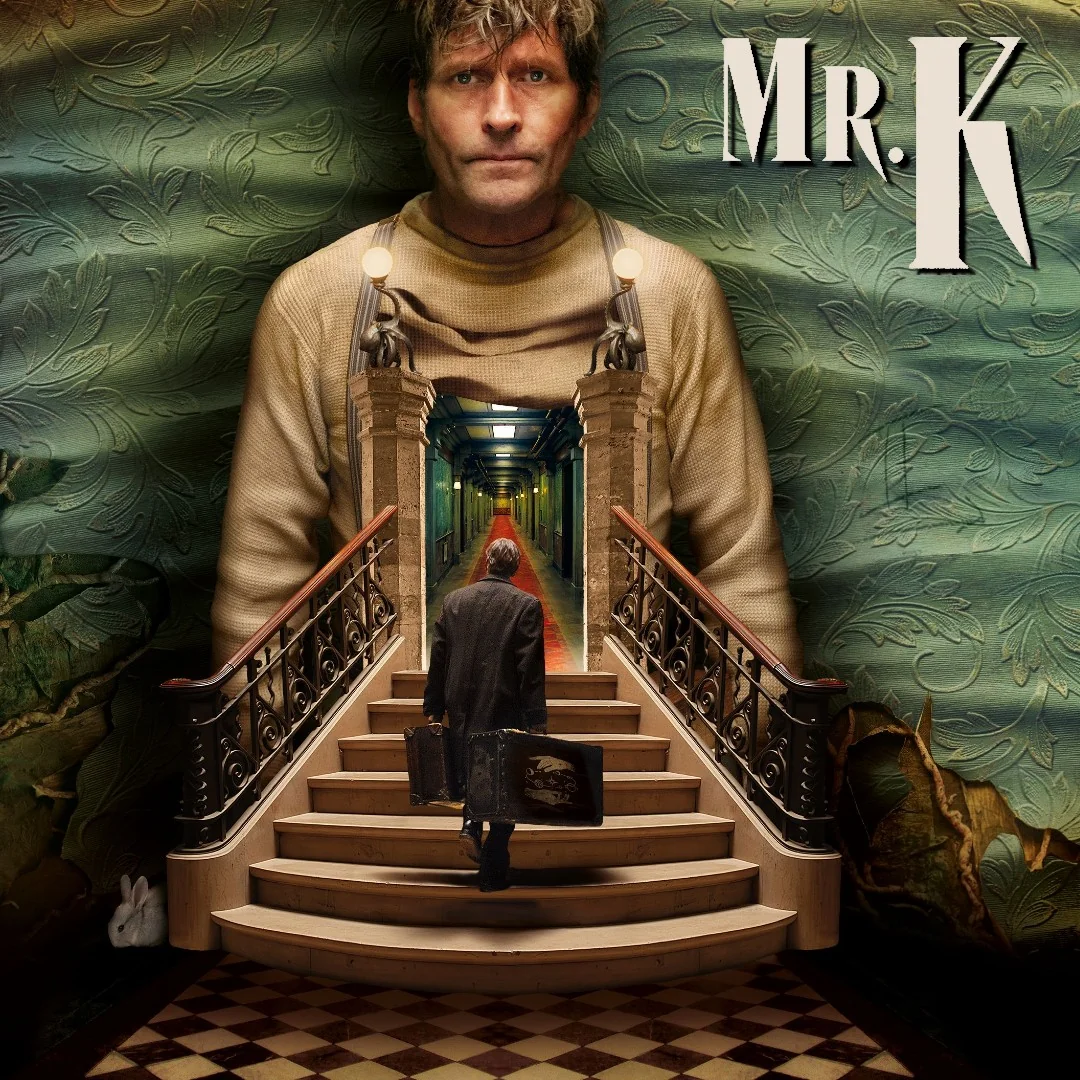
In 2024, a mysterious film titled Mr. K made its debut on the cinematic scene, offering a visually striking and unconventional narrative that blends absurdist realism with psychological fantasy. The film is a European co-production between the Netherlands, Germany, and Belgium, but was shot in English, allowing it to connect with international audiences while retaining its distinctively surreal European character.
The story begins simply enough: Mr. K, a traveling magician and illusionist living on the fringes of society, arrives at a grand hotel on the outskirts of a European city, planning to spend just one night before heading to his next show. What starts as an ordinary stay soon spirals into an existential nightmare.
From the moment he enters his room, things start to get strange:
Doors shift locations, hallways multiply, windows no longer open to the outside, and time itself seems trapped in an endless loop. Every attempt Mr. K makes to leave the hotel only brings him back to where he started. The guests are eccentric, and the staff behave as if they're part of some perpetual ritual with no beginning or end.
What was meant to be a single night turns into a forced, inescapable stay, as the space literally shrinks and closes in, almost as if the walls are swallowing those inside. There’s no logical explanation for what’s happening—just an intensifying sense of suffocation and confusion, as if the hotel is a living entity reshaping itself to trap its guests in its own maze.
Kafka and the Nightmare Hotel
A work is described as 'Kafkaesque' when it reflects the influence of Czech writer Franz Kafka (1883–1924), known for his symbolic novels like The Trial and The Castle, where ordinary people find themselves at the mercy of mysterious, unjust, and incomprehensible systems. In these worlds, rational laws break down, leaving individuals to face inexplicable absurdity they can neither understand nor escape.
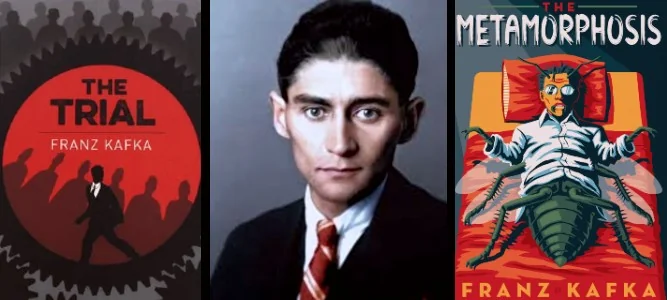
Mr. K brings this Kafkaesque nightmare into the modern era:
- An isolated protagonist: Mr. K is an ordinary man, confronted by the authority of a place that offers no explanations.
- Absurd systems: The hotel operates like a metaphysical bureaucracy, imposing rules that are both incomprehensible and unbreakable.
- Loss of control: Every attempt to make sense of the situation only leads to deeper chaos.
- Endless repetition: Doors and corridors endlessly replicate, and time loops back on itself.
In an interview, director Schwab confirmed that the name 'K' was no accident, but a deliberate nod to Kafka’s world, saying: “The connection to Kafka is clear, from the name itself to the visual symbolism... In the film, the hotel is Kafka’s new castle.”
The hotel becomes a symbol of modern life and the systems that confuse people and strip away meaning—much like how Kafka used the castle and the trial as metaphors for a world that judges people without ever telling them their crime.
Spatial Disorientation: When a Place Loses Its Logic
Mr. K's hotel is more than just a setting; it acts as a character in its own right, pulsing, shrinking, and rearranging its corridors to create a sense of—spatial confusion or disorientation(Spatial Disorientation). The idea of a place that refuses to stay fixed isn’t new in cinema, but here it takes on a psychological and philosophical dimension:
- The Place as a Mirror of the Mind
The hotel changes in tandem with Mr. K’s unraveling consciousness.
- Losing His Bearings
He can’t figure out where he is or which way to go—just as he can’t make sense of the rules that govern his world.
- The Disappearance of the Outside
There’s no clear 'outside'; every door just leads to another interior, as if the entire world is a single, endlessly repeating fold.
This disorientation pulls the viewer into the protagonist’s experience, making us feel just as lost and unmoored in time. It’s as if the film is suggesting that the reality we live in might be just another wing of this absurd dream hotel.
Visual Structure and Psychological Atmosphere
The film relies more on visual storytelling than dialogue: muted colors, dim lighting, and endless corridors evoke surrealist paintings. Mirrors and hallways appear again and again, symbolizing the self trapped in endless loops. The soundtrack shifts between hissing and murmurs, creating a constant sense of unease—like a nightmare you can’t wake up from.
In some scenes, the hotel literally seems to shrink, as if it’s swallowing its own wings—a visual metaphor for the mind collapsing in on itself when meaning is lost.
Mr. K is not a film for quick entertainment; it’s a contemplative experience blending the bizarre, the nightmarish, and existential isolation. It recalls Franz Kafka’s literature, where people are trapped in senseless systems, and European cinema’s explorations of the fragility of reality and the mind.
The shrinking hotel isn’t just a building—it’s a metaphor for a world eroding from within. It’s a world we know all too well, but at any moment, it could become like Mr. K’s hotel: familiar on the outside, strange at its core, with no door leading to escape.
About the Writer
About the Author