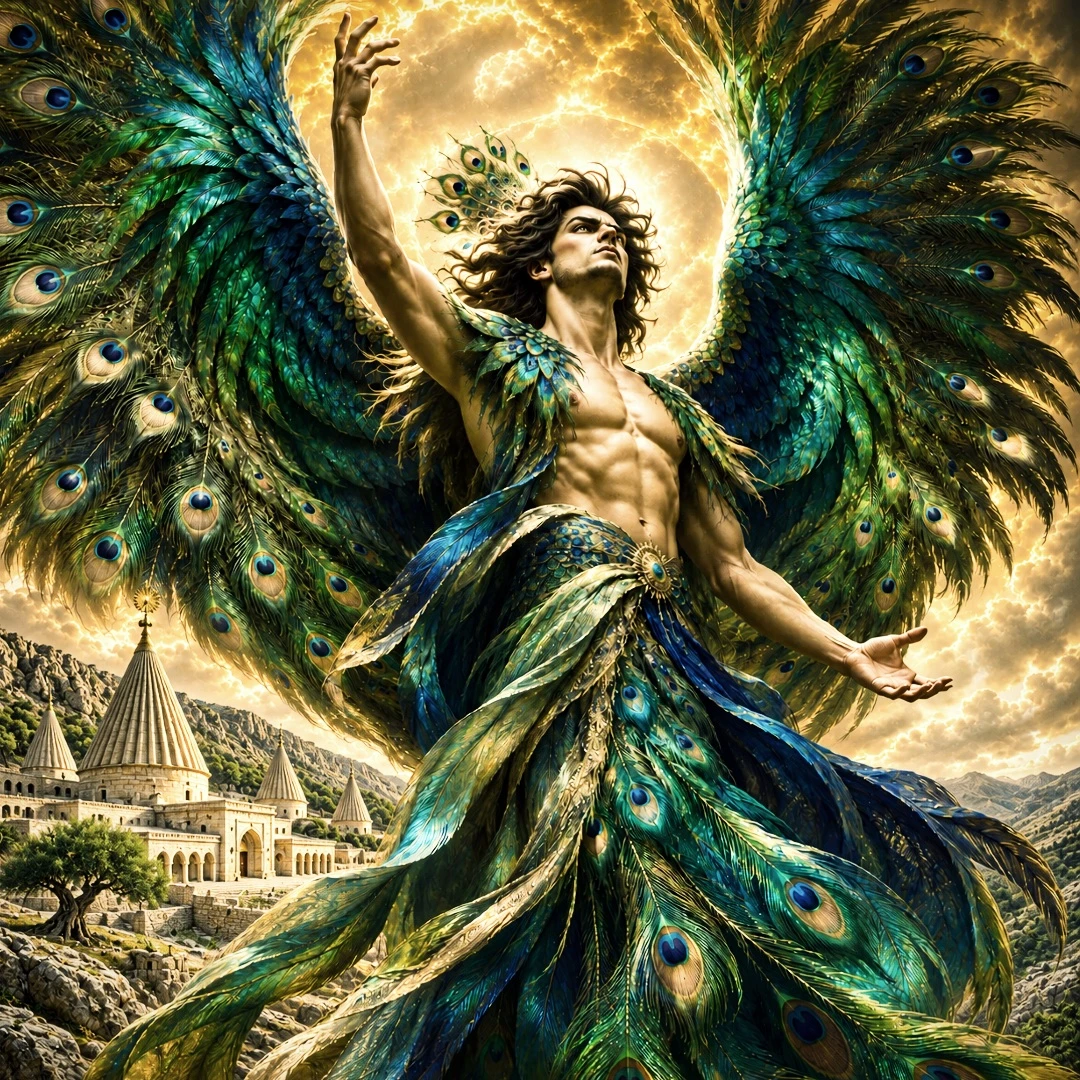
Nestled in a mountain valley surrounded by green hills in northern Iraq stands the Lalish Temple, the holiest site for the Yazidis. Its distinctive stone domes rise above shrines that date back centuries. Here, followers of this ancient faith perform their religious rituals and honor a sacred being known as "Tawûsê Melek" or the "Peacock Angel," one of the central figures of their belief system.
For Yazidis, this angel embodies holiness and loyalty to the Creator. However, some from other faiths have associated Tawûsê Melek with Iblis or Lucifer, the fallen angel in Christian tradition. This resemblance between religious stories has fueled accusations of devil worship against the Yazidis, and legends have grown around their temple, including tales of secret towers and hidden powers controlling the world.
So who is Tawûsê Melek, really ? Why does his story resemble that of Iblis in Islamic tradition ? Is there a historical connection, or are these similarities the result of outside interpretations of a unique faith ?
Tawûsê Melek in Yazidi Belief
The Yazidis are a religious community historically centered in northern Iraq, especially in Sinjar and Sheikhan, with smaller populations in Syria, Turkey, Armenia, and Georgia. Most Yazidis speak the Kurmanji dialect of Kurdish, and their religion has developed its own distinct traditions over centuries, shaped by influences from ancient Iranian beliefs, local customs, Christianity, Islam, and Sufism.
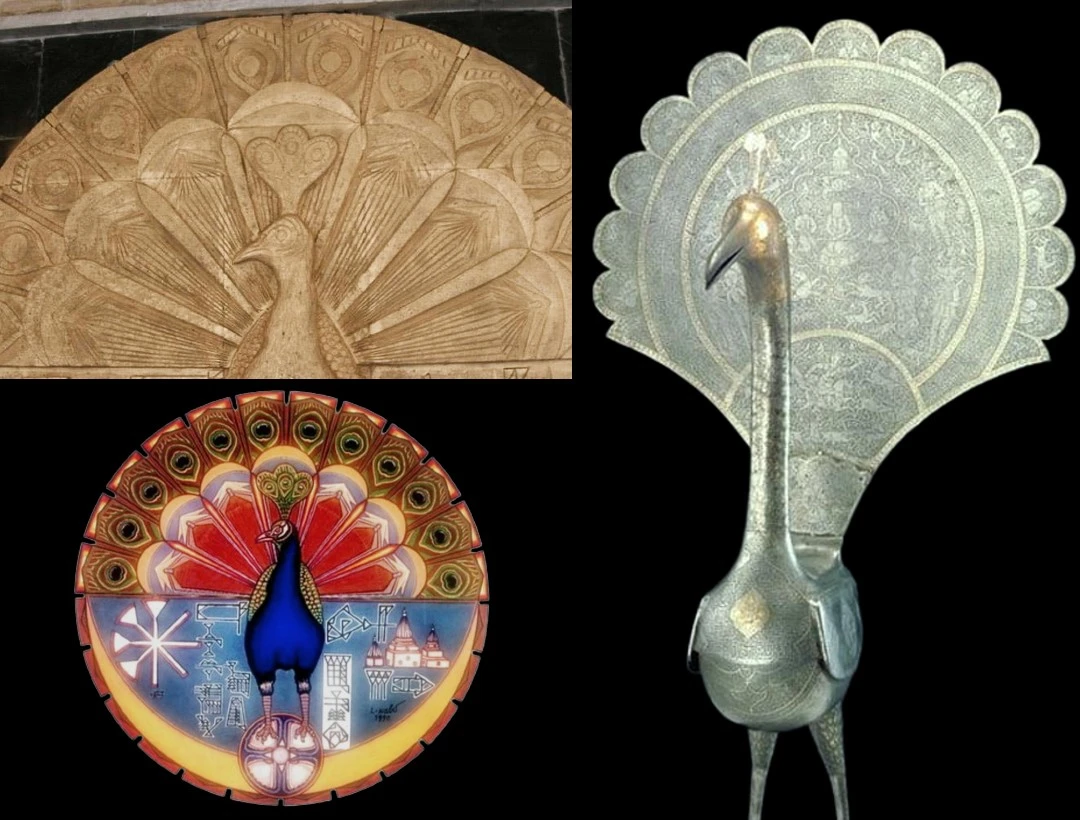
Yazidi faith is based on belief in a single God, called "Xwedê," the Creator of the universe. According to Yazidi tradition, God entrusted the world to seven holy beings known as the "Seven Mysteries," with Tawûsê Melek as their leader. He is seen as the representative of divine will and the intermediary between the Creator and the world, not a separate deity, but the highest among the sacred beings. Tawûsê Melek is symbolized by a peacock with multicolored feathers, a motif that also appears in the metal statues known as "sanajaq," which have long been associated with Yazidi rituals and pilgrimages.
Yazidi beliefs have been preserved through oral tradition, especially sacred hymns called "Qewl." As a result, their faith does not have a single, unified scripture like some other religions, and there are variations in how certain events and holy figures are interpreted.
The Angel Who Refused to Bow to Adam
One of the most well-known stories about Tawûsê Melek centers on the creation of Adam, a story that has played a major role in linking him to Iblis. According to a popular Yazidi account, after creating Adam, God commanded the angels to bow before him. All obeyed except Tawûsê Melek, who refused, not out of rebellion, but because he had pledged never to bow to anyone but the Creator. He saw bowing to Adam as a violation of that promise. The story goes on to say that God's command was a test of the angels' loyalty, and Tawûsê Melek passed by remaining true to his original vow. As a reward, God appointed him as the leader of the angels and entrusted him with the world's affairs.
This story closely parallels the account of Iblis in the Quran, who also refused to bow to Adam. However, Iblis justified his refusal by saying, "I am better than him. You created me from fire and created him from clay" (Al-A'raf: 12). In the Quranic version, this refusal is seen as an act of arrogance and disobedience, resulting in Iblis's expulsion and curse.
Both stories involve the same act, refusing to bow, but differ fundamentally in their interpretation. In the Quran, it's an act of pride and defiance; in the Yazidi tradition, it's a test of faithfulness and devotion. This is not the only story about Tawûsê Melek, though. Other versions describe his fall and repentance, adding further complexity to his character.
The Angel Whose Tears Extinguished the Fires of Hell
In a 2007 feature by British journalist Sean Thomas, members of the Yazidi community in Celle, Germany, shared another version of the Tawûsê Melek story. Halil Savucu recounted that Tawûsê Melek was once a proud angel who rebelled against God and was cast into hell. He spent forty thousand years weeping in remorse, and his tears eventually extinguished the fires of the underworld. Reconciled with God, he regained his status. When asked whether the angel represented good or evil, Savucu compared him to fire: it can provide warmth and cook food, but it can also burn and destroy.
This story is found in some Yazidi traditions, but it is not a universally accepted interpretation. It differs from the version where Tawûsê Melek's refusal to bow is seen as virtuous from the start, instead portraying his fall as a punishment followed by repentance and forgiveness.
This version bears a stronger resemblance to the story of Lucifer in Christian tradition, where a high-ranking angel falls from grace due to pride. However, unlike the common Christian interpretation, Lucifer does not regain his divine status after the fall, whereas Tawûsê Melek's story ends with reconciliation and forgiveness. Thus, the similarities between the two figures are not enough to claim they are the same, especially since Yazidi belief does not view Tawûsê Melek as an embodiment of evil or an adversary to the Creator.
The Title "Peacock of the Angels" in Islamic Tradition
An intriguing detail adds to the comparison: the title "Peacock of the Angels" actually appears in some classical Islamic texts, where it was used to describe Iblis before his fall from grace.
In his book 'Umdat al-Qari Sharh Sahih al-Bukhari,' Badr al-Din al-Ayni (died 1451) cites a narration claiming that before his fall from grace, Iblis was known as the 'Peacock of the Angels' because of his beauty. This title was lost after his appearance changed as a result of his disobedience.
Ibn Taymiyyah (died 1328), in his book 'Minhaj al-Sunnah al-Nabawiyyah,' also refers to reports suggesting that Iblis was either the most devout of the angels, one of the bearers of the throne, or called the 'Peacock of the Angels.' However, he questioned the evidence supporting these claims and did not accept them as established religious facts.
Some traditional interpretations describe Iblis before his fall as having the name Azazel and enjoying a high spiritual status due to his devotion. However, these details come from disputed historical accounts and are not confirmed by the Quran or any authentic prophetic traditions. The Quran explicitly states that Iblis "was one of the jinn" (Al-Kahf: 50), though early commentators sometimes debated his origins and his relationship to the angels.
This is where the similarities between the 'Peacock of the Angels' in some Islamic narratives and 'Tawus Melek' in Yazidism become apparent. Both figures are associated with a lofty celestial status and the story of refusing to bow to Adam. However, the title 'Peacock' in reference to Iblis is more of a metaphor for beauty and former status, while the peacock is a central religious symbol in Yazidi belief. There is no solid historical evidence that Tawus Melek was directly derived from Iblis, or that Yazidis reinterpreted the Islamic devil. The resemblance likely reflects ancient interactions between neighboring religious traditions, but it does not, on its own, indicate the direction of influence.
Lalish and the Legend of the Seven Towers of the Devil
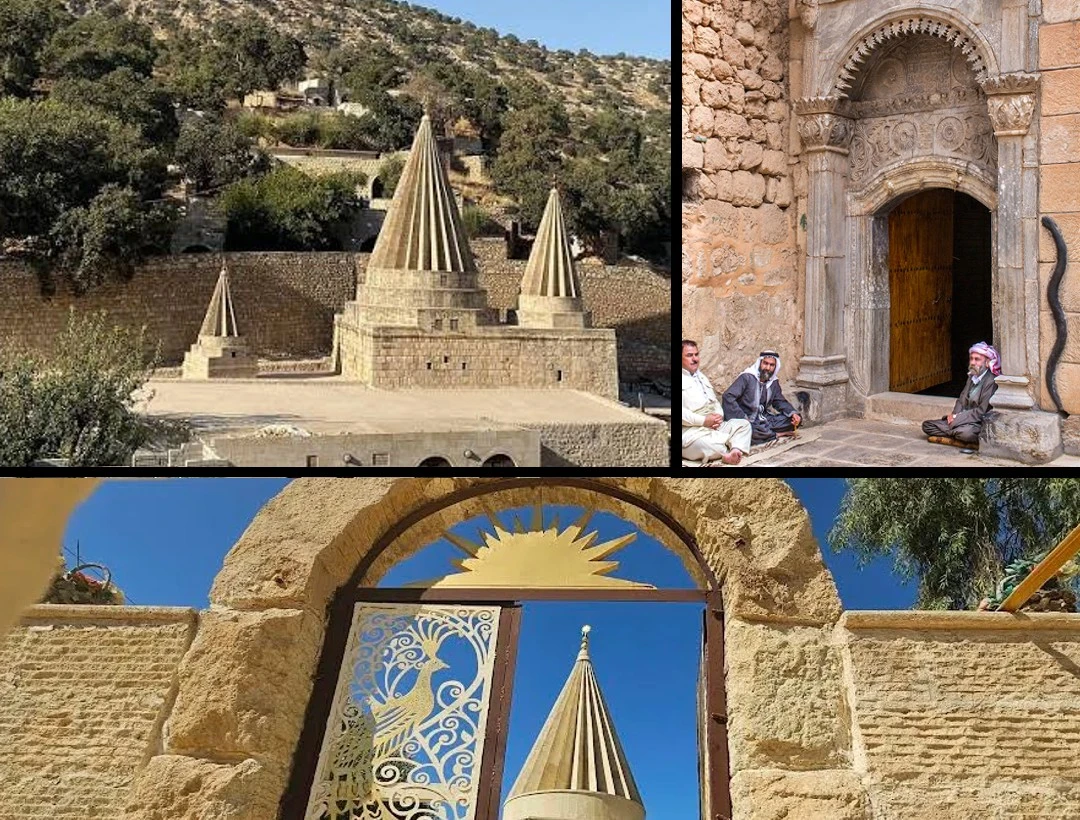
The Lalish temple, located in the Sheikhan region of northern Iraq, is home to the tomb of Sheikh Adi ibn Musafir, a Sufi figure from the 12th century who played a key role in Yazidi history and religious development. The site is known for its distinctive conical stone domes, sacred springs, and shrines visited by Yazidi pilgrims. Out of respect, visitors remove their shoes before entering. The temple hosts rituals, prayers, and major religious celebrations, most notably the annual Jamaa festival. Despite its true significance for Yazidis, Lalish has been portrayed quite differently in some Western literature.
In his 1927 book 'Adventures in Arabia,' American traveler William Seabrook recounted stories about seven secret towers stretching across Asia, from Manchuria and Tibet to Persia and Kurdistan. According to these tales, each tower housed a priest of the devil who sent mysterious forces to influence the fate of the world. Although Seabrook himself acknowledged these stories were legendary, he linked them to what he had heard about the Yazidis and the conical domes found in their sacred sites.
In the twentieth century, some Western occult literature revived these ideas, including the writings of Anton LaVey, founder of the American Church of Satan, who referenced the lore attributed to the Yazidis in his explorations of ritual and esoteric symbolism.
However, there is no historical or archaeological evidence supporting the existence of a network of 'devil's towers' or that Lalish serves as a center for hidden powers controlling the world. The unique architecture of Yazidi sites, combined with limited outside knowledge of their religious traditions, likely provided fertile ground for such myths to take root and spread in fantastical literature.
How Did the Accusation of Devil Worship Arise?
The distorted image of the Yazidis did not stem solely from the similarities between Tawus Melek and Iblis. The secretive nature of their faith, which long relied on oral tradition, and religious taboos surrounding certain words and symbols also played a role. Yazidis are known for avoiding the word 'devil' and similar terms, a practice some outsiders misinterpreted as evidence of devil worship. In reality, this avoidance reflects a religious sensitivity to words considered offensive to their sacred being.
Texts attributed to the Yazidis, especially the 'Book of Revelation' (Kitab al-Jilwa) and the 'Black Book' (Mushaf Rash), have also fueled confusion. Research has shown that the published versions of these texts from the early twentieth century are not reliable or authentic sources representing the entirety of Yazidi belief, even though they contain elements consistent with some oral traditions.
Philip Kreyenbroek, a scholar of Iranian studies who spent many years researching Yazidi beliefs, affirms that the community does not worship the devil or any evil force. In Yazidi doctrine, Tawus Melek is a sacred being who does not embody evil. Kreyenbroek suggests that some aspects of Yazidi belief may trace back to pre-Islamic Iranian religious traditions, drawing a possible connection between Tawus Melek and the many-eyed god Mithra from ancient Iranian mythology. However, this remains a scholarly interpretation of the symbol's origins, not an established historical fact.
From Religious Accusation to Persecution and Genocide
Accusations of devil worship against the Yazidis have not just been a matter of religious debate, they have fueled waves of persecution, displacement, and violence throughout their history, especially when doctrinal differences were used to justify treating them as outsiders.
This persecution reached its peak in modern times when ISIS invaded the Sinjar region on August 3, 2014. The group used its extremist religious interpretations to justify targeting Yazidis, committing mass killings, abductions, and sexual enslavement. Children were separated from their families, and some were forced to join ISIS ranks.

Estimates indicate that thousands of Yazidis were killed and thousands more abducted, most of them women and children. A United Nations investigative committee concluded that ISIS's crimes against the Yazidis amounted to genocide, as well as crimes against humanity and war crimes. While misunderstanding Tawus Melek was not the sole reason for these atrocities, the historical accusation of devil worship provided an ideological pretext that ISIS used to dehumanize and target its victims.
A Sacred Angel or Another Image of Iblis?
Comparing Tawus Melek, Iblis, and Lucifer reveals striking similarities, particularly regarding their exalted status and refusal to bow to Adam, as well as the appearance of the title 'Peacock of the Angels' in some Islamic sources.
However, these similarities do not mean the three figures are identical, nor do they prove that Yazidis worship the devil under another name. Each figure serves a distinct religious function within its own tradition, and even the stories about Tawus Melek vary in their details.
The exchange of stories among neighboring religious communities, the influence of fantastical Western literature, and misunderstandings of Yazidi oral traditions have all contributed to the mysterious image of this angel. For some, he has come to symbolize evil, while for his followers, he remains a symbol of holiness and devotion.
The story of Tawûsê Melek stands out as a striking example of how a single symbol can be interpreted so differently across religions. In one tradition, the angel is punished for refusing to bow, while in another, he is rewarded for the very same act. These contrasting interpretations have fueled centuries of debate, myths, and accusations, some of which have profoundly affected the lives of an entire religious community.
About the Author