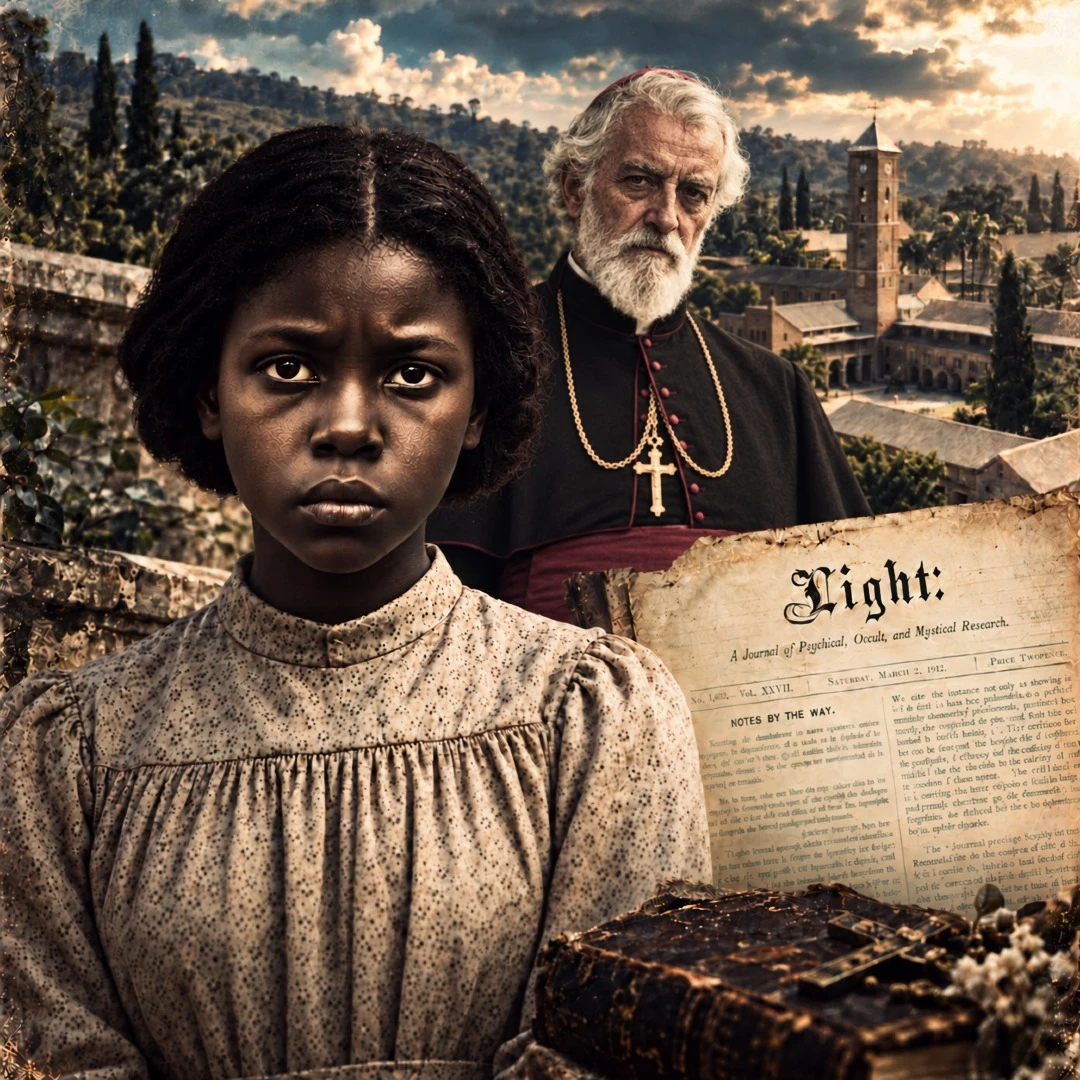
In 1907, inside a small chapel at St. Michael’s Mission in South Africa, Bishop Henry Delalle stood before a teenage girl whose condition had terrified the nuns and priests. He’d heard she spoke languages she’d never learned, revealed people’s secrets, and even levitated. Still, he wasn’t convinced she was possessed, so he decided to conduct an unusual test.
The bishop ordered the font to be emptied of holy water and refilled it with regular water. He kept a small vial of holy water in his pocket without telling the girl. When he sprinkled her with the water from the font, she shuddered slightly, then mocked him, saying it wasn’t holy water. But when he used the hidden vial, she began screaming and begged him to stop.
The girl’s name was Clara Germana Cele. This was just one of a series of strange incidents recorded at a Catholic mission in the British colony of Natal between 1906 and 1907. Clergy saw these events as evidence of demonic possession, though the true nature of what happened remains in question, even after more than a century.
How It Began: A Pact with the Devil
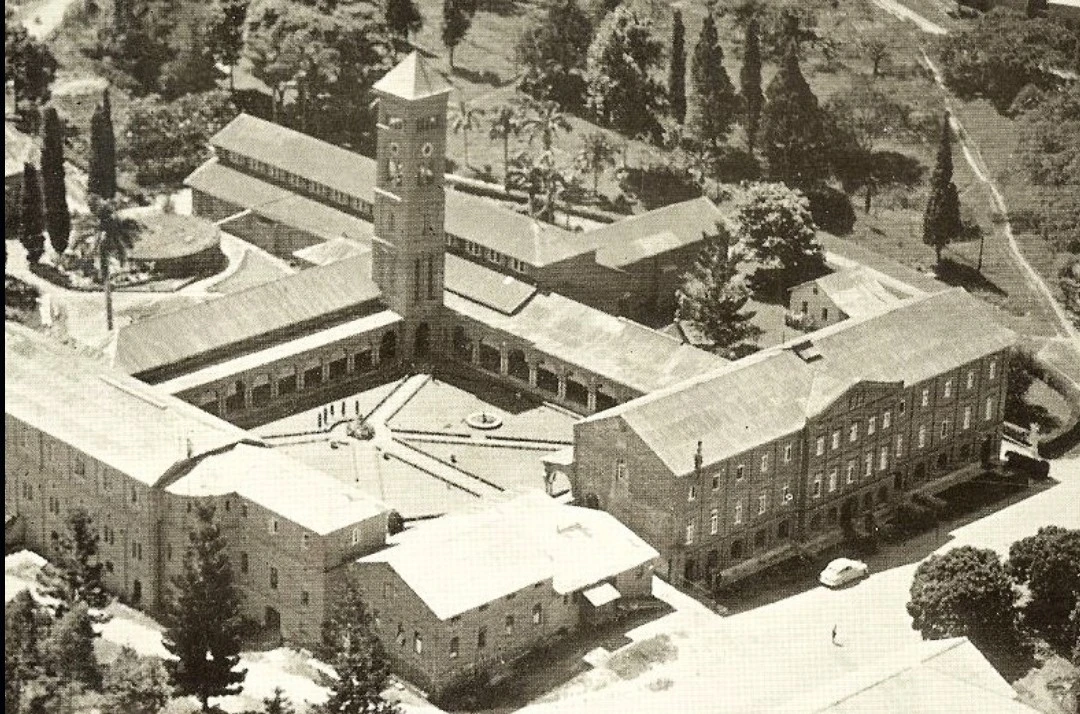
Clara was a sixteen-year-old African girl living at St. Michael’s Mission near Umzinto, in what is now KwaZulu-Natal, South Africa. Raised in a religious environment under the supervision of Catholic missionaries, she received her education and lived among nuns and other girls at the school.
Church accounts describe her as intelligent and gifted with a beautiful singing voice. But during the summer of 1906, her behavior began to change in troubling ways. She became increasingly agitated, suffered fits of anger and fear, and sometimes spoke in strange voices that didn’t sound like her own.
In July of that year, she handed Father Erasmus Hörner, one of the mission’s priests, a note said to be a pledge to sell her soul to the devil. The original document has never surfaced, but this alleged confession became a turning point in how her case was understood.
After that, according to Hörner’s account, she began screaming during prayers, showed aversion to sacred symbols, and made animal-like noises. She reportedly knew the whereabouts of priests when they were absent and revealed personal details she shouldn’t have known. News of her spread quickly among the mission’s residents, especially after witnesses claimed to see physical phenomena they couldn’t explain.
Nuns spoke of her displaying unusual strength, resisting the efforts of several people to restrain her, and even levitating despite attempts to hold her down. There were also reports of her dress catching fire suddenly and her bedding burning without any apparent source of ignition.
Perhaps the most extraordinary claim was her ability to understand foreign languages she’d never learned—German, Polish, and Latin among them. Later accounts added French and Norwegian, and some even claimed she spoke all these languages fluently.
Such claims emerged in a context where clergy saw speaking unknown languages, superhuman strength, secret knowledge, and aversion to sacred objects as possible signs of demonic possession.
The First Exorcism and the Levitation Incident
As events escalated, the mission’s leaders sought permission to conduct an official exorcism. The ritual began on September 12, 1906, led by Father Mansuet Poll with Father Hörner assisting.
A large crowd of residents, clergy, and nuns gathered at the mission. Historian Francis Young notes that about 150 people were present, though not all witnessed every event attributed to Clara.
The prayers went on for hours. According to church accounts, Clara writhed, screamed, and fought attempts to restrain her. When asked the name of the entity possessing her, it reportedly called itself "Melek."
The rituals reached their peak the next morning, when witnesses claimed that Clara rose off the ground along with the chair she was sitting on. She then collapsed, regained her composure, and appeared calm once more.
Other accounts from Horner describe separate incidents of levitation, including one where Clara reportedly floated nearly five feet off the ground. However, there are no photographs or independent testimonies with precise measurements to confirm this, and details vary between sources. The priests declared the ritual a success, believing the evil spirit had left the girl’s body. Clara returned to her normal life for a short time, but the disturbances reappeared the following year, and this time, she wasn’t alone.
The Return of Symptoms and the Bishop’s Involvement
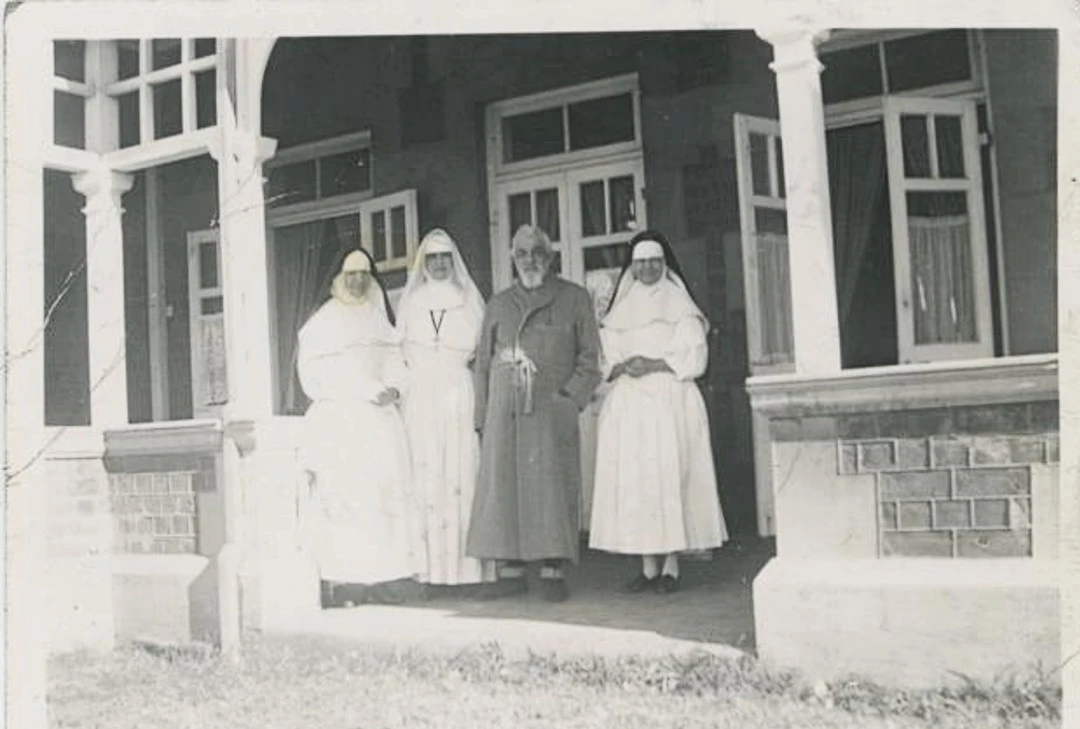
By 1907, another girl at the mission, Monica Moletshe, began showing similar behavior. The situation alarmed the nuns, who called for the intervention of Bishop Henri Delalle, the church authority for Natal.
At first, the bishop was skeptical of any supernatural explanation. In a statement he later published, he admitted doubting the reports and noted that the priest accompanying him from Durban openly mocked the idea of genuine possession. However, upon arrival, Delalle found the mission residents waiting for him as the one who would drive out the demons, having been told by the priests to prepare with prayers for his visit.
The bishop met with both girls and listened to the testimonies of the nuns and priests. When he entered Clara’s room, she began trembling and clenching her teeth, then erupted in anger after the accompanying priest threatened her with punishment. According to the bishop, she addressed the priest and mentioned he had come from Durban, even though she had never met him before. As the meeting continued, Delalle became convinced that another ritual was necessary, beginning with the holy water test previously described.
During the ceremony, the bishop spoke in Latin and noticed that Clara responded to his commands usually in Zulu, and sometimes in Latin itself.
When asked to reveal the name of the entity within her, she initially refused, but eventually spelled out the name Dioar. She then linked this entity to Lucifer, the name traditionally associated with the devil in Christian belief.
The confrontation lasted for hours, marked by screams and violent outbursts. Eventually, those present had to restrain her hands and feet, as they were unable to control her movements, according to the bishop's account.
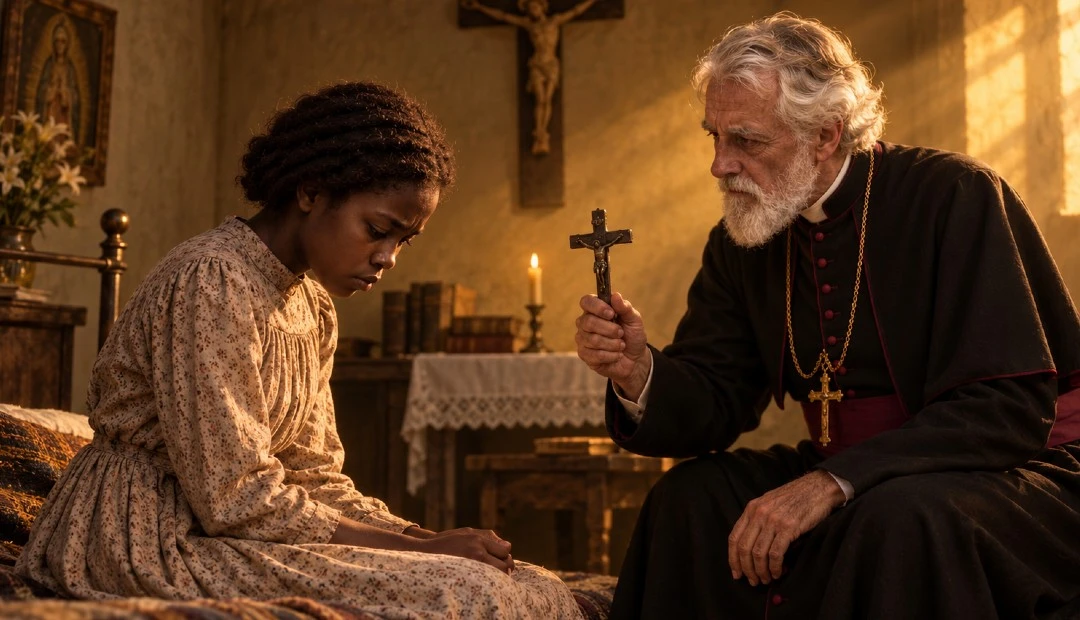
Delal also recounts that during the rituals, Clara revealed two things he considered evidence of supernatural knowledge: she mentioned that another girl had been sent to a distant mission, and that a priest had left to baptize a sick person. He believed there was no way she could have known either fact.
In the end, she collapsed to the ground in pain, then experienced a seizure followed by complete stillness. The bishop noted that a foul odor filled the room before the girl regained consciousness about ten minutes later and got up to pray. For him, that moment marked the end of the demonic possession.
What do the historical records reveal?
Clara's story didn't remain just a tale passed around the mission. Bishop Delal published his account of the second ritual in the Rome magazine on January 23, 1909. The British magazine LIGHT later reprinted it in its February 13 issue that same year, under the title "An Authentic Case of Possession."
This testimony is one of the earliest published documents about the incident, but it requires careful reading. The bishop distinguishes, though not systematically, between what he witnessed firsthand and what was reported to him by nuns and priests.
For example, he did not claim to have seen Clara levitate a meter and a half off the ground; instead, he relayed that others said the two girls sometimes rose above the floor. He also didn't conduct a linguistic test to prove Clara spoke foreign languages she hadn't learned, but mentioned her responses to his Latin commands and some answers in that language.
Even the holy water test, which the bishop considered strong evidence, does not rule out the possibility of suggestion or unintentional cues from those present, and is not sufficient to prove the girl had supernatural abilities.
Popular accounts describing her speaking four European languages fluently, throwing priests across the room, or trying to strangle one with his religious stole, do not all appear in the same detail in the bishop's early testimony.
The frequent retelling of the story in books and online does not necessarily mean there is more evidence; many later accounts relied on the same clerical sources, often adding more sensational details.
Demonic possession or altered consciousness?
Clara's case takes on special significance when viewed in the context of colonial-era South Africa, where traditional African beliefs about spirits intersected with European Christian ideas of the devil and possession.
In a study titled "Witchcraft or Madness?" historian Julie Parle examined the phenomenon of 'Indiki'—cases linked to beliefs in spirit possession in Zululand between the 1890s and 1914. She explained that interpretations of these cases were shaped by the religious, social, and economic changes brought by colonialism. While this doesn't mean Clara experienced the same phenomenon, it does provide a framework for understanding the environment in which her case emerged.
Historian Francis Young also notes that Clara's case highlights a deep difference between African views of the spirit world and the Catholic interpretation adopted by European missionaries. What the priests saw as a battle between good and evil may have had very different meanings in local beliefs.
From a psychological perspective, some of the symptoms described in historical accounts of possession resemble dissociative states, which can involve changes in identity or control over behavior, as well as phenomena influenced by suggestion and group expectations.
The fact that similar disturbances appeared among other girls in the mission raises questions about the psychological influence individuals can have on each other, especially in an environment charged with fear of the devil and constant anticipation of his signs.
However, the lack of detailed medical records makes it impossible to retrospectively diagnose Clara's condition or to confirm that all the phenomena attributed to her were truly supernatural.
What stands out is that the surviving accounts were written almost entirely by members of the clergy, while Clara's own perspective is almost completely absent. We know what the priests believed they witnessed, but we have no independent insight into how Clara herself understood her experience, or what she felt as she lost control of her actions and underwent those rituals.
Clara's Fate and the Enduring Mystery
After the 1907 rituals, religious sources claim that Clara regained her composure and lived out her remaining years free from the disturbances that had made her famous. However, a bishop's testimony published in 1909 reveals a more painful side to her later life: he reported receiving a letter from Clara begging him to pray for her death, as she had grown fearful of life after what she had endured. The original letter has not survived, so we cannot examine it or fully understand the psychological state that led her to write those words—if the account is accurate.
There is some disagreement about the details of her death. Modern accounts often state that she died in 1912 of heart failure, while historical sources suggest she passed away in 1913 from a lung disease. Without an original death record, the exact circumstances remain uncertain.
Clara died young, but her story has remained a fixture in discussions of demonic possession and exorcism for over a century.
Clergy documented the exorcism rituals and described behaviors they considered beyond natural explanation. Yet, no matter how sincere these testimonies may be, they alone cannot prove that levitation occurred, that Clara possessed supernatural knowledge, or that a demonic entity truly inhabited her body.
On the other hand, our inability to explain every detail today does not justify reducing her experience to a specific psychological disorder without medical evidence. Clara Germana Cele's case remains suspended between a religious narrative of a battle with the devil and a historical and psychological interpretation seeking to understand human suffering within its cultural context.
Perhaps the most striking aspect of her story is that nearly everyone focused on the devil they claimed possessed her, while very little has been preserved about Clara herself. Her suffering became one of the most famous possession stories of the modern era.
About the Author