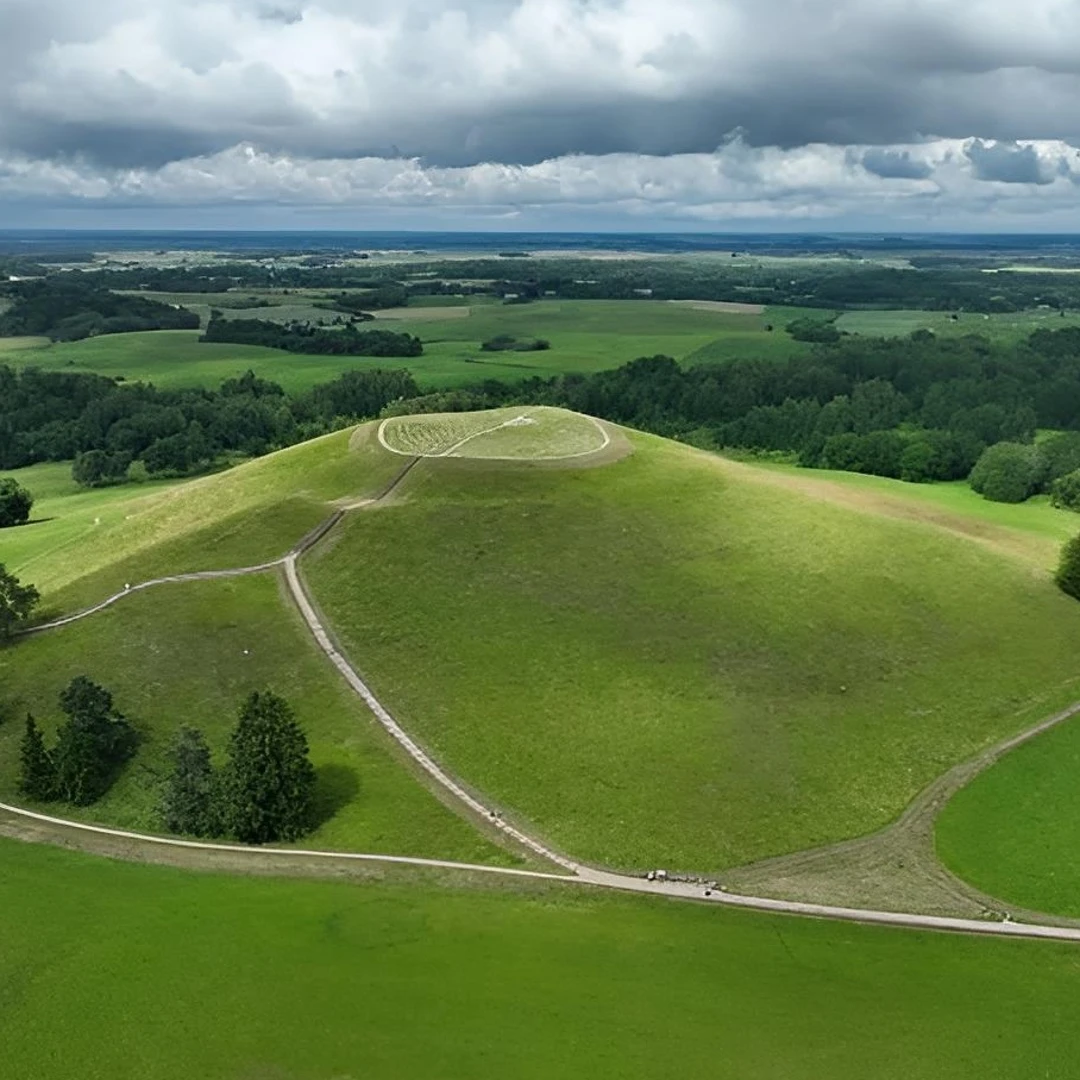
In western Lithuania, in the heart of the Žemaitija region, there’s a green hill that at first glance looks much like the dozens of others dotting the rural landscape. But this place, known as Šatrija, has for centuries been shrouded in a darker legend: according to local folklore, witches from all over Lithuania , and sometimes even farther, would gather here to dance and report to a mysterious master waiting at the summit.
Šatrija isn’t just a so-called "witches’ mountain" invented for modern tourism. Its name appears in actual witch trial records from the 17th and 18th centuries, as well as repeatedly in the Lithuanian folklore archives. In a recent study, researcher Andrius Kaniava reviewed ninety-nine folk tales about witches’ gatherings; Šatrija was the meeting place in 49 of them, a huge margin over any other location.
So what did locals imagine was happening on this hill? Why did a real place become so closely associated with witches? And most importantly: what do court records and archaeological evidence reveal when we move from legend to investigation?
The Night Witches Head to Šatrija
Many stories set the gathering on one of the most significant nights in Lithuanian folk belief: St. John’s Eve, which roughly coincides with the summer solstice and is also linked to the pre-Christian or overlapping festival of Rasos.
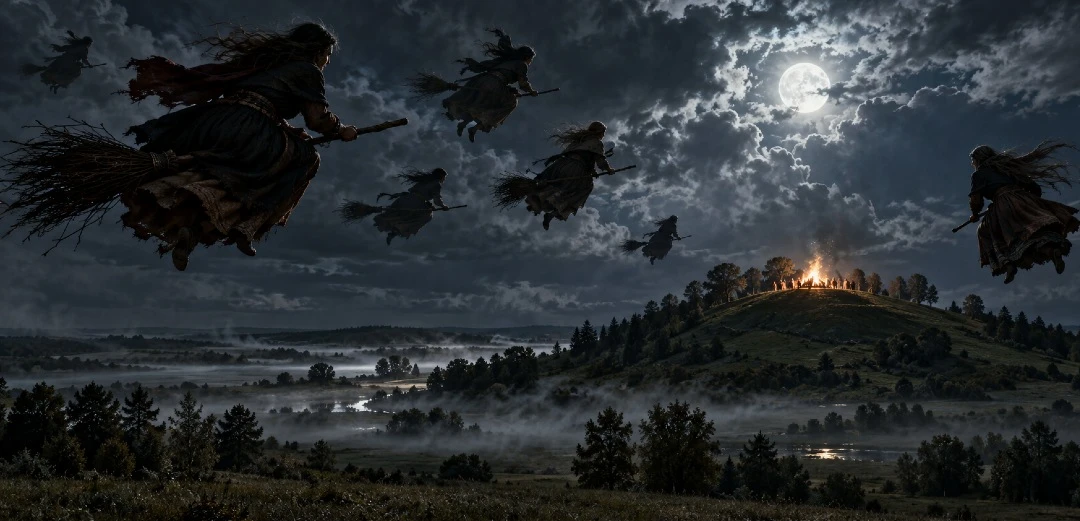
One tale preserved in the folklore archives describes an annual gathering of witches and sorcerers from all over Lithuania and even Poland. After they arrive, the "chief of witches" appears, said to come from Riga or Mitava , and the group reports on their activities over the past year. The means of travel vary: broomsticks, staffs, beehives, and other objects that, in the popular imagination, become flying vehicles. The journey is accompanied by strong winds, swirling air, and bad weather that hides the witches from view.
The timing isn’t just a detail. Of the 99 stories Kaniava studied, 24 link the witches’ gathering to this period. In Lithuanian tradition, St. John’s Eve was believed to be a time when magical forces were especially active. People took precautions to protect their livestock, milk, and crops from witchcraft, such as placing thorny plants, nettles, or rowan branches at barn doors, alongside Christian symbols. ResearchGate
So, on a single night, two layers of belief overlapped: an ancient celebration of fire, fertility, and nature, and a later Christian fear of witches and evil spirits.
The Gathering on the Hill
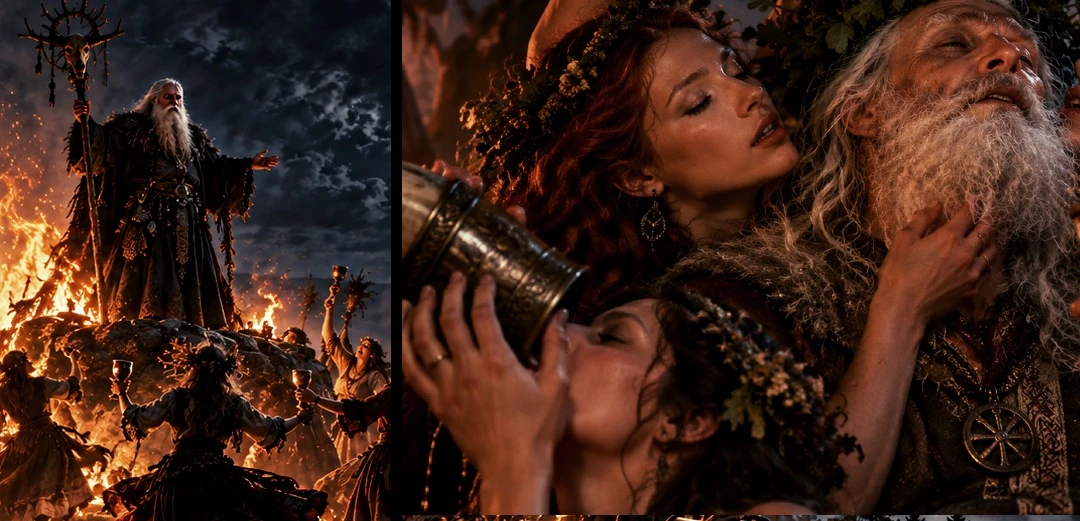
Once the witches reach Šatrija, the legend’s most dramatic scenes unfold. The stories don’t always describe a gloomy meeting; sometimes it’s a wild celebration with music, dancing, and feasting that lasts all night. In other versions, the scene turns into a dark, demonic banquet: witches and devils dancing together, corpses and dead animals as part of a terrifying feast. One tale even calls it something like "the devil’s wedding."
The leader of the gathering takes different forms: sometimes an old man with a long beard, sometimes a figure before whom the witches show submission, or even the devil himself appearing in one story as Lucifer. In Lithuanian folklore, he’s sometimes depicted as a small German man or dressed in German fashion, reflecting an old regional stereotype of the devil.
In one story, the witches report their misdeeds to the master of the gathering. Šatrija wasn’t just a place to party, it was an annual reckoning in the world of folk magic.
The Ointment That Opens the Way to the Sky
One of the most recurring elements in these tales is a mysterious substance that enables flight. In 25 of the stories Kaniava examined, a magical ointment or mixture appears; in some versions, it’s made from rye or buckwheat. The witch applies it under her arm, on her face, ears, or eyes, then vanishes—through the chimney, the window, or straight into the air.
The means of travel reflect a distinctly rural imagination: broomsticks are the most famous, but beehives, pestles and mortars, wooden bath branches, and tree trunks also make appearances.
Another recurring character is the curious servant or farmhand.
He sees the lady of the house use the ointment and fly away, so he decides to imitate her. In some stories, he ties himself to something heavy, thinking it will keep him grounded, but the spell lifts him anyway. He crashes into the chimney, the roof, or the treetops, and suddenly finds himself on Šatrija, surrounded by witches.
In one version of the story, a servant discovers his mistress among a gathering. When he's asked to join their group and write down his name, he writes the name of Christ instead of the devil. Instantly, the entire scene collapses, the witches, the warlocks, and the castle vanish, leaving the man alone on the mountain.
This ending clearly shows how old folklore merged with Christian beliefs: the supernatural world exists within the story, but a single religious gesture is enough to break the spell and make it disappear.
From Folktale to Courtroom
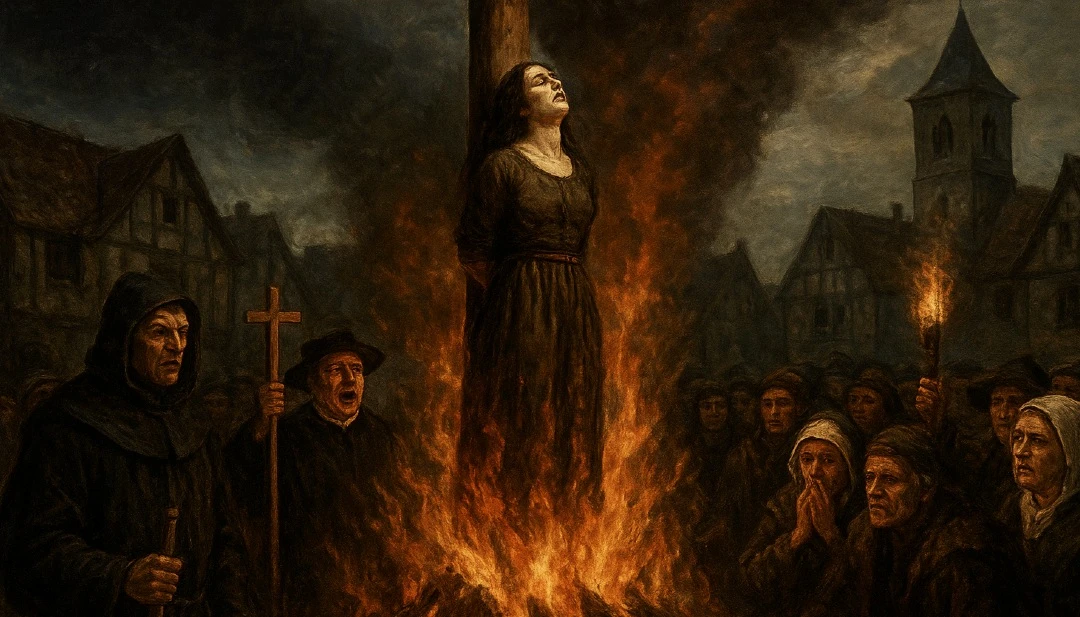
The story of Šatrija takes a darker turn here, moving from folklore into documented history. On July 4, 1696, the court of Dirvonėnai heard the case of several residents from the village of Kirklių accused of witchcraft. The accused were tortured and forced to confess, and some were sentenced to be burned at the stake. During the investigation, Maria Adomaitytė, under torture, claimed that a group of women had flown to Šatrija on St. John's Night in 1695. It was said that two of the women flew 'with sparks' higher than the others.
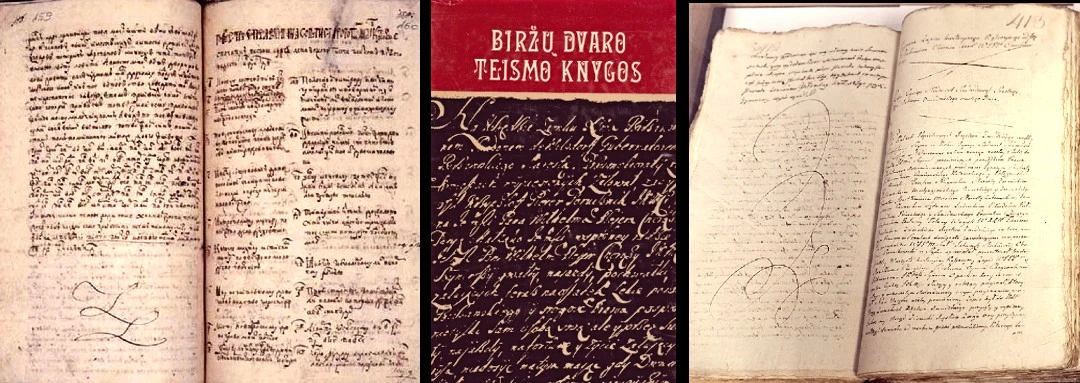
More than thirty years later, in 1730, the mountain appears again in the Tirkšliai case. Two women accused of witchcraft were sentenced to be burned, while a minor girl was sentenced to be whipped near the pyre. The case files include claims that the women used an ointment under their arms before flying to Šatrija, which was nearly fifty kilometers away.
The following year, another court case surfaced involving an accused man who claimed he attended witch gatherings after using the ointment, and that a demonic figure would appear to him in various forms. Historian Aivas Ragauskas’s research into sixteen cases between 1641 and 1746 shows that Šatrija repeatedly appeared in accounts of 'witches’ flights' in Samogitia, with some alleged journeys covering up to sixty-four kilometers.
This helps explain why the name Šatrija became more than just a local legend: the courts themselves played a role in cementing the myth.
Witches aren’t the only ones said to haunt the hill
But the folklore surrounding Šatrija is much older and broader than just the story of the Witches' Sabbath". There are legends that explain the origin of the hill through giants. In one version, a giant was on his way to his mother's funeral when his shoe filled with earth; when he emptied one of his shoes, Šatrija Hill was formed. Another tale, recorded in 1938 and published as early as the nineteenth century, claims the hill is actually a massive burial mound for the wife of a giant named Alcis.
A different story tells of a church that once stood atop Šatrija but then sank into the hill. Some versions mention an opening leading to it, or that its bell can still be heard from deep underground. Legends of sunken churches and palaces are common in Lithuanian folklore, often used to explain ancient sites or symbolize the conflict between old pagan beliefs and Christianity.
Other tales speak of buried treasure guarded by a mysterious being inside the hill, or of a child who encountered "little devils" living beneath Šatrija. In this way, the hill becomes more than just a meeting place for witches—it's imagined as a world with both an above and a below: gatherings on the summit, and churches, demons, and treasures hidden underground.
There's also a more specific local version that says after Christianity arrived, the witches couldn't stand having a church at their favorite meeting spot, so they buried it under the earth. While this story isn't based on historical fact, it shows how folklore tries to explain the transition from ancient sacred sites to new Christian spaces.
What do we actually know about the real Šatrija?
Beyond the legends, Šatrija is a real and important archaeological site. The hill is located about 2.5 kilometers southeast of the town of Luokė, rising to around 229 meters above sea level. It's actually a glacial moraine formed during the last Ice Age, not a mound built by people or witches, as some stories claim. However, humans later modified the site and turned it into a fortified hilltop.
Excavations have uncovered fire pits, traces of posts, both cremated and uncremated human remains, as well as weapons, tools, jewelry, and pottery. The oldest finds around the fortress date back to the first centuries AD, and the area continued to be used into the Middle Ages. There was once a large settlement at the base of the hill.
According to the Lithuanian Encyclopedia, researchers believe the hill may have been used for ancient religious rituals. Some scholars consider Šatrija one of the most important sacred sites in Samogitia before Christianity. The region was relatively late to convert; the Christianization of Samogitia began in the early 15th century, and one of the area's earliest churches was built in nearby Luokė around 1421.
But it's important to be cautious here: the existence of an ancient fortress, human remains, and a site of pre-Christian significance doesn't prove that witches' gatherings actually took place on the hill. What it does show is why the location was so well-suited to become the center of legends: it's elevated, ancient, visually striking, and tied to a religious history that predates Christianity.
Investigation: Did witches really fly to Šatrija?
The best evidence we have doesn't come from later skeptics, but from examining the records themselves.
Ragauskas points out that accounts of flying in court records need to be understood in the context of interrogation, suggestion, and confessions extracted under duress. Some of the accused were tortured, and the court would approach the investigation already holding a cultural image of the witch: ointment, night flight, a demon, a gathering in a distant place. Under pressure, the accused would begin to produce stories that matched the tales already familiar to the community.
This creates a fascinating cycle: folklore influences the court, the court then reproduces folklore in an 'official' form, and these legal stories return to the community with even more power, since they supposedly happened to real people.
Still, there's a detail that's hard to ignore: when Kaniava examined 99 folk tales from the nineteenth and twentieth centuries, he found that 55 placed the gathering on a hill, and 49 specifically named Šatrija. Some of these stories were collected from villages more than a hundred kilometers away, showing that Šatrija's fame wasn't just a local tradition, it became part of the magical geography of the Lithuanian imagination as a whole.
So the real 'truth' about Šatrija isn't about proving witches flew there, but about something more tangible: an entire community mapped out its supernatural world and put Šatrija at its center.
Why Šatrija, specifically?
Researchers highlight an important idea here: certain landscapes naturally lend themselves to myth because of their prominence. A towering, isolated mountain, an ancient archaeological site, or a sacred or mysterious location becomes a focal point for stories to take root.
This is what sets Šatrija apart from the legendary 'Blue Mountain' in some Latvian traditions or Sweden’s Blåkulla; those places can be vague or uncertain in location, while Šatrija is a real, visible place that people can climb and point to. In this way, it resembles other European sites that became actual mountains associated with witches’ gatherings in folklore.
Even the name adds to the mystery. Kaniawa notes that historically, the word 'Šatrija' was used in western Lithuania to describe a difficult or angry woman, while some folk tales link the name to 'šatra,' meaning a stick or long branch. It’s hard to prove which, if either, is the true origin, but what’s clear is that over time, Šatrija and the idea of the witch have become intertwined both linguistically and culturally.
The fire still burns atop the mountain.
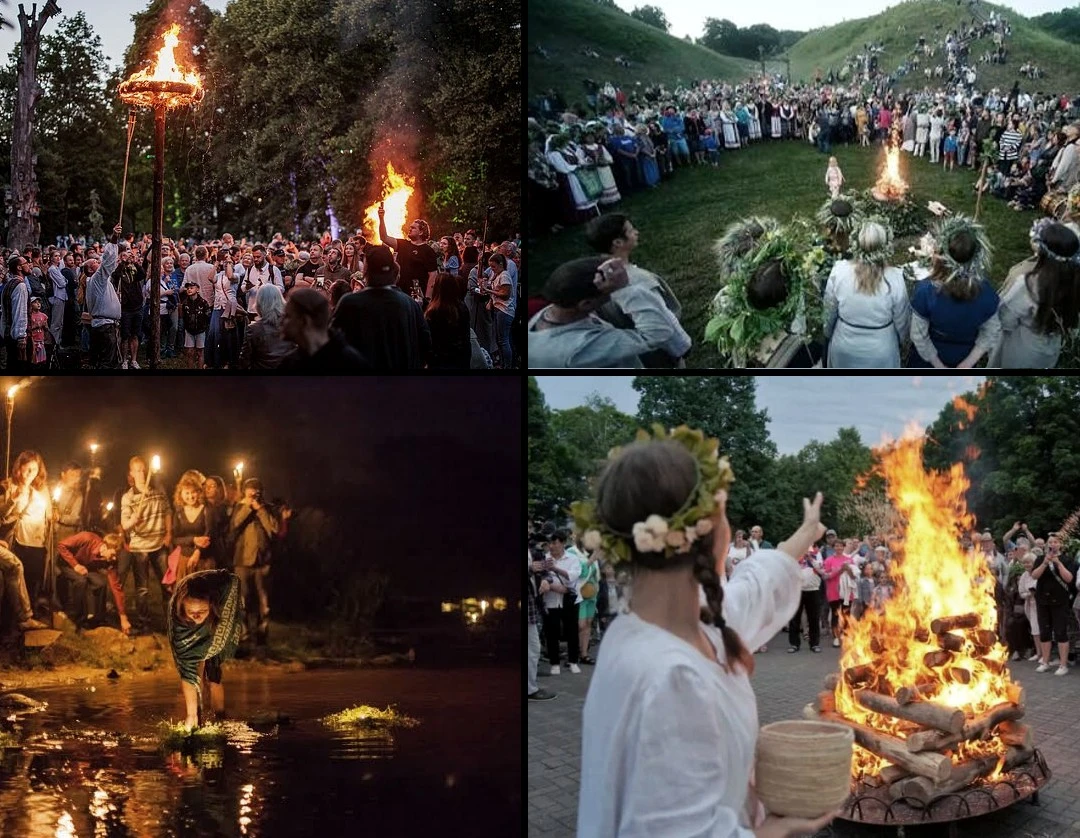
Remarkably, the summer solstice tradition hasn’t disappeared from Šatrija. Today, Rasos celebrations are held on the mountain on the night of June 23rd to 24th. Participants wash their faces with water from a nearby well, gather plants, light fires, sing and dance, symbolically search for the 'fern flower,' and then roll a burning wheel of straw down the mountain before returning to the summit to greet the sunrise.
Of course, this doesn’t mean that ancient witch rituals have survived unchanged; the modern celebration is a cultural and ceremonial revival of solstice traditions. Still, it creates a scene that’s hard not to associate with the stories told about this place centuries ago: a short night, fire on the mountain, circles of people, songs, and rituals lasting until dawn.
Perhaps that’s why the legend of Šatrija has endured for so long. The hill wasn’t just a backdrop for the tale—it gave the story a tangible presence, a place people could return to.
On a place like this, three eras converge at the summit: an Iron Age fortress, confessions recorded by witch trials, folklore about broomsticks, whirlwinds, and demons, and now, modern people climbing the hill on solstice night to light the fire once again.
So while there’s no evidence that witches ever actually flew to Šatrija, there is something just as fascinating: it’s one of the rare places in Europe where you can trace its transformation from an ancient sacred site, to a center for witches’ gatherings in popular imagination, and finally to a real name that appears in the records of witch trials themselves.
About the Author