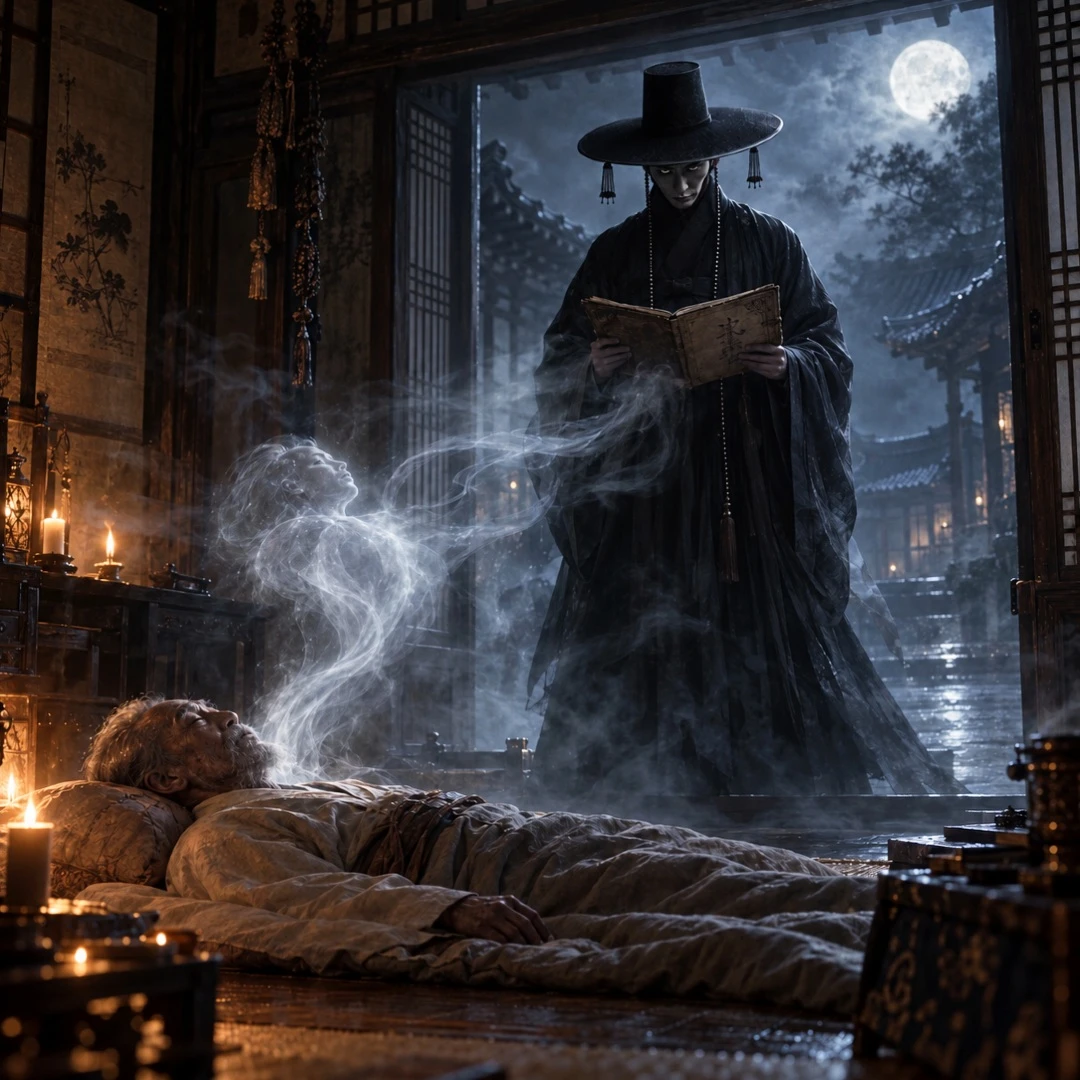
In some Korean folk beliefs about death, the end doesn't come alone. When a person's allotted time is up, an order is issued in the afterlife, and messengers are dispatched to find and escort them to begin a new journey. These messengers carry documents specifying their target, verify the person's identity, and then accompany them to the realm where the dead await their fate. They are known as Jeoseung Saja (저승사자), or 'Messengers of the Afterlife.'
Western translations often liken them to the Grim Reaper, but that's only part of the story. Jeoseung Saja aren't solitary figures who kill humans; they're more like envoys or officials in a vast system that governs the dead. They don't decide when someone dies, they arrive only after the decision has already been made.
Behind this figure lies a fascinating world of folklore, where Korean shamanism blends with Buddhist beliefs and funeral rituals. Death is imagined as having its own bureaucracy: kings, judges, messengers, documents, records, and even food offered to those who come to take the deceased.
When the Order Comes from the Afterlife
The name itself reveals the character's nature: 'Jeoseung' (저승) means the afterlife or the world of the dead, while 'Saja' (使者) means messenger or envoy. So 'Messenger of the Afterlife' is a more accurate description than simply calling them a 'Grim Reaper.'
Some of the most detailed descriptions of their role appear in the rituals of Jeju Island.
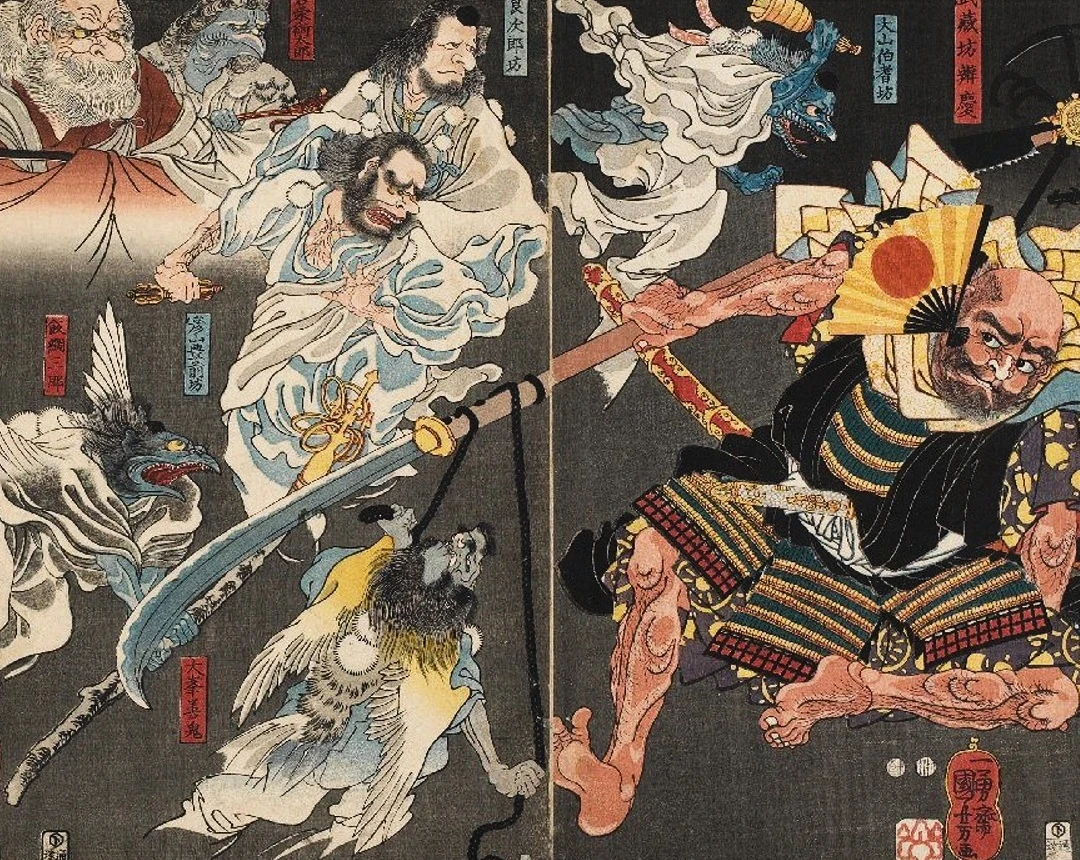
When the rulers of the afterlife command that a person's time is up, the messenger carries a document called 'Jeokpaeji' (적패지), an official order from the other world. The messenger enters the world of the living, but doesn't go straight to the person; first, they consult the local guardian deity to confirm the name, then are directed to the home of the one whose time has come. The story describes the messenger carrying tools to restrain and lead the deceased.
In this view, death isn't a chaotic event but a process governed by rules, procedures, and higher authority. Even after leaving the body, the soul isn't free, it has only just begun its journey through another system.
Three Strangers Await a Meal
Koreans haven't always seen the messengers of death as enemies to be driven away. After all, what do you do when the one who comes to take your loved one is also their companion on the long road to the afterlife?
In some traditions, the answer was to show them hospitality.
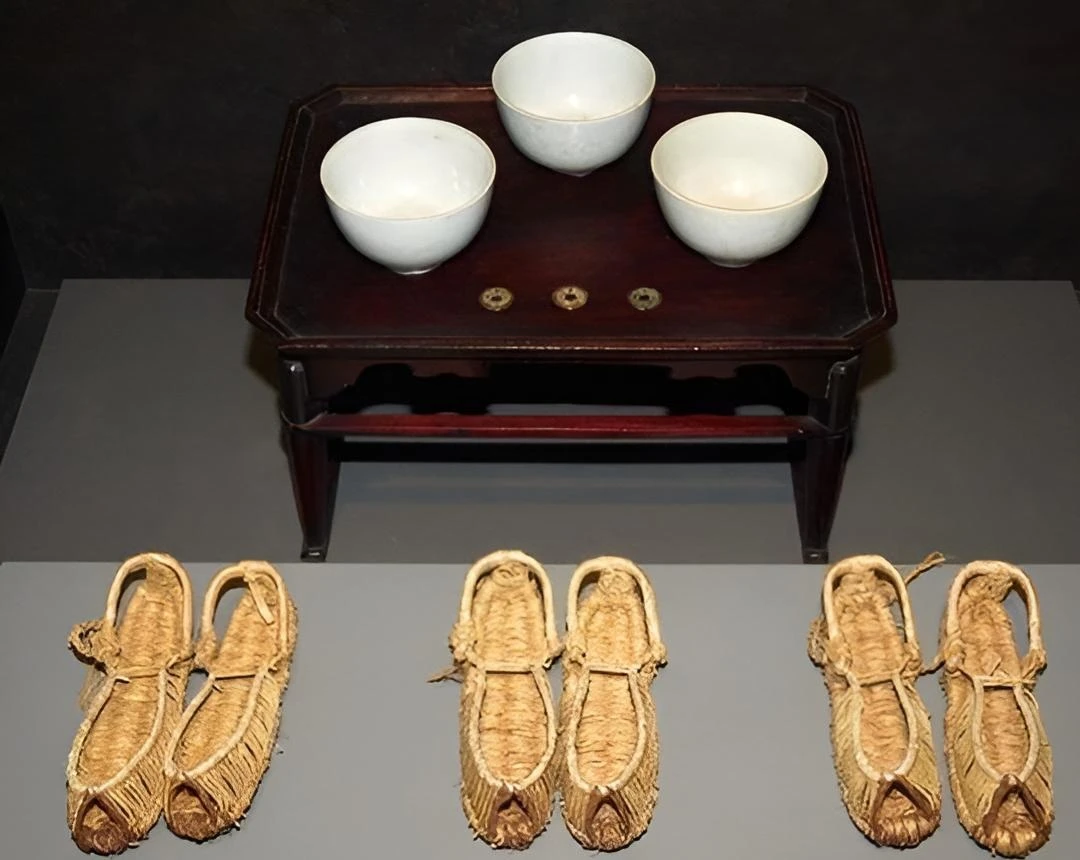
The Korean Encyclopedia of Culture documents a custom called 'Sajabap' (사자밥), or 'food for the messengers.' After a death, food would be placed outside the home to welcome the messengers. In some parts of southern Gyeonggi Province, the offering included rice, straw sandals, and coins.
The number three often appears in these rituals: three dishes of food, three pairs of straw sandals, and three pairs of spoons. This reflects the belief that three messengers might come to collect the deceased. In some Seoul traditions, these are known as the messengers of heaven, earth, and humanity.
The goal wasn't to prevent death—it was already too late for that. Instead, families hoped that by treating the messenger kindly, the soul would be treated gently in return, and the deceased would not suffer on their journey to the afterlife.
This reveals a strange relationship between people and the messenger of death: disliked for taking a loved one, yet also seen as their companion on an unknown journey. For that reason, the messenger shouldn't be insulted.
When the Living Bargain with Messengers of Death
In some shamanic rituals, this relationship takes on a completely different tone—far removed from the terrifying image popularized by movies.
In funeral rituals from regions like Hwanghae, there was a tradition known as the 'Death Messenger Play.' A performer would take on the role of the messenger, complain about the lack of food, demand more, and sometimes threaten to stay in the house or treat the deceased harshly. Family members would try to appease him.
These rituals often included bargaining, jokes, and moments of satire, all within a ceremony centered on loss and mourning. According to tradition, the messenger might eat, then pretend to lie down from being too full, or pick up straw shoes and prepare to search for the deceased, a scene that blended solemnity with comedy.
This contrast likely served a deep psychological and social purpose: transforming the terrifying power of death into a character people could talk to, argue with, and even laugh at, if only briefly. In reality, death is non-negotiable, but within the ritual, it becomes symbolically open to bargaining.
But where did these messengers come from in the first place? This question leads to one of the strangest death legends in Korean folklore.
The Man Who Went to Fetch the King of Death
On Jeju Island, there is a shamanic epic known as Chasa Bonpuri (차사본풀이), or 'The Origin Story of the Messenger from the Otherworld.' It was traditionally chanted during rituals meant to comfort the spirits of the dead and send them to the afterlife. The hero of the tale is a man named Gangnim (강림).
The story, in one of its well-known versions, begins with three brothers destined for short lives. After a series of events, they arrive at the home of a woman who covets their fine cloth. She serves them wine, kills them, and throws their bodies into a pond.
But death does not end their story. Three flowers appear in the pond. The woman takes the flowers and burns them, only for three strange seeds to emerge from the ashes. She swallows the seeds, becomes pregnant, and later gives birth to three sons.
The sons grow up and achieve success, but on the very day they return home, they die suddenly.
The woman, distraught, goes to the ruler Kimchi to demand an explanation for her sons' deaths. The ruler realizes the case is beyond the reach of human courts, and that only Yeomra, the King of the Otherworld, can resolve it.
At this point, Gangnim is summoned and given a nearly impossible task:
"Go to the land of the dead and bring Yeomra to my court."
With help from his wife and household deities, Gangnim sets out on his journey to the afterlife. He eventually reaches a place that serves as a gateway between worlds, dives into the water, and finds himself at the entrance to the realm of the dead, where he waits to meet Yeomra.
Surprisingly, the king of the underworld doesn't kill or punish him for trespassing. Instead, he listens to Gangnim and promises to appear in the human world at a set time. Gangnim returns, and when the appointed moment arrives, Yeomra appears in a mythical scene that shakes both heaven and earth.
The truth is revealed: the three children who died are actually the reincarnations of the three souls the woman had killed long ago. The old crime, thought to be buried forever, comes to light, judgment is passed, and justice is restored.
But Yeomra notices something else: a man who can find his way to the land of the dead and return is uniquely suited for a job no ordinary human could do. He asks to take Gangnim to work with him. After some bargaining over his body and soul, Yeomra takes Gangnim's soul to the other world. Thus, Gangnim the man dies, and Gangnim the messenger of death is born.
Why do people die out of order?
But the Chasa Bonpuri epic doesn't just explain the origin of a death messenger, it also tries to answer one of humanity's oldest questions:
Why does a child die while an old man lives? Why does death sometimes come with no apparent order?
According to legend, Yeomra gave Gangnim a document stating that people should enter the afterlife in order of age, so that each person would reach old age before their time came.
On his way, Gangnim entrusted the document to a crow, but something happened and the message was lost. Since then, death has come without order: the young may die before the old, the strong may go while the weak remain.
Of course, it's just a legend, but it highlights an important role of folk tales: offering a narrative explanation for what seems unfair or inexplicable in life.
The story continues with Yeomra assigning Gangnim another task: to capture Dongbangsak, the legendary man who lived for three thousand years and escaped the messengers of the afterlife.
Gangnim uses his wits to find him, and when he succeeds, he proves his abilities and officially becomes the messenger sent to bring the dead.
What happens after the messenger takes the soul?
Here, folk beliefs and shamanic traditions blend with a broader Buddhist vision of the afterlife. In Korean Buddhist art and beliefs, the Ten Kings preside over the judgment of the dead. Paintings from the Joseon era depict the deceased passing into a world run by courts, judges, and officials.
Artifacts in the National Museum of Korea show that some paintings include, alongside the kings, two death messengers with different roles: Jikbu Saja, who delivers the record of the deceased's deeds to the rulers of the afterlife, and Gamjae Saja, who watches over the dead and prevents escape. This vision also features the Mirror of Deeds, which reveals a person's sins and actions to determine their fate.
The afterlife is no longer a mysterious cave haunted by ghosts, but a fully functioning institution of cosmic justice: there are records, courts, judges, guards, and messengers, and the dead travel through them on a long journey.
Where is the man in black?
If you look up Jeoseung Saja today, you’ll usually find an image of a pale-faced man dressed in black, wearing a traditional Korean hat, quietly searching for wandering spirits. But this isn’t an age-old, unchanging depiction.
According to the Encyclopedia of Korean Culture, the modern image of the man in black robes, pale face, and gat hat became widespread through visual media and television. In some traditional rituals, the messenger of death appears quite differently, sometimes more like a soldier or an official attendant. In other words, the character is much older than its now-famous look.
With the rise of Korean dramas and cinema, the idea has evolved yet again. Recent works like Guardian: The Lonely and Great God (Goblin), Along with the Gods, and Tomorrow have not only revived the figure of the death messenger, but reimagined him as an employee with his own life, memories, and struggles—and sometimes, even a longing to return to the human world.

A recent Korean study on these works notes that while they kept the idea of a messenger tasked with escorting the dead, they gave the character new roles and motivations that weren’t necessarily part of traditional stories.
When death becomes something we can understand
Behind all those chilling tales lies a much simpler, deeply human question.
What happens to the people we love when they’re gone?
Ancient societies couldn’t answer that question, but they managed to create a world where death had shape and meaning. In that world, the soul doesn’t just vanish, someone comes to guide it, there’s a path to follow, judges to meet, and rules that decide its fate.
That’s also why families would leave food by the door, not just as an offering to a frightening being, but as a deeply human wish: if death must take our loved one, let it be someone who knows the way... and treats them kindly.
And so Jeoseung Saja stands at the threshold between two worlds, not death itself, but the one who arrives when the time comes, opening the first door for the soul’s journey into the unknown.
About the Author