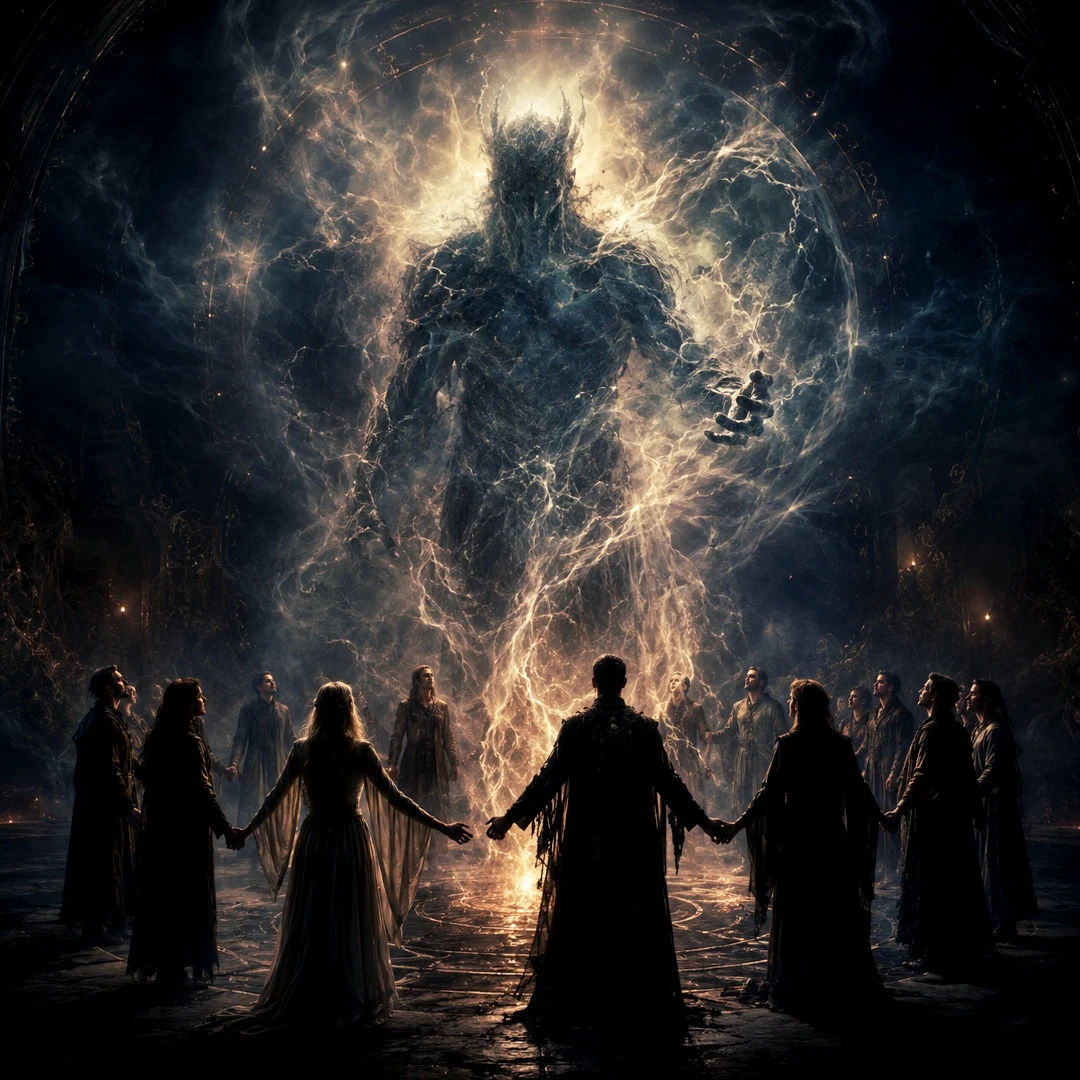
Imagine a group of people coming together around a single idea. They give it a name, a symbol, rituals, and a story that’s passed down through generations. At first, everyone knows they created this identity themselves. But over time, something strange happens: members start talking about it as if it existed before them, as if it has its own presence, will, and memory. Sometimes, the group becomes willing to make decisions, sacrifices, or change its behavior to protect this 'thing', which, in reality, began as nothing more than an idea.
In some Western esoteric traditions, this phenomenon is called an egregore. The concept sits somewhere between magic, psychology, and sociology. For believers, an egregore might be a real, non-physical entity that feeds on human thoughts, emotions, and rituals. From a more skeptical perspective, it’s a clever way to describe how groups can create an identity that eventually becomes more powerful than any individual member.
So, can people really create a 'being' out of ideas? And if this being only exists in their minds, how can it have such a strong influence over them?
From the 'Watchers' to the Collective Entity
The word egregore comes from a Greek term meaning 'watchers', a name that appears in ancient religious traditions, especially in the Book of Enoch to refer to angelic beings who observe humanity. However, this original meaning is very different from the one the word later took on in European esoteric circles.
In the nineteenth century, the term began to appear in French literary and occult writings. Various thinkers and esotericists used it in different ways. Over time, the egregore moved away from being seen as a being from another world and became something generated by people themselves: a psychological or spiritual product that forms when a group consistently focuses on a shared idea, symbol, or goal.
This was a fascinating shift. The question was no longer: What entities surround humanity?
Instead, it became: What entities can people create without even realizing it?
How is an egregore born?
According to esoteric thought, an egregore doesn’t appear out of nowhere. It usually starts with a group united by a strong belief or goal. Around this, a shared identity forms, there might be a logo, a name, a set of symbols, a founding story, revered figures, regular meetings, or repeated rituals. All of these focus the members’ attention on a common center.
As these practices are repeated, the group becomes more than just a collection of individuals. Its history takes on special meaning, its symbols evoke strong emotions, and members might feel that entering a meeting space or seeing the group’s logo is stepping into a world apart from everyday life.
From a magical perspective, these feelings and thoughts accumulate until they form a relatively independent entity that draws its strength from the group. Psychologically, what emerges isn’t necessarily a spirit, but a powerful network of shared expectations, values, memories, and emotions.
The turning point comes when language shifts from 'we want' to something like 'this is what the group wants' or 'this is the spirit of the organization.' At that moment, an idea seems to take on a voice of its own.
GOTOS: The Being of the Fraternitas Saturni
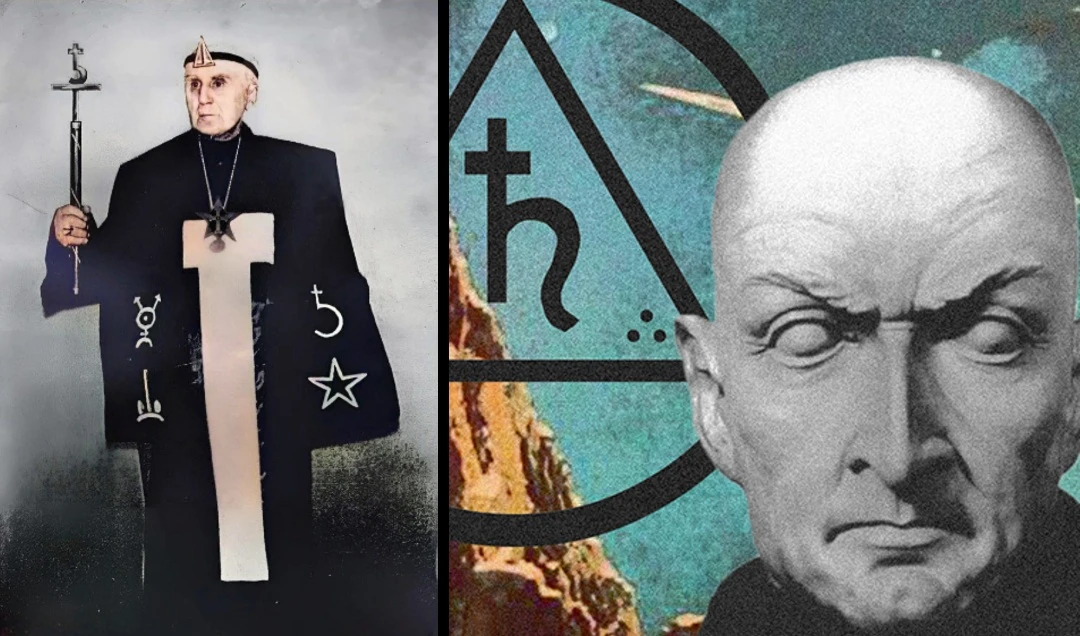
One of the clearest examples of a deliberately created egregore comes from the Fraternitas Saturni, a German esoteric order that flourished in the first half of the twentieth century.
Within this group, a symbolic entity known as GOTOS emerged. It wasn't meant to represent a historical figure or a spirit of the dead, but rather embodied the collective power of the brotherhood itself. Some members believed that their shared practices, rituals, and ideas nourished this entity, which came to represent the distilled spiritual will of the group.
Over time, GOTOS evolved from an abstract concept into a more defined human-like figure. Statues were created to represent it, and some members even claimed to have seen or sensed its presence during their mystical experiences.
Notably, GOTOS wasn't intended to grant superficial wishes. Instead, it embodied the qualities the group wanted to instill in its members—discipline, willpower, self-control, and resilience. It served as an idealized image of what each individual should strive to become.
This highlights one of the most intriguing functions of an egregore: the group creates a symbolic model of the power it seeks, then returns to that model whenever its members need to feel empowered.
Was GOTOS truly an independent entity? There's no evidence to support that, but its psychological impact within the group was real enough that it was treated as if it existed.
Ellis: When a Symbol Becomes a Persona
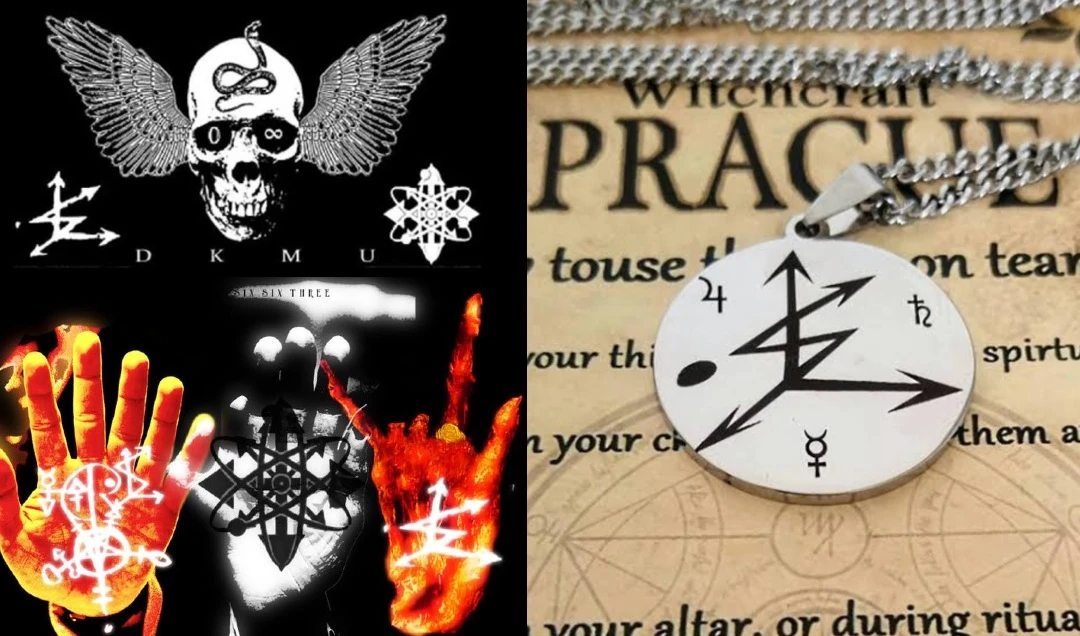
In the internet age, a more modern and unusual version of this idea appeared within some Chaos Magick communities. In the early 2000s, a symbol known as the Linking Sigil spread among members of an occult network called DKMU.
Initially, the purpose of the symbol was relatively simple: to connect people, places, and practices within a single symbolic network. Members began drawing it in various locations and sharing photos and stories about their experiences with it.
As the symbol spread, the conversation around it began to shift. Gradually, a persona named Ellis emerged, a name derived from the pronunciation of the letters 'LS.' The network was no longer just a symbol; some participants began to speak of it as if there were an independent feminine presence behind it. Ellis developed traits, stories, and titles, and some people shared dreams, coincidences, and experiences they attributed to her. What started as a symbol, in the collective imagination of a group, became a character.
The story is so recent that it resembles the way internet memes work: a small idea created by one person is reproduced and modified by thousands until it takes on a life of its own. No one fully owns it anymore, yet it continues to spread and influence culture.
This raises a question that's especially relevant in the internet era: Can a shared idea evolve into something that behaves socially as if it were a living being?
Philip: The Ghost Who Never Lived
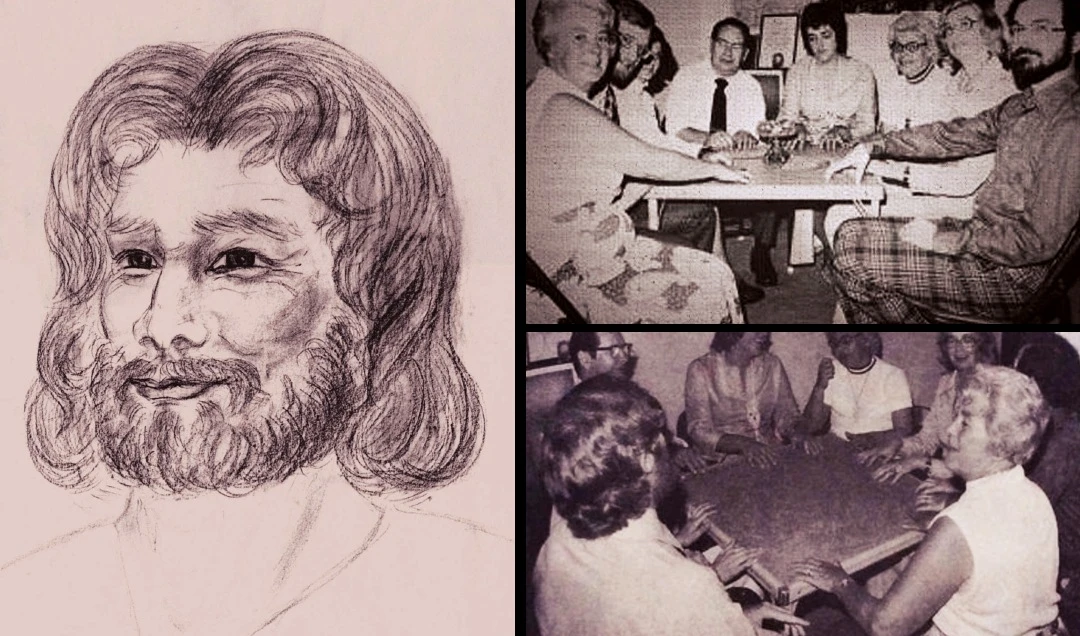
One of the most fascinating experiments in this context took place in Toronto in the 1970s, when a group interested in paranormal phenomena decided to invent a person who had never existed.
They named him Philip Aylesford, created a portrait, and wrote a detailed biography for him. He was imagined as a 17th-century English aristocrat with an unhappy marriage, a tragic love affair, and a dramatic end. Everyone in the group knew Philip was fictional, yet they began holding sessions to try to 'contact' him.
At first, nothing much happened. But as the atmosphere became more relaxed and informal, the table began to move and knock, with some of the knocks interpreted as answers from Philip. Over time, the character developed responses and a story that the group members maintained together.
This raises an intriguing problem: If everyone knew the man never existed, who, or what, were they communicating with ?
Parapsychological explanations suggest the experiment might have involved a collective psychological effect or a form of psychokinesis. A more conservative interpretation points to the ideomotor effect, where people unconsciously make small movements in response to their expectations and thoughts, as sometimes happens with Ouija boards or pendulums. Still, the experiment remains a compelling example of how a group can give an invented character an increasing sense of independence.
Philip wasn't an egregore in the strict historical sense, but the experiment closely mirrors the concept: a group creates a character, and then the character begins to respond. Read more about this experiment in the article How to Create a Ghost
An Egregore Doesn’t Always Need a Face
According to this perspective, an egregore doesn't have to appear as a man, woman, or strange creature, it can be the 'spirit' of an entire organization. Some Western esoteric schools have suggested that ancient groups, especially secret societies and spiritual orders, develop a unique psychological presence over time. When someone joins such a group, they're not just entering a social network, they're stepping into a history, a set of symbols, and traditions shaped by generations before them. Members may feel that the group possesses knowledge beyond that of any individual, and that it has a 'memory' independent of its members.
From this angle, the egregore becomes almost like the personality of the institution itself. People come and go, but the identity remains; faces change, but the language, symbols, rules, and expectations persist.
This is why some esoteric thinkers have spoken of egregores not just for magical groups, but also for cities, nations, institutions, and religious or political movements. In these cases, the line between mystical belief and sociology becomes very thin.
What is an egregore supposed to do?
Believers in the concept see the egregore as a reservoir of collective strength. When an individual feels weak, they believe they can draw stability from their connection to the entity that represents the group as a whole. People may attribute protection, inspiration, guidance, or the success of rituals and projects to the egregore.
But perhaps its most important function isn't supernatural at all. When someone joins a group with a strong identity, they're often more willing to make sacrifices, keep going in tough times, overcome fear, and endure hardship. They may feel they're not acting alone, but carrying with them the legacy of everyone who has shared the same vision.
During World War II, for example, British writer and occultist Dion Fortune organized a series of group meditations and visualizations among her followers. She believed that a group of individuals could influence the 'collective mind' of the British people, boosting courage and resilience in the face of fear.
There's no evidence these practices produced any supernatural force, but they clearly show what Fortune aimed to achieve: uniting scattered individuals into a single will.
That's exactly what an egregore does, whether you see it as a spiritual being or simply a psychological mechanism.
The Other Side of the Egregore
If an egregore can be created to help a group, it can also, within this belief system , become a burden. Every collective entity needs to sustain itself, and if its power comes from human attention, fear, loyalty, and repeated rituals, maintaining it can become an end in itself. At that point, the institution no longer exists to serve its members; instead, the members exist to serve the institution.
This idea isn't limited to the world of magic. How many organizations started with a clear purpose, only to become obsessed with their own survival over time? How many movements have continued long after the circumstances that created them changed? How many people have done things they personally disagreed with, simply because 'the group demands it'?
In esoteric language, you might say the egregore has taken control of its creators. In sociology, it's simply that the institution has developed a culture and social pressure stronger than any individual. Either way, the result is strikingly similar.
Tulpa and Egregore: Two Similar Ideas
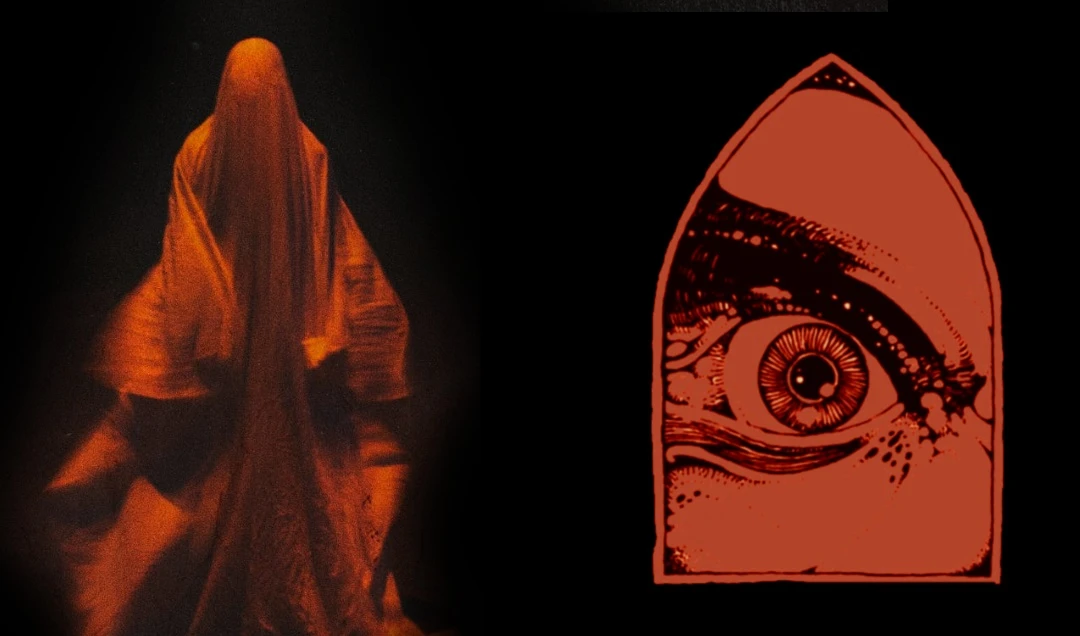
The egregore can seem very close to the concept of Tulpa especially in its modern Western form, where a person creates a character through imagination and focus until it feels independent. The key difference lies in their origins.
A tulpa is usually tied to a single person's mind, while an egregore is born from a group. A tulpa might become a companion or character its creator interacts with, but an egregore represents a complete collective identity and draws its strength from several people. In short: a tulpa is shaped by an individual's imagination; an egregore is shaped by a shared story.
Yet both raise the same question: Can a person create something in their mind and then completely lose control over it?When the Egregore Becomes an Object of Worship
In some esoteric traditions, the egregore is no longer just a symbol of collective consciousness. It is given a name and a form, sometimes even statues or symbolic images. Rituals or requests may be directed toward it as if it were an independent entity. At this point, the practice starts to resemble worship more than symbolic meditation. From an Islamic perspective, directing prayers, vows, or appeals to a created or imagined being, believing it has supernatural power—constitutes associating partners with God, regardless of whether that being truly exists or is just a product of collective psychology. The issue is not just about 'creating an entity,' but about what happens when people give it a name and authority, then begin to treat it as a superhuman force.
When Magic Meets Psychology
There are well-known phenomena in social psychology that make the concept of the egregore intriguing, even for those who don't believe in supernatural explanations.
The French sociologist Émile Durkheim described a phenomenon later called 'collective effervescence.' When large groups gather around a shared goal, sharing emotions, movements, and symbols, a psychological state emerges that individuals don't usually experience alone.
We see this in crowds, festivals, sporting events, religious gatherings, and major celebrations. People may suddenly feel a surge of energy, enthusiasm, and belonging far stronger than anything they could explain as a purely individual feeling.
Social psychology studies confirm that synchronization, shared emotions, and group identity can increase cohesion, belonging, and willingness to cooperate or sacrifice. In other words, a group can truly generate a 'force' that changes the behavior of its members. The only difference lies in how we interpret the nature of this force.
A psychologist might see it as a natural result of human minds interacting, while an esotericist might view it as something that has surpassed its creators and become an independent entity.
The Entity We Might Live Inside Without Seeing
There's no need to imagine an invisible creature hovering over a group to understand the appeal of the egregore. People can create something that didn't exist before they came together: an identity with a name, logo, rules, history, and emotions. Over time, this identity can outlast its founders, welcome new members who never met them, and inspire people to act according to principles established before they were born.
We create companies, movements, nations, associations, and institutions, and then we say they have a ‘personality’ and a ‘spirit’ and a ‘will.’ Maybe these are just metaphors, or maybe esoteric thinkers saw something more in this phenomenon and called it the 'egregore.'
But the more intriguing question isn’t whether a supernatural being exists outside the human mind, but what happens when a shared idea becomes so powerful that its believers start listening to it as if it were a living entity?
At that point, it becomes hard to tell who is shaping whom:
Are we the ones creating the egregore... or does it begin to shape us once it comes into existence?
About the Author