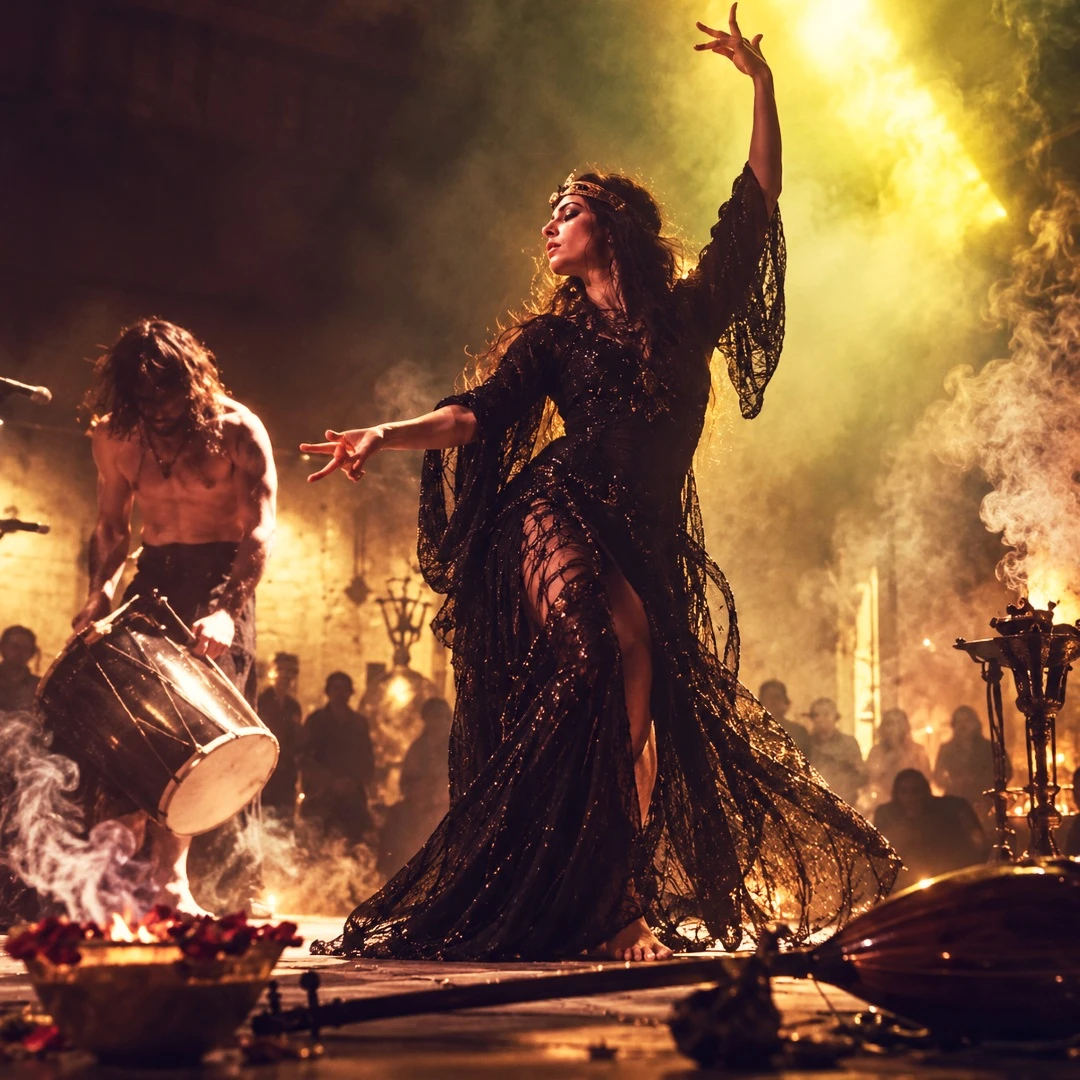
A woman in a black cloak approaches a seated man and begins to dance seductively, as if trying to captivate him with her presence. As the drumbeat intensifies, she sheds her cloak, revealing more of her body. She then drinks a liquid and passes it directly from her mouth to his in an intimate, ritualistic gesture. At the climax, she straddles him in a position of sexual dominance, transforming from dancer to the one in control.
At first glance, the scene might seem like an erotic performance with mystical overtones. However, the video’s title on the logos373art Instagram account frames it differently: "Lilith Invocation by Esoteric Order of Ouroboros."
Are we witnessing a theatrical interpretation of an ancient myth, or do the participants see this as a genuine magical ritual? And why are nudity, drink, dance, and sexual union used as tools to summon a legendary being?
Research into the video's origins led to documents revealing the group behind the ritual, their philosophy, and the methods they claim allow for the invocation of Lilith into the body of a woman.
Into the Womb: The Lilith Invocation Ritual in Berlin
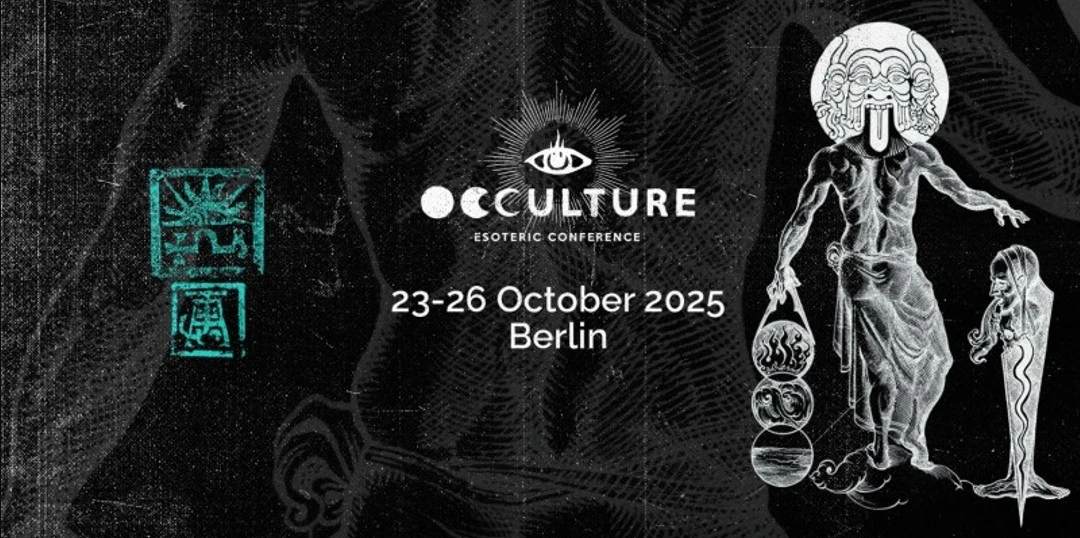
From October 23 to 26, 2025, Berlin hosted the Occulture Conference, an international gathering for those interested in ceremonial magic, esoteric traditions, and ritual arts. As part of its official program, the Esoteric Order of the Ouroboros presented a performance titled "Into the Womb: Lilith Invocation."
Organizers don’t describe their performance as ordinary theater, but as an act of invocation and embodiment. Participants believe they are calling forth the spirit of Lilith to manifest within the dancer, who serves as a vessel for the summoned entity.
The official description outlines the ritual’s elements: music and dance, flaming drinks, group chanting, magical symbols and geometric patterns, and techniques intended to induce trance-like or hypnotic states. The idea is that, at the peak of ecstasy, the dancer temporarily becomes the embodiment of Lilith, while the audience joins in chanting and dancing to generate what they call the "collective energy" needed for the invocation. Symbolically, the ritual aims to portray Lilith’s transformation over time from a terrifying demonic figure to a modern symbol of female empowerment, strength, and sexual independence.
The Priestess and the Team Behind the Performance
The official conference program listed four participants, most notably Dayenne Neroli, a performance artist and dance instructor who describes herself as a contemporary priestess practicing erotic and ritual arts. She played the role of "The Vessel," believed to embody Lilith during the ritual.
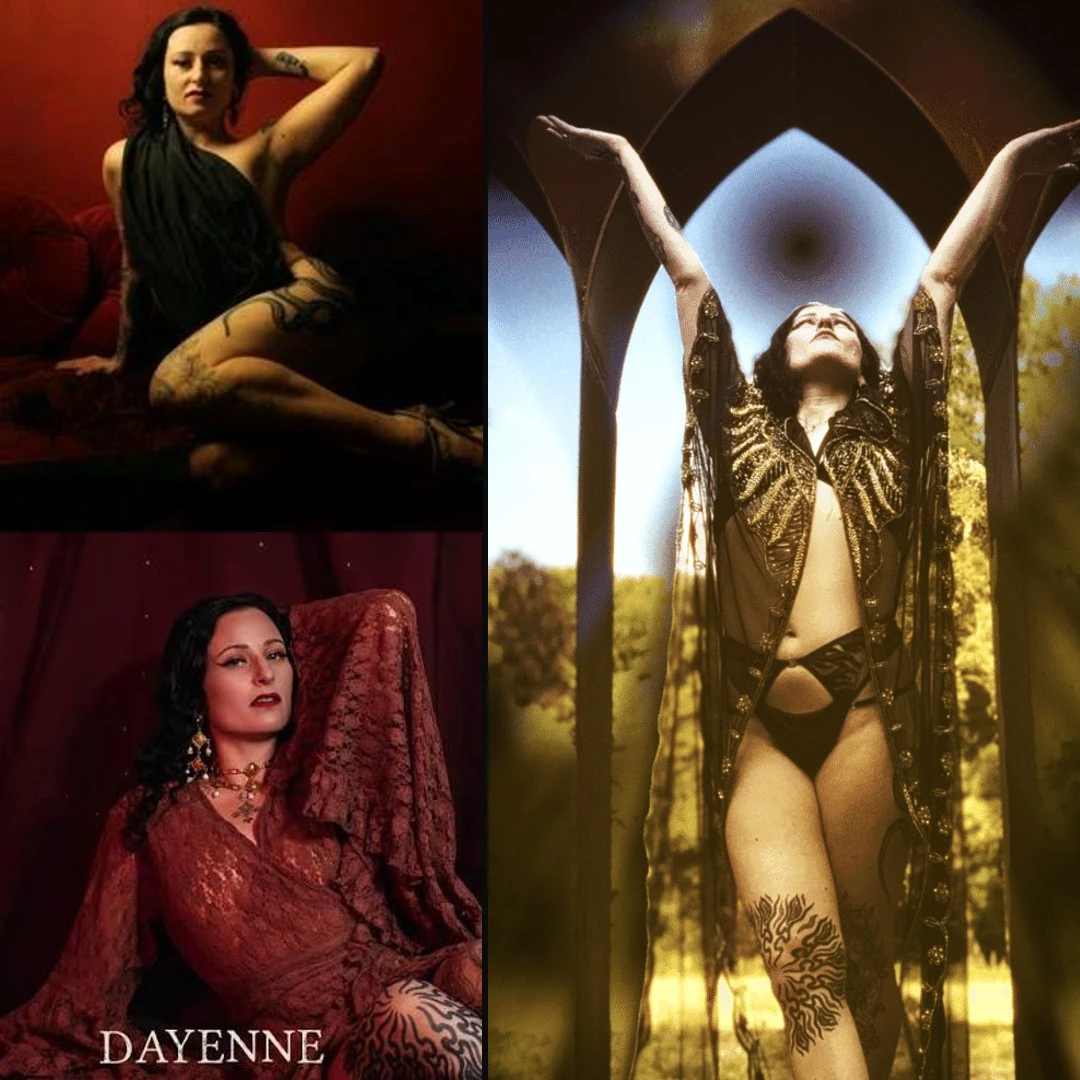
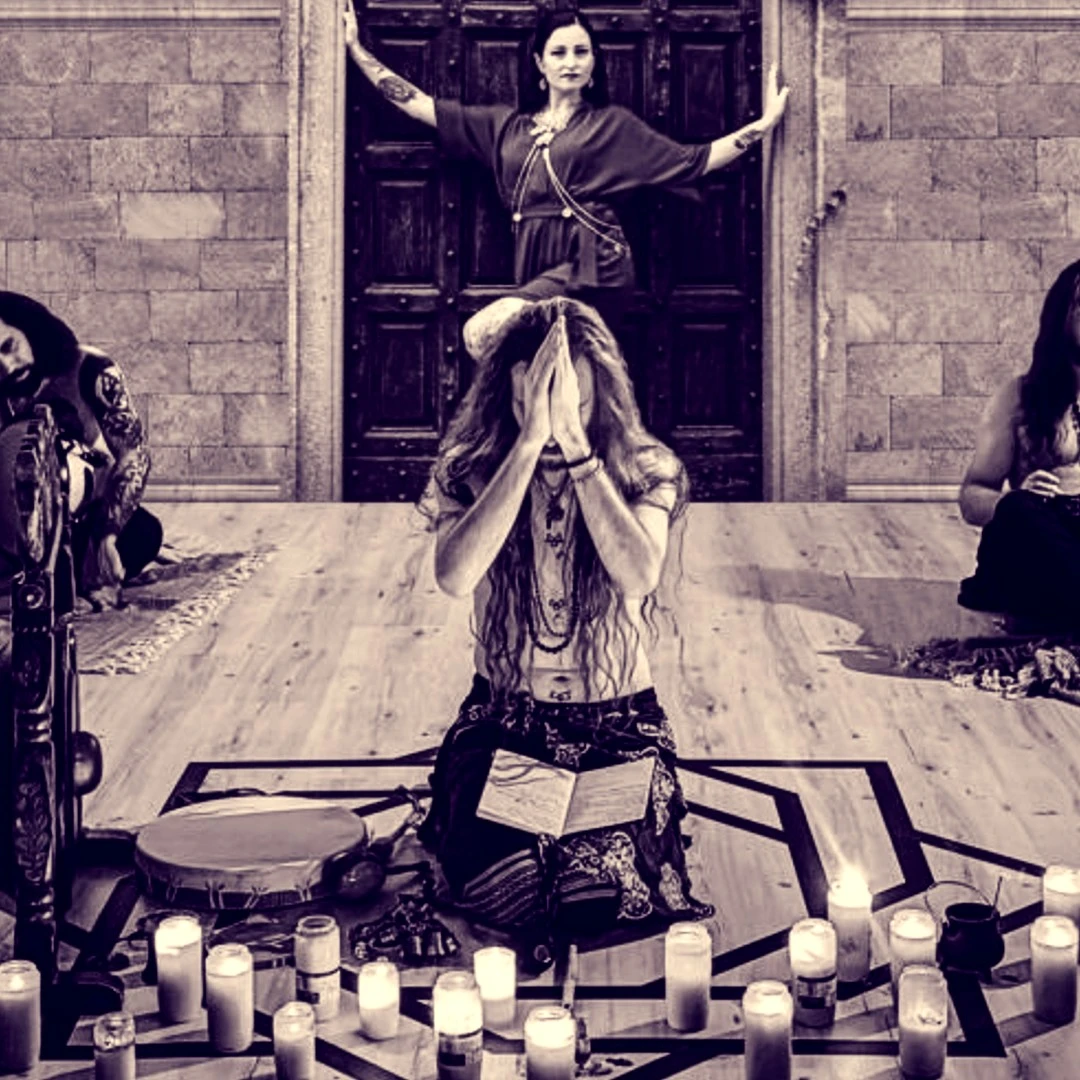
She was joined by Gabriel Garcia as the "Satyr", a mythical creature associated with lust—Jacob as the magician, and Daemonicreator as the owl. Each character played a symbolic role within the performance.
LOGOS 373 Workshop, the account that posted the video, was listed among the conference participants as a project specializing solely in ritual clothing and tools. They were not responsible for the performance itself.
Interestingly, in September 2026, Dayenne Neroli organized another event called "Salon Babalon," described as an evening of erotic magic featuring sensual rituals, dance, incense, and practices inspired by the goddess Babalon in Thelema, a religious and esoteric philosophy founded by Aleister Crowley, centered on discovering and fulfilling one's true will.
This connection sheds light on the esoteric environment where Lilith invocations intersect with modern Western sex magic.
Lilith: The Woman Who Refused to Submit to Adam
To understand the image of a woman on top of a man, we need to look back at the myth that gave rise to Lilith as a symbol of sexual rebellion. The name Lilith has roots in ancient Mesopotamian traditions, where night spirits and demons were known by similar names like Lilītu. Over time, her image evolved in Jewish literature, where she became associated with seduction, erotic dreams, and threats to newborn children. The most famous version of her story appears in the medieval Jewish text known as the 'Alphabet of Ben Sira,' which dates back to the 9th or 10th century CE.
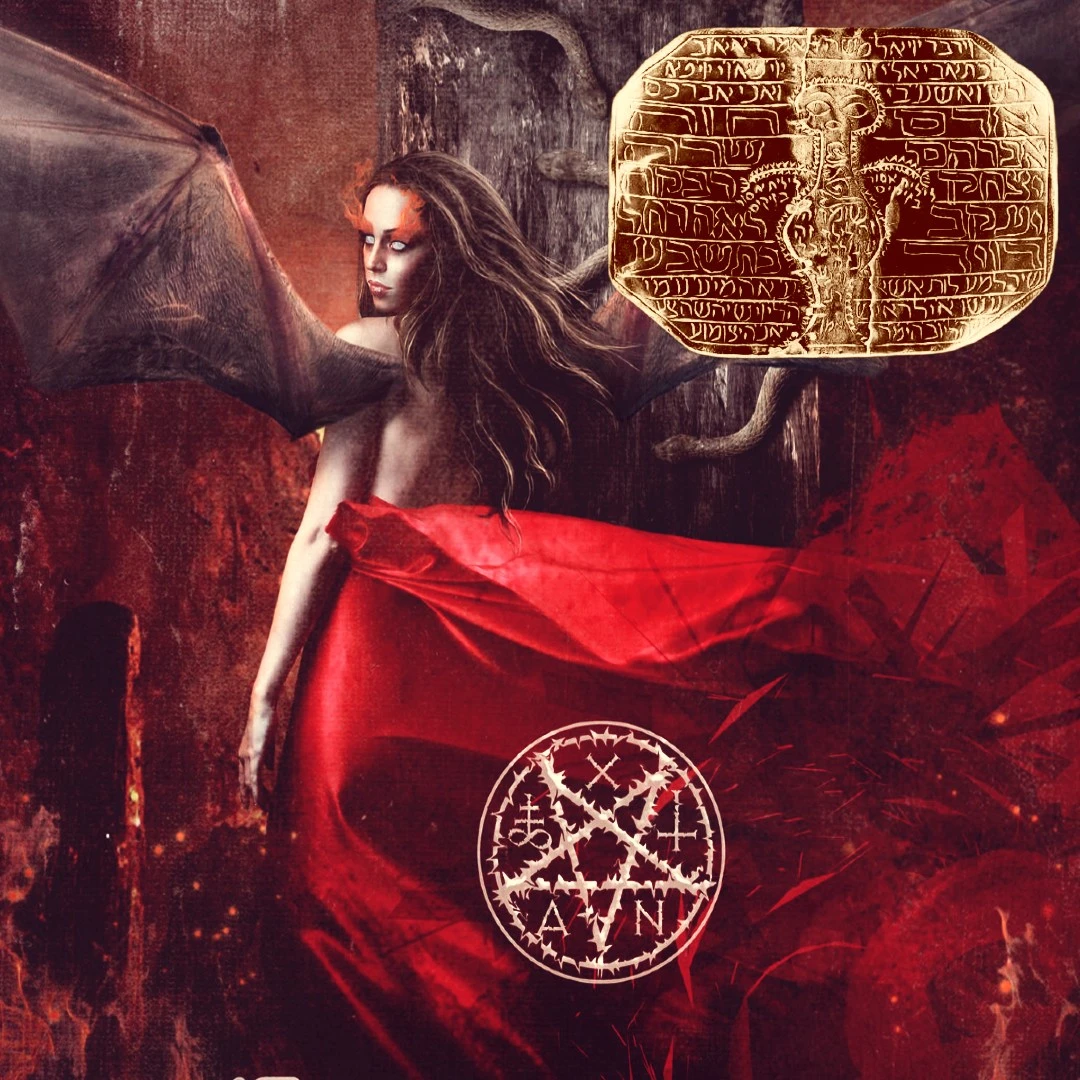
According to the legend, God created Lilith from the earth, just like Adam, making her his first companion before Eve. Conflict arose when Adam insisted on being dominant during sex, while Lilith refused to submit, arguing that they were equals since they were made from the same material. When Adam persisted, Lilith spoke the sacred divine name and left Eden, refusing to return or submit. This story is not part of Genesis but is a later folk tale that became the foundation for Lilith’s image as a woman who defies male authority.
In this context, the woman-on-top position in the modern ritual can be seen as a symbolic reenactment of the struggle between Adam and Lilith: the woman who once refused to be beneath the man now takes the upper position, asserting control over the relationship.
Wine and Seduction in Zoharic Texts
There’s another curious parallel between the video and a passage from the Zohar, a foundational work of Jewish Kabbalistic mysticism. In Volume 1, page 148a, there’s a symbolic story about a malevolent female spirit who adorns herself to seduce men. She approaches a man, kisses him, and offers him wine. After he drinks and follows her, she sheds her adornments, having succeeded in her seduction, before revealing her terrifying face. This scene is associated with evil forces in Kabbalistic thought, and some commentators have linked it to Lilith, though the text itself doesn’t name her explicitly.
The similarities to the video are striking: a seductive woman, a man succumbing to her allure, a drink, gradual undressing, and then a sexual encounter.
Did the ritual designers borrow these symbols from the Zohar?
There’s no direct evidence for that, but the comparison shows that the combination of seduction, drink, and the female body as representations of nocturnal forces has deep roots. As for the liquid the woman transfers to the man’s mouth in the video, its exact nature isn’t clear just from watching, though the official program mentions the use of flaming drinks, meaning alcohol, in the ritual.
When the Priestess Becomes Lilith
The ritual’s title uses the term 'Invocation,' a key concept in ceremonial magic. While 'Evocation' typically refers to summoning an entity as a separate presence, 'Invocation' means inviting a divine or spiritual force to manifest within the practitioner. In the ritual performed by the Ouroboros group, Lilith isn’t expected to appear before the dancer; rather, her spirit is believed to enter the dancer’s body. This explains the use of the cloak, the dance, and the gradual undressing as markers of transition from ordinary identity to the ritual persona. When the priestess reaches a trance state, she is thought not just to represent Lilith, but to temporarily embody her. Her interaction with the man is seen as an expression of the invoked feminine power. Still, feeling possessed or entering a trance doesn’t prove that a supernatural spirit has actually taken over the body.
Babalon: The Sacred Feminine in Crowley’s World
Although the ritual centers on Lilith, some of its symbols recall another central figure in Thelema: Babalon. The British occultist Aleister Crowley drew inspiration for this figure from the 'Whore of Babylon' in the Book of Revelation, but reinterpreted her as a sacred feminine force symbolizing sexual liberation, transcendence of the ego, and spiritual union.
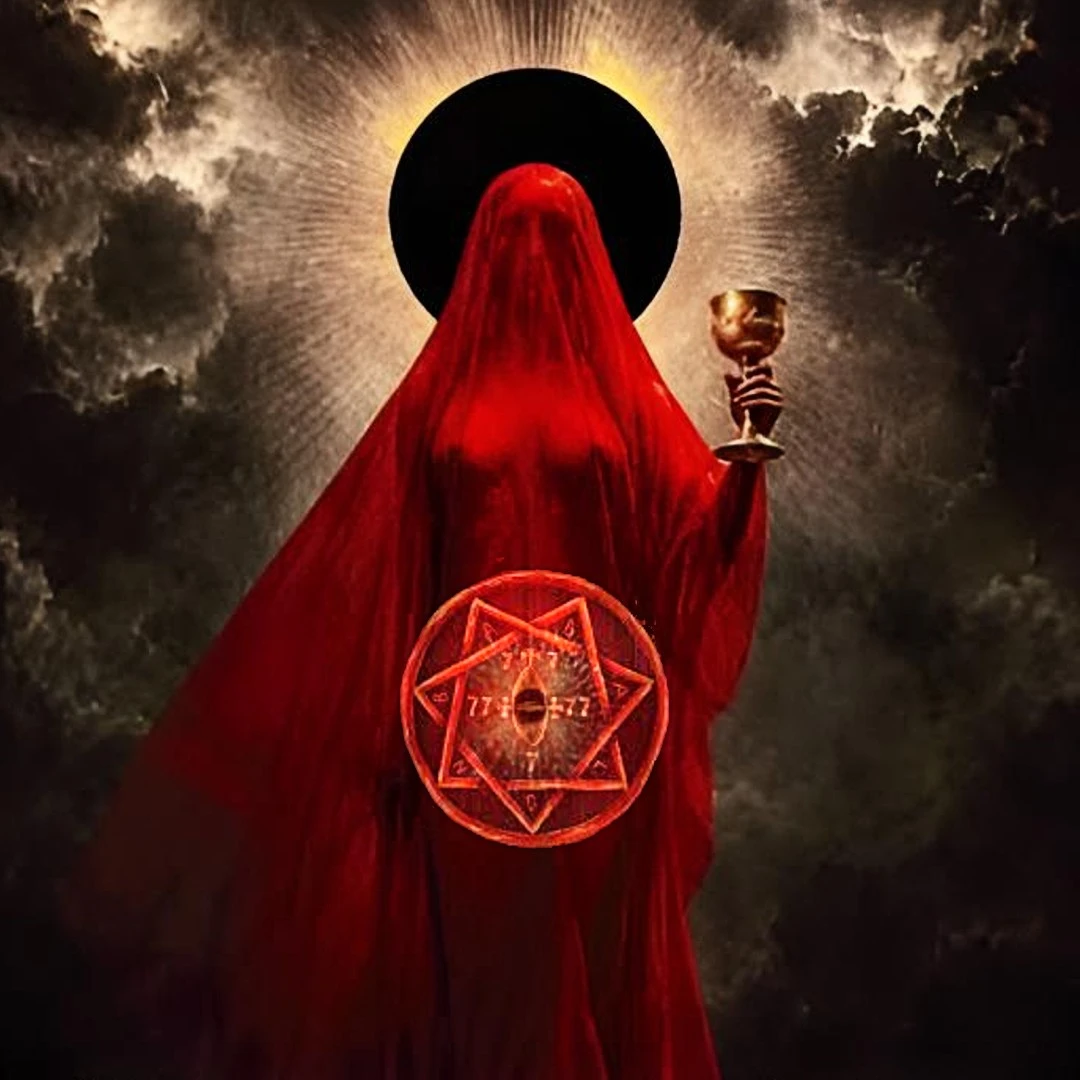
Babalon is associated with the Holy Grail and the 'Scarlet Woman,' a title Crowley gave to some of his sexual and magical partners, whom he saw as earthly representatives of this feminine power. In certain Thelemic rituals, the union of man and woman represents the meeting of opposing cosmic forces, with sexual relations serving as a symbolic means to achieve a greater spiritual union. Elements of this appear in Crowley’s writings, including 'The Supreme Ritual' published in 1913, which features a priest, a priestess, music, dance, wine, and the invocation of Babalon and the Beast.
Still, Lilith and Babalon shouldn’t be conflated. Lilith’s story evolved through Mesopotamian and Jewish traditions, while Babalon is a modern Thelemic reinterpretation of a biblical figure. However, some contemporary practitioners see them both as icons of untamed femininity, sexual desire, power, and liberation. This helps explain why priestess Dayne Neroli is interested in both Lilith and Babalon rituals, without assuming they are the same entity.
The Impact of Music and Dance on the Presence of Entities
The ritual relies on escalating rhythms, dance, and repetitive movements—methods that can influence a person’s attention and sense of self, especially when combined with religious expectation and group emotion. Studies in psychology and neuroscience have explored the link between repetitive rhythms and altered states of consciousness, including trance and ritual ecstasy.
A scientific review published in 2025 in the Annals of the New York Academy of Sciences noted connections between repetitive drumming patterns and certain changes in subjective experience and awareness, though the precise neurological mechanisms remain under investigation.
As a result, participants in a Lilith ritual may feel they are experiencing a spiritual presence or a shift in identity, shaped by the interplay of music, movement, suggestion, and belief.
However, this doesn't prove that Lilith's spirit actually possessed the dancer, or that some supernatural force was transferred to the man.
In summary, Lilith was the woman who refused to submit to Adam and left paradise in ancient legend. In later Jewish tradition, she became a night creature associated with seduction and evil spirits. For some modern practitioners, Lilith has evolved into a symbol of feminine power, unrestrained desire, and rebellion against authority.
The 'To the Womb' ritual reflects these transformations, presenting the dancer as a vessel believed to receive Lilith's spirit. Through music, symbols, and sensual movements, participants aim to reach a state of ecstasy and heightened emotion.
Perhaps the most intriguing aspect is how the ritual turns the relationship between man and woman into a symbolic confrontation that echoes the Lilith and Adam myth. In the eyes of its practitioners, the woman who once refused to be subservient returns to assert her dominance through her body and allure. What unfolds is a blend of myth, sexuality, magic, and belief, where Lilith transforms from a frightening figure in bedtime stories into a symbol invoked through dance, ecstasy, and empowerment.
This raises the question: Are participants seeking something beyond the natural world, or has Lilith simply become a name that allows them to explore the desire, control, and liberation hidden within the human psyche?


