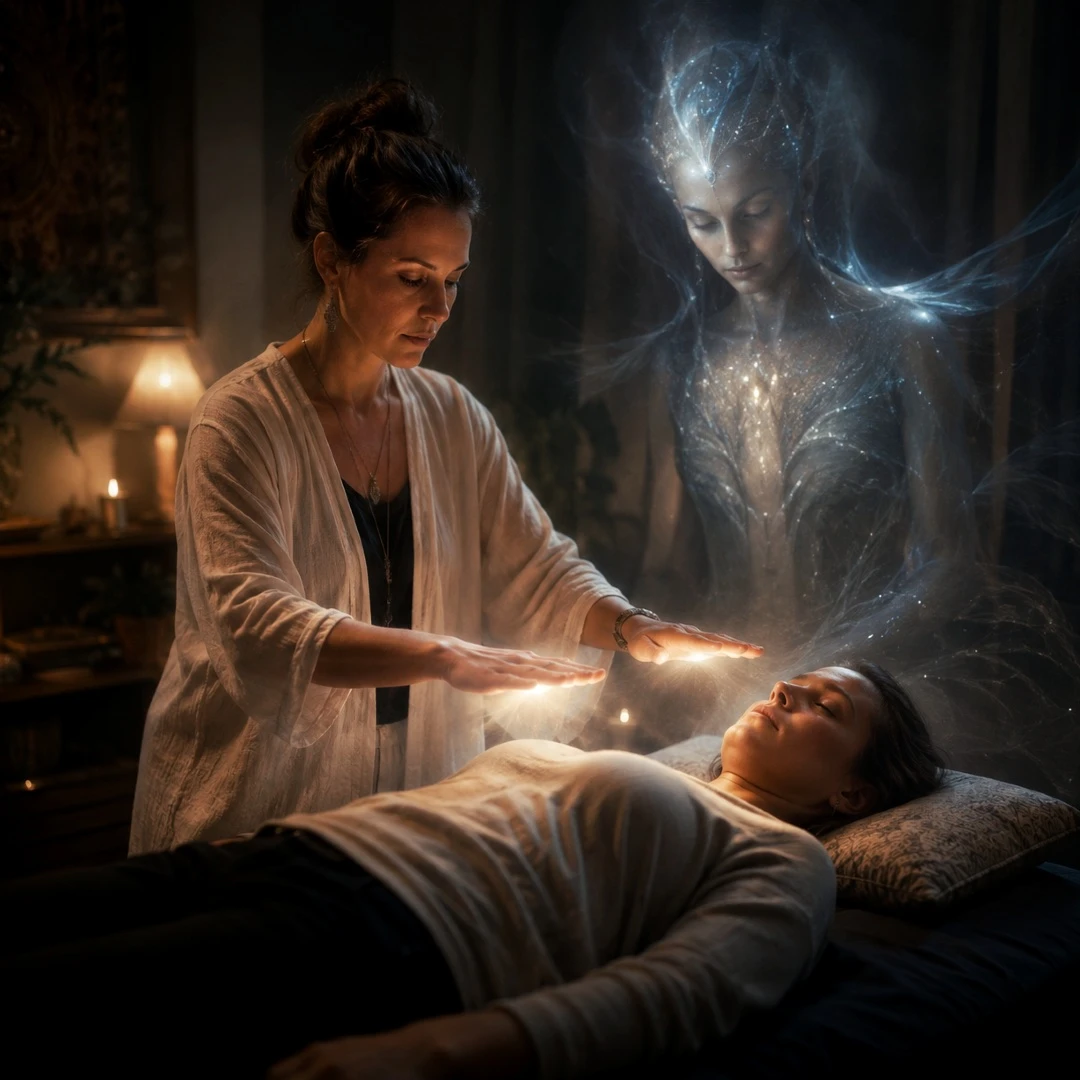
A quiet room, soft lighting, calming music, and someone lying down as a practitioner gently places their hands on or just above the body, this is the typical scene of a Reiki session. Promoted as a way to channel or direct 'energy' to help restore balance to the body and mind, Reiki is often associated with tranquility and relaxation. Yet beneath this serene surface lies a lesser-known and more unusual side to the practice.
In some modern Reiki schools, practitioners believe they are not working alone. There is talk of spiritual guides, angels, ancestral spirits, ascended masters, spirit animals, and other unseen entities participating in or guiding the healing process. On the other hand, there are also accounts of unwanted entities, known as Spirit Attachments, which are believed to attach themselves to people and influence their well-being. Were these entities always part of Reiki from the beginning, or did they become associated with it later as Reiki spread from Japan to the West?

What is Reiki?
Reiki is now offered as a form of complementary therapy based on the idea that an invisible life energy can be channeled from the practitioner to the recipient. In a typical session, the practitioner lightly places their hands on various parts of the body or holds them just above the body without direct contact.
The most well-known form of Reiki is associated with the Japanese practitioner Mikao Usui (1865–1926), who developed the Usui Reiki Ryōhō healing method in the 1920s. His teachings were passed down through his students, most notably Chujiro Hayashi. Later, Hawayo Takata played a key role in introducing Reiki from Japan to Hawaii and North America in the 1930s.
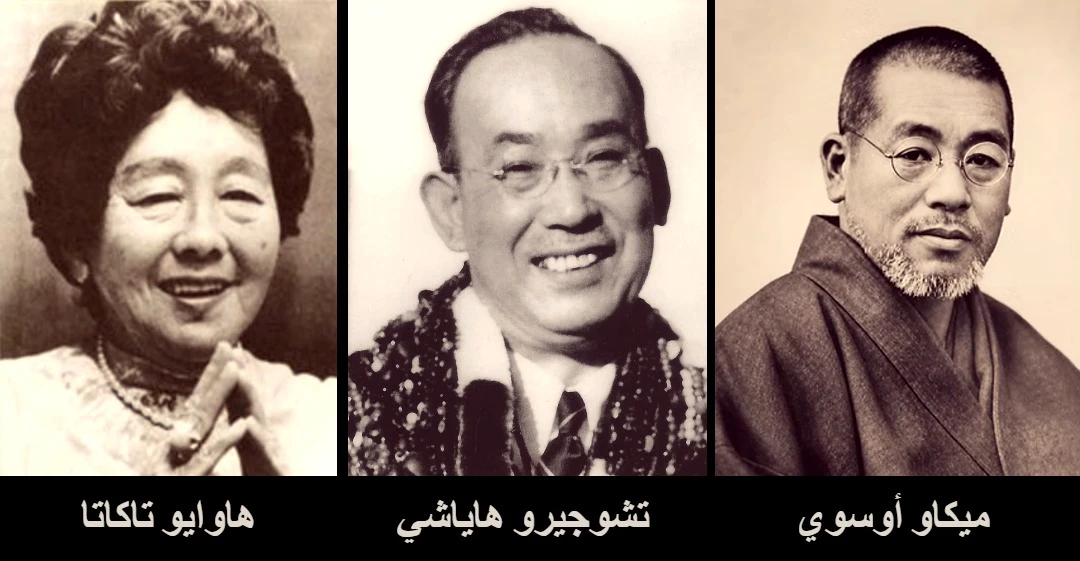
Historical studies reveal that the story of Reiki is more complex than the legendary accounts that later spread in the West. In fact, the term 'Reiki Ryōhō' (Reiki healing method) was already in use in Japan for certain healing practices even before Usui.
As Reiki spread from one culture to another, its concepts evolved. In the West, Reiki became more than just a set of Japanese techniques, meditations, and ethical principles, it began to blend with ideas from modern spirituality, the New Age movement, chakras, and auras. Reincarnation and Crystal Healing angels and spiritual guides.
Did Usui summon spirits?
There is no historical evidence that 'entity invocation' was a core part of the original Usui Reiki system. In fact, one of the largest Western Reiki organizations, the International Center for Reiki Training, openly acknowledges that the concept of Reiki guides was not part of the original teachings and was introduced later by Western practitioners.
Recent studies on the phenomenon indicate that the concept of the 'Reiki guide' became more prominent in Western Reiki during the 1980s, likely emerging from the blending of Japanese practices with various Western esoteric and spiritual beliefs.
So, it's inaccurate to simply dismiss Reiki as just a ritual for Spirit Summoning , Some practitioners don't believe in the existence of spirit guides at all, while others see Reiki simply as a method for meditation, relaxation, and complementary therapy. However, in other branches, the presence of the unseen world becomes much more apparent.
The Concept of Attunement
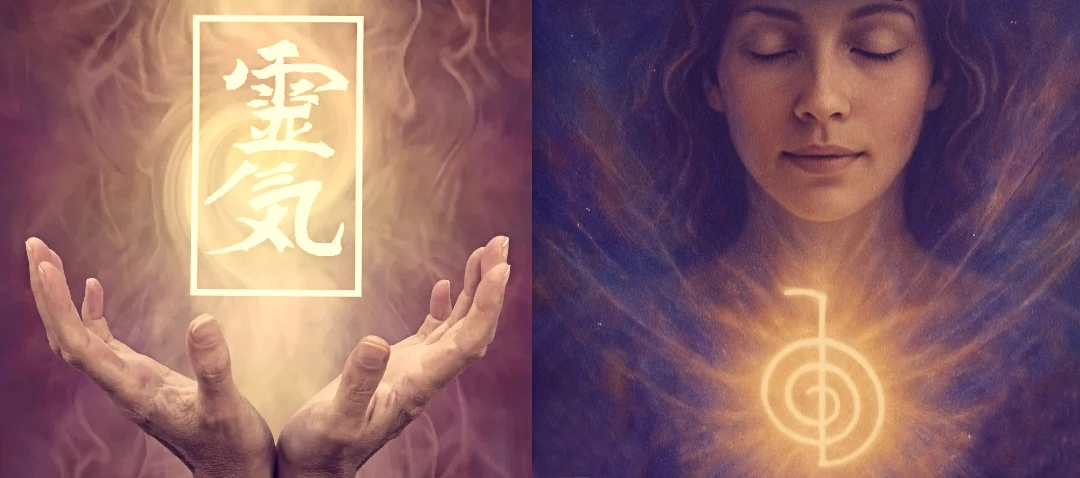
One of the core ideas in most Reiki schools is known as Attunement, a process in which a Reiki Master initiates a student to enable them according to belief to receive and channel Reiki energy.
Reiki schools describe this as more than just a technical lesson; it's seen as a transformation of the student's 'energy pathways' and a way to connect them to the Reiki source. Some students report sensations of heat or tingling during the process, while others describe seeing colors, images, figures, or even 'spiritual beings.'
At advanced levels, Reiki symbols are introduced. Practitioners use these symbols to focus or 'direct' energy, including one associated with what’s called distance healing.
However, the use of these symbols doesn't necessarily mean Reiki is a form of magic or spirit summoning; interpretations and practices vary widely between different schools.
Reiki Guides: The Unseen Helpers
In some Western Reiki traditions, it's believed that practitioners or recipients are accompanied or assisted by 'spiritual guides.' Some practitioners think these guides may have been humans in past lives, spiritual healers, or entities that have reached a higher state of existence. They claim these guides can help direct energy or point out areas that need attention during a session.
Interestingly, this belief is no longer entirely fringe in some Reiki circles. A 2025 study published in Complementary Therapies in Medicine surveyed Reiki practitioners, mostly in the UK and US, many of whom were Reiki Masters. Of those surveyed, 79% said they believe 'Reiki guides' provide guidance, support, and assistance. Most also viewed Reiki as not just a healing method, but a practice with a spiritual dimension.
Of course, this doesn't mean the study proved these guides exist; it simply reports what practitioners believe, not what exists outside their personal experience.
What Do These Entities Bring?
When practitioners talk about helping entities, they don't usually describe them as spirits summoned just for conversation. Instead, these entities are associated with specific roles—such as helping to identify 'energy imbalances,' offering protection or support, or delivering messages about a person's life, traumas, relationships, or spiritual path.
In schools influenced by New Age ideas, this concept can extend to 'raising vibrations,' cleansing the aura, activating chakras, clearing past energies, resolving so-called 'karmic knots,' and connecting a person to their higher self.
It's important to note that all these interpretations are part of the belief systems of these schools and are not scientifically proven healing methods.
When Angels Enter Reiki
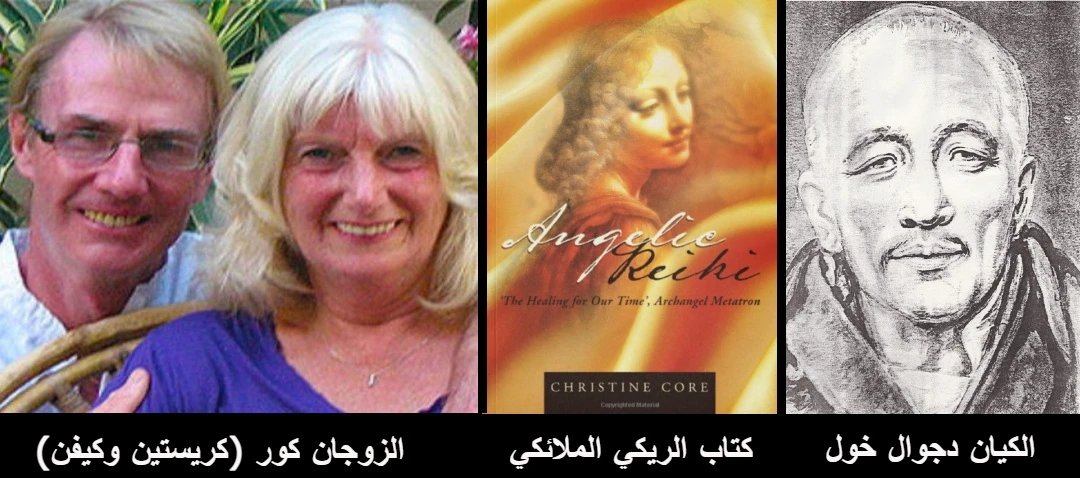
One of the clearest examples of Reiki's shift toward working with entities is 'Angelic Reiki.' This is not an ancient Japanese tradition, but a modern system founded by Christine & Kevin Core in 2002. According to the official website, the system was developed based on the founders' belief in guidance from a spiritual figure called Djwhal Khul and principles associated with the archangel Metatron. Here, angels are not just a side note, they become a central part of what’s called the 'Angelic Kingdom,' which is integral to the process.
However, there’s an important distinction: proponents of Angelic Reiki themselves avoid describing the process as 'summoning' in the magical sense. They say the practitioner doesn’t choose which entity or energy to bring in; instead, they act as a 'bridge' and, according to their beliefs, leave the healing process to the angelic realm.
So we're dealing with a linguistic gray area: what an outsider might call 'summoning,' a practitioner might refer to as 'opening the channel,' 'making contact,' or 'allowing a presence.'
Not all of them are angels.
Modern Reiki isn't limited to guides and angels. In some accounts, 'spirits of the dead and ancestors' are said to appear, offering protection or support. Practices influenced by shamanism may involve animal spirits or power animals. In New Age circles, there's talk of 'Ascended Masters'—figures believed to have transcended ordinary human existence and now able to help others from a higher spiritual plane. Some stories even go further, mentioning 'non-terrestrial' intelligences or entities.
While these ideas might seem far removed from traditional Japanese Reiki, they show just how much a single spiritual practice can absorb beliefs from a variety of systems over time.
A Strange Experiment: 40 Sessions and Six 'Seers'
In 2025, the journal Anthropology of Consciousness published a study titled 'Reports of Non-Physical Beings Assisting in Reiki Sessions.' It's one of the most unusual recent studies on Reiki.
Six participants, selected by researchers for their reported ability to perceive unusual visual or spiritual phenomena, observed 40 Reiki sessions, each lasting about half an hour. They recorded what they claimed to see or feel during these sessions.
The results were striking: the observers reported 'non-physical beings' or guides in the sessions, animal spirits in 35 sessions, angelic entities in 29, deceased individuals in 21, ancestors in 17, and non-terrestrial intelligences in 16. Names of archangels like Michael, Raphael, Metatron, and Gabriel also appeared, though less frequently. However, these numbers seem less surprising when you read the full study.
The study doesn't claim that scientists 'discovered angels or spirits in Reiki sessions.' Rather, it documents that people who describe themselves as able to perceive such beings reported their presence.
More importantly, the actual agreement between observers about the types of entities was low in most cases. The average level of agreement was very weak, and the researchers acknowledged several methodological issues, such as the lack of a proper control group, the influence of personal beliefs and expectations, and the fact that some observers sat near each other. They explicitly advised caution in interpreting the results.
So the real significance of the study isn't that it proved the existence of an unseen world, but that it documented how present this idea is in contemporary Reiki experiences.
The Dark Side: Spiritual Attachments
Perhaps the most unusual aspect of the study wasn't the appearance of 'helpers,' but the mention of what observers described as 'Unhelpful Beings.' This brings up the concept of Spirit Attachment.
According to this belief, an entity or spirit can attach itself to a person, draining their energy or affecting their mood, body, or thoughts, often without the person realizing it. This idea isn't unique to Reiki; similar concepts exist in many cultures and spiritual practices.
In the study, the 'seers' reported these attachments in a significant number of sessions, sometimes describing them as being around the head, neck, or shoulders, or causing a 'blockage' in what they call the energy field.
For some practitioners, Reiki shifts from simply channeling positive energy to something more like detecting and removing unseen presences.
But again, these are the beliefs and descriptions of participants, not medical diagnoses or experimental proof that an independent entity has actually attached itself to someone.
Why Do Some People See Entities During Sessions?
Psychology offers several explanations that don't require the existence of external beings. A Reiki session includes many elements that alter a person's normal mental state: calm, closed eyes, extended relaxation, music, steady breathing, the expectation that something will happen, and focused attention on inner sensations.
In such settings, mental imagery can become more vivid, and shapes, colors, faces, or scenes may appear, much like the moments between wakefulness and sleep.
Expectation also plays a significant role. If someone enters a session already believing that angels or guides might appear, the brain is primed with a template it will use to interpret any vague image or unfamiliar sensation.
This doesn't necessarily mean the person is lying, the experience can feel completely real to them on a personal level, even if the explanation for its source is another matter.
This is the difference between saying, "I saw a being," and saying, "There was a being in the room independent of my mind."
The first is a description of a personal experience, while the second requires evidence that can be verified outside the individual's own account.
Does Reiki really work?
Even setting aside the question of entities, the medical effectiveness of Reiki remains debated. The US National Center for Complementary and Integrative Health (NCCIH) states that Reiki has not been clearly proven effective for any health purpose. Studies on Reiki often suffer from poor quality and inconsistent results, and there is no scientific evidence for the existence of the "energy field" that underpins Reiki's core theory.
However, the picture isn't entirely one-sided. A 2024 meta-analysis covering 13 studies and 824 participants found reduced anxiety levels in some groups who received Reiki. Still, the variation between study results was very high, making the findings difficult to interpret with confidence. Improvements in relaxation and anxiety don't automatically prove that "universal energy" is being transferred; factors like comfort, personal attention, touch, expectation, and a calm environment could all contribute to the outcome.
In other words, someone may genuinely feel better after an experience, even if the supernatural explanation offered for it hasn't been proven.
"Healing Entities" in Islamic Culture
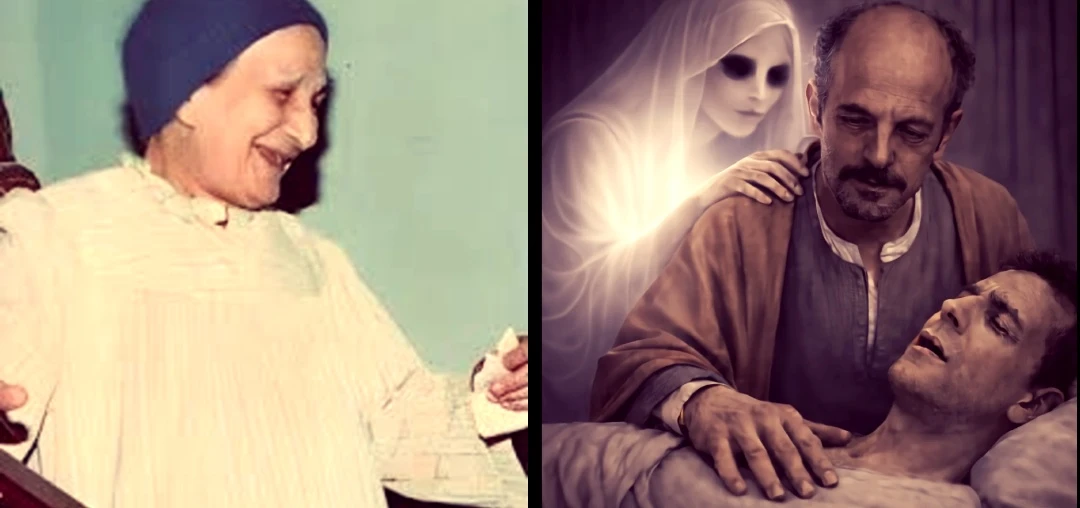
The idea of an invisible being assisting a healer isn't unique to Reiki—it appears in various cultures and belief systems. In Egypt, for example, Hajja Safsaf was known for speaking about a "guiding spirit" that helped her diagnose and treat patients, while Abu Kaf claimed that a "believing jinn" was behind his ability to heal the sick.
This is similar to the concept of Reiki guides, where the healer acts as a channel while the power or knowledge is attributed to an unseen entity. The name of this entity varies by culture, it might be a spirit, a jinn, an angel, or a spiritual guide. From an anthropological perspective, this reflects a recurring ancient idea: the healer is simply a medium for an invisible force believed to be the true source of healing.
Reiki or a Gateway to Another World?
What makes modern Reiki so unusual is that it no longer means just one thing. For some, it's a few minutes of calm and relaxation; for others, it's energy flowing through the hands. For someone else, it becomes a spiritual journey involving chakras, symbols, and guides. In certain schools, the universe itself is imagined as inhabited by a network of angels, teachers, and spirits believed to participate in the healing process. So when it comes to the question, "Does Reiki summon entities?"—there's no single answer.
In traditional Japanese Reiki, calling upon spirits or angels isn't required for practice. In several modern Western schools, however, unseen entities have become a clear part of both belief and practice.
What’s striking is that these ideas aren’t just scattered stories found on obscure corners of the internet. Recent studies show that belief in spiritual guides is widespread among many practitioners, and even anthropological research has begun documenting accounts of entities appearing during sessions.
However, documentation is one thing and proof is another. So far, there’s no independent scientific evidence that 'Reiki energy' exists as a physical field, let alone proof that the guide, angel, or spirit someone sees during a session actually exists outside their own consciousness.
About the Author