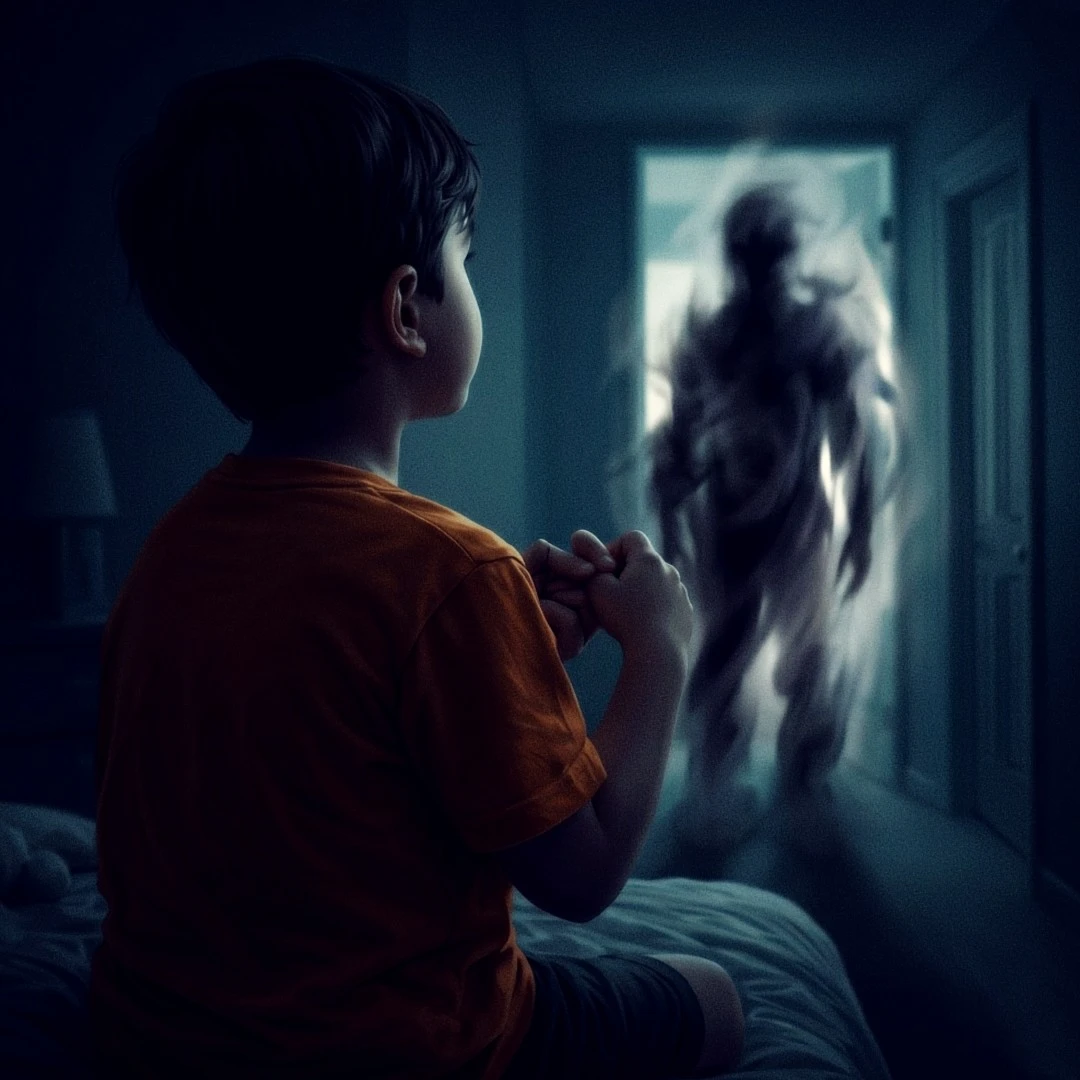
Sometimes, a story begins with a small, easily overlooked detail: a child staring into the corner of a room for a long time, sometimes smiling, sometimes growing tense, then pointing and saying, "Someone's here." At first, it's dismissed as a child's imagination. But what if these moments keep happening? And what if the child isn't the only one who notices "something"?
At this point, the family's concern turns into a bigger mystery: Could some children especially those with autism be more sensitive to things we can't perceive?
Autism: A Different Way of Experiencing the World
Before jumping to supernatural explanations, it's important to lay out the science. Autism isn't a disease in the traditional sense; it's a neurological difference in how information is processed. Many autistic people experience the sensory world differently: sounds may seem louder, lights brighter, details more pronounced, and subtle changes in the environment more noticeable.
Some studies suggest that a significant number of people on the autism spectrum have atypical sensory experiences—either heightened or reduced sensitivity, or a different way of perceiving signals around them. In other words, an autistic person might pick up on things the rest of us overlook—not because they're "seeing another world," but because they process reality through different perceptual filters.
But... is that explanation always enough?
The real challenge begins when these unusual perceptions become something more concrete: a presence, a face, a figure , something with features and behavior.
At this point, parents are faced with two equally unsettling possibilities:
Either the child is experiencing a psychological disorder... or there's something happening that can't be easily explained.
Even medical literature warns against jumping to conclusions:
Not every child who says they "see someone" is experiencing psychosis. Distinguishing between imagination, atypical expression, sensory experience, and true hallucination isn't always straightforward, especially in children and those on the autism spectrum. This is where things get murky, and the mystery deepens.
Daniel's Story: The Man in the Cowboy Hat
One widely discussed account comes from a mother named Melissa, who shared the story of her autistic son, Daniel. From a young age, Daniel would stare at the ceiling and react as if someone was there. This wasn't a one-off; it happened almost daily. Over time, he began drawing an old man wearing a cowboy hat, then pointing to the drawing and saying, "He's here," before pointing up at the ceiling as if the drawing was just a reflection of something real. Naturally, his mother was concerned. When she took him to doctors, she was shocked when they suggested he might be experiencing psychosis, even though he showed no other clear symptoms. But Daniel's story didn't end there.
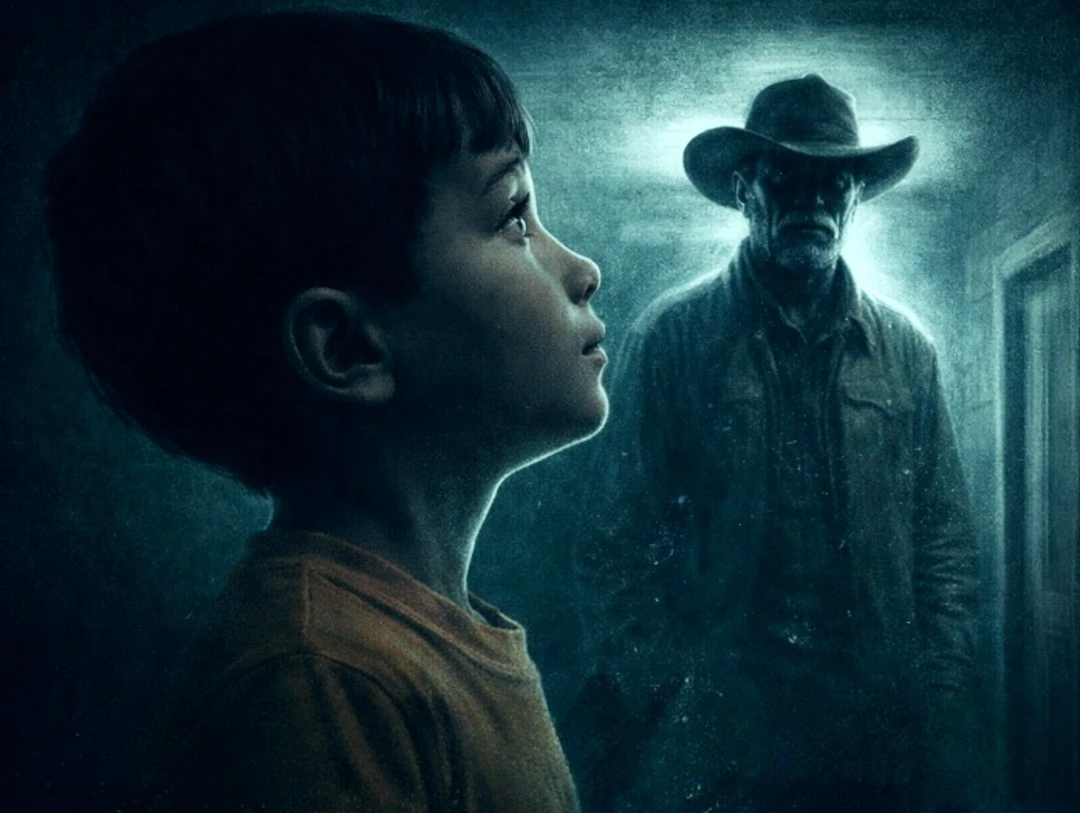
According to Melissa, Daniel wasn't the only one who saw the man. His grandmother claimed to have seen him, his younger brother confirmed it, and even a neighbor described seeing the same figure.
Soon, other stories began to circulate around the house:
Doors closing on their own, objects moving, and a general feeling that something was "off" about the place.
Over time, Melissa says the strange occurrences lessened when the family stopped resisting the idea that something unusual was happening.
Was it simply a psychological acceptance... or something else? No one has a definitive answer.
Ellie’s Experience: The Entity That Moved With the Family
In another case, the story began with a young autistic girl named Ellie, who claimed to see people no one else could. Her parents, Billy and Ray, were genuinely frightened. They took her to a doctor and then to a psychologist, who found no signs of schizophrenia or psychosis, describing her instead as an imaginative child. But the strange events didn’t stop there.
The family decided to move to a new house, hoping the problem was tied to their old home. But what happened next was even stranger: the phenomenon followed them.
Ellie was no longer the only one experiencing unusual events. Her mother began having recurring dreams about an Asian man, her father felt mysterious touches while sleeping, and objects in the house started moving or changing places on their own.
Later, the mother sought help from someone who claimed to have spiritual abilities. According to the account, this person spoke of a man named Ron who had died during a robbery. He said Ron had followed the girl because he 'wanted to be seen and heard.'
The advice was simple and a bit unusual: "Talk to him and ask him to leave." The mother says she did just that, and afterward, she heard a loud noise in the house. Gradually, the strange occurrences subsided. 'Ron' didn't disappear completely—but, as she puts it, his presence became much less disturbing.
So what’s really going on here?
Stories like these and there are many leave us with a real dilemma:
- On one hand, there’s no scientific evidence that people with autism can see entities from 'another world.'
- On the other hand, some personal experiences are hard to dismiss as pure imagination, especially when they happen repeatedly or involve more than one person.
Science offers several possible explanations:
Differences in sensory processing might make some individuals more attuned to subtle details.
- Stressful environments can lead to distorted perceptions.
- For children, imagination can sometimes feel incredibly real.
- Family influence can turn a single experience into a shared one.
Still, there’s always that lingering sense that some cases defy easy explanation. Could they be 'picking up' on something?
Maybe the real question isn’t: 'Do they see ghosts?'
But rather: 'Do they have a different way of perceiving reality, one that lets them notice when something’s off before anyone else does?'
The human brain doesn’t show us reality as it is; it filters, simplifies, and fills in the gaps. But what if those filters work differently or are weaker?
In that case, the world might seem sharper, less stable, and filled with more unexplained things.
What others see as a 'presence' could actually be a complex mix of perception, sensation, and interpretation or maybe even something more.
Between science and the unknown
The undeniable truth is that science hasn’t proven the existence of hidden entities in these cases. But science also hasn’t fully explained every human experience. It’s in this space between certainty and mystery that stories are born.
Stories of children who saw something first then others followed. Tales of homes where something invisible changed. Families caught between two explanations: a psychological disorder, or an unexplained presence.
An open question with no final answer:
Are people with autism more attuned to 'another world'?
Scientifically, there’s no evidence for this. But real-life experiences suggest otherwise: there are stories, and there are questions that still have no clear answers.
Maybe these individuals don’t see 'beyond our world' but sometimes, they might see this world in a way the rest of us can’t.
And in that small gap between two ways of seeing, our greatest fear can take root: doubt.
About the Author