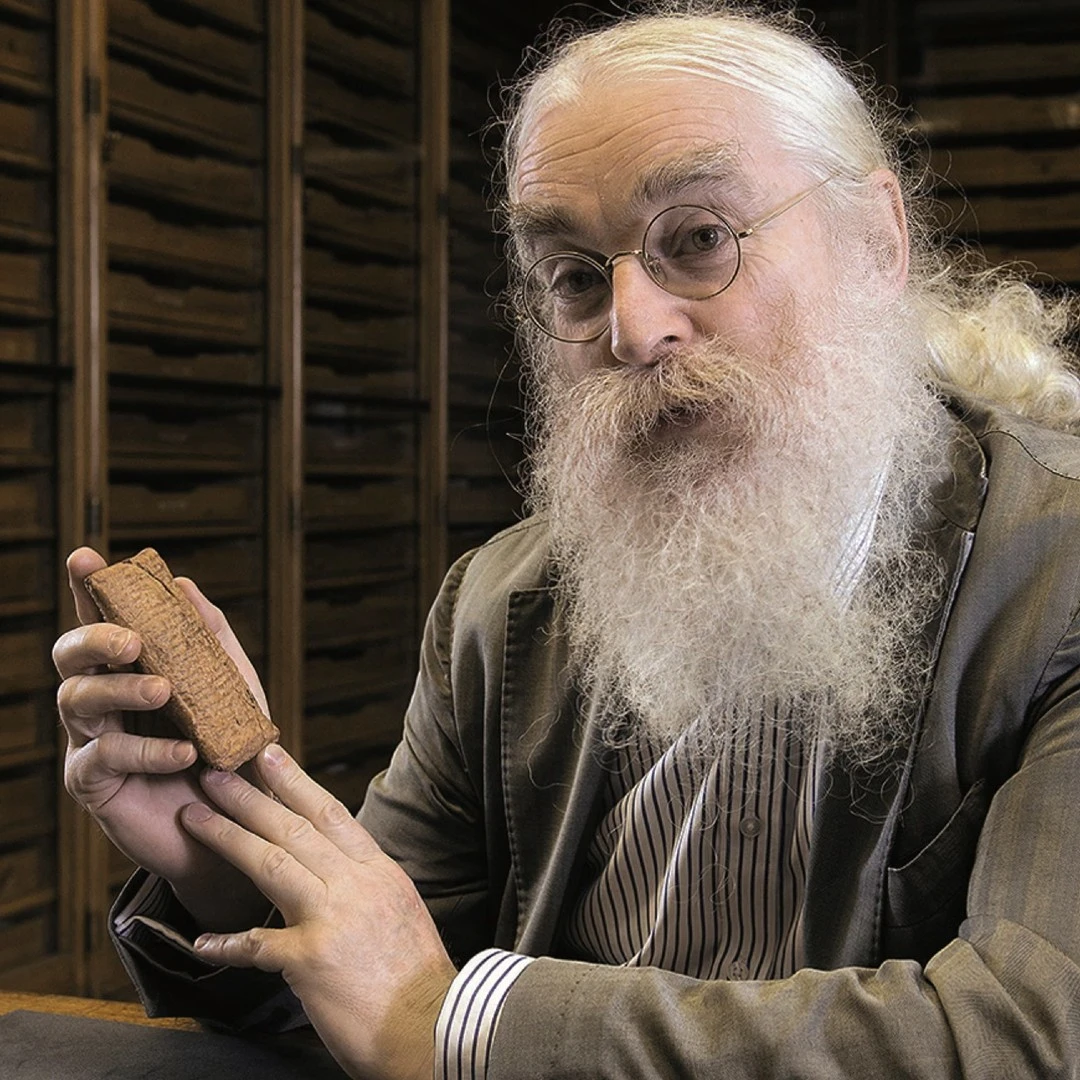
In one of the most fascinating discoveries in the history of ancient paranormal studies, Irving Finkel, curator of the Middle East department at the British Museum, re-examined a small Babylonian tablet dating back to around 1500 BCE. He found that it not only contains a ritual text about spirits, but may also feature the oldest known drawing of a ghost in history. The tablet has been part of the British Museum’s collection since the 19th century, but its full significance went unrecognized for a long time.
What does the tablet show?
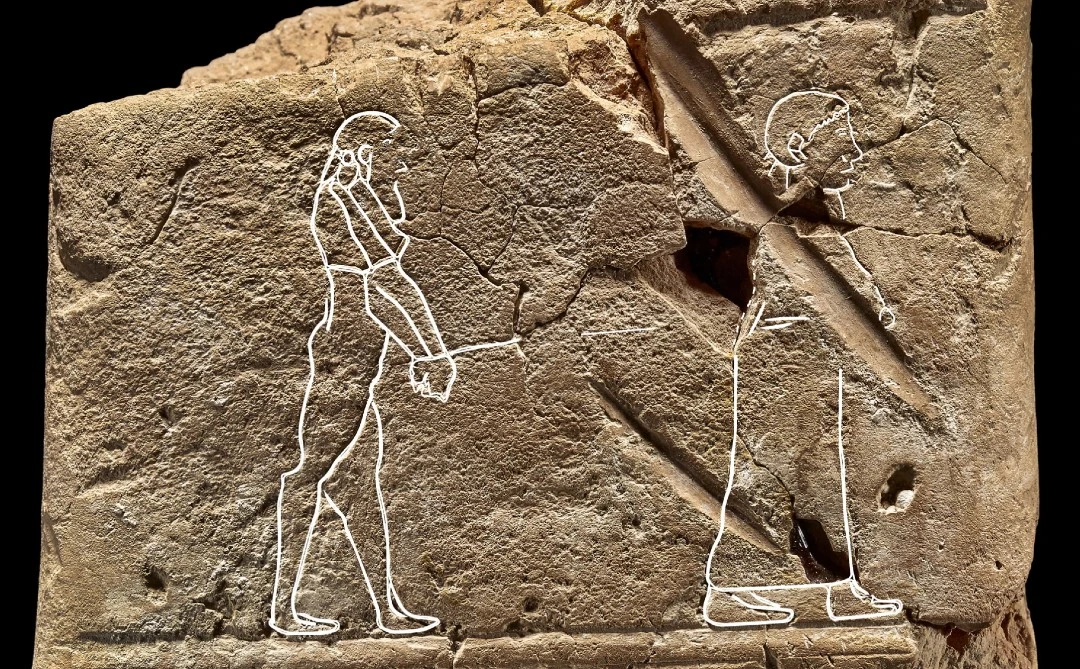
A close inspection of the tablet reveals faint lines depicting a bearded man’s ghost, looking somber or weary, being led by a woman with a rope toward the underworld. This isn’t just decorative art—it’s a visual explanation of the ritual described in the accompanying text. That’s what makes this artifact so remarkable: it doesn’t just describe ghosts, it actually shows one, helping us understand the fate the Babylonians intended for this troubled spirit.
Not your typical exorcism
Interestingly, the text doesn’t describe a straightforward evil spirit. Instead, it tells of a male ghost who seems to be stuck, haunting or disturbing the household. Rather than banishing him with force, the ritual reveals a completely different approach: the ghost isn’t portrayed as a demonic being, but as a soul whose journey isn’t finished. The Babylonian solution was to provide what he was missing, so he could finally move on.
The ghost needs a companion
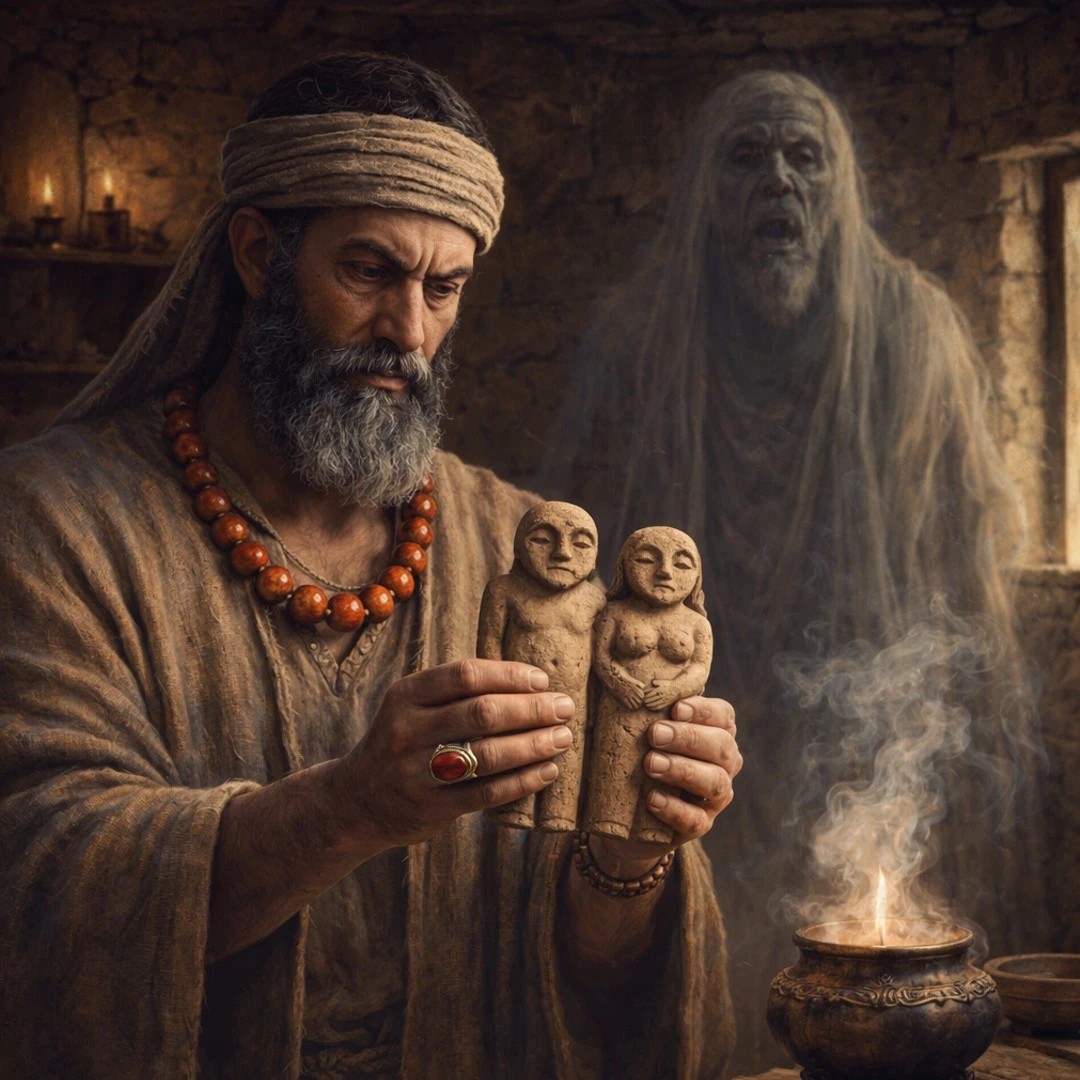
This is where the ritual becomes both unusual and strangely beautiful. The exorcist would craft two figurines—one male, one female—and prepare them for their roles. The man is depicted as if he’s setting out on a journey, while the woman represents stability and companionship. This wasn’t just symbolic; it was an attempt to give the ghost a companion to accompany him to the underworld. In other words, the Babylonians weren’t just trying to get rid of the spirit—they wanted to solve the reason he lingered.
Beer was part of the ritual
Beer appears alongside other ritual items in the ceremony. Its presence is far from incidental—beer in Mesopotamia was more than just a daily beverage; it played a role in offerings and funerary rites. Here, it likely served as sustenance for the soul’s journey or as an appeasing offering to help the spirit depart peacefully, rather than being a mere ritual accessory.
The statue as a vessel for the spirit’s passage
A substitute body—a statue—was crafted for the spirit. The incantation would be recited, and the god Shamash, associated with the sun, justice, and the movement of souls to the underworld, would be invoked. At this point, the ritual specialist believed they were transferring the spirit from its lingering presence in the home into the statue, preventing it from wandering among the living. The statue thus became a vessel for transition, not just an inanimate figure.
Once the ritual was complete, the two statues (representing a man and a woman) were buried together at sunrise while the incantation was spoken. The goal wasn’t simply to trap the spirit in the statue, but to send it, along with its companion, to the underworld. This reveals a key idea: the Babylonians didn’t view all spirits as evil forces to be destroyed. Some, they believed, simply needed guidance and a proper conclusion to their journey after death.
The phrase "Don’t look back"
One of the most chilling aspects of this tablet is its final warning: “Don’t look back.” While there’s no definitive explanation, it’s likely tied to the moment of transition itself. Perhaps the ritual specialist was cautioned not to look behind, so as not to reopen the connection between the world of the living and the dead. With this brief phrase, the entire ritual takes on a dramatic intensity, as if the Babylonians understood that the most dangerous moment wasn’t summoning the spirit, but the instant it began its departure.
Why is this tablet so significant?
This tablet’s importance lies not just in presenting what may be the earliest depiction of a ghost, but in revealing how complex Mesopotamian beliefs about spirits and exorcism were. It’s not simply about fear; it’s a fully developed ritual based on understanding, appeasement, transition, and sending the spirit to the afterlife. This makes the artifact much more than a curiosity—it’s a rare document at the intersection of archaeology, religion, magic, and the history of exorcism.
In conclusion, if this interpretation is correct, the Babylonians didn’t just record one of the earliest references to ghosts—they also left us one of the oldest rituals for dealing with them. That’s what makes this tablet exceptional: it shows that the question of restless spirits is as old as civilization itself. Over three thousand years ago, people in Mesopotamia were already grappling with the same question that still haunts us today: how do we help the dead who haven’t fully departed find their rightful place?
About the Author